Executive Overview
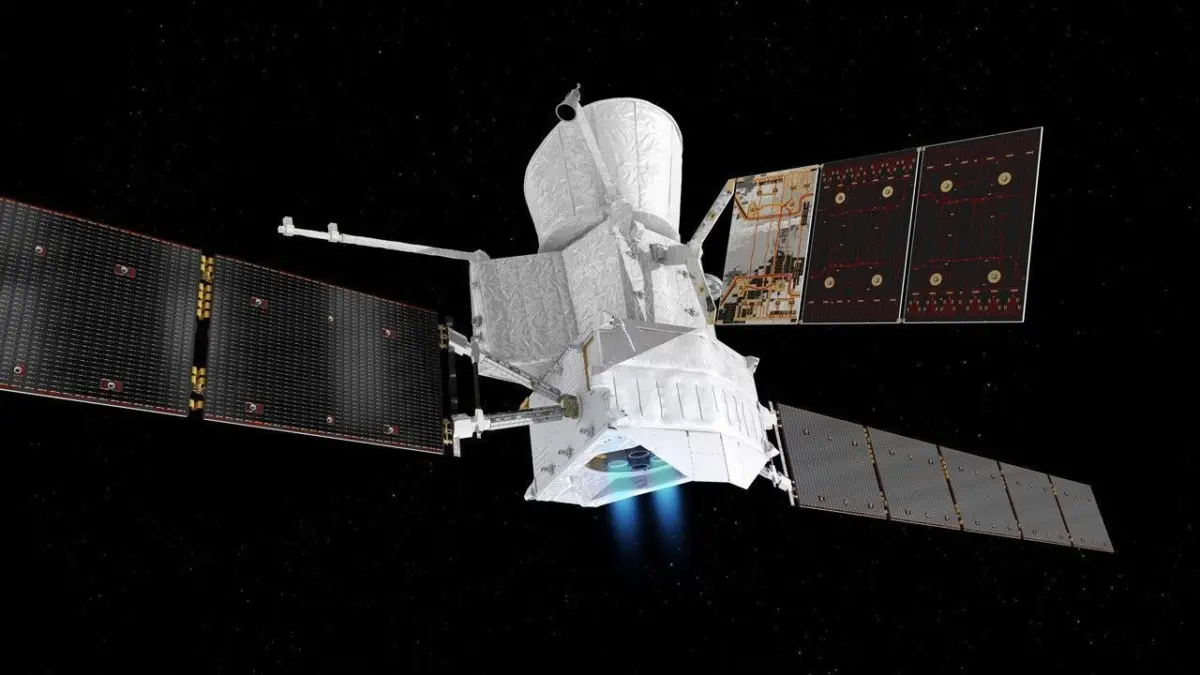
After an arduous, nearly decade-long celestial odyssey that pushed both engineering limits and human patience to the brink, the joint European-Japanese spacecraft BepiColombo has officially entered the final phase of its mission. Ground control confirmed a major milestone: the successful separation of the probe’s propulsion module, clearing the way for the spacecraft to begin its intricate insertion into low orbit around Mercury.
Named in honor of the visionary Italian mathematician and engineer Giuseppe "Bepi" Colombo—whose pioneering mechanics laid the theoretical foundation for the "gravity assist" maneuvers used in modern interplanetary spaceflight—the mission was originally slated to reach the innermost planet last year. However, a series of propulsion system malfunctions forced mission operators to radically alter the spacecraft’s trajectory. Operating on reduced power, BepiColombo was forced to take a prolonged cosmic detour, pushing its arrival date back by nearly twelve months.
Now, after traveling an astonishing 6 billion miles (9.9 billion kilometers) across the inner solar system, the spacecraft stands on the threshold of planetary science history. As BepiColombo prepares to split into two independent, highly specialized orbiters, it promises to decode the enduring mysteries of a world that has only ever been visited twice before in human history. With full-scale scientific operations slated to commence in April 2027, the mission is poised to rewrite our understanding of planetary formation, magnetic fields, and the violent neighborhood of our sun.
Detailed Chronology: Eight Years, Six Billion Miles, and a Propulsion Crisis
The saga of BepiColombo is a masterclass in cosmic navigation, resilience, and the relentless pursuit of scientific discovery. The mission’s timeline has been defined by high-stakes orbital gymnastics, unexpected hurdles, and breathtaking engineering triumphs.
Launch and the Early Years (2018–2020)
Launched on October 18, 2018, aboard an Ariane 5 rocket from Europe’s Spaceport in Kourou, French Guiana, BepiColombo set out on a path that was never going to be a straight line. Because of the immense gravitational pull of the Sun, reaching Mercury requires an extraordinarily complex choreography.
During its initial years in space, the spacecraft embarked on a multi-planetary grand tour to shed orbital velocity. It executed its first planetary flyby in April 2020, skimming past Earth to recalibrate its trajectory. This was followed by a pair of precision Venus flybys in October 2020 and August 2021, which utilized the dense atmosphere and gravity of our planetary neighbor to further brake the spacecraft without expending precious chemical propellant.
The Mercury Flyby Phase and the Propulsion Crisis (2021–2024)
As BepiColombo plunged deeper into the inner solar system, it began its encounters with its ultimate destination. Between 2021 and 2024, the probe completed six separate flybys of Mercury, capturing stunning monochromatic imagery, testing its scientific instruments in the harsh thermal environment, and using the planet’s gravity to continually shave off speed.
However, the mission faced a severe crisis when engineers detected a critical malfunction within the spacecraft’s electric propulsion system. The thrusters—vital for maintaining the precise thrust profile needed to gently ease the craft into orbit—failed to deliver the necessary power.
Faced with a potential catastrophe that could have resulted in the spacecraft bypassing Mercury entirely, mission controllers at the European Space Agency (ESA) and the Japan Aerospace Exploration Agency (JAXA) devised an ingenious contingency plan. By redesigning the trajectory to leverage alternative gravity-assist configurations and utilizing a low-power propulsion strategy, the team managed to save the mission. The cost, however, was time: the arrival date was delayed by nearly a year.
The Separation Milestone (September 2025)
The culmination of this arduous eight-year journey occurred on September 3, when mission control officially confirmed that the massive propulsion module—having completed its heavy-lifting duties—successfully detached from the science carriers. Telemetry data received at mission control indicated that the separation sequence went off without a hitch, paving the way for the spacecraft’s final insertion maneuvers and the historic bifurcation of the mission architecture.
Supporting Context & Metrics: The Engineering Nightmare of Reaching Mercury
To truly appreciate BepiColombo’s achievement, one must understand the unique physical and mathematical nightmare of exploring Mercury. While Mars and the outer planets receive the lion’s share of popular media attention, Mercury remains the most difficult terrestrial body in the solar system to reach and orbit.
The "Falling" Problem
When a spacecraft travels from Earth toward the outer planets (like Jupiter or Saturn), it must fire its engines to accelerate away from the Sun. Conversely, traveling inward toward Mercury requires a spacecraft to journey "downhill" into the immense gravitational well of the Sun.
As the spacecraft falls toward the center of the solar system, it accelerates dramatically, gaining immense kinetic energy. To enter orbit around Mercury rather than simply crashing into the Sun or zooming past the planet at blinding speeds, the spacecraft must constantly apply the brakes. Because carrying enough chemical fuel to brake continuously is physically impossible with modern rocketry, missions must rely on a complex series of gravity assists.

BepiColombo’s staggering odometer reflects this reality:
- Total Distance Traveled: ~6 billion miles (9.9 billion kilometers)
- Earth Flybys: 1
- Venus Flybys: 2
- Mercury Flybys: 6
- Total Gravity Assist Maneuvers: 9
Surviving the Thermal Crucible
Once a spacecraft successfully enters orbit around Mercury, it faces an equally hostile environment: extreme thermal stress. Because Mercury is the closest planet to the Sun, its sunlit surface can reach blistering temperatures exceeding 800 degrees Fahrenheit (430 degrees Celsius)—hot enough to melt lead.
Compounding this problem is Mercury’s near-total lack of an atmosphere. Unlike Earth, which traps heat and maintains a relatively stable thermal equilibrium, Mercury cannot insulate itself. Consequently, when the sun sets on a given region, temperatures plummet to a freezing -290 degrees Fahrenheit (-180 degrees Celsius).
BepiColombo has been specifically engineered to survive these violent, daily thermal swings. The spacecraft is coated in specialized high-temperature multi-layer insulation blankets, equipped with advanced radiation shields, and designed with active cooling loops to protect its delicate electronics from cooking in the solar glare.
Official Statements and Collaborative Vision
The BepiColombo mission represents a monumental milestone in international scientific cooperation, uniting the premier space agencies of Europe and Japan in a joint quest for planetary knowledge.
"Reaching Mercury is not merely a destination; it is a test of human ingenuity against the most unforgiving mechanics of our solar system," remarked an ESA senior mission scientist during the recent post-separation briefing. "Despite the propulsion setbacks that tested our resolve over the past year, our international teams have proven that perseverance and brilliant engineering can overcome the harshest obstacles space has to offer."
JAXA project managers echoed this sentiment, emphasizing the unprecedented nature of the dual-spacecraft architecture. By splitting into two distinct orbiters upon arrival, the mission avoids the compromises traditionally required of single-probe architectures.
"We are not just sending a camera to look at rocks," a JAXA spokesperson noted. "We are deploying a synchronized observing system that will allow us to look at Mercury’s core, its surface, and its magnetic bubble simultaneously. This collaborative effort between ESA and JAXA marks a new gold standard for deep-space exploration."
Future Outlook: A Dual-Orbiter Perspective on a Mysterious World
With the propulsion module now jettisoned, BepiColombo is entering its final preparatory phase. Over the next year and a half, mission operators will meticulously calibrate the instruments, test the communication links, and guide the craft into its optimal low-altitude orbits.
Upon reaching its operational orbit, the spacecraft will physically split into two independent scientific platforms:
- The Mercury Planetary Orbiter (MPO): Built primarily by ESA, the MPO will remain in a lower orbit, utilizing an advanced suite of spectrometers, radiometers, and cameras to map Mercury’s rugged surface in high definition, study its elemental composition, and probe its dense internal structure. Scientists hope to shed light on whether Mercury’s crust is rich in exotic minerals, such as crystallized diamonds, formed during the planet’s violent cooling phase.
- The Mercury Magnetospheric Orbiter ("Mio"): Built by JAXA, Mio will occupy an elliptical higher orbit dedicated to investigating Mercury’s enigmatic magnetic field. Unlike most planets, Mercury possesses a global magnetic field, though it is offset from the planet’s geographic center. Mio will study how this magnetic shield interacts with the fierce solar wind streaming directly from the nearby Sun, as well as analyzing Mercury’s tenuous exosphere.
This dual-point observation strategy marks a historic first in planetary science: never before have two distinct spacecraft orbited Mercury simultaneously. By capturing synchronized data from both the surface-level and magnetospheric perspectives, researchers hope to construct a unified, comprehensive model of the planet—solving decades-old debates regarding its formation, geological inactivity, and metallic core.
Following the thorough checkout and commissioning phase, full-scale scientific observations are officially scheduled to begin in April 2027. As BepiColombo finally settles into its long-awaited home, the scientific community stands on the precipice of a golden age of inner-solar-system discovery, ready to unveil the deeply guarded secrets of the solar system’s smallest and most resilient terrestrial planet.