Executive Overview
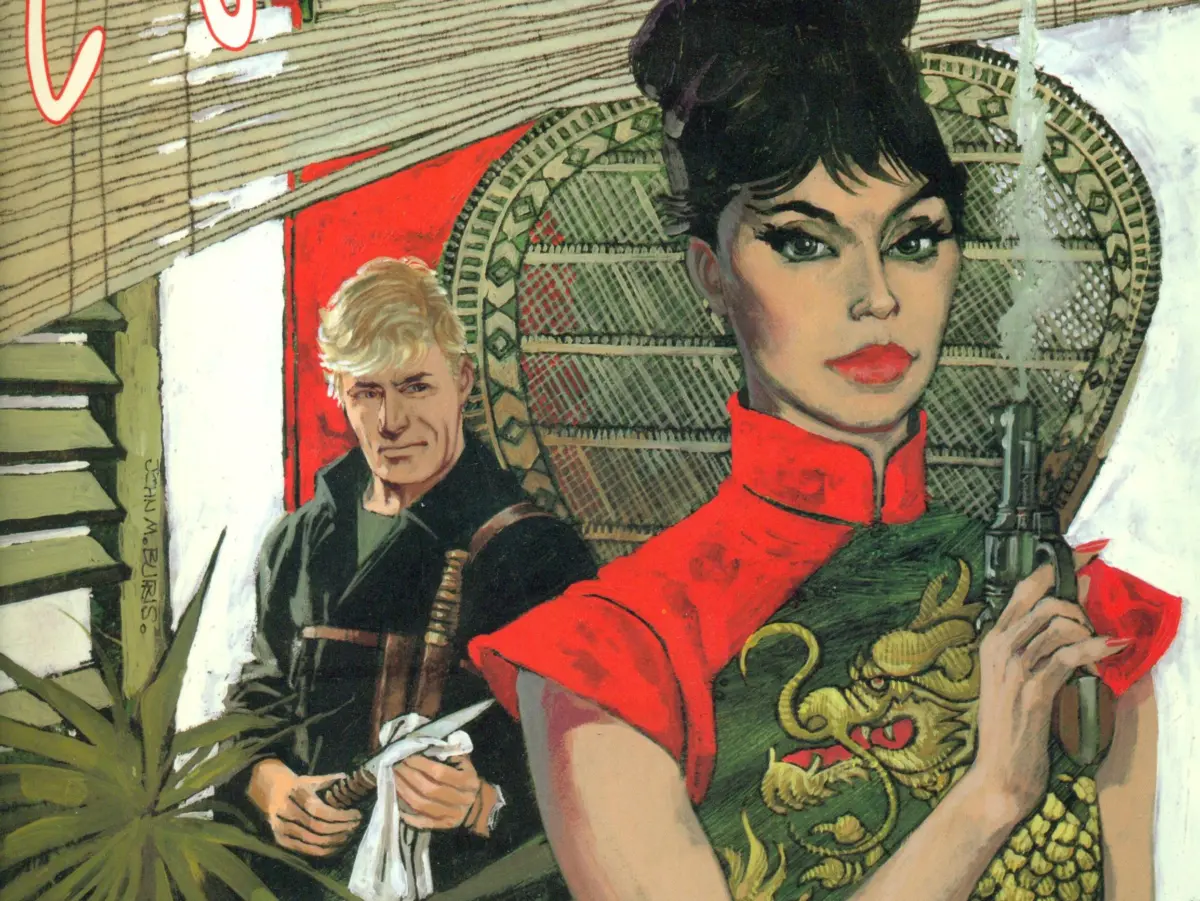
In the vast landscape of international pop culture, few gaps between critical acclaim and mainstream American awareness are as wide as that of Modesty Blaise. Described memorably as "the fabulous, feminine answer to James Bond," this iconic British newspaper comic strip ran from May 1963 to February 2001, captivating readers across Europe, Asia, and Australasia. Yet, outside of a dedicated cult following and a single mainstream syndication outlier in the Detroit Free Press, the adventures of the charismatic, high-rolling former crime lord Modesty Blaise and her fiercely loyal right-hand man, Willie Garvin, largely bypassed the United States.
The primary barrier to entry for American audiences was cultural rather than narrative. Penned by the late Peter O’Donnell and illustrated predominantly by Jim Holdaway and Enrique Badia Romero, the strip frequently featured unfiltered nudity and mature themes that clashed with the conservative editorial guidelines of mid-century American newspapers. Consequently, generations of U.S. readers missed out on one of the 20th century’s most progressive, tightly plotted, and visually stunning adventure serials.
Today, thanks to comprehensive archival preservation efforts—most notably Titan Books’ 27-volume paperback collection spanning 2004 to 2017—the entire saga is accessible to modern enthusiasts. For fans of classic spycraft, caper films, and hard-hitting pulp fiction, Modesty Blaise offers a masterclass in sequential storytelling that easily stands shoulder-to-shoulder with 007, Modesty Blaise offering an alternative vision of action heroism that remains as fresh and thrilling as it was during the height of the Cold War.
Detailed Chronology: From Refugee Origins to Syndicated Legend
To fully appreciate the scope of Modesty Blaise, one must examine the painstaking construction of its lore. The character’s fictional history begins in the chaotic wake of World War II. Born as an orphaned refugee in the Middle East with zero knowledge of her birth parents or nationality, she was "born walking," drifting across borders until she eventually found her way to Tangier.
The Rise of the Network
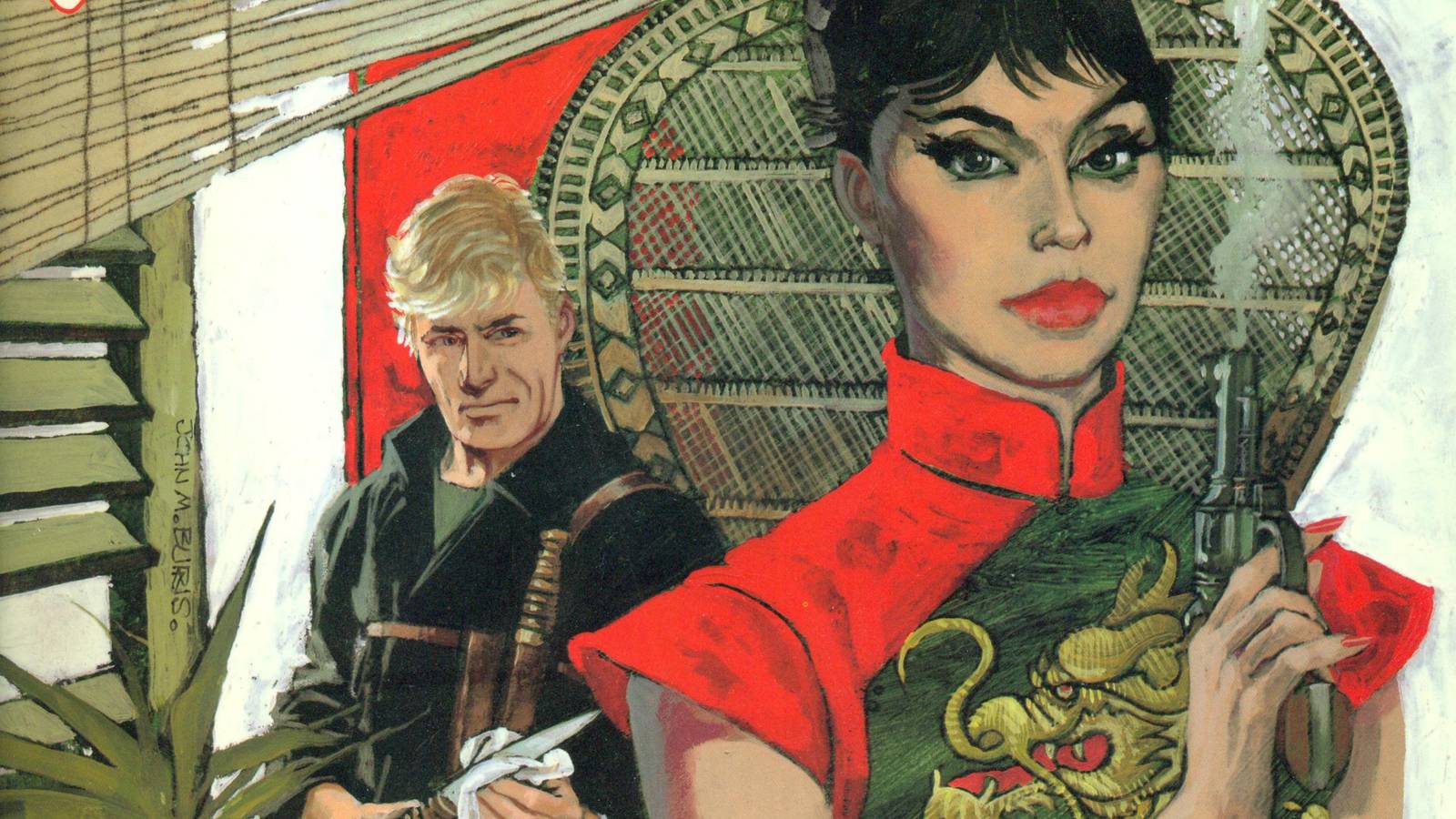
In the alleyways and underworld of Tangier, the young protagonist seized control of a local street gang and methodically expanded it into an international syndicate known simply as "The Network." Unlike traditional criminal cartels driven purely by malice or ideological conquest, The Network operated under a strict, albeit unconventional, moral code. While grand larceny, corporate espionage, and high-stakes smuggling were standard operations, Modesty’s regime aggressively crushed drug traffickers, human-traffickers, and brutal warlords operating within their territories.
Retirement, Citizenship, and British Intelligence
Having amassed a massive fortune through criminal enterprise, Modesty chose to walk away from the syndicate while she was at the top. She officially "acquired" United Kingdom citizenship and retired to a luxurious lifestyle in London alongside her closest friend and operational partner, Willie Garvin.
Possessing elite training as thieves, master-class martial artists, and global operatives, Modesty and Willie quickly caught the attention of British intelligence. Their wealth, combined with Modesty’s infallible marksmanship and Willie’s lethal proficiency with throwing knives, made them irresistible assets for MI6. The British government routinely employed them as freelance troubleshooters for missions requiring unorthodox methods and absolute deniability.
The 95 Storylines of the Cold War
The original newspaper run was structured into 95 distinct, serialized storylines rather than a continuous, sprawling narrative. This format allowed O’Donnell to craft tight, self-contained escapades that routinely pitted the duo against Eastern Bloc organizations (such as "La Machine" and "Top Traitor"), independent con artists ("The Girl From the Future"), and ruthless crime rings ("Death in Slow Motion"). Crucially, the stakes were frequently kept intimate. Rather than battling to save the Western world from global annihilation, Modesty and Willie typically fought for personal survival, localized justice, or pure vengeance.

Supporting Context & Metrics: The Art, the Artists, and the Adaptation Legacy
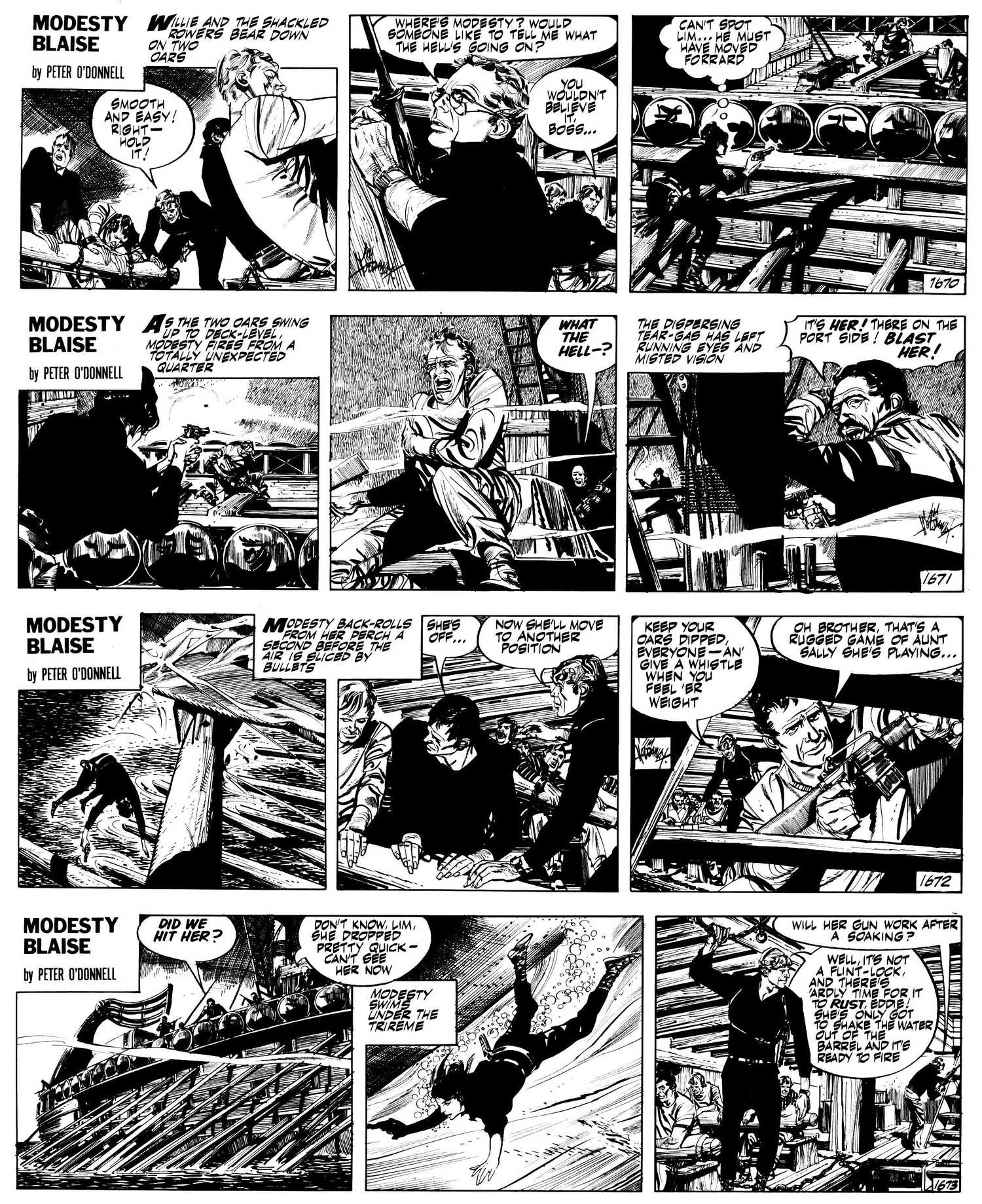
The narrative brilliance of Modesty Blaise was matched—and often elevated—by the legendary artists who brought O’Donnell’s scripts to life. The partnership between O’Donnell and his illustrators created a masterclass in economic visual storytelling.
+---------------------------------------------------------------------------------+
|                         KEY *MODESTY BLAISE* CREATORS                           |
+--------------------------+-----------------------------+------------------------+
| Creator / Artist         | Role                        | Notable Contributions  |
+--------------------------+-----------------------------+------------------------+
| Peter O'Donnell          | Creator / Writer            | Authored all 95 strips |
|                          |                             | & companion novels     |
| Jim Holdaway             | Original Artist (1963-1970) | Established the iconic |
|                          |                             | noir-infused aesthetic |
| Enrique Badia Romero     | Principal Artist (1970s-01) | Defined the modern era |
|                          |                             | of the strip           |
| John Burns & N. Colvin   | Guest Artists               | Contributed standout   |
|                          |                             | multi-part arcs        |
+--------------------------+-----------------------------+------------------------+
Visual Economy and Noir Aesthetics
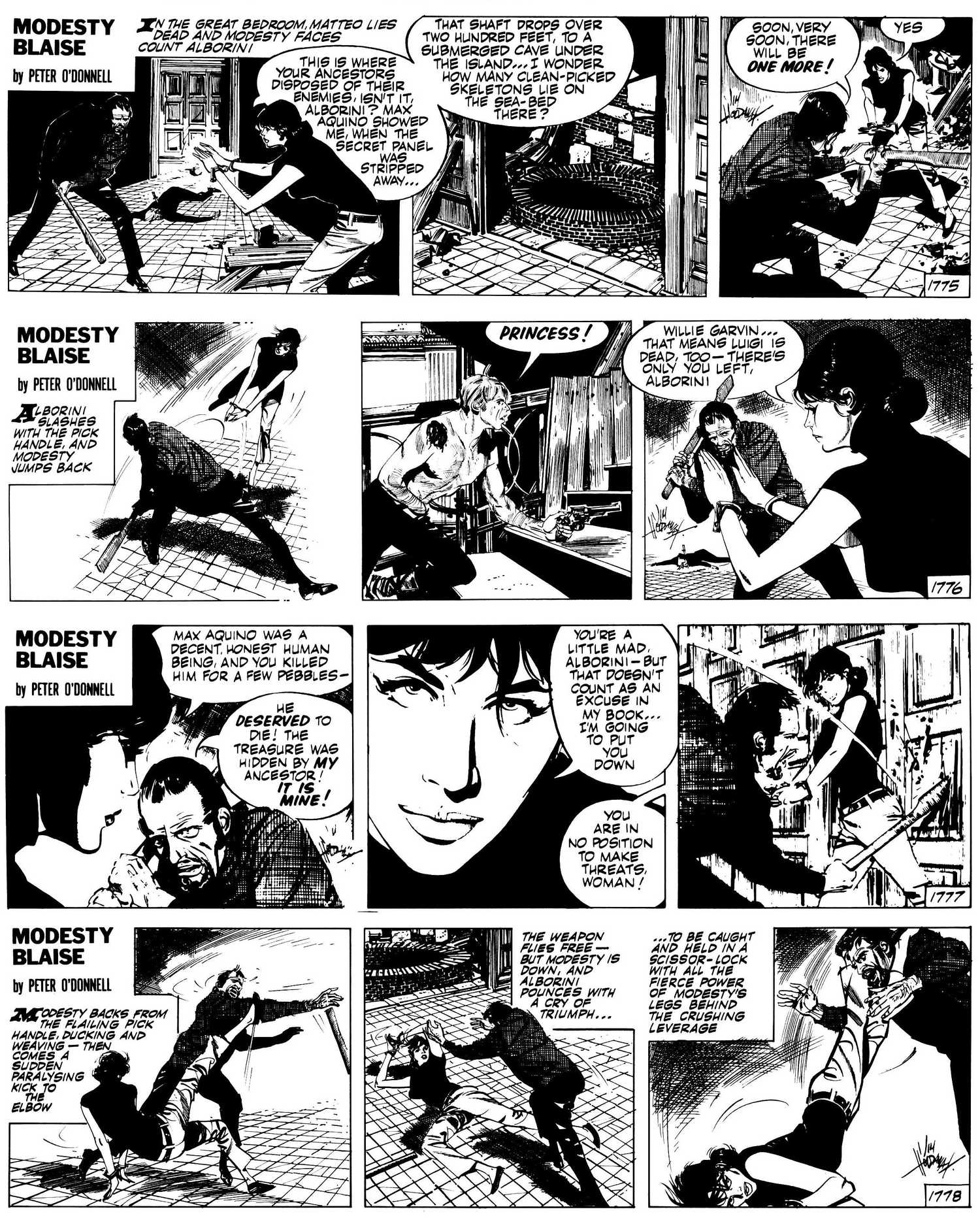
Jim Holdaway served as the strip’s foundational visual architect until his sudden death in 1970. Holdaway possessed an extraordinary ability to communicate intense kinetic action, subtle emotional nuance, and deep atmosphere within the cramped grid of a daily black-and-white newspaper strip. He could achieve more narrative momentum in three panels than many contemporary comic artists manage in a full splash page.
Following Holdaway’s passing, Spanish artist Enrique Badia Romero took over the artistic reigns, maintaining the crisp, dynamic inkwork that defined the strip’s aesthetic golden age. Additional artistic contributions came from industry heavyweights like John Burns, Neville Colvin, and Pat Wright. Together, they proved that newspaper strips could rival the artistic fidelity of comic books and graphic novels.
Film Adaptations and Cult Status
Outside of print, Modesty Blaise has enjoyed a rocky cinematic history that nevertheless bolstered its mythos.
- The 1966 Feature Film: Directed by Joseph Losey and starring Monica Vitti as Modesty and Terence Stamp as Willie Garvin, the 1966 Modesty Blaise film leaned heavily into camp and 1960s pop-art aesthetics. While it was a box-office disappointment upon release, it has since achieved a legendary cult following among film historians and retro enthusiasts.
- The 2004 Reboot: Director Quentin Tarantino’s long-standing fandom of the character eventually led to him executive-producing My Name Is Modesty (2004), a prequel film focusing on Modesty’s early days in Tangier.
Official Statements and Critical Reception
The cultural legacy of Modesty Blaise has been dissected by literary critics, comic historians, and international press outlets for decades. While contemporary readers celebrate its forward-thinking representation of female agency, modern re-evaluations have not been entirely without controversy.
Progressive Gender Politics vs. Period Language
In an era where female action heroes were routinely relegated to damsels in distress or hyper-sexualized accessories, Modesty Blaise stood as an undisputed equal—if not superior—to every male operative she encountered. She was intellectually brilliant, emotionally complex, unapologetically wealthy, and fiercely independent.
However, because the strip spanned nearly four decades, certain elements have inevitably aged. While O’Donnell frequently positioned Modesty and Willie as protectors of marginalized communities against bigoted antagonists, the dialogue occasionally incorporated outdated vernacular. A prominent example occurred as recently as 2020, when an Australian newspaper pulled a reprint of the 1971 storyline "The Stone Age Caper" due to a villain’s racially insensitive language regarding Indigenous Australians—sparking widespread debate among preservationists about contextualizing historical media.
Despite these occasional historical friction points, literary scholars widely praise O’Donnell’s crisp dialogue and progressive characterization. As noted by modern comic reviewers, Modesty Blaise anticipated the modern trend of morally gray, anti-heroic espionage dramas long before television and cinema normalized the archetype.
Future Outlook: Preservation, Collectibility, and Discovery
As physical print media continues to shift toward digital curation and specialized collections, the long-term outlook for Modesty Blaise rests securely in the hands of dedicated publishers and archival groups.
Titan Books’ monumental effort to keep all 27 paperback volumes in print ensures that new generations of readers can explore the complete run without relying on deteriorated newspaper clippings or difficult-to-find foreign editions. Furthermore, online fan preservation communities continue to scan, index, and archive rare promotional materials, interviews, and foreign translations that would otherwise be lost to time.
Why You Should Read It Today
If you have an affinity for classic espionage, international crime dramas, or character-driven heist stories (such as television shows like Leverage or classic James Bond literature), Modesty Blaise represents an untapped goldmine. It is a masterclass in sequential art, a monument to pulp fiction adventure, and a shining example of how a newspaper comic strip could transcend its medium to become a timeless work of pop-art literature. For anyone looking to expand their literary horizons beyond contemporary superhero universes, diving into Titan Books’ Modesty Blaise collection is an essential expedition.