Executive Overview
In an era dominated by calculated deckbuilders, passive autoshooters, and sprawling, slow-paced city builders, the modern PC gaming landscape occasionally yearns for something far more visceral. Enter Stuntboost, developed by Byting Games. Seemingly arriving without warning or the backing of a multi-million-dollar marketing apparatus, this deceptively humble title has quietly carved out a reputation as the most exhilarating, high-velocity movement experience of 2026.
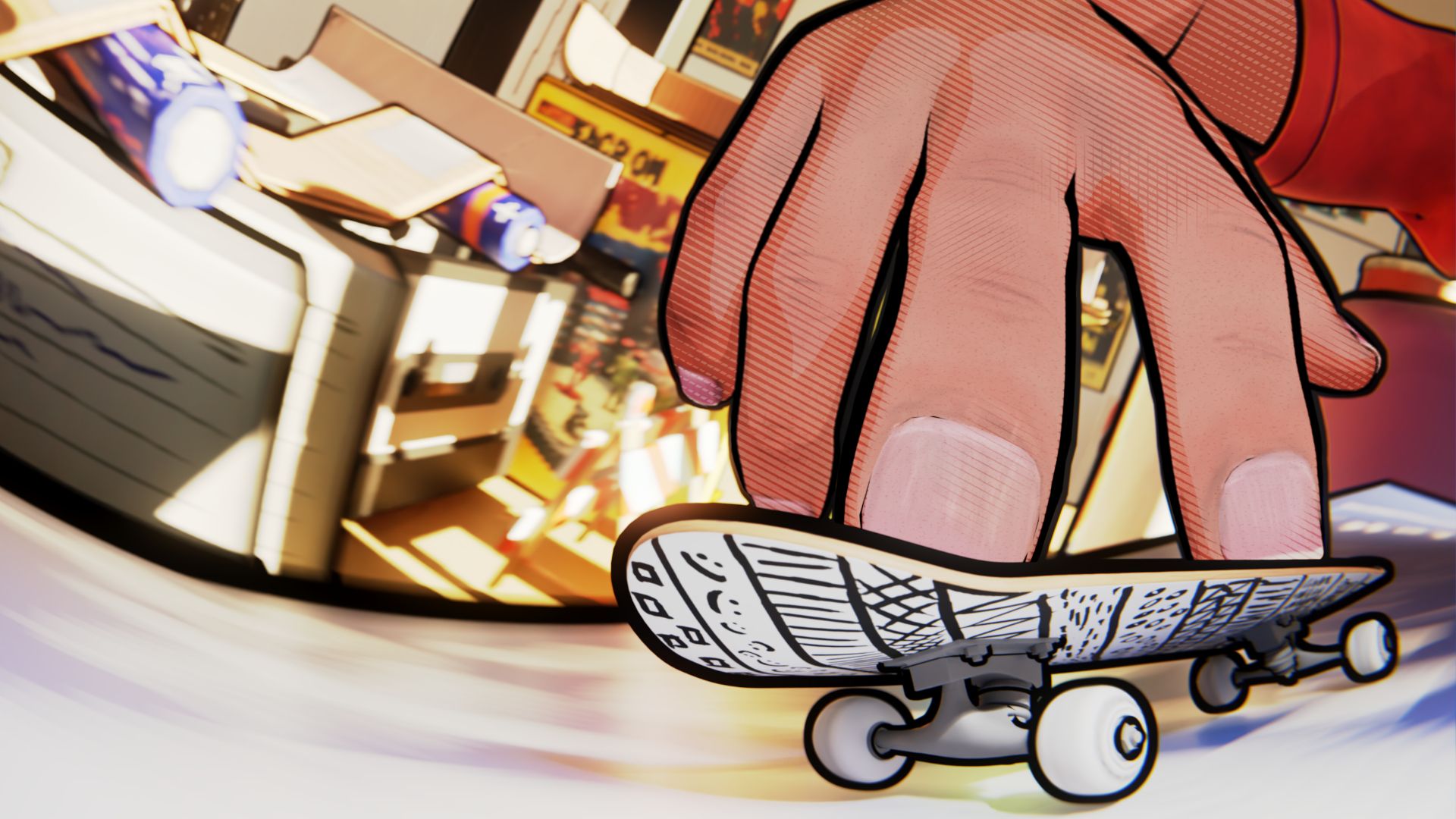
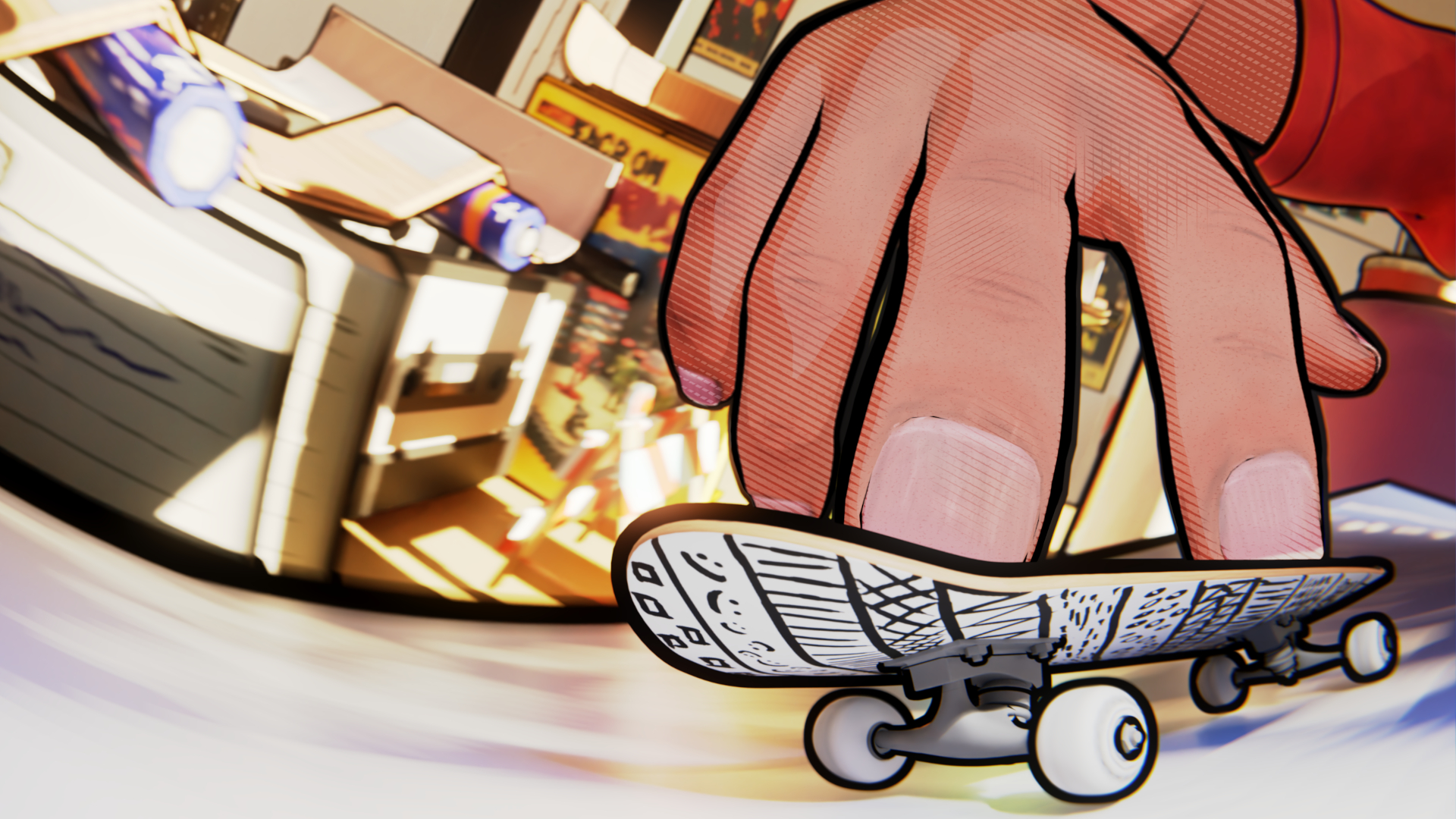
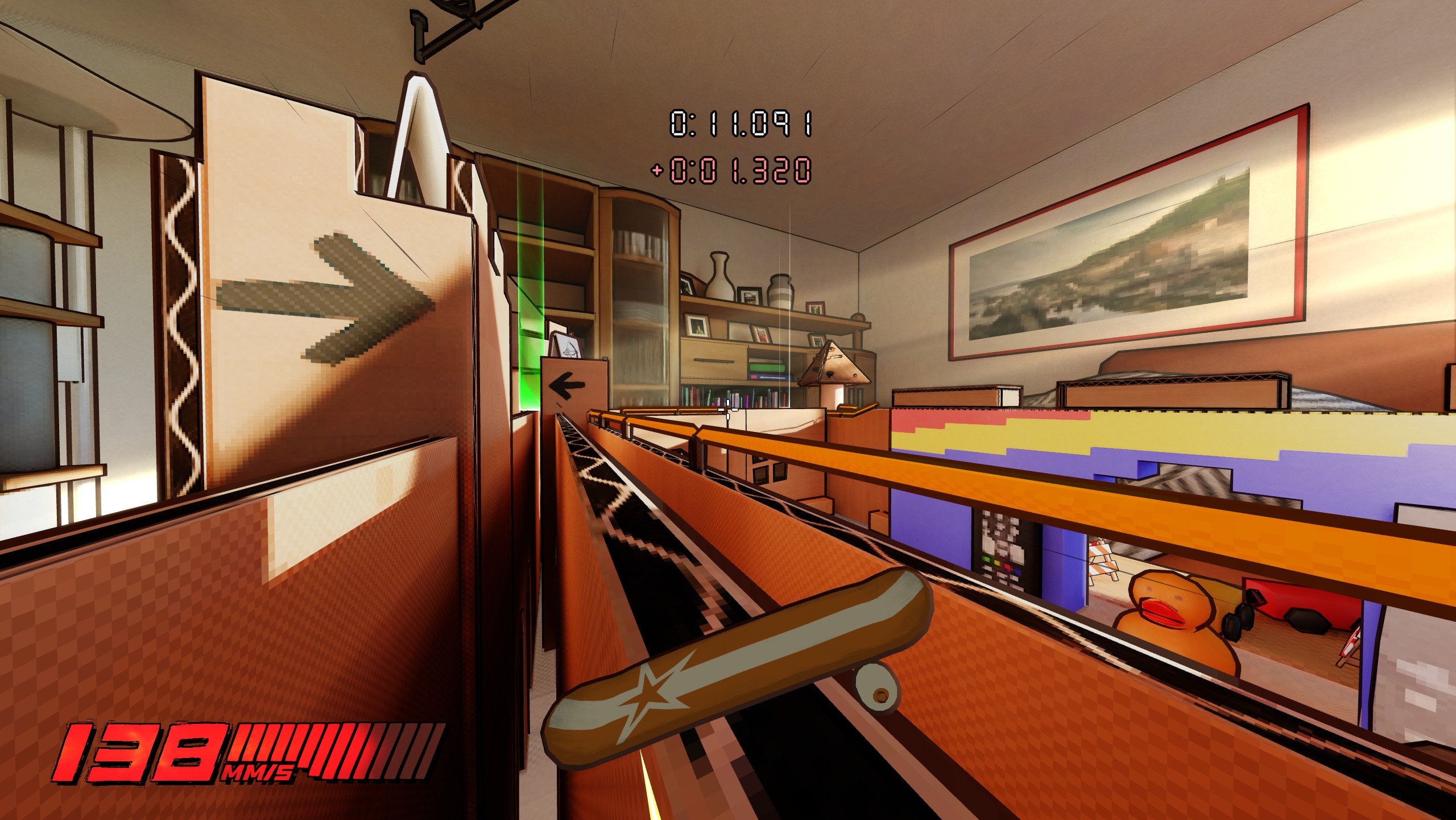
At first glance, Stuntboost presents a charming, almost nostalgic facade. Its aesthetic channels miniature fingerboard sets, cardboard circuits, and household tabletop tracks that evoke memories of early first-person shooter level editors and nostalgic toy commercials. Yet, beneath its colorful, unassuming surface lies a white-knuckle, first-person precision platformer engineered specifically for movement purists and "FPS sickos."
Requiring the tight coordination of a mouse and keyboard—a rare warning for a title featuring skateboards and toy cars—Stuntboost challenges players to master speed, momentum, and spatial awareness across more than 40 meticulously designed levels. Despite holding a "Very Positive" rating on Steam with a modest 253 reviews a month after its launch, the game has ignited fierce, obsessive competitive loops among those fortunate enough to discover it. Priced at an astonishingly modest $7, Stuntboost stands as a masterclass in minimalist design, physics-based propulsion, and community-driven time-trial obsession.
Detailed Chronology: How Stuntboost Found Its Footing
The journey of Stuntboost from an obscure Steam release to an underground critical darling reflects the shifting tides of organic game discovery in the mid-2020s.
Phase 1: The Quiet Launch
Released quietly onto Valve’s storefront, Stuntboost initially flew beneath the industry radar. Lacking the algorithmic rocket fuel or viral streamer endorsements that launch triple-A and prominent indie projects into instant mainstream awareness, the game relied almost entirely on word-of-mouth recommendations within niche community circles. Review counts trickled in slowly, crossing just over 250 reviews within its first month on the market. For many prospective buyers, the game’s toy-like visual presentation created a false impression: it looked like a casual, family-friendly racer akin to Hot Wheels, masking the brutal, high-skill ceiling waiting underneath.
Phase 2: The Movement Enthusiast Awakening
As early adopters began peeling back the layers of the game’s physics engine, the true nature of Stuntboost became apparent. Players realized that the title was not merely a casual skateboard simulator, but a precision-engineered kinetic puzzle. Movement mechanics such as varial kickflips, grind hopping, and speed storage transformed standard tracks into complex playgrounds for momentum optimization.
Word spread through Discord servers, specialized movement-gaming subreddits, and personal recommendations among gaming journalists. The realization that the game demanded precise mouse-and-keyboard input to truly excel separated casual dabblers from dedicated time-trial runners, establishing a core community of competitive speedrunners and leaderboard chasers.
Phase 3: The Persistent Obsession Loop
Weeks into playing, early adopters found themselves deeply entrenched in shaving microscopic fractions of a second off their personal bests (PBs). The introduction of asynchronous leaderboards, ghost-replay sharing, and friend-group rivalries transformed Stuntboost from a weekend diversion into a daily fixture. Today, the game sits comfortably as a cult phenomenon, proving that innovative game feel and precise execution can still triumph over massive marketing budgets.
Supporting Context & Metrics: Deconstructing the Velocity
To understand why Stuntboost resonates so deeply with its audience, one must examine its mechanical framework and how it compares to established pillars of the speed-running and racing genres.

The Anatomy of Movement
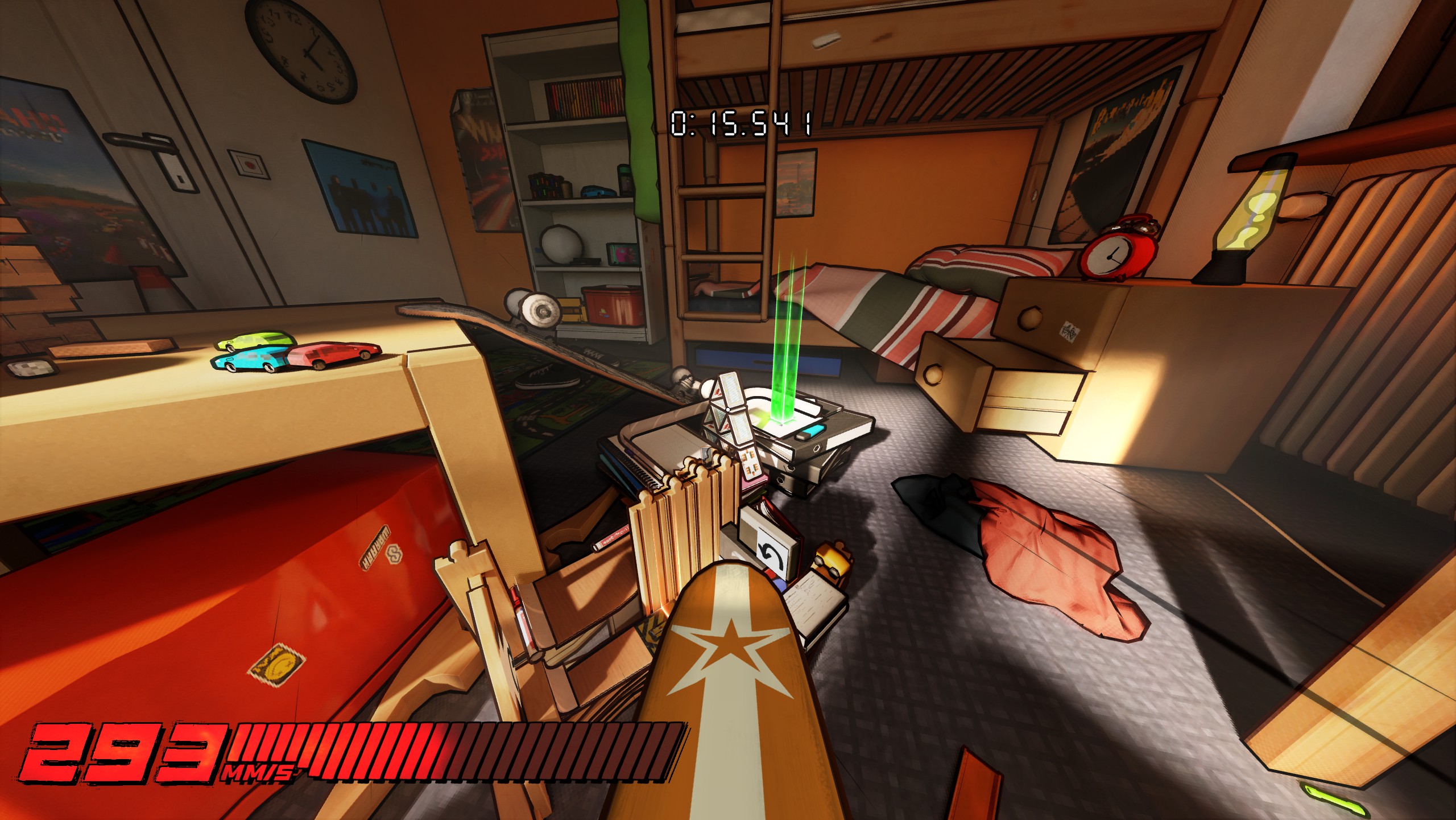
At its core, Stuntboost is deceptively simple: it operates fundamentally as a three-button game centered around jumping, crouching, and grinding. However, the application of these inputs is where the mastery lies. Every sloped surface, ramp, playing card, plate, and three-ring binder scattered across the bedroom and household-themed maps acts as a potential springboard.
Unlike traditional racing games that penalize reckless driving, Stuntboost encourages maximum speed at all costs. There are no brakes. The game relies entirely on a player’s ability to read the terrain, maintain flow state, and improvise paths through non-linear obstacle courses.
Comparative Analysis: Trackmania and Neon White
Critics and players alike have drawn comparisons to two distinct heavyweights of the speed-running genre: Trackmania and Neon White.
| Feature / Metric | Stuntboost | Trackmania | Neon White |
|---|---|---|---|
| Primary Input Focus | Mouse-driven precision camera & 3-button movement | Precise driving lines & heavy braking/drifting | Card management, shooting, & parkour |
| Pacing Philosophy | Max speed at all costs; improvisational flow | Strict racing lines, cornering, & technical braking | High-intensity puzzle-platforming with combat elements |
| Vehicle Variety | Skateboards, cars, scooters, longboards | Dedicated racing vehicles (stadium cars, etc.) | On-foot character movement |
| Level Design | Non-linear household environments & modular tracks | Mathematical, highly technical racing tracks | Linear, puzzle-like combat arenas |
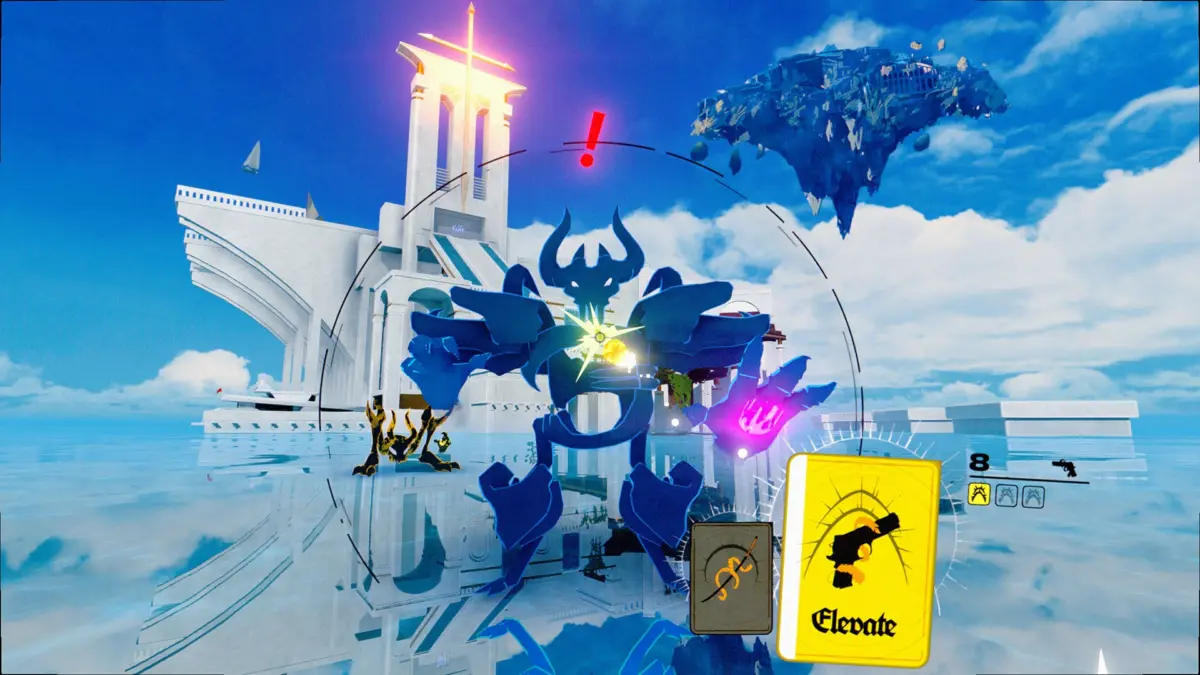
While Trackmania fans will appreciate the emphasis on flying across massive jumps and chasing high-tier medals, Stuntboost discards the need for cautious cornering. Conversely, while comparisons to Neon White are apt due to the focus on ghost replays and rapid retries, Stuntboost avoids the restrictive, card-juggling combat mechanics that can sometimes overwhelm players, opting instead for pure, unadulterated movement freedom.
Quality-of-Life Ingenuity on a Budget
Despite its micro-budget status, Stuntboost features brilliant quality-of-life design choices that larger studios frequently bungle:
- Staged Information Reveal: Friend times remain hidden until you complete a track once, and global leaderboards are locked behind a diamond medal achievement, preventing early-game intimidation.
- Smart Ghost Implementation: Players can toggle ghosts for themselves, friends, or top global leaderboard contenders.
- Contextual Replay Viewing: Full replays of other players are viewable only if you have discovered the same shortcuts they utilized, preventing map spoilers while encouraging exploratory gameplay.
Official Perspectives & Critical Reception
While major publisher output often relies on predictable formulas, independent developers continue to push the boundaries of kinetic game design. Industry critics and community writers have been vocal about the stark contrast between the game’s modest commercial footprint and its towering mechanical achievement.

In reflections on the title’s impact, reviewers have noted that games focusing on pure physics and momentum-based movement occupy a unique, underserved niche in modern gaming:
"What I want are more games that make me feel alive and dangerous. Stuntboost has me vibrating in place, leaning into high-speed turns, and cursing a god I don’t believe in. It’s an intoxicating rush on a level I have not experienced before."
The game’s developer, Byting Games, has managed to capture lightning in a bottle by understanding the psychology of the time-trial runner. By ensuring that every object in the environment serves a mechanical purpose—transforming mundane stationery into launchpads—the studio has validated the desires of players who prioritize kinetic expression over cinematic storytelling.
Future Outlook: The Longevity of a $7 Masterpiece
As Stuntboost settles into its post-launch lifecycle, its future looks anchored by a dedicated, hyper-engaged community. The inclusion of diverse vehicle types across later worlds—such as drift-focused cars and free-roam scooters featuring collectible hunts—proves that Byting Games understands how to expand the core formula without diluting its frantic pacing.
Furthermore, features like the hidden tape collection system, bonus tower gauntlets, comprehensive speedrun modes, and daily challenges provide immense replay value. For a title priced at a mere $7, the content-to-value ratio is staggering.
What Lies Ahead for Movement-First Indies?
The success—however quiet—of Stuntboost serves as a vital proof-of-concept for the indie sector. It demonstrates that players are hungry for titles that respect their intelligence and mechanical dexterity. While the market will no doubt continue to be flooded with passive titles and comfortable strategy games, Stuntboost stands as a defiant reminder of what interactive entertainment does best: making the player feel invincible, weightless, and gloriously out of control at 200 miles per hour across a kitchen table.