Executive Overview
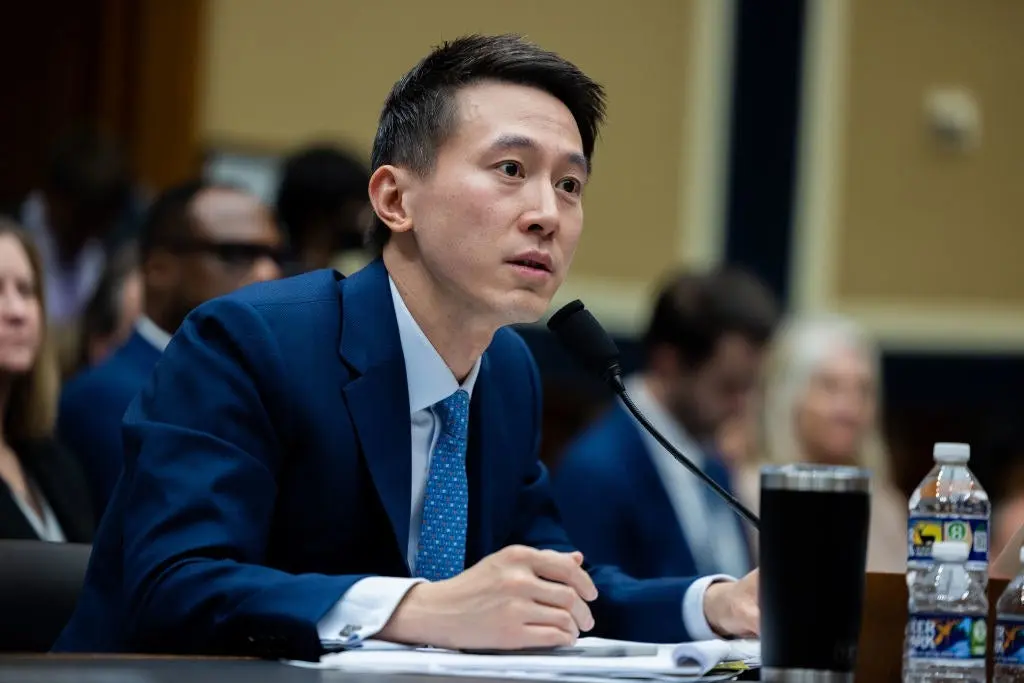
In an era defined by intense geopolitical friction, regulatory scrutiny, and a shifting technological landscape, few events have so uniquely bridged the gap between serious legislative oversight and viral internet culture as the recent congressional testimony of TikTok CEO Shou Zi Chew. Facing a five-hour grilling before the House Energy and Commerce Committee, Chew stepped directly into the political crosshairs. Lawmakers from both sides of the aisle converged on the 40-year-old executive, pressing him on national security, data privacy, and the platform’s ties to its Beijing-based parent company, ByteDance.
Yet, as the live broadcast played out across television screens and digital feeds, a fascinating cultural phenomenon materialized parallel to the serious policy debates unfolding in Washington. While members of Congress voiced deep-seated anxieties over foreign influence and the safety of the app’s 150 million monthly U.S. users, the digital ecosystem responded with a wave of unexpected adoration. Across TikTok itself, Chew was rapidly transformed by creators into a viral meme, dubbed “TikTok daddy” and lauded as the “finest CEO of our generation.”
This juxtaposition of high-stakes geopolitical posturing and tongue-in-cheek internet stasism highlights a profound cultural disconnect between lawmakers and the digital-native generations who rely on platforms like TikTok for commerce, community, and connection. As Congress weighs sweeping legislative measures that could ban the app outright, Chew’s performance has catalyzed a complex public relations narrative. It is a story not just about data sovereignty and international trade wars, but about generational divides, the mechanics of modern digital influence, and the theatrical nature of contemporary political hearings.
Detailed Chronology: Five Hours on the Hot Seat
The proceedings before the House Energy and Commerce Committee on March 23 represented a watershed moment for the short-form video giant. From the opening gavels, the atmosphere was charged. Chew, stepping into the spotlight with a composed demeanor, faced a barrage of aggressive questioning designed to corner the executive on ByteDance’s operational independence and data handling practices.
Opening Statements and Firm Denials
Chew’s prepared testimony began with a definitive attempt to dismantle the narrative that TikTok operates as an arm of the Chinese state. In his written statement, he declared: "Let me state this unequivocally: ByteDance is not an agent of China or any other country." Throughout the five-hour session, he reiterated that the platform prioritizes user safety and data protection, pointing to the company’s multi-billion-dollar initiative, "Project Texas," as a comprehensive framework designed to wall off American user data from foreign oversight.
Despite his prepared assertions, lawmakers remained largely skeptical. Questions ranged from nuanced inquiries regarding algorithmic transparency to fundamentally basic technical queries—such as whether the application accesses home Wi-Fi networks—that drew widespread mockery from online commentators. Viewers quickly took to social media to criticize what they perceived as a lack of technological literacy among older members of Congress, with many posting comments pointing out the stark age and cultural gap between the inquisitors and the platform’s user base.
The Legislative Push and Accusations of Grandstanding
The hearing underscored the precarious legal reality facing TikTok in the United States. Currently, three distinct bills loom in Congress that threaten the platform’s continued operations. Two of these bills propose an outright ban, while a third would grant the executive branch sweeping powers to prohibit any foreign-owned technology deemed a national security risk.
Lawmakers, led by committee chair Cathy McMorris Rodgers, made their distrust clear, declaring early on: "We do not trust TikTok ever to embrace American values."
In response, TikTok representatives fiercely defended their executive and criticized the nature of the hearing itself. Following the conclusion of the testimony, a company spokesperson issued a blistering statement accusing the committee of engaging in political grandstanding:
"Shou came prepared to answer questions from Congress, but, unfortunately, the day was dominated by political grandstanding that failed to acknowledge the real solutions already underway through Project Texas or productively address industry-wide issues of youth safety."
Supporting Context & Metrics: Data, Politics, and the Rise of "Shou Time"
To fully understand the gravity of Chew’s congressional appearance, one must examine the complex backdrop of data security incidents, corporate maneuvers, and grassroots lobbying that preceded the event.
The Burden of Past Breaches
Chew’s task was made significantly harder by well-documented historical missteps by ByteDance. Investigative reporting, notably by BuzzFeed News, revealed that in 2021 and 2022, employees based in China had on multiple occasions accessed nonpublic U.S. user data. This included the private data of journalists covering the company—a revelation that severely undermined executive assurances regarding data isolation.
While ByteDance confirmed in December that an internal investigation led to the firing of the employees involved, the damage to the company’s credibility in Washington had already been done. It provided lawmakers with concrete ammunition to argue that assurances from executives are insufficient to guarantee American national security.
Orchestrated Rallies and Grassroots Support
In the days leading up to the hearing, TikTok engaged in proactive public relations efforts. According to reports by Wired, the company sponsored more than 30 creators and influencers, covering their travel and accommodation expenses to participate in a pro-TikTok rally outside Capitol Hill on March 23. This calculated move sought to demonstrate the human cost of a potential ban, highlighting the millions of small business owners, artists, and educators who rely on the platform for their livelihoods.
The Viral Transformation of Shou Zi Chew
Perhaps the most unforeseen metric of the entire ordeal was Chew’s explosive growth in personal digital capital. Prior to his appearance on Capitol Hill, Chew maintained a remarkably low public profile. His official TikTok account, @shou.time, hovered at a modest 18,000 followers as of March 22.
In the immediate aftermath of his congressional defense, however, social analytics data from Social Blade revealed an astronomical surge. Chew amassed tens of thousands of new followers within hours, ultimately crossing the 70,000-mark and continuing to climb.
Concurrently, the platform erupted in user-generated content celebrating the CEO. Creators utilized green-screen video collages, ironic commentary, and satirical comparisons to other tech executives—such as Meta CEO Mark Zuckerberg, who has also faced hostile congressional inquiries—to frame Chew as an unlikely folk hero. Captions ranged from comedic observations about the global economy to tongue-in-cheek declarations regarding his marital status (for the record, Chew is happily married to Vivian Kao, whom he met at Harvard Business School in 2008).
Official Statements and Industry Fallout
The aftershocks of the March 23 hearing continue to ripple through Silicon Valley, Washington, and international trade forums. The official stances staked out during the proceedings reveal starkly different visions for the future of digital connectivity.
- The Congressional Perspective: Lawmakers maintain that the structural ties between ByteDance and the Chinese Communist Party present an unmitigated risk. From this viewpoint, no amount of corporate restructuring or domestic data routing can fully eliminate the threat of algorithmic manipulation or state-mandated espionage.
- The Corporate Defense: TikTok and its advocates argue that targeting a single platform is a xenophobic and heavy-handed approach that ignores broader, industry-wide challenges concerning data brokerages and digital privacy. They contend that singling out TikTok sets a dangerous precedent for free expression and economic innovation in the United States.
- The Creator Economy: For millions of Americans who utilize the app for commerce and creative expression, the threat of a ban represents an existential economic blow. Creators have increasingly voiced frustration that legislative bodies are out of touch with the modern digital marketplace, where millions of small businesses derive their primary revenue from algorithmic discovery.
Future Outlook: Where Does TikTok Go From Here?
As the dust settles on Chew’s grueling five-hour testimony, the path forward remains fraught with uncertainty. The legal battles playing out in Congress are expected to intensify, with lawmakers determined to push forward restrictive legislation regardless of corporate pushback.
At the same time, the viability of Project Texas—TikTok’s proposed $1.5 billion firewall designed to place U.S. user data under the oversight of an independent American-led board—will be rigorously evaluated by the Committee on Foreign Investment in the United States (CFIUS). Whether this structural separation will satisfy regulators remains the central question of the entire saga.
Meanwhile, Shou Zi Chew has inadvertently emerged as a cultural icon for a generation disillusioned with traditional political institutions. By maintaining his composure under relentless political pressure, he successfully galvanized an army of digital defenders. Whether this wave of grassroots digital affection can translate into real-world legislative salvation for TikTok, however, remains to be seen. The algorithm has spoken, but in Washington, the final verdict rests elsewhere.