In a landmark escalation of international financial enforcement, the United Kingdom has levied sweeping economic sanctions against Cryptomus, a notorious, chameleonic cryptocurrency payment processor. According to cybersecurity experts, blockchain analytics firms, and international investigators, Cryptomus has operated as a primary financial conduit for ransomware gangs, darknet narcotics markets, large-scale cybercrime services, and illicit networks helping the Russian government bypass Western financial restrictions.
The sanctions, formally issued by the U.K. government on October 8, freeze all domestic assets tied to Cryptomus—historically known by corporate aliases such as Certa Payments and Xeltox Enterprises—and legally bar British enterprises from engaging in any virtual or traditional business transactions with the platform. Alongside Cryptomus, the U.K. targeted a constellation of interconnected virtual payment gateways, including VexPay, TokenSpot, and the Tsunami Payments service.
Industry analysts emphasize that this move marks a critical departure from previous regulatory attempts. While Canada famously slapped Cryptomus with a record-breaking CAD $176 million fine in late 2025 for severe anti-money laundering (AML) violations, that penalty proved largely uncollectible and toothless in halting ongoing illicit operations. By deploying outright economic sanctions, London has taken the decisive step of attempting to strangle the infrastructure rather than merely penalizing it. Furthermore, trade and intelligence observers note that this action represents a historic milestone: the first known instance of a "Five Eyes" nation (comprising Australia, Canada, New Zealand, the U.K., and the United States) officially sanctioning a cryptocurrency entity incorporated within another Five Eyes jurisdiction.
Detailed Chronology of an Illicit Empire
The Rise and Transformation of Cryptomus (2022–2024)
Cryptomus emerged onto the digital finance landscape in 2022, rapidly positioning itself as a favored payment processor for dozens of Russian cryptocurrency exchanges and underground websites hawking illicit cybercrime services. Operating ostensibly out of a shared virtual office space in Vancouver, British Columbia—an address housing dozens of other phantom foreign currency dealers and money transfer businesses—Cryptomus processed billions of dollars in digital assets with minimal regulatory oversight.
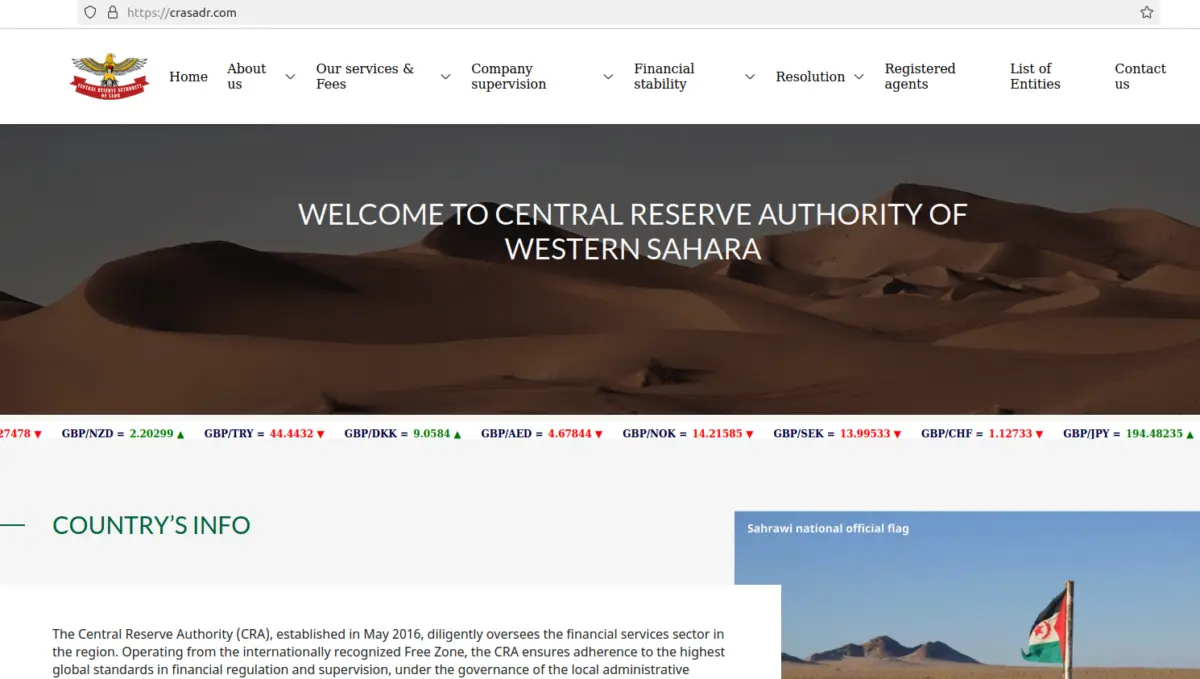
Investigative reporting by cybersecurity journalist Brian Krebs in December 2024 exposed the structural anatomy of the platform. The investigation revealed that Cryptomus’s parent company, Certa Payments, was wholly owned by a 25-year-old Ukrainian woman. This individual simultaneously directed multiple shell corporations, including the WS Management and Advisory Corporation. This corporate entity billed itself as an official regulatory body exclusively overseeing licenses for cryptocurrency, foreign exchange, and online gambling businesses operating out of the disputed northwest African territory of Western Sahara.
Canadian Penalties and the Birth of "Heleket" (2025)
As the scale of illicit transactions routed through Cryptomus became impossible to ignore, Canadian authorities cracked down. In late 2025, Canada issued a historic CAD $176 million fine against the platform for systemic anti-money laundering failures.
Faced with mounting scrutiny, institutional pressure, and the record Canadian fine, Cryptomus executed a classic chameleonic pivot. Rather than folding, the platform appealed the penalty while weaponizing corporate obfuscation. It launched a parallel, no-KYC (Know Your Customer) service operating under the moniker "Heleket."
While Cryptomus briefly instituted stricter KYC requirements that temporarily dented its overall transaction volumes, Heleket stepped seamlessly into the vacuum, ensuring that Russian state-backed financial networks, ransomware operators, and darknet vendors experienced zero interruption in their money-laundering pipelines. Telegram support bots for Heleket brazenly denied any corporate affiliation with Cryptomus, even as investigators mapped identical backend infrastructure, personnel, and operational patterns.
The U.K. Sanctions and Operational Collapse (October 2026)
The facade began to crumble on October 8, when the United Kingdom published its formal sanctions notice. The U.K. Treasury’s Office of Financial Sanctions Implementation (OFSI) targeted Cryptomus, Heleket, VexPay, TokenSpot, and Tsunami Payments simultaneously.
Within hours of the announcement, empirical disruptions rippled across the platform’s support channels. Independent blockchain investigator Richard Sanders documented that Cryptomus and Heleket support bots on Telegram were suddenly flooded with user complaints regarding frozen withdrawals and failed transactions. When queried by users about the sudden outages, support agents admitted that the platforms were no longer able to process transactions.
Supporting Context & Metrics: The Scale of Criminal Facilitation
To understand why international governments targeted Cryptomus, one must look closely at the staggering volume of illicit funds processed by the platform. Blockchain data-crunching and intelligence firms have spent years mapping the financial flows moving through the network, revealing a staggering reliance by global criminal syndicates.
Transaction Volumes and Illicit Inflows
In April 2026, leading blockchain analysis firm TRM Labs published an exhaustive intelligence profile on Cryptomus. The firm revealed that since its inception in 2022, Cryptomus had processed more than $7 billion in cumulative transactions. This sprawling ledger did not merely comprise standard retail crypto transactions; it included heavy volumes tied to child sexual abuse material (CSAM) vendors, international terrorist financing networks, and sophisticated human trafficking operations.
Chainalysis Findings on the Wartime Economy
Following the U.K. sanctions announcement on October 8, blockchain intelligence giant Chainalysis published a comprehensive breakdown emphasizing that Cryptomus and its spin-off Heleket served as foundational pillars for Russia’s wartime economy.
According to Chainalysis data:
Surpassing Traditional Mixers: At their peak, Cryptomus and Heleket received more illicit funds across tracked categories than traditional cryptocurrency mixing services present in the firm’s dataset.
Explosive Growth of Illicit Counterparties: The number of unique illicit counterparties interacting with the platform surged dramatically, reaching more than 900 illicit entities in a single month in late 2025.
Sanctions Evasion Hub: The platforms functioned as automated liquidity bridges, allowing sanctioned Russian banks and state-linked cyber warfare units to convert digital currency into fiat cash or routing mechanisms untraceable by conventional Western banking monitors.
Official Statements and Industry Analysis
The international response to the U.K.’s actions highlights a pivotal shift in how Western governments handle transnational cryptocurrency evasion. Industry experts have lauded the shift from civil fines to aggressive asset freezes.
Richard Sanders on Why Sanctions Matter
Richard Sanders, a veteran blockchain investigator who spent months mapping Cryptomus’s infrastructure and transacting undercover with its merchant base, highlighted the crucial difference between financial penalties and outright sanctions.
"A fine doesn’t stop a cryptocurrency payment processor from processing payments," Sanders wrote in a public analysis shared on LinkedIn. "Sanctions kill the operation. The distinction matters."
Sanders noted that Canada’s earlier CAD $176 million fine, while impressive on paper, was ultimately unenforceable against a decentralized, ghost-registered crypto platform that maintained no physical brick-and-mortar assets in North America. By contrast, U.K. sanctions criminalize business interactions with the entity, cutting off access to liquidity providers, Western-facing domain registrars, cloud service providers, and global banking partnerships.
Chainalysis and TRM Labs Assessments
In its official advisory, Chainalysis reiterated that the U.K. sanctions represent an indispensable blow to the broader shadow economy sustaining geopolitical aggression.
"Cryptomus and Heleket have emerged as major payment hubs for illicit activity," Chainalysis wrote. "Targeting their infrastructure disrupts the primary pipelines used by cybercriminals to monetize ransomware and bypass international trade barriers."
TRM Labs echoed these sentiments, noting that while Cryptomus attempted to launder its reputation by implementing cosmetic KYC checks on its legacy domain, its deliberate launch of Heleket proved that its core business model relied on serving bad actors who required absolute anonymity.
The Illusion of Legitimacy: Phony Regulators and Western Sahara Shells
One of the most bizarre and illuminating aspects of the Cryptomus investigation is the origin of its operational authority. When financial regulators or inquisitive journalists questioned how a Vancouver-registered shell company possessed the legal right to process billions of dollars in international payments, the trail led to a phantom geopolitical entity.
The Central Reserve Authority of Western Sahara
Investigators probing Certa Payments (Cryptomus’s initial corporate guise) discovered that its sole shareholder was a 25-year-old Ukrainian woman. Beyond controlling Certa Payments, she headed several other corporate entities, including the WS Management and Advisory Corporation.
WS Management positioned itself as an elite, exclusive regulatory body responsible for issuing licenses to cryptocurrency exchanges, forex brokers, and online gambling enterprises. However, its jurisdiction was claimed to be the Western Sahara—a disputed region in northwest Africa not widely recognized as a sovereign nation by the United Nations or the global community.
Digital Fingerprints and Shared Servers
The administrative footprint of this scheme was remarkably sloppy upon deep technical inspection. The regulatory body’s official website—crasadr.com—purported to be the portal of the Central Reserve Authority of Western Sahara, publishing lists of licensed crypto and gaming entities.
Furthermore, historical technical infrastructure data revealed that one of Certa Payments’ early web domains (certa.website) shared a physical web server with 12 distinct domains. Among them was rasd-state.ws, a direct network node associated with the fictional state’s financial apparatus. This bizarre nexus exposed how transnational cybercriminals fabricate sovereign-level regulatory credentials out of thin air to deceive naive payment gateways, banking partners, and compliance officers.
Future Outlook
The joint economic chokehold executed by the United Kingdom against Cryptomus, Heleket, VexPay, TokenSpot, and Tsunami Payments signals the dawn of a far more aggressive era in decentralized finance regulation.
As blockchain analytics firms continue to unmask the infrastructure underpinning Russian sanctions evasion, security analysts predict several key developments:
Proliferation of Whack-a-Mole Entities: While sanctions effectively cripple designated platforms like Cryptomus and Heleket, operators are expected to attempt further rebranding cycles, migrating their codebase and merchant networks to entirely new jurisdictions with weaker enforcement cooperation.
Intensified "Five Eyes" Collaboration: The precedent set by the U.K. sanctioning a Canadian-incorporated (yet globally operating) crypto platform proves that jurisdictional loopholes are narrowing. Intelligence-sharing agreements are increasingly translating into synchronized multi-nation sanctions packages.
De-risking by Liquidity Providers: Major decentralized liquidity pools and compliant stablecoin issuers are expected to automatically blacklist addresses linked to the newly sanctioned entities, making it exponentially harder for cybercriminals to cash out stolen ransomware proceeds or state-sponsored funds without triggering immediate freezes.
The downfall of Cryptomus stands as a cautionary tale for the cryptocurrency industry: the era of anonymous, state-backed money laundering operating under the guise of financial innovation is rapidly drawing to a close, as Western governments deploy the full weight of international law to dismantle digital safe havens.