Executive Overview
For years, the premium over-ear headphone market has operated under an unwritten rule: if you want industry-leading active noise cancellation (ANC), exquisite build quality, and high-fidelity sound, you must be prepared to part with $350 to $500. Dominant titans like Apple, Bose, Sony, and Sennheiser have long held a monopoly on the high-end tier, relegating budget brands to the realm of compromises—muffled micro-drivers, cheap plastics, and tinny audio signatures.
Enter Anker. Through its Soundcore audio division, the company has methodically chipped away at this paradigm. With the launch of the Anker Soundcore Space 2 Pro—priced aggressively at $200—Anker is not merely offering an affordable alternative; it is attempting to redefine the price-to-performance ratio entirely.
Earning an impressive 8.4/10 rating, the Space 2 Pro introduces Anker’s proprietary Thus AI audio chip to an over-ear form factor for the very first time. Backed by a Guinness World Record for the "clearest over-ear headphones for calls," a sophisticated aesthetic overhaul, and robust multi-day battery life, these headphones punch well above their weight class. However, they are not entirely without fault. While their raw audio fidelity and voice processing are extraordinary for the price point, their software-driven personalization features and general-purpose ambient noise mitigation reveal minor growing pains in Anker’s march toward flagship dominance.
This deep-dive investigation examines how the Soundcore Space 2 Pro stacks up against established industry benchmarks, exploring its engineering, acoustic performance, and long-term viability in an increasingly competitive market.
Detailed Chronology & Design Evolution
Refining the Form Factor: Premium Aesthetics at a Mid-Range Price
To understand the significance of the Space 2 Pro, one must look at the evolutionary trajectory of Anker’s design language. Previous iterations in the Soundcore lineup often leaned heavily into industrial utility—functional, durable, but unmistakably budget-conscious.
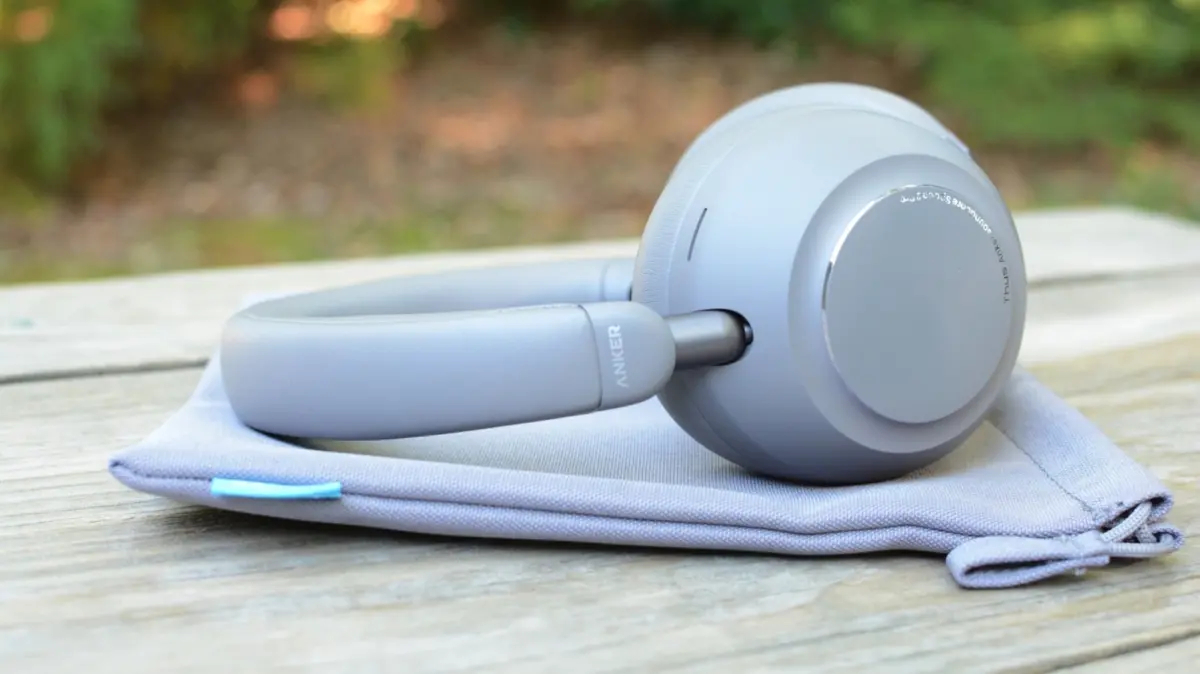
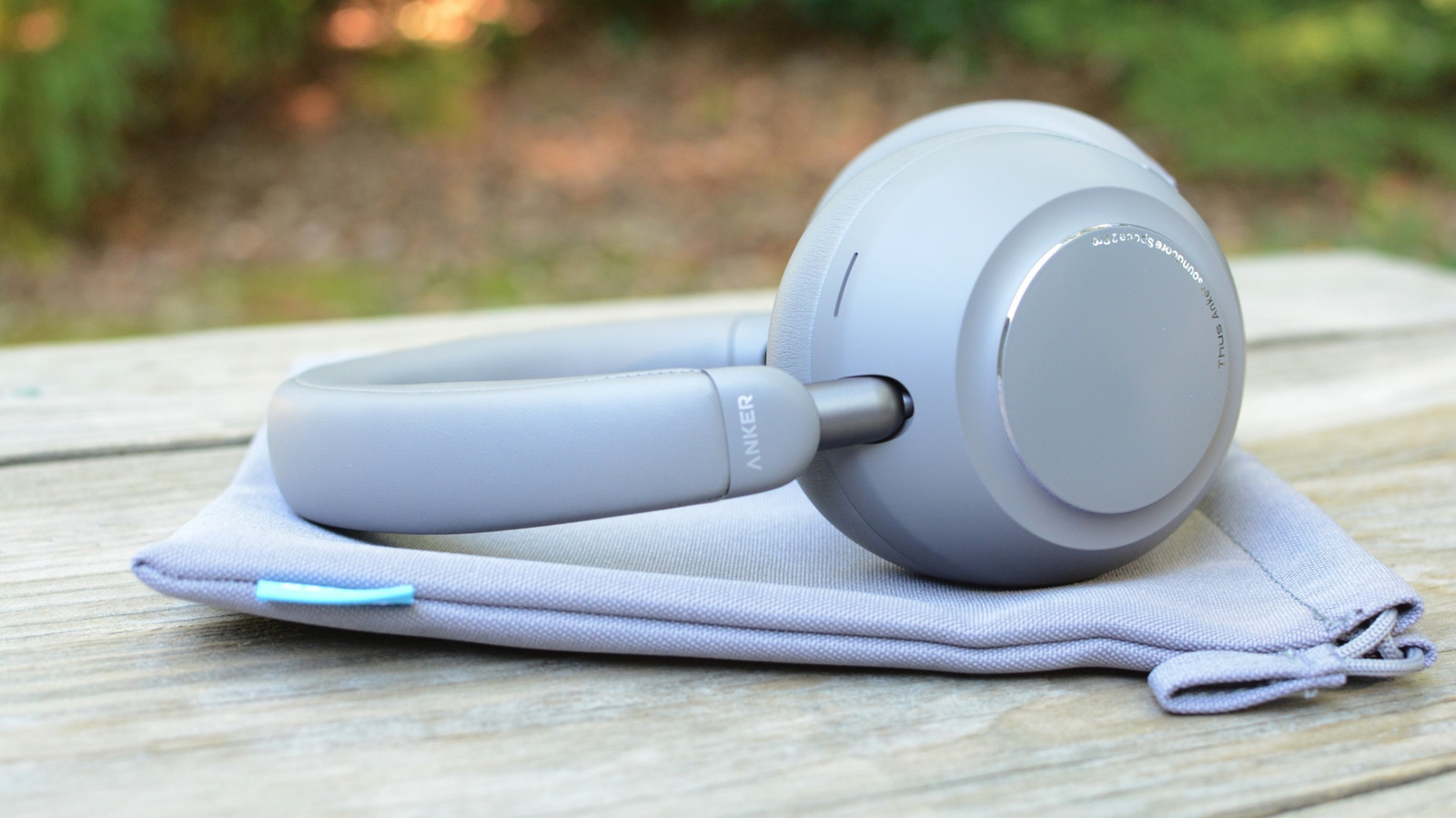
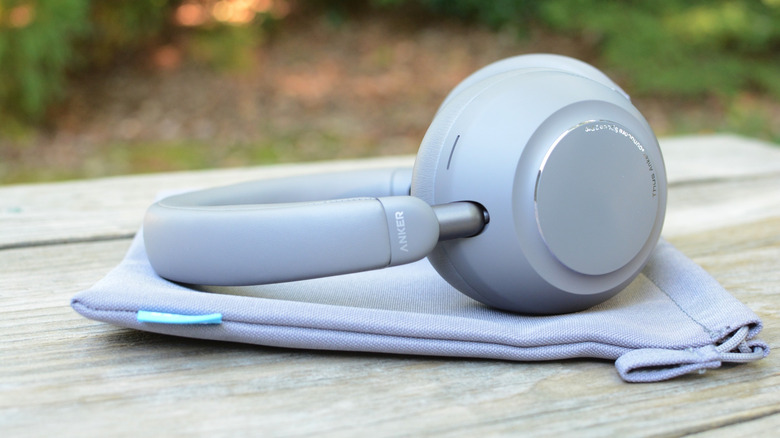
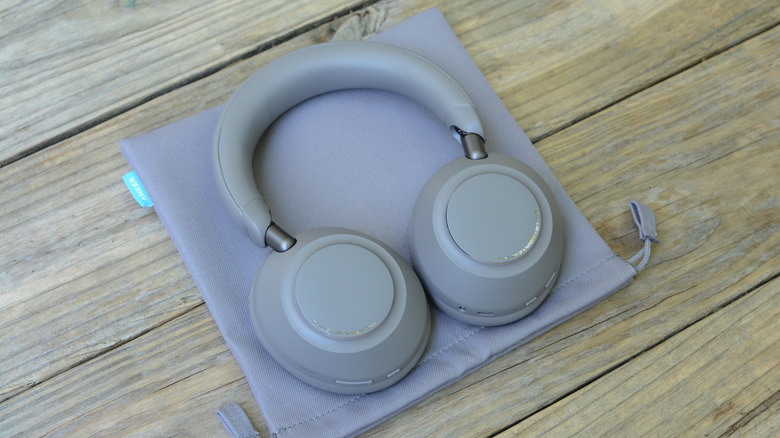
The Space 2 Pro marks a radical departure from this philosophy. Out of the box, the reviewer-tested grey variant immediately dispels any notion of a cheap build. Anker has meticulously updated the physical architecture of the Space line, favoring a refined aesthetic that blends lightweight plastics with robust metal components. The headband sliders are crafted from solid metal, ensuring structural integrity where plastic hinges historically fail, while the headband and plush ear pads are swathed in remarkably soft, supple leatherette.
Subtle metallic accents—such as the concentric rings etched into the outer ear cups and the understated, non-intrusive product branding—elevate the device’s visual identity. Unlike bulky competitors that can feel cumbersome during extended listening sessions, the Space 2 Pro manages to distribute its weight evenly, resulting in a featherlight, fatigue-free fit that rivals products costing twice as much.
Physical Controls Over Touch Captives
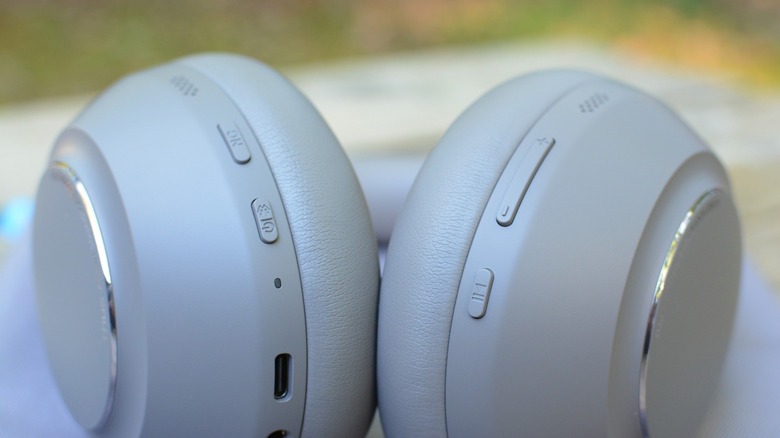
In an era where tech manufacturers stubbornly force capacitive touch panels onto every available surface—often leading to frustrating accidental inputs in the rain or cold—Anker has made a refreshing engineering choice. The Space 2 Pro relies on tactile, physical buttons for its primary controls.
Located strategically along the rims of the ear cups, these buttons offer distinct travel and click feedback. Whether a user is pausing a track, adjusting volume, or cycling through noise-canceling modes, the physical interface ensures zero guesswork. This design choice highlights a broader consumer-first mentality: prioritizing functional reliability over bleeding-edge gimmicks that ultimately degrade the user experience.
Supporting Context & Acoustic Metrics
The Engineering Behind the Sound: 35mm Dual-Material Drivers
Beneath the sleek exterior lies a carefully engineered acoustic chamber. The Space 2 Pro utilizes custom 35mm dynamic drivers constructed from a dual-material composite. This technical choice is deliberate: by combining different rigidity profiles within a single diaphragm, Anker aims to maximize high-end frequency clarity without sacrificing the subterranean low-end response that modern listeners demand.
In real-world testing across diverse musical genres, this dual-material approach yields dividends. Consider Mastodon’s complex progressive metal track "Marrow Deep." On lesser headphones, the dense wall of distortion can quickly muddy the mix, turning intricate arrangements into a sonic blur. Through the Space 2 Pro, Brann Dailor’s double-kick drums project a powerful, resonant boom, while Troy Sanders’ bass guitar anchors the foundation. Crucially, Anker’s tuning delivers what the company calls "crystalline highs," allowing Bill Kelliher’s guitar leads and layered synthesizers to slice cleanly through the heavy mix without inducing listening fatigue.
The acoustic separation scales impressively when transitioning to acoustic and vocal-forward arrangements. Listening to Zach Bryan’s “Lies” (featuring Lana Del Rey), the Space 2 Pro showcases micro-details that are frequently obscured in the $200 bracket. The delicate interplay of piano chords, finger-picked acoustic guitars, and a swelling string section floats effortlessly in a three-dimensional soundstage, receding gracefully to allow the interwoven, melancholic vocal harmonies of Bryan and Del Rey to take center stage.
The Thus AI Chip and the Call-Quality Revolution
Perhaps the most notable hardware advancement in the Space 2 Pro is the integration of the Thus AI chip, working in tandem with a sophisticated six-microphone array (expanding to eight microphones for ambient tracking in the Adaptive ANC 3.0 suite).
Anker made waves—and captured a Guinness World Record—by marketing these as the "clearest over-ear headphones for calls." In audio tech, marketing hyperbole is common, but real-world testing validated the claim with astonishing clarity.
Traditional noise-canceling headsets often utilize aggressive gating algorithms that suppress background noise by heavily compressing the user’s voice, resulting in a metallic, robotic artifacting that sounds distinctly unnatural. The Space 2 Pro bypasses this pitfall entirely. During field tests involving bustling urban environments and windy outdoor corridors, the Thus chip successfully isolated spoken word from environmental chaos. Call recipients reported that the audio remained remarkably natural, warm, and clear, lacking the digital muffling typical of mid-tier Bluetooth headsets. Users might sound minutely processed under extreme duress, but they never sound like digitized androids.
Battery Life: Exceeding Manufacturer Claims
Battery anxiety remains a persistent friction point in wireless audio. Anker has historically excelled in power management, and the Space 2 Pro continues this legacy.
The company officially rates the battery life at up to 30 hours with Active Noise Cancellation (ANC) enabled, and up to a staggering 60 hours with ANC completely disabled.
During rigorous hands-on testing—conducted with ANC active roughly 95% of the time, alongside intermittent voice calls requiring temporary shifts to transparency mode—the headphones finally depleted their charge at 31 hours. This performance not only meets Anker’s conservative specifications but easily outpaces many legacy flagships that require daily midday top-ups.
Critiques & Shortcomings
Despite its many triumphs, the Space 2 Pro is not an unalloyed masterpiece. An analysis of its weaker points reveals several areas where software implementation and ambient processing fall short of true flagship status.
Software Customization and HearID 5.0
Powered by the Thus chip, Anker includes HearID 5.0—a software feature housed within the Soundcore companion app that administers a personalized hearing test to dynamically mold an EQ profile suited to the user’s unique auditory sensitivities.
Unfortunately, the real-world utility of HearID 5.0 is underwhelming. Across multiple testing profiles, the resulting custom tuning offered negligible subjective improvement over Anker’s stock acoustic profile. Similarly, the onboard spatial audio simulations and curated EQ presets felt overly aggressive, frequently skewing tonal balance. After experimenting with these digital enhancements, testers consistently gravitated back to the default out-of-the-box sound signature, rendering the software suites largely superfluous.
Adaptive ANC 3.0: A Mixed Bag
While Anker’s voice-isolation call technology is industry-leading, the Adaptive ANC 3.0 suite yields mixed results when tasked with general environmental noise cancellation.
Anker explicitly highlights the headphones’ capability to neutralize office chatter and mechanical keyboard clicks into "instant silence." In practice, the Space 2 Pro handles human voices and sharp, transient high-frequency sounds with commendable efficiency. However, it stumbles significantly when confronted with continuous, low-frequency ambient rumble—such as white noise machines, heavy traffic hums, or the steady drone of powerful industrial fans. While the ANC certainly dampens these sounds, it lacks the absolute, vacuum-like isolation achieved by Sony’s WH-1000XM5 or Bose’s QuietComfort Ultra.
The "AI Note-Taker" Conundrum
Looking toward future software expansions, Anker has teased an "AI Note-Taker" feature on the Space 2 Pro’s provisional spec sheet—a capability borrowed from its higher-end sibling, the Liberty 5 Pro Max earbuds (which house an AI assistant directly inside a touchscreen charging case).
The inclusion of this feature on over-ear headphones introduces two distinct hurdles:
- Ergonomic Inconvenience: Wearing bulky over-ear headphones in a professional boardroom meeting to record and transcribe audio is considerably more conspicuous and awkward than sliding a compact earbud charging case to the center of a conference table.
- Subscription Friction: Anker’s transcription and cloud storage ecosystem operates on a restricted freemium model. Users are allotted a paltry two hours of transcriptions and 10,000 minutes of audio storage monthly for free, restricted to a two-year window. Beyond that promotional period, ongoing subscriptions range from $8.33 to $20 per month (billed annually).
Because this feature remains "TBD" and has not fully rolled out, its current absence does not detract from the hardware’s immediate value, but prospective buyers should approach future cloud-locked AI utilities with cautious skepticism.
Future Outlook & Market Implications
The release of the Anker Soundcore Space 2 Pro signals a broader, maturation-phase shift within the consumer audio landscape. For years, heritage audio brands relied on brand equity and massive marketing budgets to sustain exorbitant profit margins on flagship hardware.
By delivering premium metallic aesthetics, plush comfort, class-leading call clarity via the Thus AI chip, and reliable 30-hour battery life for just $200, Anker is fundamentally altering consumer expectations. The message to legacy manufacturers is stark: the performance gap between a $200 pair of headphones and a $450 pair is shrinking at an exponential rate.
For the everyday consumer, the Space 2 Pro represents a paradigm shift
in value. While audiophiles seeking uncompromising, absolute-best-in-class active noise cancellation or deeply customizable spatial immersion may still gravitate toward the traditional $400+ heavyweights, anyone whose priority list centers on build quality, rich bass, vocal clarity, and affordability will find the Space 2 Pro an exceptionally compelling proposition.
Anker has proven that Soundcore is no longer merely a budget alternative for the frugal shopper; it is a legitimate heavyweight contender forcing the entire industry to rethink how much high-end audio should cost.