Executive Overview
Jeff Bezos’s aerospace venture, Blue Origin, has officially suffered a significant setback in the development and operational rollout of its flagship heavy-lift vehicle, the New Glenn rocket. According to internal corporate communications reviewed by industry analysts, the eagerly anticipated next launch of the New Glenn has been officially postponed from its originally forecasted 2026 window into January 2027.
The delay is the direct result of a catastrophic ground-test anomaly that occurred earlier this year in May 2026, when a New Glenn rocket catastrophically exploded on its designated launchpad at Space Launch Complex 36 (SLC-36) in Florida. While initial executive optimism suggested that the ensuing infrastructure damage could be rapidly mitigated—with leadership promising a return to the launchpad before the close of 2026—the sheer complexity of heavy aerospace repairs, compounded by adverse local weather patterns, has ultimately forced a recalibration of the timeline.
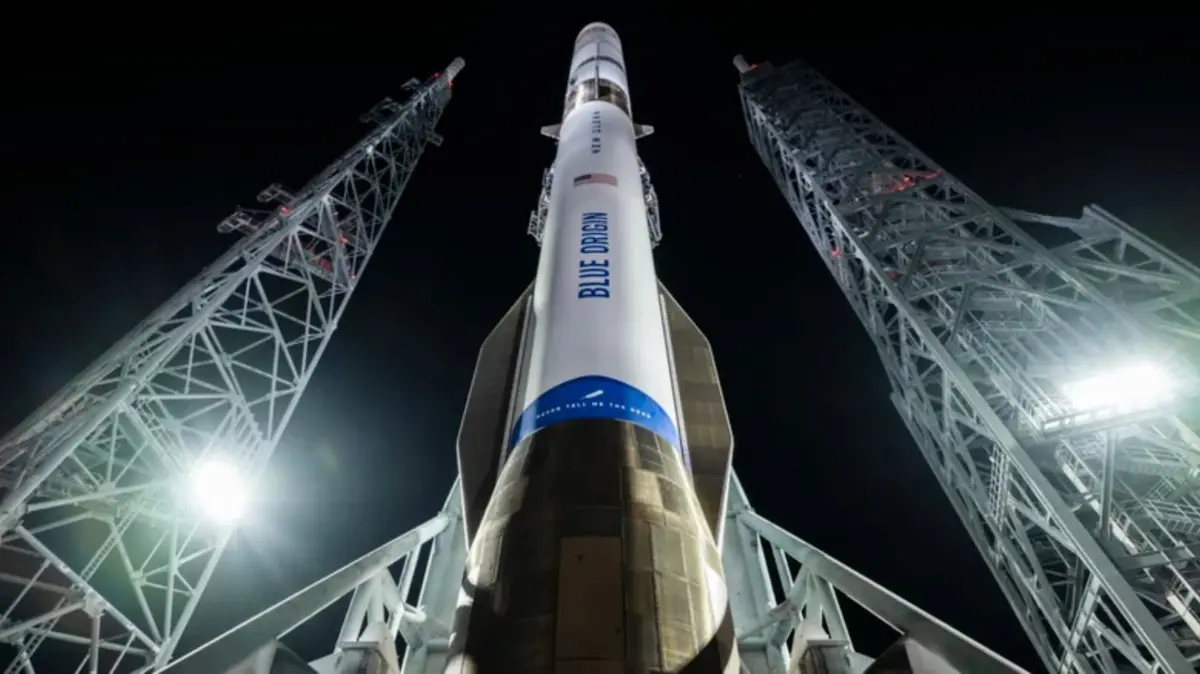
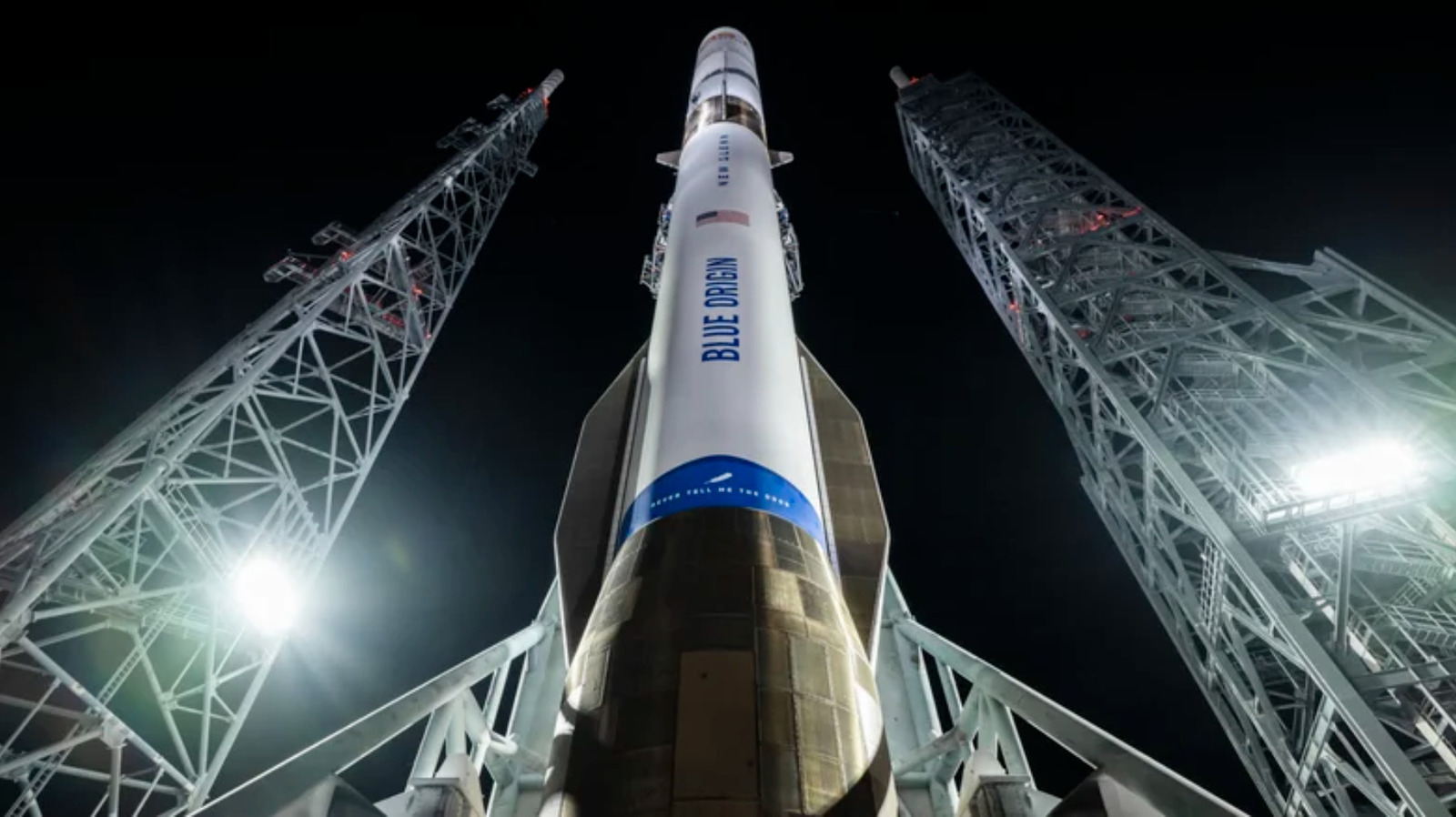
Despite the setback, Blue Origin’s executive leadership, spearheaded by CEO Dave Limp, has heavily praised the engineering workforce for achieving an unprecedented pace of infrastructure rehabilitation. In just a matter of months, teams have managed to reconstruct core elements of the launch mount, Vehicle Access Tower (VAT), and launch bridge.
Nevertheless, the delay has far-reaching implications. Beyond Blue Origin’s internal ambitions, the slip directly affects key institutional and commercial commitments, including vital infrastructure support for NASA’s interplanetary exploration objectives and the aggressive deployment schedule for Amazon’s Project Kuiper low-Earth orbit (LEO) satellite constellation. As the aerospace industry watches closely, Blue Origin stands at a critical juncture: transitioning from a developmental space tourism and suborbital enterprise into a dominant heavy-lift orbital logistics provider.
Detailed Chronology: From Pad Explosion to 2027 Delay
To understand the current trajectory of Blue Origin’s heavy-lift program, it is essential to retrace the timeline of events that began in the spring of 2026 and culminated in the recent announcement regarding the 2027 slip.
The May 2026 Catastrophe
The friction point in Blue Origin’s development schedule occurred during a routine hot-fire test campaign in May 2026. Hot-fire tests—wherein a rocket’s primary engines are ignited while the vehicle is firmly secured to the launch mount—are standard milestones designed to verify propulsion system integrity, fluid dynamics, and avionics synchronization immediately prior to maiden flight operations.
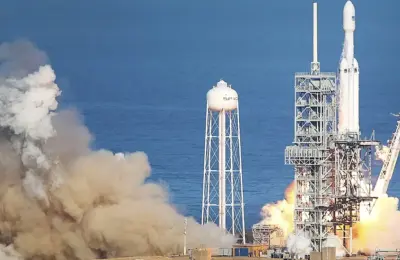
During the May test at Space Launch Complex 36 at Cape Canaveral Space Force Station, a severe anomaly transpired, culminating in an explosion on the pad. The blast generated intense thermal and kinetic energy, heavily impacting the surrounding ground support equipment, the launch mount, and the delicate umbilical connections bridging the infrastructure to the rocket. Fortunately, because the test was conducted remotely as per standard safety protocols, no injuries were reported among the ground crew. However, the physical toll on the pad infrastructure was immediate and severe.
Initial Optimism and Executive Projections
In the immediate aftermath of the May incident, Blue Origin leadership sought to reassure both internal stakeholders and external partners. Shortly after the explosion, executive communications struck a tone of resilience and aggressive recovery. Company leadership publicly asserted that the architectural architecture of SLC-36 was designed with redundancy and modularity in mind, forecasting that repair work would proceed at a rapid clip.
At the time, executives floated optimistic timelines suggesting that the launchpad could be brought back to operational status within a matter of months, theoretically clearing the path for the inaugural New Glenn flight to occur before the end of 2026. This aggressive stance was viewed by many industry observers as an ambitious attempt to maintain momentum in a fiercely competitive commercial launch market dominated by rivals such as SpaceX.
The Reality Check: Internal Memo and the 2027 Slip
The optimism of mid-2026, however, collided with the unforgiving realities of heavy civil engineering and aerospace refurbishment. According to an internal corporate memo authored by CEO Dave Limp—which was first brought to public attention via reporting by the Financial Times—the target launch window has officially drifted into January 2027.
The memo provided a transparent look at the state of repairs at SLC-36. Limp noted that while critical milestones had been met, the compounded friction of logistical challenges and environmental hurdles made a 2026 return to flight untenable. The decision to officially push the date into January 2027 prioritizes long-term safety, rigorous system certification, and structural verification over rushed deadlines, signaling a maturing operational philosophy within the Bezos-backed firm.
Supporting Context & Metrics: Infrastructure Rehabilitation and Engineering Hurdles
Rebuilding a heavy-lift launchpad capable of servicing an orbital-class vehicle like the New Glenn is an engineering feat of immense proportions. The sheer scale of the infrastructure required to support a rocket standing nearly 98 meters tall introduces unique vulnerabilities when an explosion occurs on the pad.
Infrastructure Repairs: The Vehicle Access Tower and Launch Bridge
In his internal memo, CEO Dave Limp outlined the significant structural achievements accomplished by the recovery crews over the preceding six months. Among the most critical components restored are:
- The Vehicle Access Tower (VAT): The towering gantry structure responsible for sheltering the rocket, providing vertical integration support, and housing critical power and data lines has been fully repaired and structurally restacked.
- The Launch Bridge: The heavy-duty structural arm that spans the distance between the fixed tower and the mobile launch platform has been successfully restored following blast damage.
- Launch Mount and Umbilicals: The interface points where cryogenic propellants, high-pressure gases, and electrical systems feed into the rocket have undergone extensive metallurgical inspection, non-destructive testing (NDT), and replacement where micro-fracturing was identified.
The Environmental Factor: Weather Disruptions
A primary culprit behind the timeline stretching past the initial late-2026 projections has been environmental and meteorological interference. Florida’s Space Coast is notoriously volatile, subject to tropical storm systems, heavy seasonal rainfall, high-wind events, and lightning activity.
Heavy construction, crane operations, and precision welding required for aerospace infrastructure repair cannot proceed safely under adverse weather conditions. Limp explicitly credited local weather challenges as a major driver for the fixes happening slower than originally hoped. Despite these delays, the CEO was quick to praise the workforce—affectionately dubbed "Team Blue"—noting that the rehabilitation of a heavily damaged orbital pad in roughly half a year is an accomplishment that many traditional aerospace entities would have projected to take multiple years.
"Your collective work on our return to flight has been nothing short of remarkable," Limp wrote in the memo. "In just six months, Team Blue has accomplished what many thought would take years."
Official Statements and Industry Reactions
The cascading implications of the New Glenn delay have reverberated throughout the commercial space sector, prompting responses from corporate leadership, defense analysts, and institutional partners alike.
Dave Limp’s Internal Messaging
Dave Limp’s leadership style, characterized by a pragmatic focus on execution and transparency, was on full display in the recent memo. By framing the six-month recovery period as a historic engineering triumph rather than a demoralizing delay, Limp sought to maintain high morale among engineers and technicians who have worked around the clock since the May anomaly. The messaging emphasizes that rushing a heavy-lift vehicle to the pad serves no strategic purpose if it compromises the ultimate reliability of the system.
Market and Competitor Perspectives
Industry analysts have noted that while the delay to January 2027 is undeniably a blow to Blue Origin’s near-term revenue generation and market positioning, it is a prudent risk-mitigation strategy. The heavy-lift launch market is currently experiencing a period of intense transformation. With SpaceX’s Starship achieving rapid developmental iterations and legacy providers managing established manifests, Blue Origin cannot afford a catastrophic failure on New Glenn’s maiden flight. An extra buffer of two to three months dedicated to exhaustive avionics checks and pad validation is a small price to pay to protect a multi-billion-dollar flight asset.
Future Outlook: Strategic Implications for NASA, Amazon, and Beyond
The successful debut of the New Glenn rocket in January 2027 is not merely a milestone for Blue Origin; it is a critical linchpin for several major national space initiatives and multi-billion-dollar commercial constellations.
NASA Contracts and Interplanetary Ambitions
Blue Origin’s ambitions extend far beyond low-Earth orbit. In September 2026, the company secured a highly competitive and prestigious contract from NASA to design, develop, and deploy an advanced telecommunications network tailored specifically for Mars. This mission architecture relies heavily on the heavy-lift capacity and fairing volume of the New Glenn rocket to transport deep-space relay hardware and orbital insertion modules. Any disruption to the New Glenn maiden flight schedule ripples downstream into NASA’s long-term planetary science and communication roadmaps, making the January 2027 launch date a hard deadline for these interplanetary preparations.
Powering Amazon’s Project Kuiper (LEO)
Perhaps the most immediate commercial pressure facing the New Glenn program stems from its sister corporate relationship with Amazon. Jeff Bezos’s retail and technology titan is aggressively building out Project Kuiper, a massive low-Earth orbit (LEO) satellite broadband constellation designed to compete directly with SpaceX’s Starlink service.
Amazon has booked a heavy manifest of launches across multiple providers—including United Launch Alliance, Arianespace, and Blue Origin—to loft thousands of satellites into orbit over the coming years. New Glenn’s immense payload capacity makes it a cornerstone of the Kuiper deployment strategy. Every month that New Glenn remains grounded on the pad places additional strain on Amazon’s regulatory milestones and deployment quotas mandated by the Federal Communications Commission (FCC). Consequently, the space and tech industries will be closely monitoring Cape Canaveral as January 2027 approaches.
Conclusion
Blue Origin’s path to the stars has encountered a formidable bump in the road. The May 2026 launchpad explosion served as a stark reminder of the unforgiving physics of rocket development. Yet, the resilience demonstrated by Team Blue in rebuilding SLC-36 within a six-month window highlights the company’s growing industrial maturity. As the calendar turns toward January 2027, all eyes will be fixed on Space Launch Complex 36 to see if New Glenn can finally thunder off the pad, ushering in a new era of heavy-lift capability for commercial enterprise and scientific exploration alike.