Executive Overview
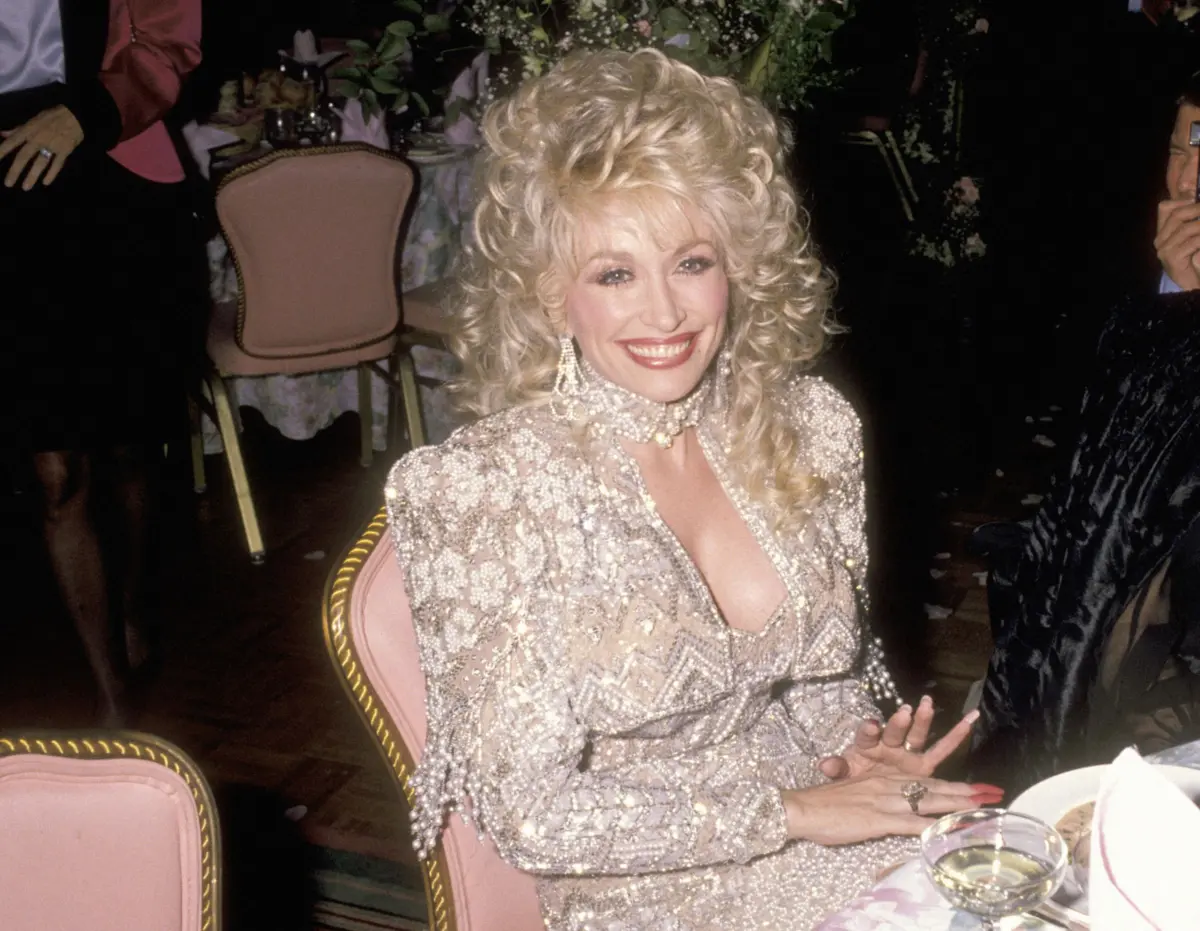
The internet mourning period following the death of legendary American singer, songwriter, and philanthropist Dolly Parton was swiftly overtaken by a volatile wave of digital misinformation. Parton, who passed away at the age of 80 following what her family described as a brief battle with cancer, had long commanded universal affection across cultural and political divides. Yet, within hours of her passing, platforms like X (formerly Twitter), Facebook, and YouTube became incubators for baseless, highly elaborate conspiracy theories.
Rather than serving solely as a space for collective grief, these digital ecosystems fractured into alternative narratives. The most prominent claims falsely attributed her death to "turbo cancer" brought on by the COVID-19 vaccine, while others spun more bizarre tales involving satanic rituals, secret societies, and cloning.
This phenomenon highlights a disturbing modern trend: the weaponization of celebrity deaths by fringe political pundits, health contrarians, and algorithmic engagement-farmers. Parton’s death serves as a case study in how deeply entrenched post-pandemic skepticism has warped baseline human empathy, transforming the legacy of a beloved cultural icon into a canvas for ideological projection.
Detailed Chronology of an Infodemic
From Public Health Advocate to Digital Target
Dolly Parton’s relationship with COVID-19 mitigation efforts was both prominent and well-documented. In 2020, at the height of the initial pandemic wave, the country music legend donated $1 million to Vanderbilt University Medical Center, funds that directly aided in the foundational research for the Moderna mRNA vaccine.
A year later, in March 2021, Parton documented herself receiving the vaccine on camera. With characteristic charm and cultural savvy, she adapted her classic hit Jolene, singing:
"Vaccine, vaccine, vaccine, vaccine, I’m begging of you, please don’t hesitate."
At the time, her public endorsement was widely praised as a masterclass in non-partisan public health messaging, leveraging her immense popularity to encourage vaccine uptake among hesitant demographics, particularly older Americans and rural populations.
However, this exact advocacy turned Parton into a prime target for anti-vaccine influencers. According to Travis View, cohost of the QAnon Anonymous podcast, Parton’s universal appeal made her uniquely vulnerable to online conspiracists. "Many anti-vaccine conspiracy theorists despised Parton because she not only encouraged others to get the vaccine, she even helped fund vaccine development," View explains.
The Amplification Phase: Pundits and Payouts
Following the May disclosure that Parton was responding well to treatments related to her immune and digestive systems, and her subsequent death from cancer, right-wing media figures and independent influencers immediately seized the narrative.
Far-right radio host Wayne Allyn Root took to X to cast immediate doubt on the circumstances of her passing. "Was Dolly Parton yet another Covid vaccine victim?" Root wrote, pointing to her televised vaccination and past public advocacy. "She took the vaxx on TV… Now she’s dead of cancer. This sounds like another case of ‘turbo cancer. RIP Dolly."
Root’s commentary was swiftly mirrored by other prominent anti-establishment figures. Toby Rogers, an affiliate of the Brownstone Institute—a think tank founded to oppose pandemic restrictions—posted that while Parton thought she was doing the right thing by backing the Moderna shot, "it very well may have killed her."
Simultaneously, health influencers with hundreds of thousands of followers, such as Valerie Anne Smith, began piecing together pseudoscientific timelines. Smith falsely claimed that Parton had developed severe autoimmune, liver, and kidney issues immediately following her inoculation, framing her eventual death as a direct biochemical consequence of the shot.
Supporting Context & Metrics: The Mechanics of Digital Misinformation
The spread of misinformation surrounding Parton’s death was not a localized phenomenon; it was structurally amplified by the architecture of modern social media platforms.
Cross-Platform Narrative Migration
While X served as the primary command center for anti-vaccine punditry, Facebook and YouTube hosted divergent yet overlapping strains of conspiracy.
On Facebook, conspiratorial energy focused heavily on a video Parton recorded just weeks prior to her death. In the clip, she thanked pop superstar Taylor Swift and NFL star Travis Kelce for a $2 million donation to her childhood literacy charity, the Imagination Library, jokingly asking for their "firstborn" child.
Conspiracy theorists isolated a split-second frame of Parton moving her hands, claiming the motion constituted a "devil horns" sign. This still image was shared across hundreds of Facebook groups, accumulating tens of thousands of interactions. An anonymous X account operating under the moniker "Red Pill USA" posted the frame alongside the claim that Parton was flashing satanic symbols, generating nearly 1 million views.
On YouTube, fringe commentators like David Nino Rodriguez dedicated entire broadcasts to framing Parton’s death not merely as a medical tragedy, but as a "prophetic marker for what comes next," weaving her philanthropy, her public support for LGBTQ+ rights, and her vaccination status into a grand narrative of esoteric subversion.
The Psychology of "Standard-Issue Brain Rot"
Mike Rothschild, an author and expert on contemporary conspiracy theories, notes that while Parton’s case featured unique triggers—such as her vocal pro-vaccine stance—the underlying mechanics reflect a broader societal decay in information processing.
"Some of these theories came specifically from her advocacy for the Covid vaccine and gay rights, and they’re pretty rare when balanced with the outpouring of love," Rothschild explains. "But a lot of what was said about Dolly was just standard-issue brain rot. There is a small part of the internet that now believes nobody dies without some involvement from the Covid vaccine, trafficking, or Satanism."
This mindset relies on pattern-matching confirmation bias. In the eyes of chronic online conspiracists, natural mortality has been effectively canceled; every high-profile death must be retrofitted into an ongoing ideological war against public health institutions, global elites, or supernatural forces.
Official Statements and Institutional Context
Medical professionals, cancer research organizations, and public health officials have repeatedly debunked the concept of "turbo cancer"—a non-medical term invented by anti-vaccine activists to describe rapid cancer progression allegedly triggered by mRNA vaccines. Comprehensive epidemiological studies involving millions of patients have found no causal link between COVID-19 vaccines and the development, recurrence, or acceleration of oncological diseases.
Furthermore, the timing of Parton’s death coincides with an increasingly tense public health landscape marked by the weaponization of vaccine skepticism at the federal level. The Brownstone Institute, cited by figures like Toby Rogers, maintains deep ideological and personal ties to figures within the orbit of Health Secretary Robert F. Kennedy Jr.
While Kennedy did not comment directly on Parton’s death, his ongoing public relations strategy has consistently undermined trust in immunization frameworks. Notably, in the same week as Parton’s passing, Kennedy publicly blamed COVID-19 lockdowns for measles-related complications following the tragic deaths of two unvaccinated individuals in Pennsylvania—a rhetorical pivot that public health experts criticized as an attempt to deflect from falling vaccination rates.
Parton’s family, meanwhile, maintained a dignified silence regarding the digital circus surrounding her passing, focusing instead on celebrating her life, her monumental contributions to country music, and her decades of humanitarian work.
Future Outlook: Protecting Legacies in the Age of Synthetic Panics
The digital desecration of Dolly Parton’s passing points to a grim reality for public figures in the 21st century: death no longer offers sanctuary from political warfare. As long as algorithmic architectures reward engagement generated by outrage, fear, and division, every major cultural event will be hijacked by actors eager to monetize distrust.
The normalization of these conspiracy theories carries long-term societal costs. When the death of an institutionally trusted, universally adored figure like Parton is immediately subverted into a tool for anti-science propaganda, it degrades the shared baseline of objective reality required for a functioning public sphere.
Mitigating this form of digital contamination will require more than algorithmic fact-checking labels; it demands a concerted effort across digital platforms, media literacy programs, and civic institutions to rebuild public trust in empirical science and basic human decency. Until then, the internet remains a space where even a life as luminous and charitable as Dolly Parton’s can be momentarily eclipsed by the darkest corners of collective paranoia.