The landscape of television superhero adaptations is undergoing a profound structural evolution. Within James Gunn and Peter Safran’s newly minted DC Universe (DCU), HBO’s gritty investigative drama Lanterns has rapidly established itself as the most talked-about property of the television season. Following a polarizing series premiere that upended decades of comic book lore by abruptly dispatching the legendary Green Lantern Hal Jordan (played by Kyle Chandler), the second episode shifts gears, blending small-town noir with sweeping cosmic implications.
Showrunner Chris Mundy and his creative team have deliberately chosen a slow-burn narrative approach, grounding the early episodes in the rural expanse of Rushville, Nebraska. However, the closing moments of Episode 2 shattered any illusions that the series would shy away from its interstellar roots. Culminating in a breathtaking journey to Oa—the stronghold of the Guardians of the Universe—and an ominous prison rendezvous with the fallen mentor-turned-arch-nemesis Sinestro (Ulrich Thomsen), the episode redefines the emotional and geographical stakes of the series.
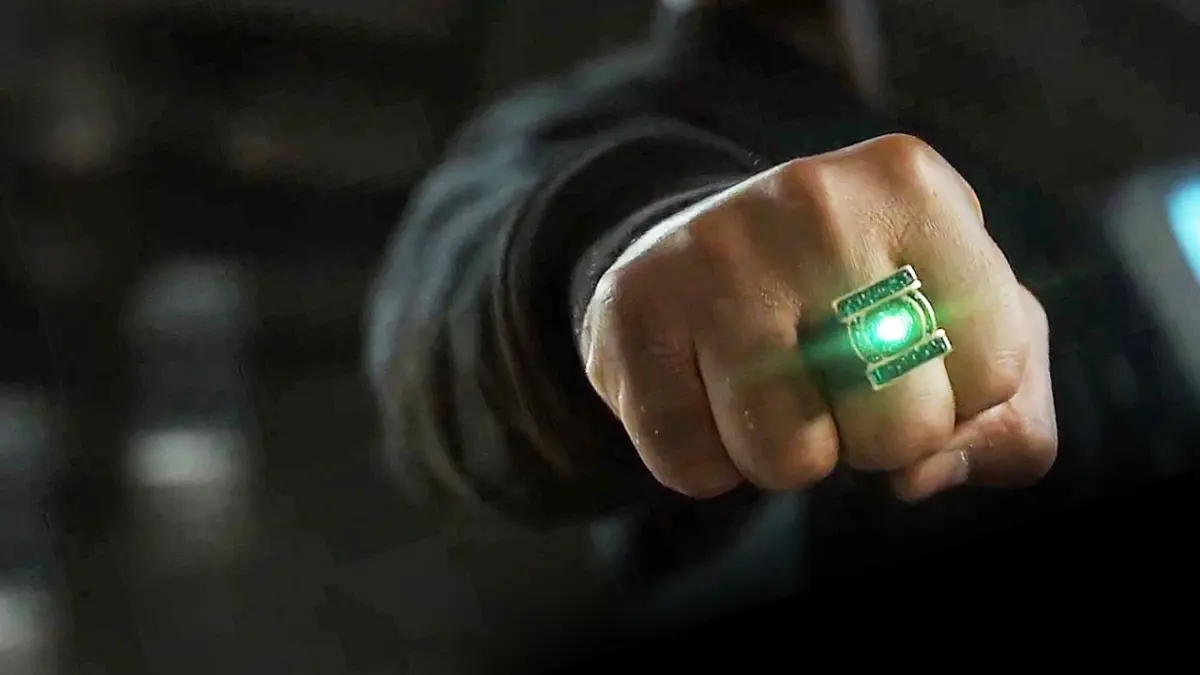
At the heart of this creative gamble is a distinct philosophy regarding the Green Lantern ring itself. Far from acting as a limitless, flashing special effect used in every scene, the ring is treated as a rare, consequential instrument. In an exclusive breakdown of the episode’s pivotal moments, Mundy unpacks the intentional restraint exercised by the writers’ room, the psychological weight carried by the ring-bearers, and how the series manages the delicate balance between grounded detective work and space-faring opera.
To understand the weight of Lanterns Episode 2, one must trace the meticulously constructed pacing that precedes its explosive finale. The series premiere famously generated immense debate across fan communities for its tonal shift and the stunning death of Hal Jordan—set within the series’ 2026 timeline—which left junior partner John Stewart (Aaron Pierre) to navigate the complex legacy of his predecessor.
Episode 2 recalibrates the narrative focus, stepping back to a 2016 timeline to examine the foundational mysteries of the region. Much of the runtime is dedicated to a classic, earthbound mystery. Hal Jordan, operating in the jurisdiction of Sheriff Kane (Kelly Macdonald), finds himself entangled in localized intrigue, while John Stewart is dispatched on an errand to secure his mentor’s iconic lantern. The atmosphere evokes a neo-noir detective thriller rather than a bombastic cosmic spectacle. This stylistic choice initially drew mixed reactions from purists longing for immediate ring-slinging heroics, but the structural patience serves a distinct narrative purpose.
The turning point arrives in the latter third of the episode. Following a tense briefing where John details his terrifying encounter with shape-shifting aliens disguised as humans—led by the enigmatic Antaan (Paul Ben-Victor)—Hal reaches a critical breaking point. Recognizing the severity of the emerging extraterrestrial threat, Hal finally suits up in his full Green Lantern regalia, putting aside his cynical reluctance.
Rather than leaping into a localized skirmish, Hal takes to the stars. The sequence is a visual triumph, depicting the Green Lantern soaring past the exosphere and traversing deep space until he reaches Oa. The destination carries immense emotional and narrative gravity. Hal seeks out neither the Guardians nor a standard tactical briefing; instead, he confronts his former mentor and ultimate adversary, Sinestro. Incarcerated following his catastrophic descent into tyranny years prior, Sinestro’s ominous presence immediately elevates the series from a planetary mystery into a complex, multi-layered space opera.
+-----------------------------------------------------------------+
|                       EPISODE 2 ARC                             |
+-----------------------------------------------------------------+
  [ Grounded Detective Work ] ---> [ Alien Encounter Revealed ]
              |
              v
  [ Hal Suits Up for Space ]  ---> [ Voyage to Oa & Sinestro ]
Supporting Context & Metrics: The Philosophy of the Ring
The decision to limit the overt displays of power in the opening hours of Lanterns was not born from budget constraints or a lack of imagination; rather, it was a deliberate narrative strategy executed by the show’s creative architects. In comic books and previous cinematic adaptations, the Green Lantern ring has frequently been utilized as an all-powerful "magic wand" capable of generating any construct imaginable. In the gritty, prestige-television framework of the DCU, however, such ubiquity would neuter the tension.
Showrunner Chris Mundy points to a specific piece of dialogue from the pilot episode to encapsulate this mindset. "It’s like Kyle says in the bar in the pilot, ‘When and where to use the ring is the whole ballgame,’" Mundy notes. This mantra dictates every narrative beat involving the cosmic weaponry. The writers understood that if the ring appeared constantly to solve minor inconveniences, the audience would lose its sense of awe and danger.
Metrics of Restraint: The Evolution of Ring Usage
The Micro Level: The series introduces the ring’s capabilities through mundane, almost playful interactions—such as manipulating a simple $20 bill. This grounds the power in everyday reality, establishing early rules for how the artifact interacts with the physical world.
The Middle Tier: As investigations deepen in Rushville, the ring is deployed strictly for utility and survival, maintaining high stakes by ensuring every activation has tangible consequences for the characters’ stamina and focus.
The Macro Level: By the end of Episode 2, the realization dawns that the narrative framework can support grander, more expansive displays of cosmic power than initially anticipated.
This calibrated escalation ensures that when the ring is finally employed on a galactic scale, it feels earned. The audience has been conditioned to respect the artifact’s destructive and creative potential, transforming each activation from a standard action-sequence trope into an extraordinary event.
Official Statements: Behind the Scenes with Chris Mundy
Speaking candidly about the creative process behind Lanterns, Chris Mundy shed light on how the writers’ room approached the daunting task of adapting one of DC’s most storied mythologies for a prestige television format.
"That was a character thing for Hal, but it was also sort of us talking to ourselves a little bit," Mundy explains, discussing the deliberate pacing of the ring’s appearances. "We wanted to earn the times we used it in a big way. We start small and start kind of playful with the $20 bill and all those kinds of things, so that each time we used it, people trusted us, like, ‘Oh, they’re not just plastering everything with it all the time.’ It’s those characters [deciding when to use it], and then because of that, those writers who are making those characters do that thing, they know when to employ it and when not to."
The collaborative synergy between character motivation and writerly restraint formed the backbone of the production. Mundy emphasizes that spectacle was never permitted to override narrative integrity. If a scene called for a ring construct that felt unearned or out of character, the writing team rejected it in favor of character-driven drama.
Yet, as production progressed and the actors settled into their respective roles, the creative boundaries naturally expanded. "And then as we went, we realized the show could hold more of the ring’s powers than maybe we would’ve guessed at the beginning, which was great," Mundy reveals. "It felt good that we could use it a lot and it felt organic." This evolution guarantees that while the series remains deeply anchored in character study and procedural investigation, it will not shy away from the jaw-dropping cosmic scale that fans of the source material demand.
Future Outlook: What Oa and Sinestro Mean for the DCU
The implications of Lanterns Episode 2 extend far beyond the immediate confines of Rushville, Nebraska. By thrusting Hal Jordan into a high-stakes confrontation with Sinestro on Oa, the series has irrevocably expanded the horizons of James Gunn and Peter Safran’s DC Universe.
Several critical narrative threads now demand exploration as the season progresses:
The Shadow of Sinestro: Ulrich Thomsen’s portrayal of the incarcerated arch-nemesis introduces a psychological chess match to the series. Sinestro’s intimate knowledge of the Green Lantern Corps, the Guardians, and Hal Jordan himself positions him as a dangerous wildcard whose influence will likely ripple through both the 2016 and 2026 timelines.
The Extraterrestrial Infiltration: With Antaan and his shape-shifting operatives moving quietly across Earth, John Stewart and the surviving Lanterns must balance terrestrial police work with a planetary defense strategy, testing the limits of their partnership.
The Evolution of John Stewart: As Aaron Pierre’s character steps further into the responsibilities of a full-fledged Green Lantern, the philosophical divide between his cautious, tactical approach and Hal’s seasoned, world-weary recklessness will serve as the emotional crucible of the series.
As Lanterns continues to unfold, its unique synthesis of grounded detective procedural and sweeping cosmic mythology is proving to be a landmark gamble for Warner Bros. and DC Studios. By prioritizing narrative patience, earned spectacle, and complex character dynamics, the creative team has ensured that the green light burning in the dark of space is one television audiences will be watching very closely for a long time to come.