Executive Overview
For as long as role-playing games (RPGs) have been translated from tabletop rulebooks to digital displays, a fierce, occasionally vitriolic debate has raged among developers, critics, and players alike: Is turn-based combat the superior medium for tactical depth, or does real-time action—with or without pause capabilities—provide a more immersive, dynamic experience?
Few figures in the video game industry are as uniquely qualified to address this philosophical divide as Tim Cain. Best known as the primary creator and programmer of the original 1997 Fallout, Cain has spent decades navigating the complexities of game design. In a recent, deeply reflective video breakdown shared on his YouTube channel, the legendary developer waded into this perennial industry controversy. Rather than taking a tribal stance or declaring one system objectively superior, Cain has adopted a pragmatic, moderate posture. He views real-time and turn-based mechanics not as ideological battlegrounds, but as distinct, specialized design tools, each carrying its own unique advantages, pitfalls, and appropriate contexts within the broader landscape of interactive entertainment.
This feature explores Cain’s comprehensive analysis of the real-time versus turn-based debate, examining the structural pros and cons of both frameworks, analyzing the cautionary tales of dual-mode implementation, and contextualizing his insights alongside fellow industry luminaries like Josh Sawyer and James Brawley.
Detailed Chronology: The Evolution of RPG Combat Paradigms
To understand why the debate between turn-based and real-time systems remains so contentious, one must trace the evolutionary history of computer role-playing games (CRPGs).
The Tabletop Roots and Turn-Based Supremacy
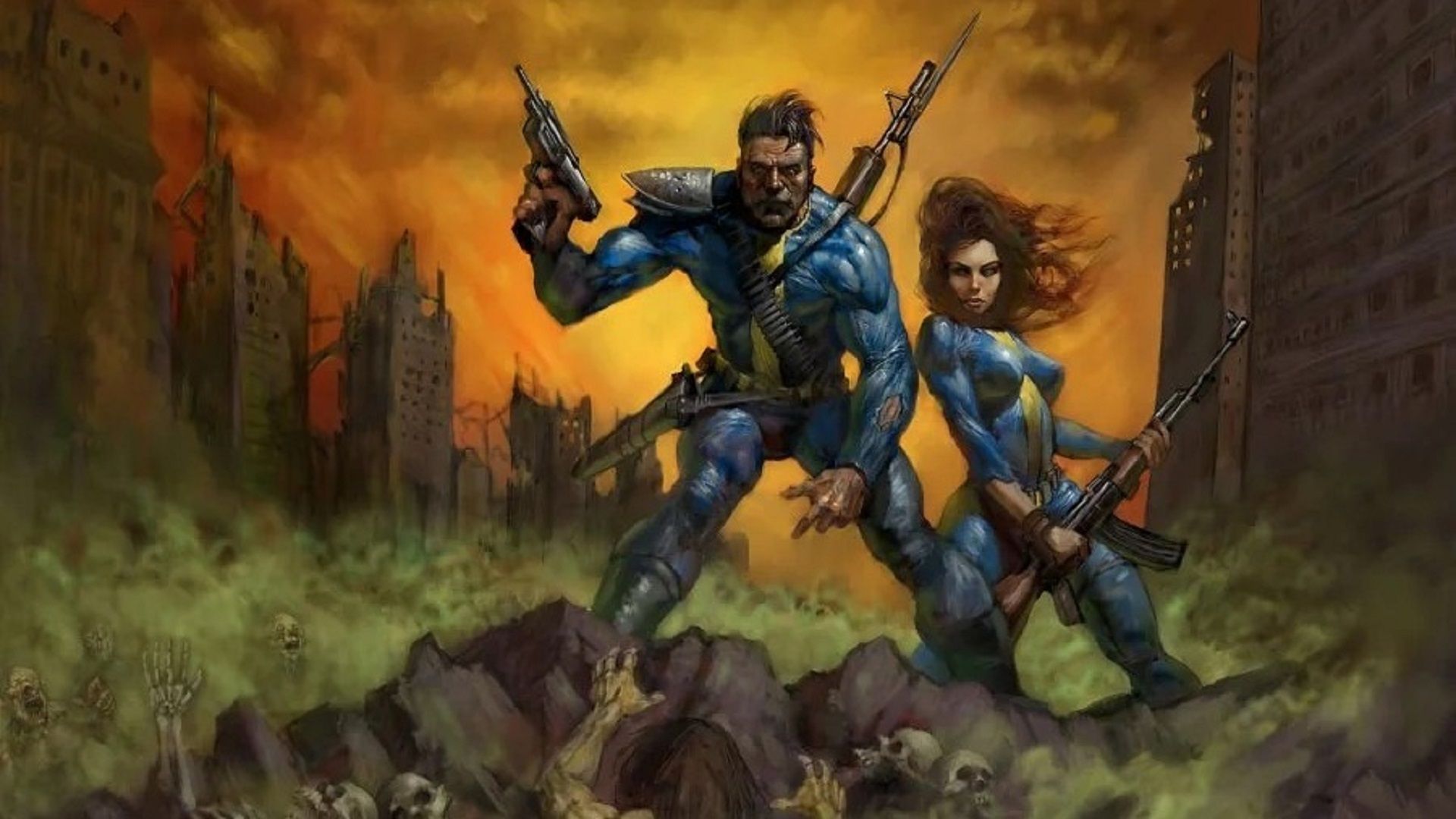
In the dawn of computer role-playing, digital design was strictly tethered to the constraints of tabletop systems like Dungeons & Dragons. Early titles embraced discrete, turn-based structures because they accurately mirrored the paper-and-dice mechanics of managing initiative, movement increments, and tactical positioning. Games like Pool of Radiance, Ultima, and eventually Cain’s own masterpiece, Fallout (1997), relied on turn-based logic to allow players ample time to weigh tactical options without the pressure of a ticking clock.
The Shift Toward Real-Time with Pause (RTWP)
As processing power increased and player expectations evolved throughout the late 1990s and 2000s, the industry experienced a seismic shift. Driven by titles like BioWare’s Baldur’s Gate (1998), developers sought to capture the breathless urgency of cinematic fantasy adventures. This gave rise to "Real-Time with Pause" (RTWP), a hybrid system where combat flows continuously in real time, but players can freeze the action at a moment’s notice to issue commands to individual party members. RTWP attempted to bridge the gap between fast-paced action and strategic party management, becoming the defining standard for western CRPGs for over a decade.
The Turn-Based Renaissance
Despite the industry’s flirtation with RTWP and full action-RPG hybrids, the pendulum has swung back dramatically in recent years. Landmark successes such as Larian Studios’ Divinity: Original Sin series and the monumental, industry-defining Baldur’s Gate 3 have proven that modern audiences voraciously consume high-budget, highly polished turn-based combat. This historical ebb and flow underscores the cyclical nature of game design trends—and highlights why veteran developers like Cain are re-evaluating the foundational mechanics of the genre.
Supporting Context & Metrics: Analyzing Cain’s Critique of Combat Mechanics
Tim Cain’s recent video commentary deconstructs the structural mechanics of both philosophies, highlighting specific friction points that developers must navigate.
The Pitfalls of Turn-Based Pacing
While turn-based systems excel at delivering clear tactical oversight, Cain points out a glaring drawback: pacing. When every single combatant—friend or foe—must execute their actions sequentially, the tempo of the game can grind to a agonizing halt.
- The "Late-Game Bloat" Phenomenon: Players experience this acutely when managing massive scale, such as reaching the modern era in a 4X grand strategy game like Civilization, or triggering a chaotic, town-wide hostile state in a dense 2D settlement in early Fallout titles.
- Repetitive Loops: As Obsidian Entertainment design director Josh Sawyer has similarly noted, turn-based systems risk falling into repetitive tactical loops late in a campaign, where players optimize a single overpowered strategy (such as targeting specific body parts repeatedly) because the underlying mathematical variation fails to keep pace with the playtime.
The Disconnect of Real-Time Adaptation
Conversely, Cain is skeptical of mechanically forcing turn-based tabletop rules into a real-time environment, even when mitigated by a pause function. He points to classic RTWP frustrations, such as queuing up a complex, multi-second Area of Effect (AoE) spell in Baldur’s Gate, only for nimble enemies to simply walk out of the designated blast radius before the incantation completes. This creates a jarring ludonarrative disconnect between the player’s strategic intent and the chaotic execution of real-time physics.
Skill Expression Versus Buildcrafting
Another focal point of Cain’s analysis centers on player agency and skill expression:
- Real-Time Demands: Real-time and unpaused systems inherently demand a higher degree of raw player dexterity, spatial awareness, and twitch-reaction speed. This raises the skill ceiling dramatically—best exemplified by extreme challenges like "The Ultimate" achievement in Pillars of Eternity, which strictly forbids both turn-based modes and pausing.
- The Purist Perspective: Cain leans toward a purist RPG philosophy. He argues that traditional role-playing experiences are best served when deep character buildcrafting, strategic planning, and statistical progression take center stage, leaving lightning-fast reflexes to dedicated action-RPG hybrids.
Official Statements and Industry Perspectives
Cain’s balanced assessment is echoed—and occasionally challenged—by other prominent figures within the development community who have grappled with these exact design choices.
The Danger of Dual-Mode Design
One of Cain’s most definitive warnings to fellow game creators is against attempting to cater to both camps by building games with switchable combat modes—a design choice seen in titles like Arcanum: Of Steamworks and Magick Obscura (which Cain co-created), Pillars of Eternity II: Deadfire, and Owlcat Games’ Pathfinder series.
"They both have their loud, vocal advocates," Cain cautions, but firmly advises developers that attempting to balance a single game for both seamless turn-based and real-time execution is "setting yourself up for a lot of work." Designing encounters, balancing action economy, and tuning monster AI for two entirely different temporal frameworks exponentially increases development overhead and often results in neither system feeling fully optimized.
Josh Sawyer on Tactical Variety
Weighing in from Obsidian Entertainment, design director Josh Sawyer has offered complementary insights regarding why turn-based combat temporarily receded during the 2000s. Sawyer attributes its dip in popularity not to an inherent flaw in turn-based philosophy, but to a historical deficit in tactical variation. When turn-based engines fail to provide meaningful environmental interactions or diverse enemy archetypes, combat quickly devolves into predictable number-crunching.
James Brawley on the Endurance of RTWP
Conversely, modern developers continue to see viability in real-time hybrids. James Brawley, lead designer on the upcoming tactical title Star Wars Zero Company, has publicly championed the resilience of RTWP, arguing that the format is far from dead and that its unique blend of strategic command and flowing tension will inevitably experience a resurgence as designers discover new ways to refine the formula.
Future Outlook: Where Does RPG Combat Go From Here?
As the video game industry marches further into an era of unprecedented graphical fidelity and complex artificial intelligence, the debate between turn-based and real-time combat is unlikely to settle into a permanent consensus. Instead, the industry appears to be moving toward a mature acceptance of specialization.
Rather than forcing monolithic engines to be all things to all players, modern developers are increasingly choosing their combat paradigm early in pre-production and designing entire game loops around it. Whether developers choose the methodical, chess-like precision of turn-based systems—as popularized by modern masterpieces—or embrace the breathless, micro-managed chaos of real-time frameworks, Tim Cain’s overarching philosophy remains the ultimate guiding light for designers: treat combat mechanics as purposeful tools, respect the player’s time, and build systems that genuinely serve the core fantasy of the world you are creating.