Executive Overview
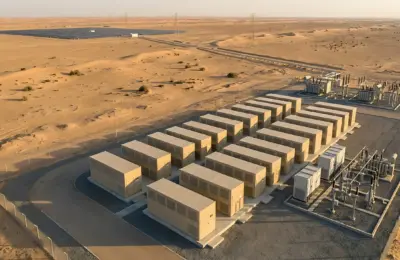
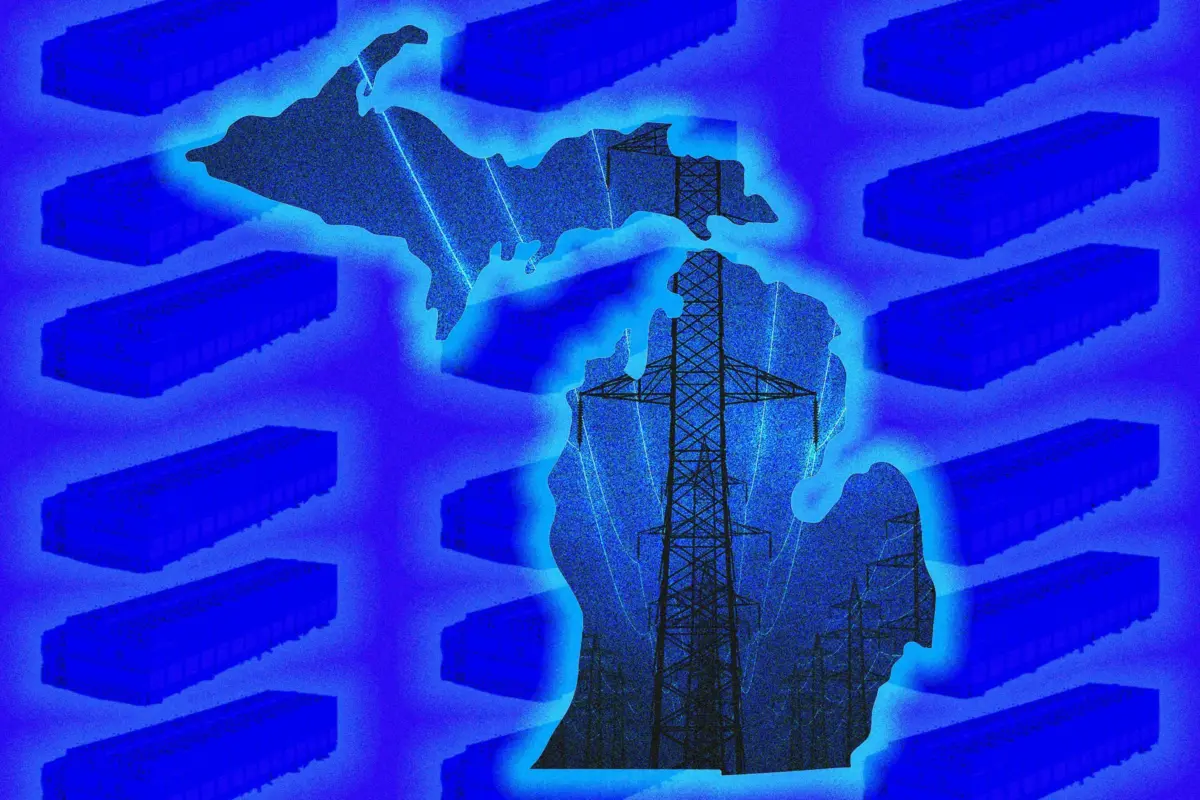
The rapid, unchecked expansion of digital infrastructure in the United States has reached a critical environmental and infrastructural inflection point. According to groundbreaking research published in Nature Sustainability, a mere 400 hyperscale data centers operating across the United States consumed as much electricity in a single year as the entire state of Michigan. This staggering consumption highlights the invisible, energy-intensive backbone powering modern cloud computing, enterprise software, and the artificial intelligence (AI) boom.
Even more alarming than the sheer volume of power consumed is its carbon intensity. The Harvard-led study reveals that the majority of this electricity was generated using fossil fuels, driving nationwide data center carbon emissions to levels three times higher than they were prior to the current generative AI explosion. These findings pierce through the marketing veneer of Silicon Valley’s "clean cloud" narratives, exposing a heavy reliance on traditional, carbon-heavy power grids.
Compounding this environmental challenge is a profound regulatory blind spot. Despite mounting projections that data centers are placing unprecedented strain on the American power grid, neither federal nor state governments historically track data center electricity consumption separately from the broader commercial power sector. Power use data for individual facilities is routinely classified as proprietary business information under non-disclosure agreements (NDAs), leaving utilities and data center operators under no legal obligation to disclose consumption metrics to the public.
As communities nationwide push back against the sprawling industrial footprints of these facilities, this newly peer-reviewed research provides a much-needed window into an industry that has largely operated behind closed doors. Yet, because the tech sector evolves at a breakneck pace, experts warn that even these eye-opening figures may already understate the true scale of the crisis currently unfolding across America’s electrical grids.
Detailed Chronology: From Cloud Storage to the AI Energy Crisis
To understand how the United States arrived at this energy crossroads, it is necessary to trace the evolution of the data center industry and the regulatory responses that failed to keep pace.
The Pre-AI Era: Quiet Expansion (Pre-2023)
For decades, data centers grew steadily beneath the public radar. While consumers enjoyed seamless streaming, instant messaging, and cloud-based file storage, the physical infrastructure enabling these services expanded rapidly. As independent energy researcher Jon Koomey notes, "Hyperscalers have been growing fast, even before the AI boom." During this period, efficiency gains in server hardware managed to partially offset the exponential growth in demand, keeping grid impacts somewhat localized to specific clusters like Northern Virginia’s "Data Center Alley."
The AI Acceleration and the Harvard Dataset (May 2024 – April 2025)
The launch of advanced generative AI models fundamentally shifted the industry’s trajectory. Training and running large language models required computing clusters of unprecedented density. Recognizing the severe lack of transparent public data, researchers at Harvard University undertook a comprehensive mapping and modeling initiative.
To assemble their dataset, the research team identified 403 operational hyperscale data centers across the United States between May 2024 and April 2025. By combining industry intelligence reports with satellite imagery analysis, the team mapped the physical footprints of these behemoths. They then modeled individual facility energy use across various operational scenarios, cross-referencing these simulations with regional grid energy mixes to calculate precise carbon emission estimates.
The Regulatory Awakening (2025)
As grid operators in regions like PJM Interconnection (covering parts of the Mid-Atlantic and Midwest) began warning of looming capacity shortfalls, federal oversight agencies finally stirred. Throughout 2025, the Energy Information Administration (EIA)—the statistical and analytical agency within the U.S. Department of Energy—conducted three pilot surveys tracking data center power consumption across 10 states. By late 2025, these pilot surveys concluded, paving the way for the EIA to design a nationwide, potentially voluntary survey mechanism aimed at bringing transparency to the sector.
Supporting Context & Metrics: The Anatomy of Hyperscale Consumption
The metrics unearthed by the Harvard study and corroborated by industry analysts paint a vivid picture of industrial-scale energy consumption.
Geographic Disparities: The Grid Hotspots
Energy consumption by hyperscale data centers is far from evenly distributed. The Harvard study found that facilities located in just four states—Virginia, Oregon, Ohio, and Iowa—were responsible for more than 50 percent of the total energy use recorded in the dataset.
- Virginia: Home to the legendary Data Center Alley in Loudoun County, this region handles an immense share of global internet traffic, drawing continuous, heavy loads from the regional grid.
- Oregon, Ohio, and Iowa: These states have increasingly become favored destinations for tech giants seeking vast tracts of land, tax incentives, and access to cooling water or cooler ambient temperatures, placing sudden strain on localized rural and suburban utility cooperatives.
The Scale Gap: Past Facilities vs. Future Megacamps
One of the most profound takeaways from the research is that the study’s baseline may already be obsolete. The average facility size analyzed in the Harvard study was 40 megawatts (MW)—a substantial industrial footprint, but one that is rapidly being dwarfed by contemporary proposals.
Tech developers are currently breaking ground on data center campuses designed to consume hundreds, and in some cases thousands, of megawatts. These facilities rival the power draw of entire heavy industrial complexes or mid-sized cities. Gianluca Guidi, a postdoctoral research fellow at the Harvard T. H. Chan School of Public Health and lead author of the study, emphasizes this disconnect: "Some of the massive campuses being proposed today are substantially larger than the typical facility in our dataset."
The "Wild Card": Behind-the-Meter Power Generation
While grid-tied consumption is massive, an emerging trend threatens to compound the environmental damage: "behind-the-meter" power generation. Rather than drawing exclusively from public utilities, tech companies are increasingly striking direct deals to build dedicated power plants adjacent to their data centers.
According to BloombergNEF, plans for behind-the-meter power generation have skyrocketed across the United States, with an astonishing 189 gigawatts currently in the development pipeline earmarked exclusively for data centers.
Many of these private plants rely on inefficient, fast-deployable natural gas turbines to ensure uninterrupted uptime. BloombergNEF estimated that if all proposed behind-the-meter power plants in the U.S. queue are built, they could increase overall national greenhouse gas emissions by a staggering 10 percent. This creates a perverse incentive structure: rather than accelerating the transition to renewable energy, the AI boom risks locking in decades of new fossil fuel combustion.
Official Statements and Expert Perspectives
The opacity surrounding data center energy consumption has long frustrated researchers, policymakers, and public utilities. Industry experts have been vocal about the urgent need for institutional transparency.
Jon Koomey, an energy researcher who has co-authored regular Lawrence Berkeley National Laboratory reports on data center energy and water use since 2007, praised the Harvard study for its methodological rigor.
"Knowing for certain how much data centers use over a year is a really useful thing," Koomey explains, contrasting peer-reviewed geographic modeling with traditional "back-of-the-envelope calculations."
He adds, pointing to the culture of corporate secrecy that has long dominated the sector: "Sometimes we know it, but sometimes it’s behind an NDA, and no one ever sees it."
On the regulatory front, federal agencies are beginning to acknowledge their past data blind spots. Lee Tucker, a spokesperson for the Energy Information Administration (EIA), confirmed the completion of the agency’s regional pilot surveys:
"The agency is currently using the completed pilot data from 10 states to design a potential voluntary survey for the sector," Tucker told reporters, signaling a potential turning point for federal energy oversight.
Meanwhile, lead author Gianluca Guidi and his colleagues at the Harvard T. H. Chan School of Public Health stress that the environmental consequences of this unmeasured growth extend far beyond carbon ledgers, directly impacting regional air quality, water resources, and consumer electricity rates as utilities are forced to upgrade transmission lines and build new generation assets to keep pace.
Future Outlook: Navigating the Energy Precipice
As the United States hurtles toward a digital future dominated by generative AI, cloud computing, and automated enterprise operations, the trajectory of data center energy consumption presents a profound policy dilemma.
Without aggressive, mandatory federal tracking and transparent reporting standards, local communities and grid operators will remain ill-equipped to plan for the staggering energy demands of upcoming mega-campuses. The reliance on non-disclosure agreements to shield proprietary energy use must be balanced against the public interest of grid reliability and climate stability.
Furthermore, the surge in behind-the-meter fossil fuel generation threatens to undermine national and corporate decarbonization targets. Unless tech giants pivot decisively toward genuine, additionality-focused renewable energy procurement—such as pairing new data centers with dedicated new wind, solar, and advanced nuclear generation—the AI revolution will come at a devastating cost to the global climate.
The findings from Harvard University serve as an urgent wake-up call. The 400 hyperscale facilities analyzed in the study consumed as much electricity as Michigan, but they represent only a fraction of the digital infrastructure currently under construction. As the industry scales toward gigawatt-sized campuses, policymakers, energy regulators, and tech executives must confront a stark reality: the grid can no longer afford to keep the lights on in the dark.