Executive Overview
Thirteen years after the cultural phenomenon that was Grand Theft Auto V, Rockstar Games has returned with Grand Theft Auto VI, an interactive blockbuster that immediately shattered sales records and dominated global discourse upon its long-awaited release. Set in the fictional state of Leonida—Rockstar’s meticulously rendered, sun-drenched pastiche of modern Florida—the title delivers everything longtime fans anticipated: sprawling urban crime syndicates, chaotic high-stakes heists, satirical media ecosystems, visceral vehicular mayhem, and surprisingly intricate character arcs and romantic subplots.
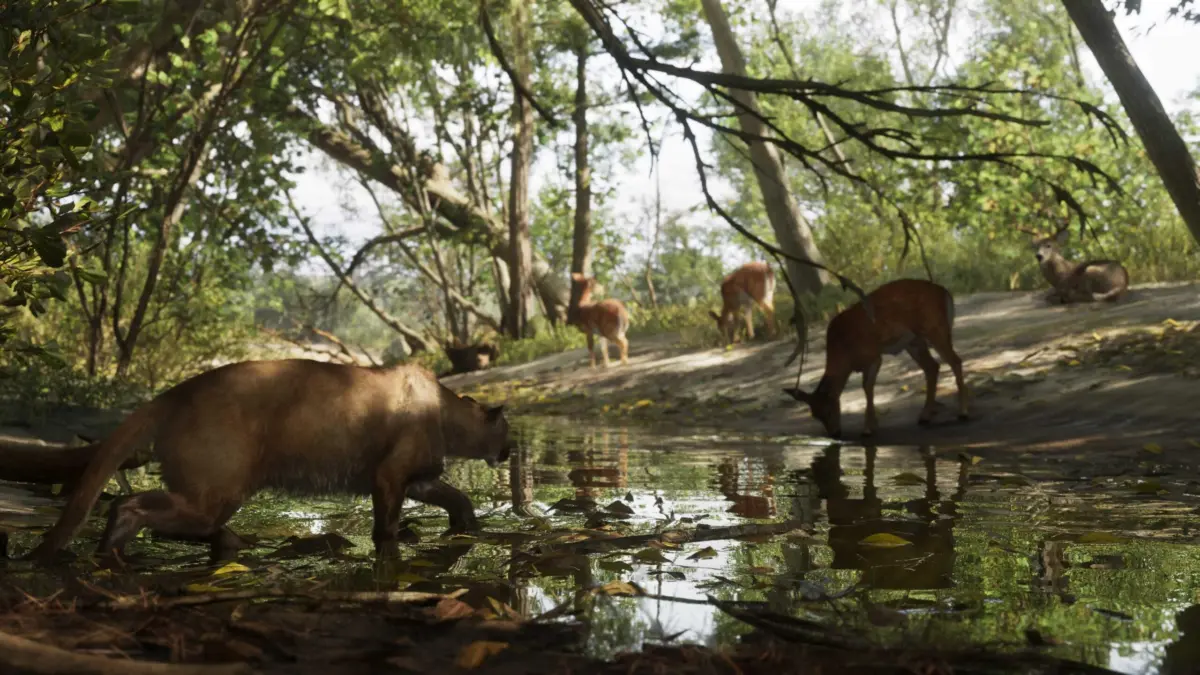
Yet, hidden beneath the veneer of high-octane criminality and satirical excess lies a breathtakingly detailed ecological simulation. Leonida is not merely a backdrop for illicit enterprise; it is a living, breathing ecosystem.
Featuring over 170 meticulously animated species of animals, including alligators sunning themselves on muddy banks, manatees gliding through brackish waters, and green iguanas scurrying across baking asphalt, GTA VI has inadvertently birthed a massive virtual phenomenon: casual and hardcore conservationist gaming. Most notably, the title features 62 distinct bird species. Players can equip binoculars, scour swampy wetlands and urban rooftops, and systematically log their avian discoveries in an in-game ornithological journal.
Far from a minor easter egg, this surprising dedication to biodiversity has captured the imagination of real-world ecologists, wildlife journalists, and digital birdwatchers alike. Social media forums and gaming boards are currently flooded with users vowing to put life-of-crime campaigns on hold in favor of cataloging Leonida’s avifauna, styling protagonist Lucia in custom field gear, and transforming a traditionally violent sandbox into a serene digital nature reserve.
This unexpected intersection of AAA game development, hyper-realistic ecosystem rendering, and real-world conservation biology signals a fascinating evolution in virtual world-building—one where players are just as likely to seek out the quiet beauty of a sunset pelican flight as they are to evade a five-star police pursuit.
Detailed Chronology: From Vice City to the Swamps of Leonida
The Long Drought: A Thirteen-Year Wait
To fully understand the cultural tidal wave accompanying the launch of Grand Theft Auto VI, one must reckon with the generational gap since its predecessor. Released in September 2013, Grand Theft Auto V spanned three distinct console generations, outliving hardware lifecycles and shifting global tech landscapes. In modern gaming terms, thirteen years is an absolute eternity. During this prolonged hiatus, technological leaps in ray tracing, artificial intelligence, procedural animation, and ecological modeling expanded exponentially.
When Rockstar Games finally began rolling out promotional material—most notably the game’s second official trailer—industry watchers immediately noted a stark departure from previous marketing campaigns. While explosions, high-speed supercar chases, and criminal shootouts were naturally present, the promotional footage lingered deliberately on the quiet moments of the natural world: pelicans gliding in formation against a violet Florida sunset, the iridescent green scales of an iguana warming itself on cracked pavement, and the gentle ripple of water disturbed by unseen aquatic life.
The Expansion of the Map: Beyond Vice City Proper
While the beating heart of the game remains Vice City—Rockstar’s iconic, neon-drenched reimagining of Miami—GTA VI dramatically expands its geographic footprint outward. Players begin their journeys in a fictionalized analog of the Florida Keys before pushing northward into sprawling simulations of the Everglades, rural swamplands, and national parks reminiscent of Mount Kalaga.
In the real world, Florida represents one of the most ecologically diverse and biogeographically complex regions in North America. The peninsula hosts more than 700 species of terrestrial vertebrates, thousands of marine and freshwater fish species, and over 500 species of birds that either reside year-round or utilize the flyway during seasonal migrations.
By pushing the simulation boundaries out of the urban metropolis and deep into the untamed wilderness, Rockstar engineered a stark spatial dichotomy. Players are encouraged to transition fluidly from the claustrophobic concrete canyons of Vice City to the sweeping, sun-bleached horizons of the Leonida wetlands.
The Launch Day Phenomenon and the Virtual Birding Craze
Upon release day, player behavior instantly bifurcated in unexpected ways. While speedrunners and traditional action gamers dove headfirst into the narrative campaigns and underworld heists, an entirely separate subculture emerged on platforms like Reddit, X (formerly Twitter), and specialized gaming forums.

Threads dedicated to virtual birdwatching skyrocketed in popularity. Users shared tips on optical equipment zoom levels, optimal times of day to spot elusive wading birds, and strategies for completing the comprehensive avian field guide. Comments on major critical reviews highlighted this profound gameplay duality. As one viral comment from a New York Times review concisely put it: "My roommate gets to play the actual game. I get to find all 62 species of birds. Truly a game for everyone."
Rather than serving merely as moving set dressing, the wildlife in GTA VI demands active engagement, turning a medium traditionally obsessed with dominance, speed, and destruction into an immersive exercise in patience, observation, and ecological appreciation.
Supporting Context & Metrics: The Science of Digital Biodiversity
Technical Marvels: Rendering Life at Scale
To achieve this unprecedented level of ecological fidelity, Rockstar Games pushed proprietary engine capabilities far beyond the benchmarks established by their previous masterwork, Red Dead Redemption 2. While Red Dead was widely praised for its lifelike hunting mechanics and diverse animal behaviors across Western landscapes, GTA VI elevates the simulation to an entirely new technological tier.
According to technical breakdowns and preview disclosures, the development team integrated advanced rendering techniques for:
- Bioluminescence: Capturing the eerie, glowing blue phosphorescence of coastal waters and specialized organisms during nocturnal exploration.
- Micro-Texture Anatomy: Accurately differentiating feather types, barbule structures, and aerodynamic layering across dozens of avian species.
- Procedural Fur and Hair Physics: Simulating how individual strands of mammalian fur and reptile scales react to environmental moisture, mud splatters, and wind dynamics.
Quantifying Leonida’s Ecosystem
To contextualize the scale of Leonida’s wildlife simulation, consider the following metrics integrated into the game’s living world:
| Ecological Category | Number of Species / Variants | Representative Examples |
|---|---|---|
| Total Animal Species | 170+ | Alligators, wild boars, deer, panthers, feral hogs |
| Avian Species | 62 | Pelicans, herons, egrets, ospreys, roseate spoonbills |
| Aquatic Life | Thousands (Simulated) | Manatees, largemouth bass, sharks, rays, amphibians |
| Terrestrial Biomes | 4 Primary Zones | Urban core, rural backcountry, coastal keys, deep swamp/Everglades |
This staggering density transforms the game world into an interactive encyclopedia of subtropical biology. Players are provided with in-game binoculars capable of high-magnification observation, allowing them to isolate targets, study behavioral animations (such as preening, nesting, and hunting), and automatically log entries into a digital compendium reminiscent of real-world citizen science platforms.
Official Statements & Industry Perspectives
Rockstar’s Design Philosophy
The integration of such profound ecological depth was no accident; it was the result of a deliberate, multi-year artistic mandate aimed at capturing the unique, fragile beauty of the American subtropics.
In a September interview with Game Informer, Michael Kane, Rockstar’s Vice President of Dynamic Art, elaborated on the studio’s ambitious environmental goals:
"Florida has a diverse animal ecosystem that we wanted to faithfully include across all the different biomes in Leonida — urban and rural environs, aquatic life both inland and ocean, and the wetland habitats like the swamps and Everglades."
This commitment to environmental authenticity ensures that the transition from a neon-lit downtown boulevard to a silent, fog-shrouded cypress swamp feels stark, visceral, and ecologically coherent.
The Academic Lens: Bridging Gaming and Real-World Conservation
The inclusion of deep, methodical nature-observation mechanics within a mainstream action blockbuster has not gone unnoticed by the academic community. Experts in ecology and wildlife biology see enormous potential in how AAA gaming can serve as an unexpected gateway to environmental literacy.

Dr. Ethan Linck, an assistant professor in the Department of Ecology at Montana State University—who noted that he does not personally identify as a gamer—offered a profound perspective on the cultural weight of the feature:
"We’ve been painting birds on the walls of caves and writing songs about them for millennia, and it makes total sense to me that this sort of wonder that we get from birds would find an expression in the very contemporary form of art that is a video game. I could totally see someone who might not have any background in natural history or birdwatching get into this fun diversion in the game and then discover that they can basically do the exact same thing in real life using apps like eBird and iNaturalist. It’s no longer an old-person hobby."
This sentiment strikes at the heart of why GTA VI’s wildlife integration matters. By gamifying observation—assigning concrete goals, visual rewards, and cataloging mechanics to the passive act of looking at animals—Rockstar has effectively lowered the barrier to entry for ecological appreciation. Millions of players who might never pick up a field guide or visit a national park are suddenly learning to identify wading birds, understand habitat zones, and practice the foundational skills of field biology.
Future Outlook: A New Paradigm for Virtual Worlds
As players continue to dissect every square inch of Leonida weeks after release, the cultural footprint of Grand Theft Auto VI is proving to be far more complex than initial hype cycles suggested. While the title will undoubtedly retain its crown as the definitive modern crime sandbox, its parallel life as a sprawling virtual nature reserve has opened up fascinating questions regarding the future of open-world game design.
The Rejection of the "Teddy Roosevelt" Model
Historically, open-world games featuring wildlife—including Rockstar’s own Red Dead Redemption series or hunting simulators like The Hunter: Call of the Wild—have framed nature primarily through an extractive lens. Animals existed to be tracked, hunted, skinned, and turned into crafting materials or profit. This aligns closely with the historical "Teddy Roosevelt school of conservation," which linked wildlife preservation directly to sporting culture, hunting management, and wilderness exploitation.
GTA VI, however, offers a liberating alternative. While hunting elements do exist within the game’s vast ecosystem for players who choose to engage with them, the inclusion of non-lethal observation tools—such as binoculars, comprehensive species logs, and passive behavioral loops—allows players to opt out of the predatory cycle entirely. Users can choose to be peaceful observers, tourists, and conservationists in a digital landscape traditionally defined by ruthless ambition.
Catalyzing Real-World Action
Looking ahead, the most enduring legacy of GTA VI’s ecological simulation may well happen outside the screen. As Dr. Linck hypothesized, the psychological bridge between virtual data collection and real-world citizen science is remarkably short.
When a player spends forty virtual minutes tracking down a rare heron species in the digital Everglades, learning its habits, its preferred nesting grounds, and its distinctive silhouette, that acquired curiosity frequently translates outward. Armed with smartphones, GPS mapping, and platforms like the Cornell Lab of Ornithology’s eBird or the California Academy of Sciences’ iNaturalist, former virtual outlaws may find themselves stepping out of their rooms, heading into local green spaces, and engaging in genuine, real-world biodiversity monitoring.
In an era defined by climate anxiety, biodiversity loss, and the increasing detachment of humanity from the natural world, the fact that one of history’s most hyper-violent video game franchises has successfully motivated millions of people to appreciate the quiet grace of a pelican in flight feels nothing short of revolutionary.
As for the broader gaming community? For many players across the globe, the criminal empire-building can wait. There are still dozens of rare bird species left to log in Leonida, and the swamps are calling.