Executive Overview
In the modern digital landscape, the demand for consistent, multi-channel content often outpaces the capacity of a traditional creative team. Solopreneurs, small business owners, and lean marketing departments constantly face a formidable dilemma: how to maintain a high-frequency posting schedule across platforms like Substack, YouTube, Instagram, and X (formerly Twitter) without succumbing to burnout or compromising authentic brand voice.
The standard binary approach to artificial intelligence—rejecting it entirely in favor of manual creation or surrendering all creative control to automated algorithms—fails to capture its true utility. Instead, a nuanced paradigm is emerging: deploying AI as an integration layer within existing workflows.
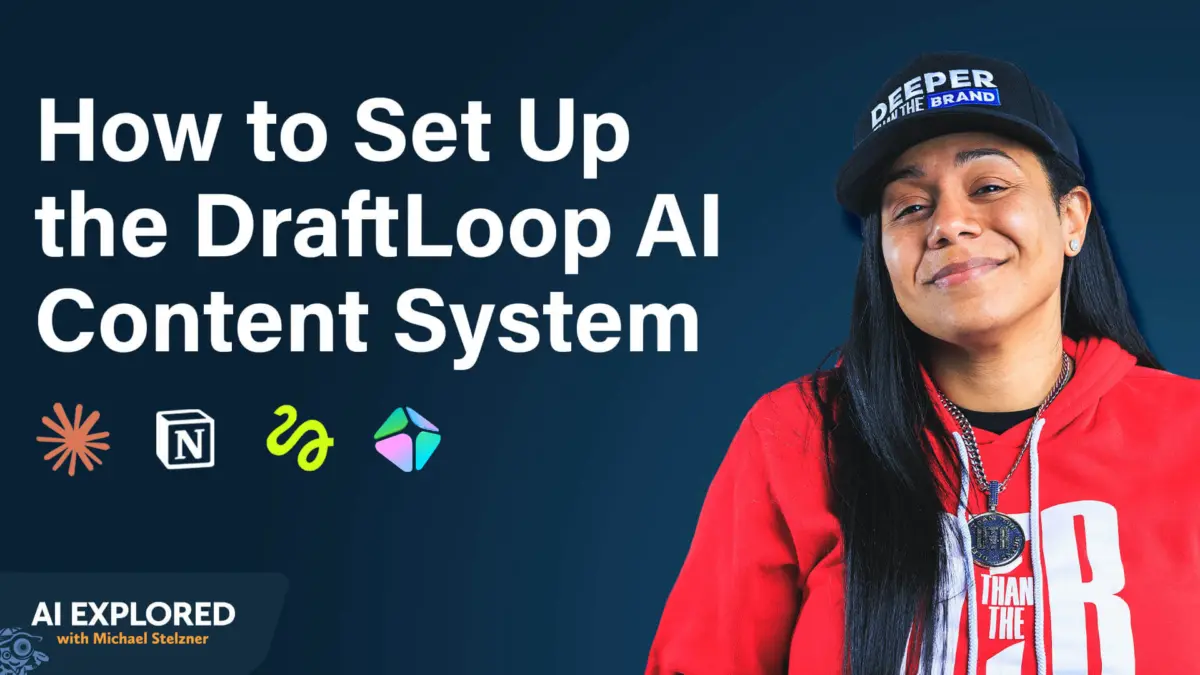
Co-created by AI strategist Nicky Saunders and digital media publisher Michael Stelzner, a novel methodology leverages Claude to act as a twenty-four-seven "brain-warming buddy" and AI creative director. By synthesizing raw voice journaling with structured AI skills, data scraping tools, and multi-modal automation pipelines, creators can transform unstructured spoken reflections into polished, platform-optimized assets. This comprehensive report explores the step-by-step framework required to establish a creative vision, build reusable brand voice skills, deploy automated content workflows like "DraftLoop," and maintain essential human oversight in the age of algorithmic media.
Detailed Chronology: The Evolution of the AI Creative Director Framework
Building a sustainable, AI-powered content operation requires a methodical progression from foundational creative definition to advanced automation. The methodology championed by Nicky Saunders unfolds across distinct operational phases.
Phase 1: Establishing Creative Vision and Style Guidelines
Before integrating artificial intelligence into content generation, creators must establish clear foundational boundaries. Telling an AI to produce content without context yields generic, easily recognizable "AI slop."
- Defining the Vision: Creators must determine the specific emotional takeaway, intended audience action (e.g., signup, purchase, or engagement), and visual exclusions for their content. When creative direction is vague, Saunders recommends prompting Claude to serve as an interactive sounding board—asking the AI to talk through the strategic goals of a piece before drafting begins.
- Curating Visual Inspiration: Style is best communicated visually rather than textually. Creators assemble inspiration libraries comprising Pinterest boards, magazine covers, product packaging, and competitor carousels. Uploading these references into a Claude project allows the AI to analyze underlying technical design elements—such as saturation levels and color harmonies—thereby helping the creator develop a precise design vocabulary.
- Auditing Existing Assets: For established businesses, existing websites, product photography, and historical social posts serve as style baselines. Claude can ingest these assets to synthesize comprehensive brand guides covering typography, color palettes, and visual tone.
Phase 2: Constructing Core Claude Skills for Brand Voice and Platform Style
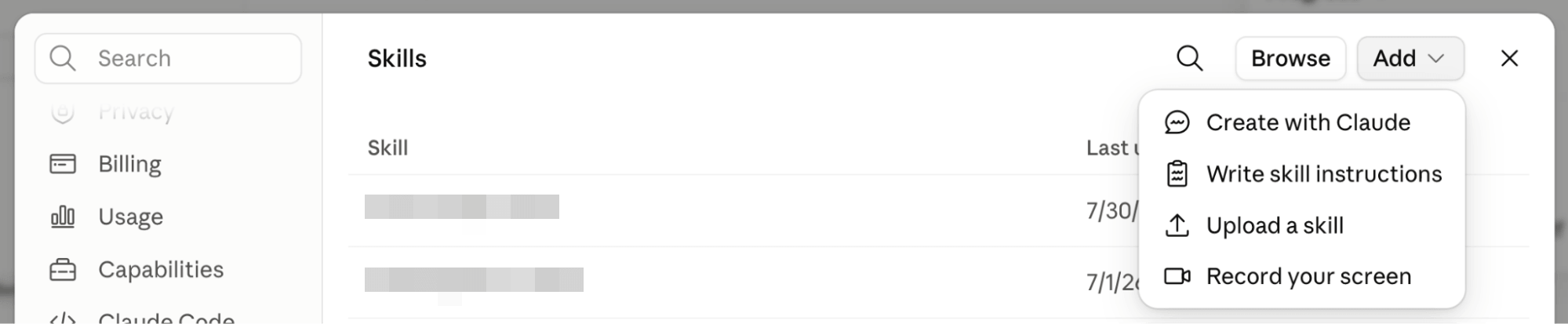
Once the visual and strategic framework is locked in, the next operational milestone involves building reusable instruction sets known as Claude "skills." These saved documents act as persistent memory layers within Claude projects, eliminating the need to repeatedly retrain the model in fresh chat threads.
- The Brand Voice Skill: This skill encodes how a creator naturally speaks and writes. Training materials include transcriptions from Zoom meetings, Google Meet sessions, video recordings, podcasts, newsletters, and social threads. Supplementing these inputs with an AI-led interview helps isolate phrasing patterns, speech cadence, and recurring keywords. Once calibrated, Claude can produce drafts that align roughly 80% to 85% with the creator’s natural voice.
- The Social Media Style Skill: Because syntax and format must shift radically between a short-form X thread, a long-form Substack essay, and a YouTube script, this second skill maps platform-specific conventions. It ensures that content complies with the unique algorithmic expectations of each distinct distribution channel.
- Harvesting Source Material via Apify: To streamline the aggregation of raw training data, practitioners often employ Apify, a data scraping tool equipped with an MCP (Model Context Protocol) connector for Claude. Apify extracts public engagement metrics, comments, and transcripts from platforms like YouTube and Instagram, feeding historical data directly into the creator’s storage systems (such as Google Drive or Notion) for continuous skill refinement.
Phase 3: Deploying the "DraftLoop" Content Workflow
With core skills active, creators can implement an automated content pipeline—exemplified by Saunders’s DraftLoop system—which bridges spoken thought and multi-format publishing.
[Voice Journal / Meeting Transcript]
              │
              ▼
    [Notion AI & Apify Data]
              │
              ▼
   [Claude Cowork (8 AM Task)]
              │
              ▼
  [Drafts Generated in Notion]
              │
              ▼
  [Human Review & Curation]
              │
        ┌─────┴─────┐
        ▼           ▼
[Written Assets] [Visual Assets (Higgsfield / HeyGen)]
        │           │
        └─────┬─────┘
              ▼
[Manual Scheduling & Publishing]- The Daily Voice Journal: Moving away from rigid content calendars, creators record a daily voice journal—inspired by Julia Cameron’s The Artist’s Way morning pages. Captured during a walk using Notion’s AI meeting notes feature, the journal records unvarnished reflections, frustrations, and inspirations. Even moments of creative block are leveraged through an iterative "three whys" questioning technique to unearth underlying business insights.
- Automated Processing and Ideation: Inside Claude Cowork, a scheduled daily task inspects the Notion journal for new entries. Claude extracts core ideas, generating draft threads, newsletter copy, and carousel quote outlines inside a centralized Notion page.
- Visual and Video Production: Approved written concepts are subsequently routed to specialized multimedia tools connected via MCP. For instance, Higgsfield generates images and animated assets directly within the interface, while HeyGen creates avatar previews that allow creators to audit how video scripts sound when spoken aloud before final recording.
Supporting Context & Metrics: The State of AI Marketing Integration
The operational shift toward AI-assisted content creation occurs against a backdrop of widespread industry experimentation. Comprehensive data from the 2026 AI Marketing Industry Report—which surveyed 681 marketers—highlights a profound reliance on self-directed learning:
- The Training Deficit: Approximately 85% of marketers learn artificial intelligence entirely through independent experimentation, while a mere 7% receive formal corporate training.
- Personal Financial Investment: Highlighting the urgent demand for operational efficiency, more than half of surveyed professionals spend their own personal funds on AI software and tools.
- The Shift Toward Hybrid Collaboration: Industry data indicates that top-performing creators avoid the pitfalls of total automation. By retaining human judgment for final curation and strategic pivoting, they achieve higher consistency without sacrificing audience trust.
Official Statements and Industry Insights
Experts emphasize that the integration of artificial intelligence into creative workflows is fundamentally changing the relationship between ideation and execution.
Nicky Saunders describes the modern AI tooling stack not as an autonomous substitute for human thought, but as a dynamic collaborator:
"AI works best as an integration layer within existing creative workflows… Think of it as a twenty-four-seven brain-warming buddy. At 2 a.m., when calling a colleague isn’t an option, you can open a conversation, break down an idea, and ensure it doesn’t get lost by morning."
Addressing the balance between algorithmic efficiency and human direction, Saunders underscores the necessity of maintaining personal accountability:

"The AI proposes; the creator decides. Nothing should ever be published or moved forward without direct human approval. The goal is to offload the friction of drafting while keeping the core human experience intact."
Furthermore, industry analysts note that advanced language models—such as Claude Fable 5 Low—provide exceptional precision for short-form copy tasks, outperforming generalized models when every word of a hook or subject line carries heavy conversion weight.
Future Outlook: The Next Frontier of AI Creative Direction
As artificial intelligence platforms evolve from reactive chat interfaces into proactive, autonomous agent ecosystems, the role of the creator will undergo a profound metamorphosis.

- Transition to Multi-Agent Workflows: Future creative systems will not merely wait for daily voice journals; they will proactively monitor market trends, competitor output, and internal engagement analytics across platforms, synthesizing multi-channel campaigns automatically.
- Enhanced Predictive Analytics: Advanced AI creative directors will increasingly serve as a psychological counterbalance to creative restlessness. By analyzing historical performance data, these systems will nudge creators back toward proven thematic pillars when boredom threatens to derail audience retention.
- Standardized Human-in-the-Loop Safeguards: As algorithmic publishing risks escalate, industry best practices will solidify around strict demarcation lines—maintaining automated pipelines for ideation and asset generation while strictly enforcing manual execution for final compliance, security audits, and public distribution.
Ultimately, the successful digital publishers and creators of tomorrow will not be those who attempt to manually out-produce algorithmic scale, nor those who abdicate their creative integrity to machines. Instead, they will be practitioners who master the art of the AI creative director—building sophisticated, voice-driven systems that amplify human stories with unprecedented speed and precision.