EDITOR’S NOTE (November 17, 2026): This feature is being republished for the holiday season to explore the enduring cultural footprint of a contemporary tradition. It was originally reported and published in 2018.
Executive Overview
Every November, millions of Americans prepare for the Thanksgiving holiday—a sprawling ritual traditionally defined by cross-country travel, high-stakes family dynamics, and meticulously prepared multi-course dinners. Yet, over the past two decades, a parallel celebration has carved out an indispensable space in the cultural calendar: Friendsgiving.
Positioned neatly between a casual weekend house party and a formal holiday gathering, Friendsgiving has evolved from an ad-hoc gathering for urban transplants into a cultural institution. Characterized by potluck-style comfort foods, relaxed dress codes, and an intentional curation of guests, the phenomenon speaks volumes about changing demographics, delayed milestones, and the shifting definition of family in the 21st century.
However, the rise of Friendsgiving is more than just an excuse to eat stuffing a week early and bypass political debates with distant relatives. Sociologists, economists, and cultural critics view the trend through multiple lenses: as a natural consequence of adults marrying later in life, as a coping mechanism for urban loneliness, and, conversely, as a symptom of economic shifts that have forced younger generations to redefine what abundance looks like.
This comprehensive report explores the origins, sociological drivers, economic critiques, and modern realities of Friendsgiving, mapping its journey from an obscure internet slang term to a cornerstone of contemporary American culture.
Detailed Chronology: From Digital Slang to Cultural Phenomenon
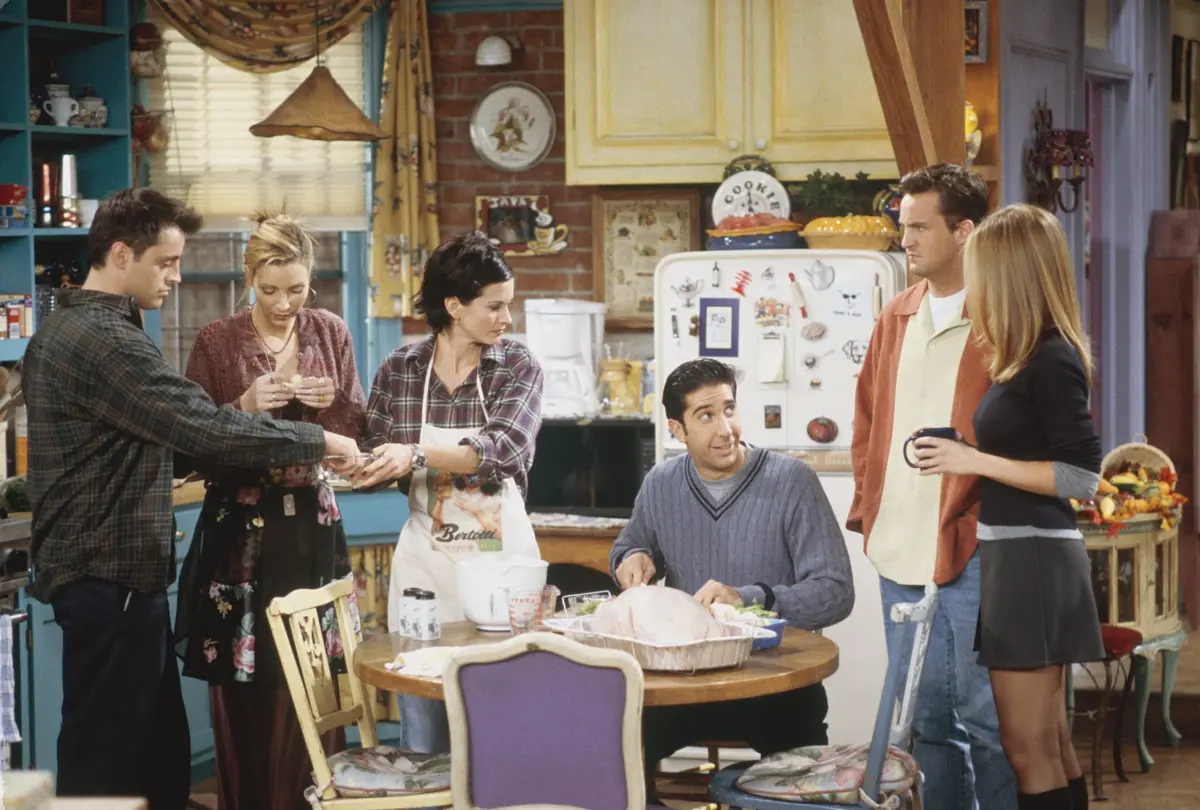
To understand how Friendsgiving became a nationwide fixture, one must trace its surprisingly recent origins. Despite cultural assumptions tying the term to beloved 1990s television sitcoms like Friends—which famously produced iconic Thanksgiving episodes featuring football games, floating green peas, and burnt turkeys—the concept actually predates the widespread colloquial use of its name.
The 2007 Digital Genesis
According to linguistic investigations by Merriam-Davidson and Merriam-Webster, the first recorded uses of the portmanteau "Friendsgiving" in print or online occurred in 2007. The term simultaneously popped up in digital archives via Usenet boards and early Twitter posts. It was not born in a writers’ room in Hollywood, but rather organically birthed by internet users trying to describe an increasingly common hybrid holiday: Thanksgiving dinner celebrated with a network of peers rather than blood relatives.
The 2011 Mainstream Inflection Point
For the first few years, Friendsgiving remained a niche millennial and urban phenomenon. That changed rapidly around 2011, propelled by two unlikely mainstream catalysts:
- Corporate Marketing: A prominent national advertising campaign by Bailey’s Irish Cream strategically centered on the concept of gathering with friends for an early holiday toast.
- Reality Television: In a moment of supreme pop-culture irony, an episode of The Real Housewives of New Jersey aired that same year, featuring cast member Teresa Giudice hosting her own explicitly named "Friendsgiving." This came on a franchise famous for its relentless mantra that "blood is thicker than water," introducing the concept to millions of mainstream television viewers.
Institutional Adoption (2013–2014)
By the early 2010s, media organizations began codifying the amorphous tradition. In 2013, BuzzFeed published its tongue-in-cheek "17 Rules of Friendsgiving," cementing behavioral norms around potluck contributions and seating logistics. By 2014, the Washington Post’s style section offered a deep-dive profile of the trend.
At the time, the Post framed Friendsgiving as a sanctuary for the nation’s "island of misfit toys"—young professionals living in major metropolitan hubs who lacked the financial resources, vacation days, or geographical proximity to travel home for a brief four-day weekend. As one Washington, D.C., resident remarked to reporters back then: "I think DC is the kind of town where there are a lot of people who are from somewhere else, and sometimes friends aren’t able to go home."
Supporting Context & Metrics: Why We Gather Outside the Family Unit
While the cultural mechanics of Friendsgiving are lighthearted—ranging from Sara Reinis’s 2017 Brooklyn potluck featuring a cake iced with the phrase "Gobble gobble, bitch" to Whole Foods hot-bar side dishes—the underlying sociological drivers are profound.
The Shifting Timeline of Adulthood
Dr. Stephanie Coontz, director of public education at the Council on Contemporary Families, points out that the rising median age of first-time marriage has fundamentally altered how adults allocate emotional and social priorities.
During the 1950s and 1960s, post-war marital advice literature placed immense pressure on young wives to prioritize their husbands above all else, discouraging close peer friendships that might distract from domestic duties. Today, with marriage occurring significantly later in life, individuals build robust, long-term support systems among friends that rival or exceed traditional familial networks in daily importance.

"Many have also seen what happens when people who haven’t maintained those networks get divorced," Coontz notes, explaining why contemporary adults are exceptionally conscious of the need to actively cultivate and preserve friendships. "For the most part, I think that people have decided to expand their definition of family-like relations."
The Psychology of Choice
One of the most frequently cited benefits of Friendsgiving over traditional Thanksgiving is autonomy. Family holidays often carry mandatory attendance policies, forcing individuals to endure unsupportive, toxic, or politically adversarial relatives.
Friendsgiving eliminates this obligation. "No one feels compelled to invite an unsupportive or obnoxious friend the way they often feel pressured to include an unsupportive or obnoxious family member," Coontz observes.
Furthermore, urban dwellers frequently cite logistical freedoms. As one anonymous participant noted during early journalistic inquiries into the trend: "I like that I can drink. If I was back with the family, they frown on it. And then you have to drive home."
Official Statements and Economic Critiques
Not everyone views Friendsgiving through a warm, romantic lens. As the phenomenon matured through the late 2010s, economists and cultural critics began interrogating what the trend reveals about the financial realities of younger generations.
The Millennial Financial Critique
In a widely discussed analysis published by The Atlantic, writer Ashley Fetters examined the darker economic undertones associated with the potluck tradition. She cited economist and author Malcolm Harris (Kids These Days: Human Capital and the Making of Millennials), who offered a sharp critique of the phenomenon:
Malcolm Harris sees something darker at work in the ‘Friendsgiving’ phenomenon. Harris thinks affixing the ‘cutesy’ label of Friendsgiving onto a scraped-together, potluck-style event popular among Millennials that will never actually rival the lavish spreads of real Thanksgiving implies approval by the powers that be of Millennial adults’ lower income and lower living standards compared to prior generations. ‘Friendsgiving,’ he says, ‘is a propaganda weapon used by the ruling class to further their plans for wage stagnation.’
While Harris’s analysis leans heavily into hyperbole, it strikes a chord regarding the financial disparity between generations. Traditional Thanksgivings hosted by older, wealthier homeowners often feature multi-hundred-dollar turkeys, fine china, and generational wealth passed down through family recipes. By contrast, a standard Friendsgiving—relying on crowd-sourced Whole Foods sides, plastic dishware, and BYOB constraints—is fundamentally an adaptation to the economic constraints of urban renting and stagnant entry-level wages.
Modern Domestic Labor Debates
Beyond economics, Friendsgiving has also become a microcosm for larger societal conversations surrounding domestic labor distribution. In recent years, cultural advice columns—such as Slate’s Dear Prudence—have fielded inquiries from frustrated hosts wrestling with a familiar, gendered dynamic: female attendees instinctively cleaning up the kitchen and washing dishes while male guests remain seated on the couch, drinking beer and watching football.
Etiquette experts advising on these dilemmas suggest a straightforward solution: direct, cheerful communication that calls out conspicuous gender dynamics in real-time rather than quietly resenting them.
Future Outlook
As Friendsgiving cements its status as a permanent fixture of the American holiday season, its scope continues to evolve. What began as an underground urban hack for transplants who missed flights home has transformed into a multi-generational, highly commercialized tradition. Grocery stores now market specific ingredients toward Friendsgiving potlucks, and digital planning apps feature dedicated tools for coordinating who brings the mashed potatoes versus who brings the pie.
Yet, despite its commercial packaging, the core ethos of Friendsgiving remains resiliently human. Whether it involves 40 people crammed into a walk-up Brooklyn apartment scrubbing sweet potato casserole off the wallpaper the next morning, or a quiet neighborhood gathering where the centerpiece is a store-bought cake with irreverent icing, Friendsgiving fills a critical modern need. It reminds us that while we cannot always choose our biological relatives, we possess the remarkable agency to curate the people with whom we share our tables, our gratitude, and our lives.