
Executive Overview
In the modern games industry, masterworks are rarely born from volatile environments. As blockbuster development cycles stretch past half a decade and budgets eclipse those of Hollywood tentpole films, the contrast between structural sustainability and toxic industry churn has never been sharper. Two of the most monumental gaming achievements of the era—Rockstar Games’ Grand Theft Auto 6 and Nintendo’s remake of The Legend of Zelda: Ocarina of Time—stand as towering testaments to what can be accomplished when a studio fosters long-term institutional knowledge, structural stability, and career continuity.
Yet, these triumphs arrive against a bleak backdrop. For years, the North American and European video game landscapes have been plagued by systemic instability, marked by relentless layoffs, corporate greed, studio closures, and a pervasive sense of worker expendability. Conversely, industry stalwarts like Nintendo have maintained astonishing employee retention rates by prioritizing worker security.
Even Rockstar Games, despite its own complicated history with corporate crunch and labor disputes, attributes its historic success with GTA 6 directly to a core contingent of veteran developers who have spent over a decade refining the studio’s proprietary engines and design philosophies.
This report examines how deep talent retention fuels generational leaps in video game design, contrasts the Japanese corporate philosophy with Western models of cyclical layoffs, and evaluates the growing labor movements fighting to protect the human capital behind the world’s favorite interactive art.

Detailed Chronology: From Concept to Cultural Phenomenon
To understand the immense mechanical leaps seen in Grand Theft Auto 6 and Nintendo’s Ocarina of Time remake, one must trace the timeline of their development, which relies fundamentally on a bedrock of accumulated institutional memory.
- The Foundation Years (Pre-2016): Decades of iterative development across titles like Grand Theft Auto V, Red Dead Redemption 2, and successive iterations of Nintendo’s flagship franchises laid the groundwork. Senior developers at Rockstar North and Nintendo established standardized codebases, physics engines, and narrative structures that would serve as the launching pads for future projects.
- The Cultural Shift and The Iwata Legacy (2013–2015): Amid the financial struggles of the Wii U and 3DS eras, late Nintendo President Satoru Iwata famously took a 50% pay cut rather than implement layoffs. This set a cultural precedent that cemented Nintendo’s reputation for prioritizing human capital over short-term quarterly profits—a strategy that yielded a 98% employee retention rate in Japan by the mid-2020s.
- Rockstar’s Pivot and Expansion (2018–2025): Following severe industry criticism over a "culture of crunch" surrounding the 2018 launch of Red Dead Redemption 2, Rockstar Games embarked on a multi-year restructuring effort. The studio nearly doubled its staff to roughly 4,700 employees, actively working to curb mandatory overtime while preserving its core base of senior leadership.
- The Layoff Wave in Western AAA Studios (2023–2025): While Japanese developers cultivated stability, Western tech and gaming giants—including Electronic Arts, Sony, Xbox, and Epic Games—engaged in aggressive cycles of consolidation, studio closures, and quarterly head-count reductions to appease shareholders.
- October 2025: Rockstar Games terminated 34 staffers, alleging the unauthorized sharing of company secrets. Affected workers and labor advocates quickly accused the company of union-busting maneuvers amid brewing internal organization efforts.
- December 2025: A landmark Fortune report highlighted Nintendo’s staggering retention metrics, revealing that the average tenure at Nintendo of Japan reached 15 years, with a 95% retention rate at Nintendo of America.
- November 18, 2026: Animation programmer Nestor Uriarte published a poignant op-ed in The Guardian, spotlighting the cognitive dissonance of working on the largest entertainment launch in history while fearing arbitrary redundancy.
- November 19, 2026: Grand Theft Auto 6 officially released, shattering global records to become the biggest entertainment debut of all time, pulling in over $4 billion through approximately 44.9 million copies sold in its first four days.
Supporting Context & Metrics: The Human Equation of Game Development
The disparity in talent retention between Western and Japanese video game corporations highlights differing corporate values. The table below illustrates the structural metrics defining the modern AAA ecosystem:
| Studio / Region | Average Employee Tenure | Retention Rate | Dominant Labor Protections / Factors | Notable Industry Challenges |
|---|---|---|---|---|
| Nintendo (Japan) | ~15 Years | 98% (Japan) / 95% (US) | Strict national labor laws, universal healthcare, executive pay-cut precedents. | Lower base salaries compared to Western tech markets. |
| Rockstar Games (Global) | Mixed (~21% over 10 years) | Moderate to High at Senior Levels | Long-term project funding, proprietary tech mastery. | Historical crunch culture, isolated union-busting allegations. |
| Western AAA Conglomerates (EA, Sony, Xbox, Epic) | Volatile (1–3 years) | Sub-50% (Frequent restructuring) | High base salaries, stock options. | Cyclical layoffs, rapid studio closures, high burnout rates. |
The Value of Institutional Knowledge
When a developer like Rockstar North co-head Aaron Garbut states that "the last 30 years have been practice for where we got to here," he is referencing the compounding interest of human capital. Building a sprawling, reactive world like Vice City in GTA 6—complete with advanced AI pedestrian routines, complex physics, and deeply interconnected heat and honor systems—cannot be accomplished by assembling a brand-new team of isolated contractors every three years.
Roughly 21% of Rockstar’s 4,700-person workforce—approximately 1,000 individuals—had been with the company for over a decade during the final stretch of GTA 6‘s development. This longevity acts as an institutional shortcut. When a junior programmer encounters an intractable physics bug or an intricate system conflict, they can draw upon the direct guidance of veterans who solved similar challenges during the creation of Grand Theft Auto V or Red Dead Redemption 2.

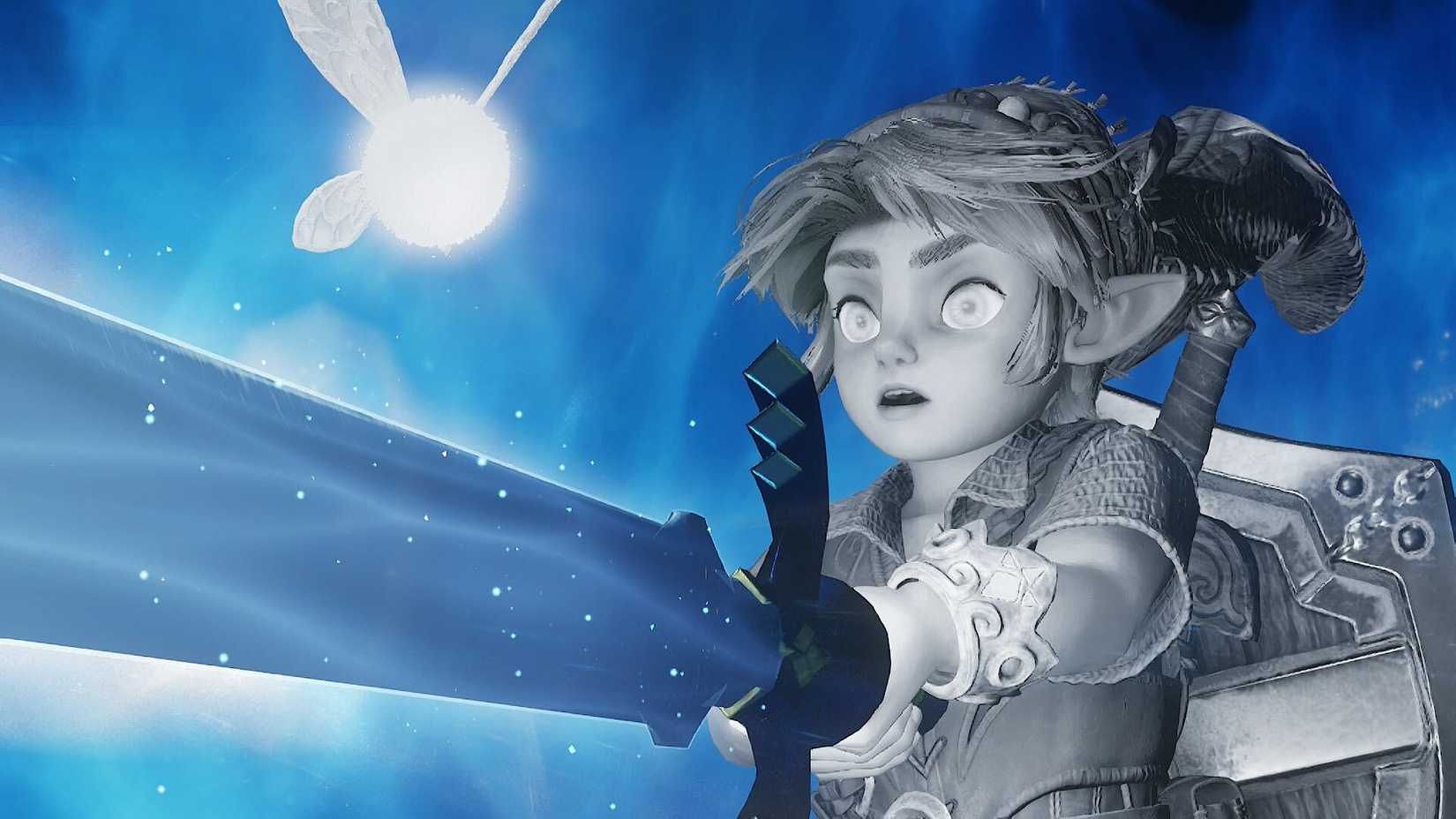
A parallel dynamic shaped Nintendo’s approach to the Ocarina of Time remake. Rather than handing the project to a completely unproven or external team, Nintendo paired junior staff directly with legendary visionaries like Eiji Aonuma (director of the original game) and Hidemaro Fujibayashi (director of Breath of the Wild and Tears of the Kingdom). This mentorship model ensures that design sensibilities are preserved, elevated, and passed down across generations.
Official Statements and Industry Commentary
The disconnect between corporate windfalls and worker precarity has sparked intense public dialogue among industry leaders and developers alike.
"If we reduce the number of employees for better short-term financial results, employee morale will decrease, and I sincerely doubt employees who fear that they may be laid off will be able to develop software titles that could impress people around the world."
— Satoru Iwata, Former President of Nintendo (2013)
Iwata’s philosophy has grown increasingly prophetic. While American and European executives routinely pull down eight- and nine-figure compensation packages while executing routine quarterly layoffs of 5% to 10% of their workforce, Nintendo’s long-term stewardship has proven that stability breeds creative excellence.
Even within companies achieving unprecedented commercial milestones, anxiety remains high. Writing for The Guardian on November 18, 2026, Rockstar animation programmer Nestor Uriarte laid bare the realities facing even the most successful development floors:
"It says a lot about the industry that even my colleagues and I, working on the biggest game of all time, are worried about getting laid off. But the truth is that workers across the sector are helpless to resist the waves of redundancies crashing around us, until we get organized."
Uriarte’s sentiments reflect a broader reckoning within the games industry. The glory of a $4 billion launch weekend does little to pay the rent of a developer who receives a pink slip on Monday morning.
Future Outlook: A Crossroads for AAA Development
As the video game industry moves deeper into the late 2020s, it stands at a profound ideological crossroads. The commercial triumph of Grand Theft Auto 6 and the critical adoration of Nintendo’s Ocarina of Time remake prove unequivocally that consumers crave deeply polished, hyper-detailed, lovingly crafted virtual worlds.

However, the economic model underpinning these creations is unsustainable if major publishers continue to treat human beings as disposable line items. The stark contrast between Japan’s 98% retention rate—bolstered by strong labor laws, cultural commitments to employment security, and executive accountability—and the ruthless, cyclical layoffs of Western tech giants suggests that structural reform is overdue.
If Western publishers wish to consistently capture the lightning-in-a-bottle magic of a GTA 6, they must abandon the short-sighted addiction to quarterly downsizing. True innovation requires time, safety, and psychological security. Until game developers are universally afforded the right to organize, unionize, and share equitably in the monumental wealth they generate, the creation of modern masterworks will continue to exact an unnecessarily heavy human toll.