Executive Overview
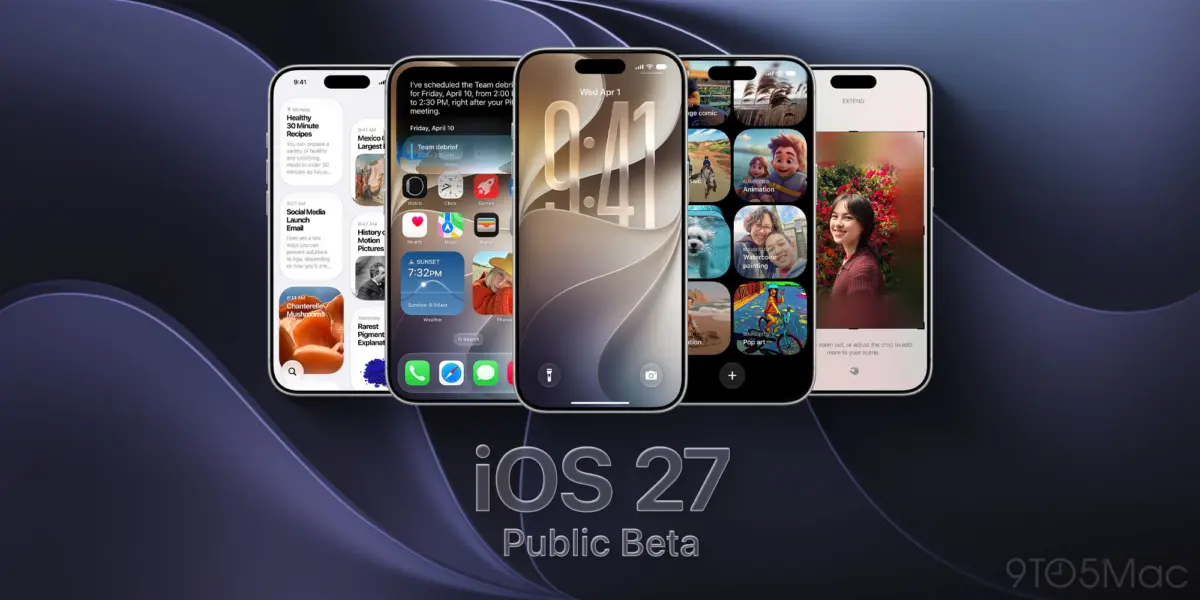
As the summer testing cycle reaches its final, high-stakes phase, Apple has officially initiated the rollout of the fifth public betas for its upcoming slate of major operating system updates. This deployment follows closely on the heels of the seventh developer beta releases, signaling that the Cupertino-based tech giant is entering the home stretch ahead of its traditional autumn hardware and software launch window.
The latest wave of software builds includes public beta equivalents for iOS 27, iPadOS 27, tvOS 27, HomePod 27, and macOS 27 Golden Gate. Notably, these public releases mirror the build numbers of their developer-facing counterparts, indicating that Apple has achieved structural parity between its commercial testing pools and its internal development channels.
Rather than introducing sweeping user-facing features or radical design overhauls—which typically characterize the early-summer beta cycles—this latest iteration is laser-focused on under-the-hood refinements, memory management optimization, critical bug fixes, and overall system stability. With the official public launch expected just weeks away, engineering teams across Apple Park are pivoting entirely from feature expansion to quality assurance, ensuring a seamless upgrade experience for hundreds of millions of active users worldwide.
Concurrently, Apple has pushed out the second public Release Candidate (RC) for macOS Sequoia 15.8 (build 24H20), hot on the heels of its developer RC counterpart. The corresponding second RC for macOS Tahoe 26.7 (build 25G224) is similarly anticipated to drop imminently, rounding out a comprehensive ecosystem-wide maintenance push.
Detailed Chronology: From Developer Builds to Public Rollouts
The cadence of Apple’s beta testing lifecycle is a meticulously choreographed sequence designed to stress-test code across increasingly broad user demographics. To understand the significance of today’s rollout, it is helpful to trace the chronological evolution of the current software cycle.
The Initial Developer Phase
The journey for iOS 27 and its sister operating systems began months ago at Apple’s Worldwide Developers Conference (WWDC), where initial developer previews were flashed onto test devices worldwide. Over the subsequent weeks and months, Apple iteratively released successive developer betas, addressing foundational API bugs, refining new interface paradigms, and introducing granular developer tools.
By the time Apple pushed out the seventh developer betas earlier this week, the codebase had matured significantly. These late-stage developer builds serve as the final proving ground for third-party app developers, allowing them to verify that their applications compile correctly, utilize new frameworks without deprecation warnings, and perform reliably under stress.
The Public Beta Bridge
Historically, Apple maintains a brief lag between developer beta deployments and their corresponding public beta releases to catch any catastrophic regressions—such as boot loops, severe battery drain, or kernel panics—that could destabilize consumer hardware.
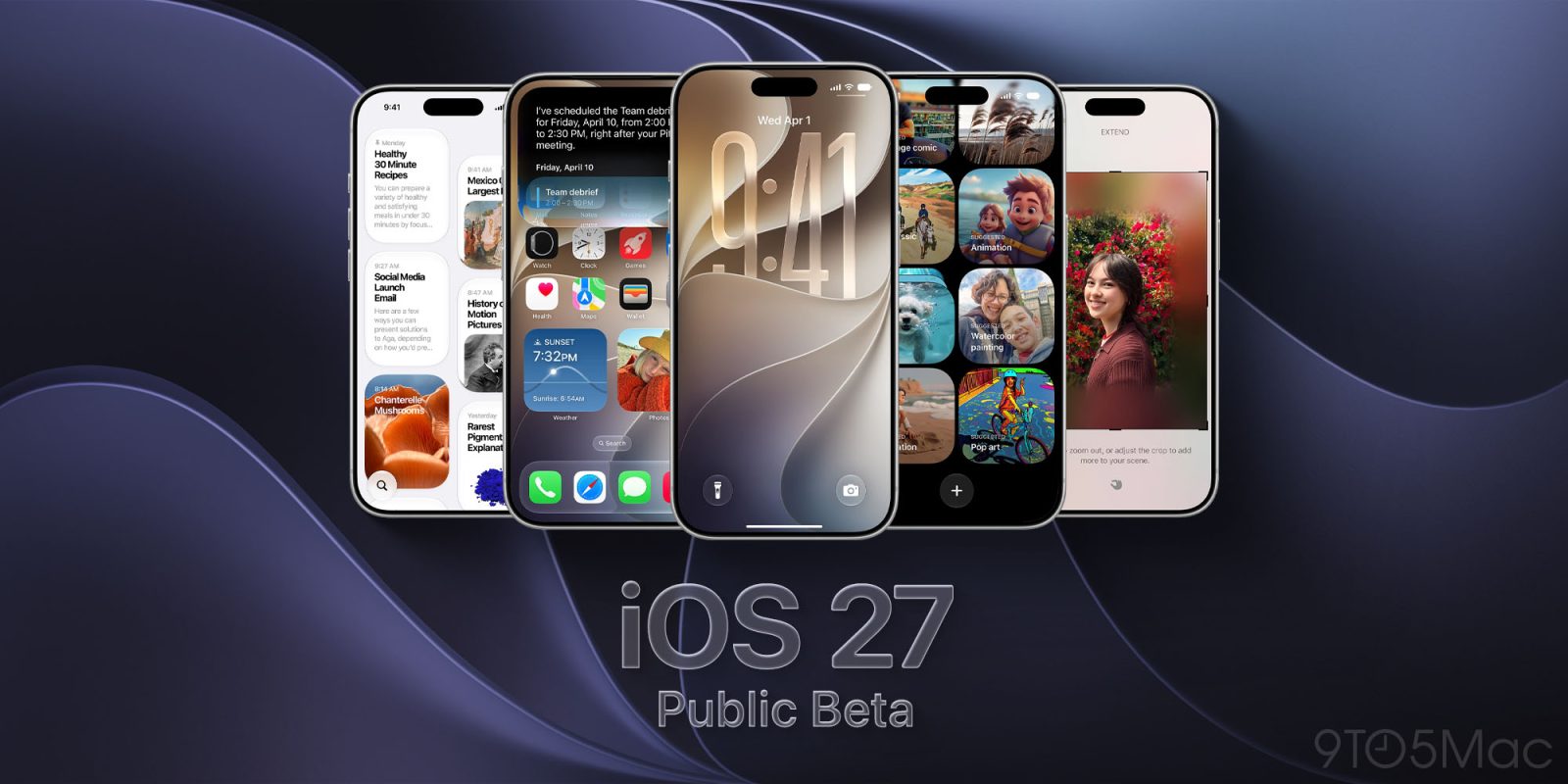
Once stability benchmarks are cleared, the builds are promoted to the Apple Beta Software Program. Today’s deployment marks the fifth public beta for the primary 27-generation software suite. By distributing these builds to everyday enthusiasts, early adopters, and hobbyists, Apple leverages crowdsourced telemetry data across a vast and diverse matrix of device configurations, ranging from legacy supported iPhones to the latest M-series iPads and Macs.
Release Candidates and the Finish Line
As the public beta cycle matures into its final fortnight, the terminology shifts toward Release Candidates (RCs). An RC represents a build that is deemed stable enough for a public commercial release, barring any critical zero-day vulnerabilities or game-breaking bugs discovered during final validation.
The simultaneous release of the second public RC for macOS Sequoia 15.8 (24H20)—following its developer counterpart—indicates that older, legacy operating systems continue to receive vital security patches and maintenance updates alongside the flagship 27-generation platforms. This dual-track support model underscores Apple’s commitment to maintaining security parity across both current-generation and mature software architectures.
Supporting Context & Metrics: What’s New Under the Hood?
While consumer-facing changelogs for the fifth public betas are notably sparse, a forensic analysis of the underlying codebases reveals a concerted effort toward performance tuning and edge-case remediation.
Focus on Stability Over Novelty
In software engineering, the transition from feature-rich development (often referred to in the industry as "feature branching") to stabilization is known as a code freeze or hardening phase. During this window, product managers and quality assurance (QA) leads enforce strict regression testing.
- Memory Footprint Optimization: Engineers are actively trimming memory leaks and reducing background wake locks to ensure that thermal performance on mobile devices remains optimal, particularly during intensive multitasking or augmented reality sessions.
- Battery Longevity Telemetry: With billions of lithium-ion batteries powering active iOS and iPadOS devices, late-stage betas heavily monitor power consumption metrics. Telemetry gathered from early public beta testers helps Apple fine-tune background task scheduling, ensuring that standby battery drain is minimized.
- Security Hardening: Late beta cycles are prime windows for patching privilege escalation flaws, sandboxing escapes, and memory corruption vulnerabilities identified by internal Red Teams or through Apple’s bug bounty program.
Ecosystem-Wide Parity
A key technical detail of today’s release is the strict synchronization between developer and public build numbers. When a public beta shares an identical build string with its developer predecessor, it guarantees that all third-party developers are testing against the exact same compiled binary that early-adopting consumers are running. This parity eliminates troubleshooting friction, allowing developers to replicate user-reported bugs with absolute confidence.
Official Statements and Industry Perspective
While Apple’s public relations and engineering teams rarely issue verbose press releases for incremental beta patches, corporate communications surrounding the software roadmap have consistently emphasized privacy, performance, and cross-device continuity.
In previous keynote addresses and developer documentation, Apple executives have underscored the philosophy driving modern OS development: “Great software is not merely measured by the number of features it introduces, but by the reliability, responsiveness, and peace of mind it delivers every single day.”

Industry analysts watching the 27-generation rollout note that Apple is adopting a more conservative, stability-first approach compared to volatile software cycles of the past. By extending the rigorous testing periods and prioritizing bug-squashing over rushed feature rollouts, Apple aims to mitigate the public relations backlash associated with buggy day-one operating system releases—a pitfall that has occasionally plagued the tech industry at large.
Furthermore, enterprise IT administrators view these late-stage public betas as a critical rehearsal window. Organizations managing fleets of enterprise iPhones, iPads, and macOS devices utilize these builds to run internal compatibility suites, ensuring that proprietary line-of-business applications will not experience catastrophic failures when the final public gold master drops next month.
Future Outlook: The Road to the General Release
With the fifth public betas now live and the Release Candidate phase looming on the horizon, the timeline for the official public rollout of iOS 27, iPadOS 27, macOS 27, and associated updates is crystallizing.
Expected Launch Window
Based on historical precedence, Apple typically uses the weeks following the seventh and eighth beta cycles to push out final Release Candidates to developers and public testers. If current testing metrics hold steady and no critical show-stopping bugs are uncovered, we can expect Apple to Greenlight the final Golden Master (GM) builds ahead of scheduled hardware announcements next month.
Recommendations for Testers and General Users
As these builds approach production-level stability, many users who have been hesitant to jump into early developer betas are tempted to join the Public Beta Program. However, Apple and industry experts maintain standard best practices for beta deployment:
- Avoid Primary Devices: Apple explicitly recommends installing beta software on a secondary, non-essential device (such as an older iPad or a backup iPhone) rather than a primary daily driver.
- Mandatory Backups: If you choose to run the public beta on your primary device, always ensure you have a recent, encrypted backup secured either via iCloud or locally on a Mac or PC prior to initiating the installation.
- Reporting Feedback: Users encountering bugs, unexpected rejections, or performance hitches should actively utilize the pre-installed Feedback Assistant app. Telemetry and diagnostic logs submitted by public beta testers play a direct role in shaping the final stability of the commercial release.
How to Enroll in Apple’s Public Beta Program
For those eager to experience the software firsthand before the public launch, enrolling is a straightforward process:
- Navigate to Apple’s official beta portal at beta.apple.com using your web browser.
- Sign in with your Apple ID and accept the terms and conditions of the Apple Beta Software Program.
- On your iOS or iPadOS device, open Settings > General > Software Update.
- Tap on Beta Updates and select the corresponding public beta profile for your device ecosystem (e.g., iOS 27 Public Beta).
- Return to the main Software Update screen, allow the system to query Apple’s servers, and tap Download and Install.
As the countdown to the official autumn release continues, the tech community will be watching closely to see how these final polish steps translate into the ultimate consumer experience.
Did you spot any subtle UI adjustments, performance gains, or hidden changes in today’s betas? Let us know your findings in the comments below.