Executive Overview
The Metro franchise has long occupied a revered position within the first-person shooter genre, celebrated just as much for its oppressive, claustrophobic atmosphere and rich storytelling as for its relentless pursuit of cutting-edge graphical fidelity. From the dimly lit, mutated tunnels of the original 2010 release to the sprawling, open-air vistas of 2019’s Metro Exodus—which famously served as an early pioneer for full ray tracing technology—developer 4A Games has consistently tested the absolute limits of what silicon can achieve.
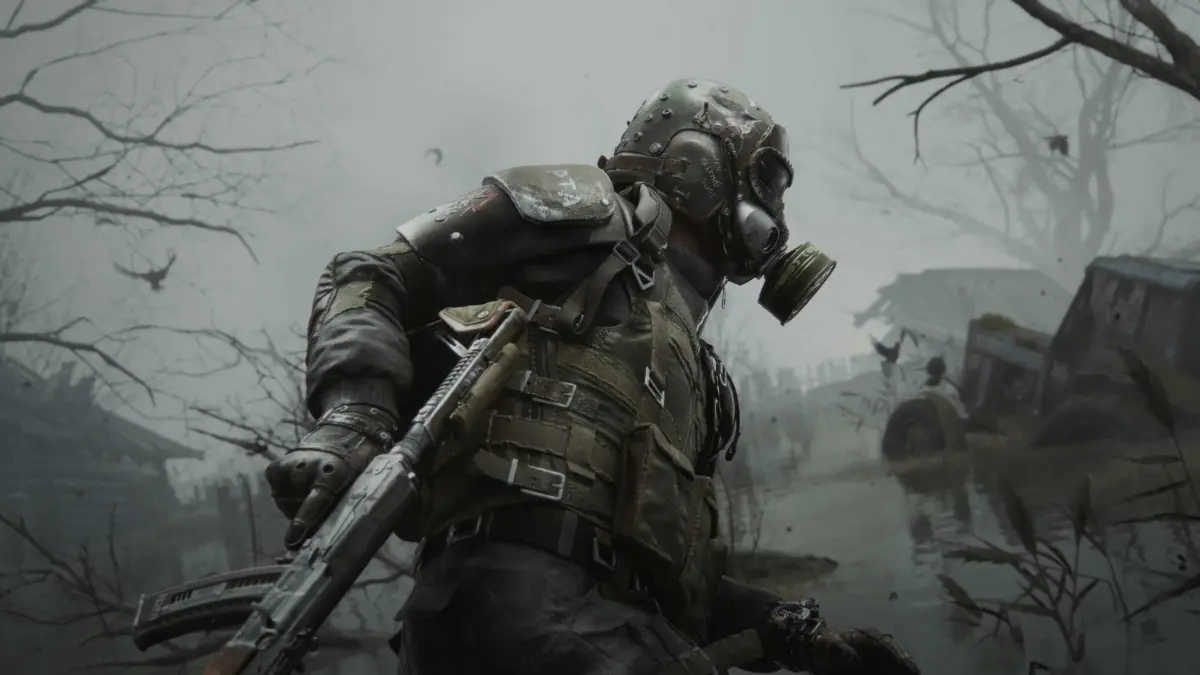
Now, the studio has returned with a breathtaking new gameplay trailer for Metro 2039, showcasing a staggering leap in visual realism that has left the gaming community simultaneously awestruck and deeply anxious. Featuring mutated, radiation-sickened monstrosities lunging straight toward the camera, the newly released "Renegade" 4K trailer attempts to induce terror through classic survival-horror tropes. Yet, the most genuinely chilling aspect of the footage is not the grotesque fauna of the post-apocalyptic wasteland, but rather the sheer, unbelievable quality of the graphics.
At the same time, this unprecedented visual fidelity arrives at a deeply precarious cultural and economic moment for PC gaming. As the industry grapples with an ongoing hardware crisis that has rendered top-tier graphics cards exorbitantly expensive and increasingly out of reach for the average consumer, games like Metro 2039 force a hard reckoning. While the trailer highlights classic franchise staples—intricate gun customization, tactile gas mask wiping, and tense stealth kills—it also raises an existential question for the modern player base: Will standard, mid-range computers even be able to run this game?
This comprehensive report delves into the technical triumphs of Metro 2039, examines the broader hardware dilemmas facing PC enthusiasts today, analyzes the optimization challenges of modern game development, and looks ahead to what this ambitious project means for the future of the survival shooter genre.
Detailed Chronology: The Evolution of 4A Games and the Path to Metro 2039
To fully understand the magnitude of Metro 2039, one must trace the technological lineage of 4A Games, a studio that has carved out a reputation for defying expectations and pushing hardware to its absolute breaking point.
The Foundation: Darkness and Confinement (Metro 2033 and Last Light)
When Metro 2033 launched in 2010, based on the dystopian novels by Dmitry Glukhovsky, it immediately became the new benchmark for PC performance testing—famously captured by the gaming community’s ubiquitous query, "Can it run Crysis or Metro?" Set entirely within the labyrinthine, ruinous subterranean transit systems of a post-nuclear Moscow, the game relied heavily on baked lighting, dense particle effects, and tight, enclosed corridors to mask hardware limitations while delivering a deeply immersive experience. Its sequel, Metro: Last Light (2013), refined these mechanics, introducing more dynamic lighting systems and further elevating the cinematic presentation.
The Great Leap Outward: Metro Exodus
The franchise underwent a radical structural paradigm shift with the release of Metro Exodus in 2019. Trading the claustrophobia of the subway tunnels for massive, semi-open sandbox environments across a ruined Russian landscape, 4A Games demonstrated that their proprietary engine was capable of rendering vast, dynamic outdoor spaces. Crucially, Metro Exodus positioned itself at the bleeding edge of graphics technology by adopting full ray tracing (RTX) and global illumination early in the lifecycle of modern ray-tracing hardware. It proved that 4A was not merely a developer of linear shooters, but a technical powerhouse capable of competing with the industry’s biggest giants.
The "Renegade" Reveal: Entering the Next Generation
The unveiling of the Metro 2039 "Renegade" gameplay trailer marks the formal introduction of the franchise into the current generation of hardware capabilities. Eschewing the rough edges of previous iterations, the new footage reveals a level of high-frequency micro-detail and complex, physically based soft lighting that frequently blurs the line between pre-rendered CGI and real-time gameplay.
According to attendees and early reports from Gamescom in Germany—where 4A Games is hosting a playable demo this week—the game retains the core mechanical identity of its predecessors. Players can once again expect granular weapon customization menus, atmospheric survival mechanics such as wiping grime and blood from gas masks, and high-stakes stealth mechanics. However, the wrapper in which these mechanics are delivered represents a generational leap forward, utilizing photorealistic texturing and reactive environmental physics that respond dynamically to player interaction and unpredictable radioactive weather phenomena.
Supporting Context & Metrics: The Hardware Crisis and the "Tech Pause"
The breathtaking visual fidelity of Metro 2039 does not exist in a vacuum. It arrives precisely when the global PC gaming community is experiencing a severe structural crisis regarding hardware accessibility and cost.
The Cost-of-Gaming Escalation
Over the past several hardware generations, the cost of top-tier graphical processing units (GPUs) has skyrocketed. Flagship graphics cards now command prices that rival entire pre-built systems of a decade ago. At the same time, inflation, supply chain fluctuations, and shifting corporate priorities have left the average consumer priced out of the high-end hardware market.
This widening chasm between the hardware required to experience games at their absolute peak and the hardware actually sitting on the desks of mainstream gamers has created a pervasive sense of fatigue. Many players are no longer excited by announcements of unprecedented graphical leaps; instead, they feel a deep-seated dread regarding optimization, systemic stuttering, and exorbitant system requirements. This growing disillusionment has even given rise to cultural phenomena like "The Great Tech Pause," where segments of the PC gaming community actively choose to step off the upgrade treadmill, holding onto mid-tier or aging hardware (such as the ubiquitous NVIDIA GTX 1060 and RTX 3060 tiers) for as long as humanly possible.
The Optimization Paradox
This hardware reality places immense pressure on developers to deliver robust scalability. Historically, PC ports have varied wildly in quality, with many modern titles relying heavily on upscaling technologies (like DLSS, FSR, and XeSS) and frame-generation crutches to mask underlying optimization deficiencies.
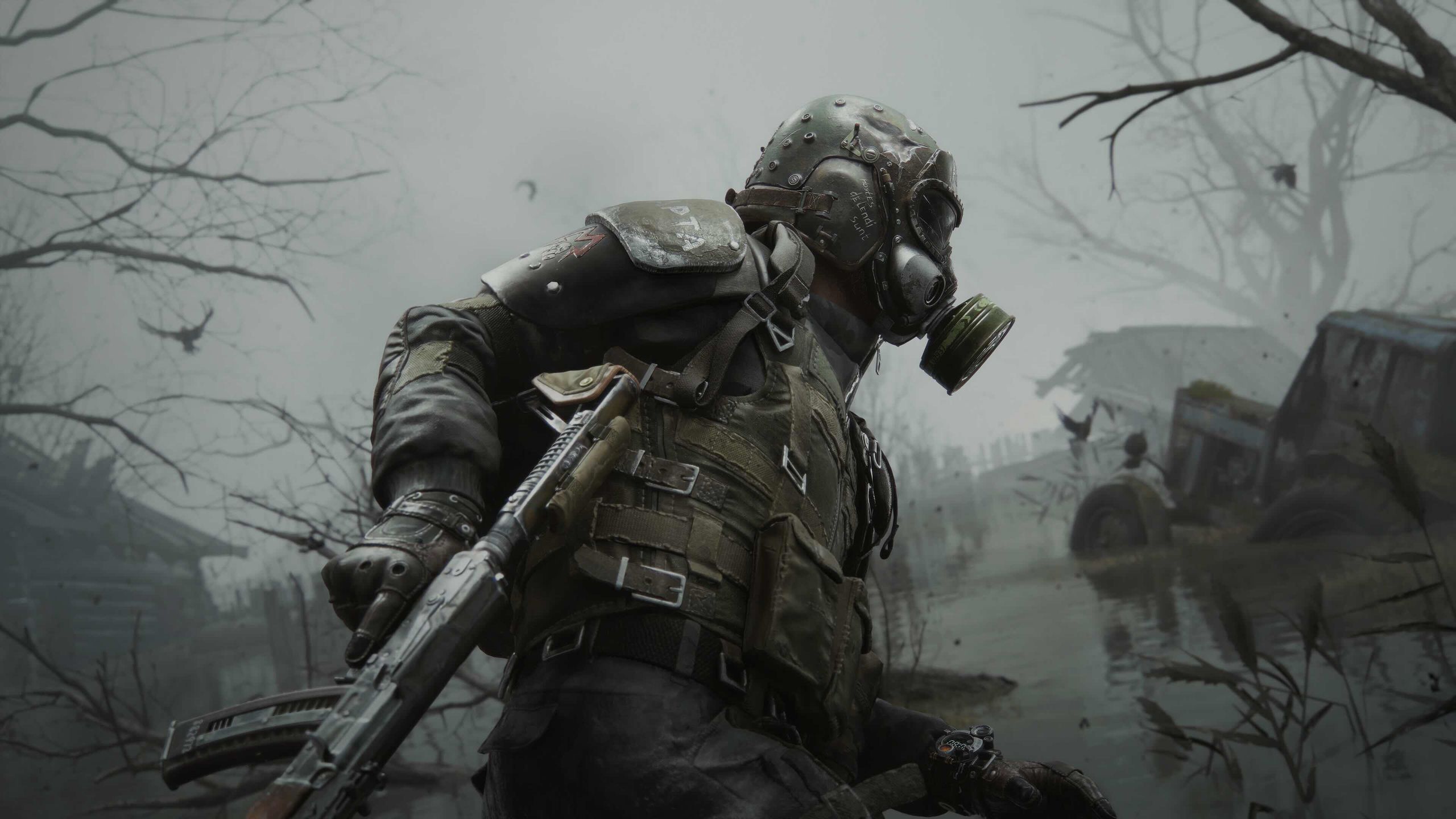
When a trailer like Metro 2039 drops—featuring outdoor spaces that look indistinguishable from actual documentary photographs—the immediate knee-jerk reaction from a significant portion of the player base is apprehension. Can a standard gaming rig handle this, or will it require a $1,500 GPU upgrade just to maintain a stable framerate?
Official Statements and Technical Analysis: Hope Amidst the Uncertainty
Despite the legitimate fears surrounding modern PC optimization, a closer examination of 4A Games’ history and the technological architecture behind Metro 2039 offers several reasons for cautious optimism.
The Console Baseline Safety Net
Crucially, Metro 2039 is fundamentally a console-targeted multiplatform title. Regardless of how photorealistic its PC counterpart appears at maximum settings, the game must ultimately run on current-generation hardware, specifically including the Xbox Series S—the acknowledged low-water mark for modern console performance.
Sony’s PlayStation 5 and Microsoft’s Xbox Series X|S establish a mandatory optimization floor. Developers cannot afford to ignore console architecture, which means that scalable LODs (Levels of Detail), aggressive culling, and optimized asset streaming are guaranteed to be foundational pillars of the game’s development. For PC players with mid-range rigs, this ensures that the game will have settings menus deep and flexible enough to scale down to reasonable performance targets, even if doing so sacrifices some of the trailer’s jaw-dropping visual majesty.
The Proprietary Engine Advantage
Another critical factor working in favor of Metro 2039’s eventual performance is 4A Games’ reliance on their proprietary in-house engine.
In an era where a vast majority of the AAA industry has surrendered to the homogenization of Epic Games’ Unreal Engine 5—frequently resulting in stutter-heavy, CPU-bound PC ports plagued by shader compilation issues—4A’s veteran engineers write and optimize their own tools. The 4A Engine has historically been custom-built specifically to handle the unique demands of the Metro universe: dynamic volumetric fog, complex lighting models, dense particle systems, and massive open-world streaming without jarring loading screens.
Because the engine is tailor-made by developers who intimately understand every line of its codebase, there is a distinct possibility that Metro 2039 will offer a much smoother, better-optimized launch experience than the typical Unreal Engine 5 release. Experienced engineers who have wrung performance out of everything from aging Xbox 360 hardware to high-end PCs are inherently positioned to maximize hardware efficiency across a wider spectrum of systems.
Future Outlook: What Metro 2039 Means for the Industry
As Metro 2039 continues its development cycle under the watchful eye of the global gaming community, its eventual release will serve as a definitive litmus test for the industry.
| Development Metric | Status / Expectation | Implications for Players |
|---|---|---|
| Release Window | Unannounced (Playable demo at Gamescom) | Indicates early-to-mid optimization phase; ample time for community feedback. |
| Engine Architecture | Proprietary 4A Engine | Potential for superior custom optimization compared to generic Unreal Engine 5 titles. |
| Hardware Scalability | Console-mandated (Xbox Series S baseline) | Guarantees lower-end performance toggles, though high-end PCs will still be required for max settings. |
| Visual Target | Photorealism, advanced soft lighting | High ceiling for graphical enthusiasts; potential barrier for budget-conscious gamers. |
The Balancing Act of Artistic Ambition
Ultimately, Metro 2039 encapsulates the eternal struggle of high-end video game development: the desperate push to make virtual worlds indistinguishable from reality versus the economic and practical realities of the people buying the hardware.
If 4A Games successfully threads the needle—delivering a breathtaking, photorealistic wasteland that can still scale down gracefully to run at a locked, butter-smooth 60 frames per second on mid-range rigs—Metro 2039 will be remembered not just as a visual masterpiece, but as a triumph of engineering discipline.
Conversely, if the game demands astronomical system requirements that alienate the very community that built its success, it may serve as the ultimate cautionary tale of an industry moving too fast for its audience to keep pace.
For now, with a playable demo turning heads at Gamescom in Germany, the wasteland beckons once again. Whether our computers will survive the journey remains the most terrifying question of all.