Executive Overview
The video game industry is a paradox of scale. At one end of the spectrum lie astronomical budgets, decade-long development cycles, and cultural juggernauts that command the attention of mainstream media long before a single copy is sold. At the other end exist independent auteurs who weaponize surrealism, deconstruct the medium’s inherent boundaries, and hijack major showcases with mind-bending teasers that leave players questioning reality.
This dynamic was brought into sharp, undeniable relief during an eventful week in late August 2026. While Rockstar Games finally pulled back the curtain on an extended look at Grand Theft Auto 6—reaffirming its status as the most anticipated commercial blockbuster of all time—another trailer quietly detonated across the gaming consciousness. Daniel Mullins, the mastermind behind indie darlings Pony Island and Inscryption, released the latest trailer for Pony Island 2: Panda Circus during Gamescom’s Opening Night Live stream.
Though swallowed in a deluge of iterative sequels, high-budget cinematic shooters, and Elden Ring derivatives, Mullins’ new footage offered something radically different: an unfiltered dose of psychological horror, fourth-wall-breaking chaos, and unclassifiable avant-garde game design.
This article explores the striking juxtaposition of these two major industry events. By examining the massive scale of Grand Theft Auto 6 alongside the defiant unpredictability of Pony Island 2, we explore the current state of interactive entertainment—an ecosystem where multi-million-dollar open-world sandboxes and disruptive indie experiments coexist, continually redefining the outer limits of what a video game can achieve.
Detailed Chronology: A Week of Extremes at Gamescom 2026
The final week of August 2026 will long be remembered as a masterclass in tonal whiplash for the video game industry. The sequence of events unfolded across multiple fronts, dominated first by the towering shadow of Rockstar Games, before pivoting abruptly into the uncanny valley of independent creation.
The Rockstar Awakening
For months, the gaming community lived in a state of suspended animation regarding Grand Theft Auto 6. Following its initial reveal trailer, information had trickled out via corporate earnings reports and speculative industry murmurs. However, the paradigm shifted in late August when Rockstar unleashed a comprehensive, extended media showcase of the Leonida setting.
The preview offered a breathtaking look at the fictionalized Florida landscape, boasting staggering density, unprecedented NPC behavior models, and a sun-drenched aesthetic set to a nostalgic soundtrack featuring artists like Phil Collins and Birdman. For millions of players, the footage validated the years of waiting. It confirmed that the November launch window would deliver a technical benchmark for current-generation hardware, capturing the sprawling socio-cultural satire that has defined the franchise for decades.
The Gamescom Opening Night Live Interruption
Yet, as the industry digested the GTA 6 media blitz, Gamescom’s Opening Night Live stream unspooled its marathon runtime. Traditionally a staging ground for bombastic AAA announcements, cinematic trailers, and predictable franchise sequels, the broadcast threatened to blur into a homogenized sea of high-production-value familiarity.
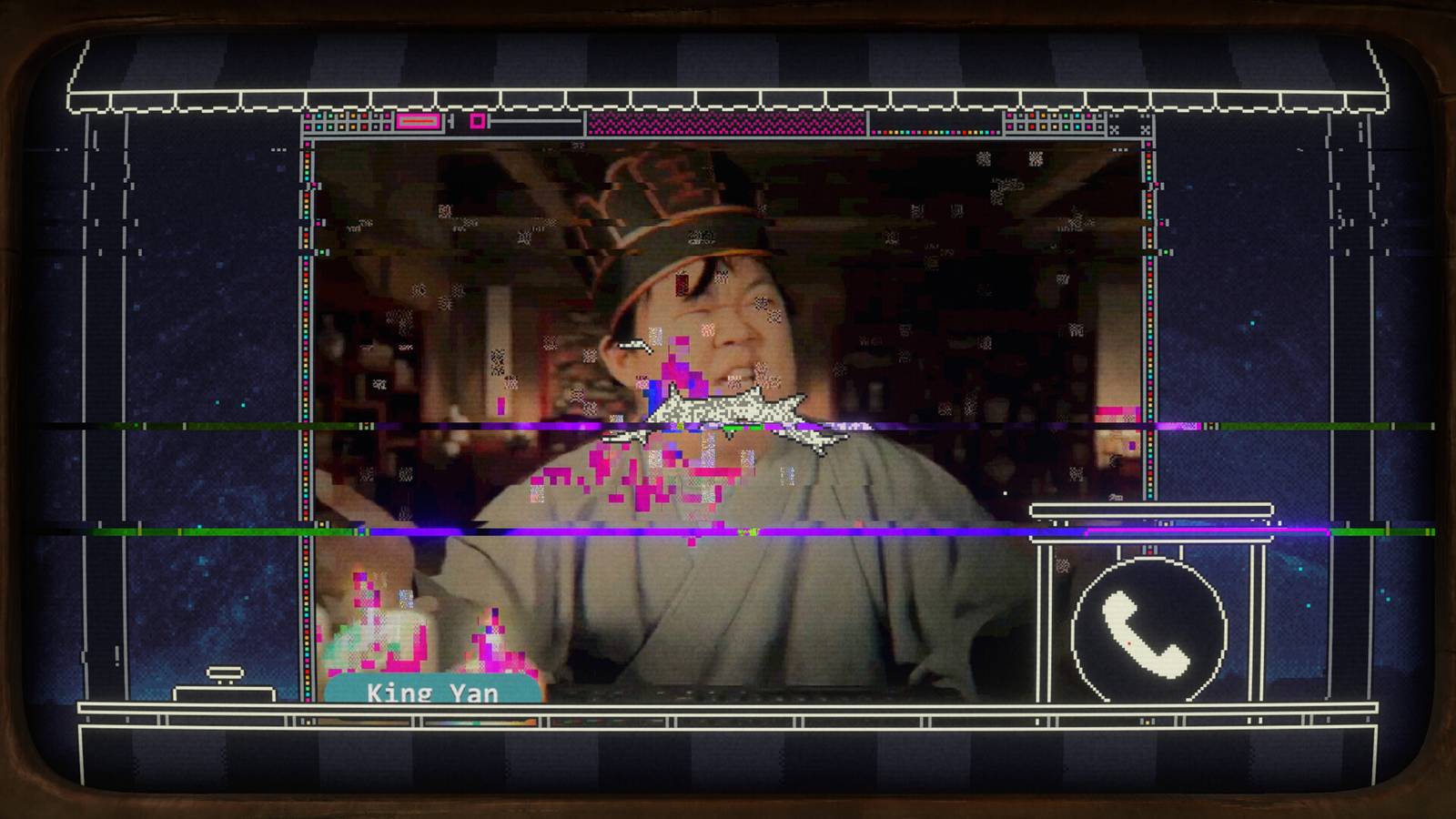
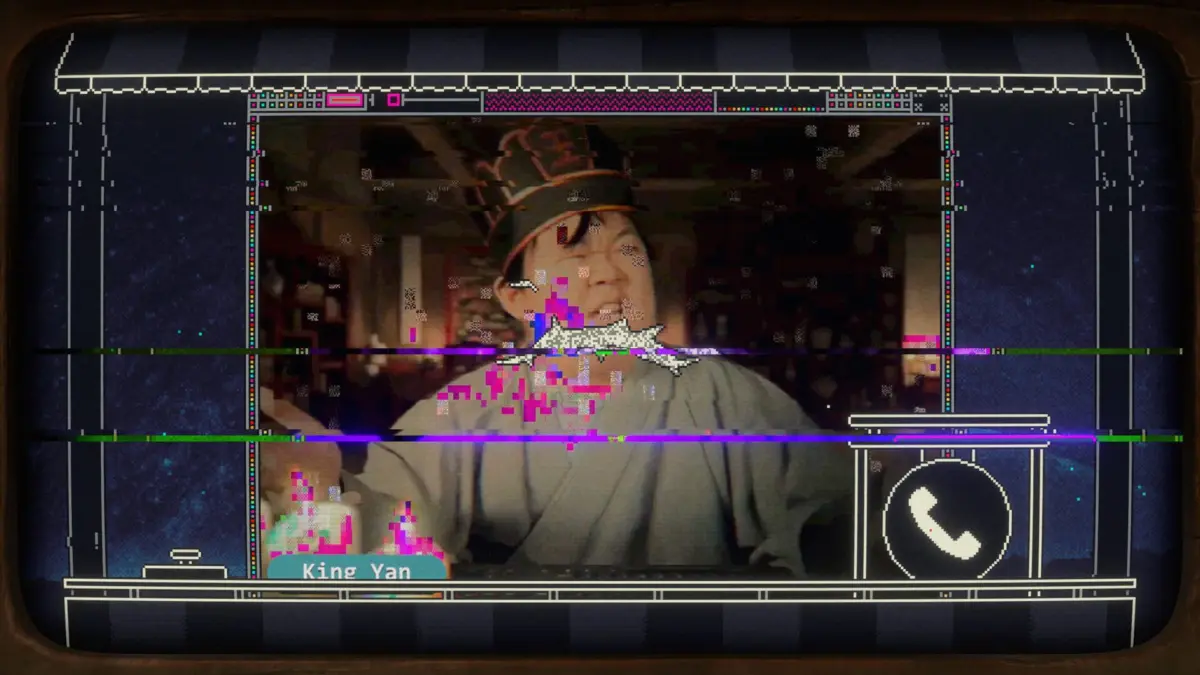
Amidst this sensory overload, Daniel Mullins Games delivered the stroke-of-genius disruption: a fresh, deeply unsettling trailer for Pony Island 2: Panda Circus.
First teased quietly at The Game Awards in 2023, the Gamescom 2026 trailer expanded exponentially on the weirdness of the upcoming title. The clip opened with a disorienting, first-person sequence before violently pivoting into a rapid-fire montage of primitive retro minigames, surreal live-action full-motion video (FMV) footage, and abstract existential dread. Positioned awkwardly among trailers designed to sell hyper-realistic graphics and tactical combat loops, the Pony Island 2 trailer felt less like a marketing asset and more like an unauthorized broadcast breaking through a commercial television feed.
Supporting Context & Metrics: The Spectrum of Game Development
To fully appreciate the cultural weight of this dual release window, one must examine the vastly divergent ecosystems that produced Grand Theft Auto 6 and Pony Island 2: Panda Circus.
The Engineering Feat of GTA 6
Grand Theft Auto 6 represents the absolute peak of AAA industrial might.
- Budgetary Scale: While exact figures remain closely guarded by Take-Two Interactive, financial analysts estimate development and marketing expenditures to exceed $1 billion, making it comfortably the most expensive entertainment product in human history.
- Development Workforce: Thousands of developers spread across multiple international Rockstar studios have spent over a decade refining physics engines, artificial intelligence routines, and narrative branching.
- Technical Ambition: The game targets maximum utilization of current-generation hardware (PlayStation 5 Pro, Xbox Series X/S, and PC), pushing lighting, draw distances, and simulation density to unprecedented heights. Its existence relies on a foundation of iterative polish, where every dollar spent aims to narrow the gap between virtual simulation and tangible reality.
The Subversive Craft of Daniel Mullins
Conversely, Pony Island 2: Panda Circus operates on an artisanal, auteur-driven scale.
- Independent Provenance: Driven primarily by indie developer Daniel Mullins, the project relies on clever conceptual engineering rather than brute-force computational power.
- The Legacy of Disruption: To understand Pony Island 2, one must look at its predecessors. The original Pony Island (2016) masqueraded as a broken, low-budget arcade game about a cursed horse before evolving into a satirical battle against the literal Devil inside a malfunctioning virtual machine. Its successor, Inscryption (2021), took these ideas further, blending roguelike deckbuilding, escape-room puzzles, and live-action psychological horror into a multi-layered narrative puzzle box that ultimately claimed numerous Game of the Year accolades.
- The Steam Profile: Eschewing traditional corporate marketing jargon, the official Steam page for Pony Island 2 describes the project with delightful ambiguity: a "phantasmagorical voyage through time, myth, divinity, and video games." The scheduled release date is locked in for April 27 on Windows PC.
| Feature Matrix | Grand Theft Auto 6 | Pony Island 2: Panda Circus |
|---|---|---|
| Primary Developer | Rockstar Games | Daniel Mullins Games |
| Estimated Budget | Blockbuster / $1B+ Scale | Independent / Lean Auteur Model |
| Core Aesthetic | Hyper-realistic open-world simulation | Surreal, mixed-media, retro-horror pastiche |
| Design Philosophy | Expansive world-building & meticulous immersion | Meta-fictional fourth-wall demolition |
| Target Platform(s) | Current-Gen Consoles & PC | PC (Steam) |
Official Statements & Industry Perspectives
The juxtaposition of these two titles has sparked vital conversations across the game development community regarding the definition of artistic ambition within the medium.
Industry analysts and critics have noted that the simultaneous spotlight on GTA 6 and Pony Island 2 exposes a false dichotomy often pushed by marketing departments—the idea that players must choose between technical supremacy and creative risk-taking.
In public forums and editorial breakdowns, commentators have pointed out that both titles, despite their polar-opposite production models, share a fundamental trait: they are uncompromised visions of creator intent.

Rockstar Games operates with the luxury of infinite resources to realize its vision of a hyper-detailed American satirical playground. Meanwhile, Daniel Mullins operates with the agility of an independent creator who treats the software window not as a transparent pane looking into a fantasy world, but as a physical object to be smashed, rewritten, and toyed with.
As one contemporary industry critic observed:
"There is no rulebook decreeing what a video game needs to be. It can either be the most expensive open-world simulation ever conceived, or it can be whatever bat-the-hell-insane artifact Daniel Mullins has pulled from his subconscious. The magic of the medium lies in the fact that both can exist simultaneously on the exact same digital storefront."
Future Outlook: Where the Industry Goes From Here
As the industry marches toward the final quarters of the decade, the lessons of this late-August news cycle offer a healthy antidote to corporate fatigue.
Major showcases like Gamescom’s Opening Night Live frequently face criticism for leaning too heavily into predictable formulas—service games, extraction shooters, and cinematic action-adventure clones designed to mitigate financial risk for risk-averse publishers. Yet, the existence of outliers like Pony Island 2: Panda Circus proves that innovation continues to thrive on the cultural and economic fringes of the industry.
The Symbiosis of Scale
Far from being mutually exclusive, the colossal success of AAA blockbusters and the subversive brilliance of indie experiments exist in a symbiotic relationship.
- The Anchor: Massive titles like Grand Theft Auto 6 pull casual consumers into the hardware ecosystem, ensuring that millions of households own the gaming consoles and PCs required to run software.
- The Antidote: Once players are within the ecosystem, indie titles provide the creative antidote to formulaic burnout. They remind audiences that video games remain uniquely capable of breaking the fourth wall, challenging player assumptions, and delivering experiences that could never be translated into film or literature.
Looking Ahead to 2026 and Beyond
With Pony Island 2: Panda Circus set to launch on April 27, and Grand Theft Auto 6 slated for its major late-year window, players face an embarrassment of riches.
For those feeling fatigued by the relentless homogeneity of mainstream marketing, the advice from industry veterans remains clear: look past the billion-dollar marketing budgets and peer into the dark, weird corners of the independent circuit. That is where the beating heart of the medium’s future is currently being forged.