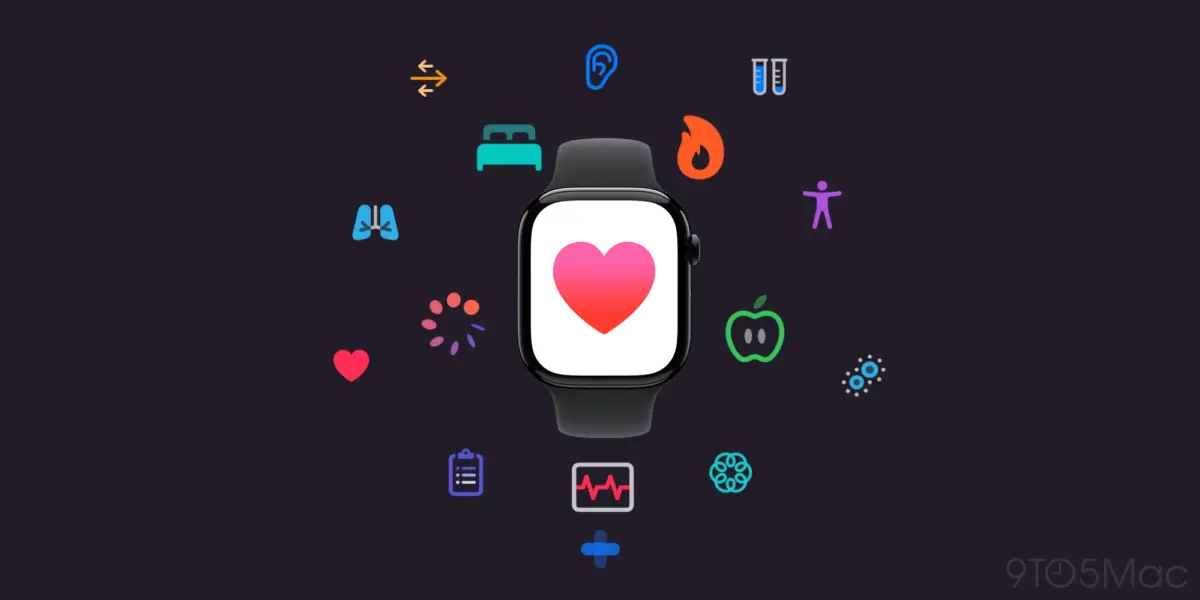
As the technology sector trains its collective gaze on the horizon of Apple’s traditional autumn hardware event, anticipation is reaching a fever pitch. With the impending debut of the Apple Watch Series 12 and the rugged Apple Watch Ultra 4 slated for next month, the conversation among analysts and consumers alike usually centers on titanium finishes, brighter displays, and incremental processing bumps. However, a quieter, more profound narrative is playing out behind the scenes—one rooted deeply in software, artificial intelligence, and the future of preventative medicine.
For much of the year, rumors have swirled regarding a sweeping, long-overdue redesign and functional overhaul of the iOS Health app. Originally projected to make a splash alongside early developer betas, the initiative faced internal delays, causing it to conspicuously miss the initial WWDC keynote windows and subsequent software cycles. Yet, as the calendar inches closer to September, industry watchers are asking a vital question: Could Apple’s most ambitious health software update yet—internally designated as Project Mulberry—still break cover alongside the company’s next-generation wearables?
Executive Overview
The evolution of Apple’s health ecosystem has always been a masterclass in patient, methodical deployment. What began as a rudimentary dashboard for step counts and basic biometric data in iOS 8 has progressively transformed into a clinical-grade preventative monitor, capable of detecting complex cardiovascular anomalies, sleep disorders, and hypertension.
Despite this hardware-driven momentum, the software interface managing these troves of physiological data has remained largely iterative, occasionally buckling under the sheer weight of its own complexity. Enter Project Mulberry: a comprehensive modernization effort designed to inject advanced artificial intelligence, streamlined user interfaces, and advanced tracking modalities directly into the user’s pocket.
Although initially anticipated to headline the software rollouts earlier this year, Project Mulberry missed its anticipated summer debut. Nevertheless, historical precedent suggests that Apple is entirely comfortable withholding major health and wellness software features from its initial June WWDC announcements, choosing instead to stage them alongside autumn hardware releases. As we dissect the roadmap, supply chain hints, and structural shifts of Apple’s health division, a compelling picture emerges: Project Mulberry may yet materialize this September, redefining how millions of users interact with their personal health data.
Detailed Chronology: The Road to Project Mulberry
To understand the current state of speculation surrounding Project Mulberry, it is necessary to trace the timeline of leaks, adjustments, and shifting corporate strategies that have defined Apple’s software roadmap over the past eighteen months.
The Early Rumors and the iOS 26.4 Window
The narrative began earlier this year when supply chain whispers and developer community leaks pointed toward an aggressive timeline for iOS. Sources familiar with Apple’s internal development cycles indicated that a major health app overhaul was being groomed for a mid-cycle release, tentatively pinned to iOS 26.4. The goals were clear: introduce a modernized UI, reduce data fragmentation, and roll out sophisticated analytical tools powered by machine learning.
However, software engineering at this scale is fraught with friction. As the spring progressed, internal priorities shifted. The sprawling scope of the health coach service—initially conceptualized as a standalone subscription tier akin to an interactive medical advisory board—hit developmental bottlenecks. The project was temporarily scaled back, forcing Apple’s engineering teams to pivot from an standalone service model to a deeply integrated, native application experience. Consequently, the iOS 26.4 window passed without the anticipated reveal, and subsequent software iterations rolled out without the anticipated overhaul.
The WWDC Blackout and Mark Gurman’s Warning
As the tech world turned its attention toward WWDC, expectations were managed by industry insiders. Prominent Bloomberg journalist Mark Gurman issued a crucial pre-keynote advisory, warning that the new health initiatives tied to Project Mulberry would likely skip the summer developer conference entirely.
Gurman’s reporting illuminated the shifting scope of the initiative:
“The Apple Health app is getting a range of new AI features that were originally planned for a comprehensive health coach service internally dubbed ‘Mulberry’ that was scaled back. The upgrade, which includes improved blood sugar-related tracking and the ability to use a device camera to monitor a person’s workout, is not expected to arrive in the initial release of iOS 27. Apple may also announce these at a later date than WWDC.”
This forecast proved entirely accurate. WWDC came and went with extensive highlights directed toward spatial computing, system-wide aesthetic adjustments, and other foundational updates, while the Health app received only modest, behind-the-scenes improvements. The omission left consumers wondering if the project had been shelved indefinitely or simply relegated to a longer incubation period.
Precedence: Why a September Reveal Remains Highly Probable
Skeptics often argue that if a software feature is not unveiled during the June WWDC keynote, it is effectively barred from deployment until the following calendar year, or relegated to minor, incremental point releases. Yet, a rigorous examination of Apple’s historical deployment patterns reveals that the company routinely shatters this assumption, particularly when it comes to health and wellness technologies.
The September Software Playbook
Apple recognizes that health features carry immense marketing gravity—gravity that is most effectively harnessed when paired with the annual September hardware spectacle. Consider the following historical rollouts that bypassed June entirely in favor of an autumn showcase:
- Low Power Mode in watchOS 9: While watchOS 9 established broad architectural adjustments revealed at WWDC, specific power-management modalities and auxiliary health-adjacent battery tracking optimizations saw prominent positioning and refinement during the autumn rollout, aligning with the release of the Apple Watch Series 8.
- Sleep Apnea Detection in watchOS 11: Perhaps one of the most clinically significant announcements in recent memory, the accelerometer-based sleep apnea notification feature was detailed extensively during the September hardware event, underscoring its synergy with the Apple Watch Series 10 hardware capabilities, despite the underlying algorithms relying on existing sensor architectures.
- Hypertension Notifications in watchOS 26: Continuing this trend, advanced vascular monitoring and hypertension alerts were brought to the forefront during autumn deployment cycles, proving that Apple is fully willing to use its hardware stages to command public attention for software-driven health breakthroughs.
These precedents establish a clear corporate strategy: Apple is entirely comfortable holding back major health app architectures to synchronize them with the media dominance of a September iPhone and Apple Watch event. Even if Project Mulberry does not strictly require the silicon or sensor arrays of the upcoming Apple Watch Series 12 or Ultra 4, the marketing momentum generated by a new hardware generation provides the ideal launchpad for a software experience of this magnitude.
Feature Deep Dive: What Project Mulberry Actually Entails
While rumors regarding Apple’s health initiatives have occasionally shifted, a coherent blueprint of Project Mulberry has crystallized through persistent leaks and patent filings. The overhaul is expected to manifest across three major pillars: artificial intelligence integration, computer vision utilization, and a fundamental UI/UX redesign.

+-----------------------------------------------------------------+
                 PROJECT MULBERRY PILLARS
+--------------------------+--------------------------------------+
| Pillar 1: AI Coach       | Proactive, data-driven wellness tips |
+--------------------------+--------------------------------------+
| Pillar 2: Computer Vision| Real-time camera-based workout form  |
|                          | and movement analysis                |
+--------------------------+--------------------------------------+
| Pillar 3: UI Overhaul    | Streamlined dashboards to conquer    |
|                          | data fatigue and fragmentation       |
+--------------------------+--------------------------------------+
1. The AI Health Coach
Early iterations of the project pointed toward a standalone, subscription-based "Health+" service that would feature video consultations and personalized insights from human medical professionals. While that monetization and service model was reportedly scaled back due to logistical and regulatory hurdles, the core technological ambition survived.
Project Mulberry introduces a sophisticated, on-device AI health coach. Unlike static notification engines that ping users when heart rates spike or sleep scores drop, this AI layer synthesizes cross-domain data—correlating sleep patterns, nutritional logs, active workout loads, and biometric trends—to offer proactive, conversational, and actionable wellness insights. Instead of staring at disparate graphs, users will receive synthesized interpretations of their body’s daily performance.
2. Computer Vision and Workout Tracking
One of the most intriguing technological leaps tied to Project Mulberry is the integration of advanced computer vision. Rumors indicate that the upgraded Health framework will leverage the iPhone or iPad device camera to monitor a user’s physical movements during workouts and specialized health tasks.
By analyzing biomechanics in real-time, the system can provide immediate feedback on posture, form, and exercise execution. This bridges the gap between passive wearable tracking (which measures what you did) and active kinetic coaching (which evaluates how you did it), positioning Apple deeper into the digital fitness and physical therapy space.
3. Comprehensive UI/UX Redesign
For years, power users of the Apple Health app have wrestled with "data fatigue." While the app captures an astonishing array of metrics—from walking steadiness and ECG readings to environmental sound levels and blood oxygen saturation—finding correlations and making clinical sense of that information has often required third-party applications.
Project Mulberry introduces a radically streamlined interface. The design philosophy centers on contextual hierarchy, presenting vital metrics front-and-center while categorizing granular data into digestible, thematic dashboards. The goal is to transform the Health app from a passive database into an intuitive daily companion.
Supporting Context & Market Metrics
To fully appreciate the strategic urgency driving Project Mulberry, one must examine the broader macroeconomic and digital health landscape. The global digital health market is expanding exponentially, projected to scale past historic valuations as consumers increasingly demand preventative, decentralized healthcare tools.
The Consumer Shift Toward Preventative Tech
Wearables are no longer viewed merely as fitness trackers for elite athletes; they are increasingly recognized by mainstream consumers and geriatric demographics alike as critical life-safety and wellness monitors. According to industry analytics:

- Over 35% of global smartwatch owners actively monitor clinical-grade metrics (such as heart rhythm, blood oxygen, and sleep architecture) weekly.
- Consumer trust in tech-ecosystem health platforms has risen sharply, with studies indicating that users prefer unified health dashboards over proprietary medical hardware apps.
- Retention rates for digital health platforms correlate directly with the presence of actionable, personalized insights rather than raw data logs.
Apple’s deliberate, heavily regulated entry into this space—characterized by FDA clearances for features like Atrial Fibrillation detection, ECGs, and sleep apnea monitoring—has established an immense moat of consumer trust. However, as competitors lean aggressively into AI-driven coaching and automated health insights, Apple must modernize the software layer to maintain its market dominance. Project Mulberry is the architectural answer to this competitive pressure.
Official Perspectives and Regulatory Hurdles
Navigating the deployment of health-related software is a labyrinthine undertaking. Unlike standard entertainment or productivity applications, features that interpret biometrics, track blood sugar trends, or offer health advice are subject to intense regulatory scrutiny by agencies such as the U.S. Food and Drug Administration (FDA) and international health authorities.
While Apple executives—including CEO Tim Cook, who has famously stated that Apple’s greatest contribution to mankind will likely be in health—maintain a fiercely optimistic public stance, corporate communications regarding unannounced software remain tight-lipped. Regulatory caution is precisely why large-scale projects like Mulberry undergo prolonged incubation periods.
Navigating the Balance Between Wellness and Medical Advice
A central challenge for Apple has been walking the fine line between general wellness coaching and regulated medical diagnosis. By scaling back the initial concept of a human-backed "Health+" service and leaning into algorithmic, data-driven AI insights, Apple mitigates certain liability thresholds while still delivering profound utility. The system acts as an analytical mirror, reflecting the user’s data back to them with intelligent context, leaving clinical intervention firmly in the hands of qualified medical professionals—a boundary Apple’s legal and regulatory teams monitor with extreme vigilance.
Future Outlook: What to Expect Next Month
As we look toward the imminent September media event, the trajectory of Project Mulberry remains one of the technology sector’s most compelling open questions.
Even if the engineering roadmap dictates a staggered rollout—perhaps launching initially as a marquee feature of iOS 27.1 or watchOS 27.1 in October rather than day-one of the September hardware release—the underlying momentum is undeniable. The convergence of advanced AI, computer vision wellness tracking, and a long-overdue interface overhaul represents the next evolutionary leap for Apple’s ecosystem.
For the everyday consumer, the arrival of Project Mulberry will mean trading data overload for genuine clarity. For the industry at large, it will signal Apple’s definitive transition from a collector of biometric data to an active, intelligent partner in personal longevity and daily wellness.
As the autumn leaves begin to turn and invitation letters find their way to press desks around the world, all eyes will be on the stage. When Apple executives pull back the curtain on the next generation of hardware next month, the true star of the show may very well be residing quietly inside our pockets, ready to change how we understand our own bodies forever.