Executive Overview
In a decisive move to secure its ecosystem and protect consumer privacy, home appliance giant LG Electronics USA has announced plans to suspend any smart television applications that turn user devices into always-on residential proxy nodes. This enforcement action comes on the heels of a sobering cybersecurity investigation revealing that a staggering 42 percent of applications available on LG’s webOS app store quietly repurposed smart televisions to route external internet traffic through unsuspecting households.
The widespread integration of software development kits (SDKs) designed to monetize bandwidth has transformed standard living room hardware—such as smart TVs used for streaming and gaming—into unwitting exit nodes for commercial proxy networks. While app developers have increasingly leaned on these SDKs as an alternative revenue model, and proxy providers defend their services as strictly regulated and consent-based, tech manufacturers are facing mounting pressure to secure consumer-grade hardware. LG’s sweeping policy shift marks a pivotal turning point in ecosystem governance, signaling that living room devices will no longer be treated as collateral hardware for third-party traffic routing.
Detailed Chronology: From Discovery to Enforcement
The Spur Security Revelation
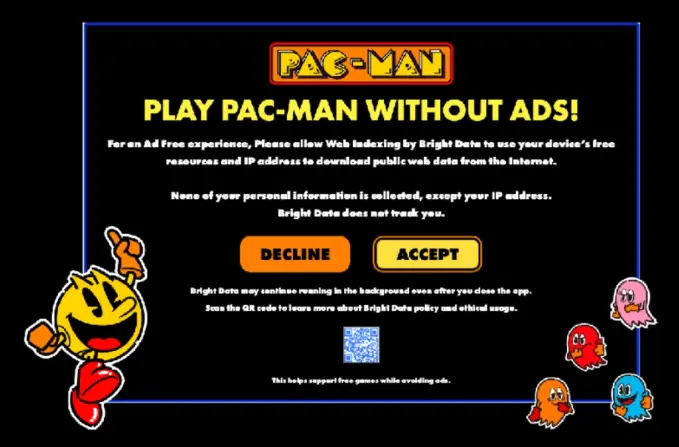
The catalyst for LG’s recent policy reversal occurred in early July 2026, when cybersecurity researchers at Spur published a groundbreaking report examining the prevalence of residential proxy software development kits embedded within smart TV applications. The investigation shed light on a largely unregulated monetization practice where everyday consumer apps—ranging from basic casual games like Pac-Man to utility tools and custom screensavers—shipped with hidden code designed to convert consumer devices into commercial proxy servers.
Spur’s telemetry and application analysis revealed that over 42 percent of applications hosted on LG’s webOS platform contained these proxy SDKs, allowing unknown third parties to tunnel internet traffic through residential IP addresses indefinitely. Furthermore, the analysis uncovered a similar, albeit slightly lower, prevalence on competing platforms, noting that more than a quarter of apps engineered for Samsung’s Tizen operating system harbored comparable residential proxy components.
LG’s Immediate Policy Response
Faced with the public release of Spur’s findings and growing industry scrutiny, LG Electronics acted swiftly. In communications with security journalists, LG Senior Vice President John Taylor confirmed that the corporation was actively collaborating with application developers to excise residential proxy options from the webOS platform entirely.
Taylor delivered an ultimatum to the software development community: developers who fail or refuse to strip these proxy features from their applications will face immediate suspension and removal from the official app store.
"A residential proxy network is not an intended use for LG smart TVs, and LG Electronics is working with developers to remove the residential proxy option from their apps on the webOS platform," Taylor stated. "If this option is not removed, these apps will be suspended."
Taylor emphasized that LG’s audit of its application catalog is already well underway and that the hardware manufacturer is systematically overhauling its evaluation processes. Moving forward, the company intends to screen developer-submitted applications rigorously to prevent proxy SDKs from slipping past quality control checks.
Supporting Context & Metrics: The Mechanics of Living Room Monetization
How Residential Proxies Infiltrate Consumer Apps
For independent developers and smaller studios, monetizing applications in a saturated market can prove challenging. To supplement revenue, many developers turn to residential proxy providers. These network operators compensate developers for embedding specific SDKs into their software. Once installed by a consumer, the application establishes a background connection, turning the device—in this case, a smart television—into a proxy node that can be rented out to corporate clients, data scrapers, and researchers.
The scope of this integration is broad. Spur’s research highlighted instances where ubiquitous applications, such as branded versions of Pac-Man, presented users with an operational choice: view traditional advertisements during gameplay or agree to enroll their smart TV as a residential proxy node in exchange for an "ad-free" experience.
The Dominance of Bright Data and Industry Defenses
According to Spur’s findings, the residential proxy network Bright Data accounted for the majority of proxy SDK implementations discovered across both Samsung and LG smart television inventories.
In response to the security community’s findings, Bright Data defended its operational model, asserting that its network is grounded in explicit user consent, strict compliance, and rigorous transparency.

"Every peer opts in through a dedicated screen and receives value in return; every customer is vetted, and our practices have now undergone a second independent audit by PwC," Bright Data said in an official statement. The company further emphasized its commitment to maintaining an open internet that allows legitimate institutions and businesses to access public domain data responsibly.
Proxy providers generally maintain that they enforce stringent "Know Your Customer" (KYC) protocols to vet the entities utilizing their networks. Additionally, these firms implement technological barriers designed to prevent proxy renters from pivoting off the proxy node to interact with, scan, or compromise other connected devices residing on the local home network.
Official Statements and Industry Debate: Convenience vs. Consent
Despite the assurances provided by proxy networks regarding KYC protocols and local network isolation, cybersecurity experts argue that the core issue lies not in the existence of these networks, but in their deceptive deployment across non-traditional computing platforms.
Trevor Sutter of Spur highlighted the fundamental flaw of relying on standard consumer consent models for living room hardware:
"A one-time consent prompt buried in a TV app is not a substitute for meaningful transparency, ongoing control, and platform oversight. The risk is amplified when consent comes from individuals within the household who use the device but shouldn’t give consent, such as minors."
Unlike traditional desktop computers or mobile phones—which users inherently understand as complex computing machinery capable of complex data processing—smart televisions are perceived by the general public as passive media appliances. Consumers rarely audit their televisions for background network utilization, nor do they anticipate that a simple game or screensaver will transform their home internet connection into an exit node for global web scraping traffic.
Furthermore, security analysts point out that residential IP addresses carry significant reputational value. When a smart TV is co-opted into a proxy network, malicious or abusive traffic originating from that IP address can result in blacklisting, CAPTCHA fatigue for other household members, and potential legal or compliance headaches for the homeowner whose broadband connection is being leveraged without full comprehension of the risks.
Future Outlook: Ecosystem Governance and Emerging Complications
Raising the Bar for Smart TV App Stores
LG’s decision to purge residential proxy SDKs from its webOS platform sets an important precedent for the consumer electronics industry. As smart televisions increasingly resemble general-purpose computing hubs equipped with sophisticated operating systems, app stores, and substantial processing power, manufacturers can no longer afford a laissez-faire approach to application governance.
The industry expects that other major hardware vendors—including Samsung, whose Tizen platform was also implicated in Spur’s research—will face mounting consumer and regulatory pressure to implement similar enforcement mechanisms. Moving forward, robust platform oversight, proactive static and dynamic code analysis during app submission, and zero-tolerance policies for hidden monetization SDKs will become baseline expectations for trusted consumer technology ecosystems.
Parallel Controversies: The McAfee Monitor Incident
Even as LG earns praise for its swift crackdown on residential proxy applications, the company’s broader software ecosystem management has recently drawn criticism on unrelated fronts.
In a stark reminder that consumer electronics manufacturers continually struggle with boundary-pushing software integrations, popular technology YouTube channel Gamers Nexus revealed that certain high-end LG LCD monitors automatically install third-party antivirus software via Windows Update without requesting explicit user approval. The software in question—an application promoting paid McAfee antivirus subscriptions—arrives bundled into driver packages, underscoring a persistent tension between hardware manufacturers seeking secondary revenue streams and consumers demanding pristine, bloatware-free user experiences.
Conclusion
The convergence of hidden proxy SDKs and aggressive software bundling demonstrates that consumer hardware is increasingly being monetized in ways that bypass traditional user awareness. While LG’s commitment to ban residential proxy networks from webOS apps represents a major victory for consumer privacy and network security, it also highlights the urgent need for continuous vigilance. As smart devices evolve, the responsibility falls squarely on manufacturers to enforce rigorous transparency, protect local network integrity, and ensure that living room hardware remains under the sole control of the consumer.