Executive Overview
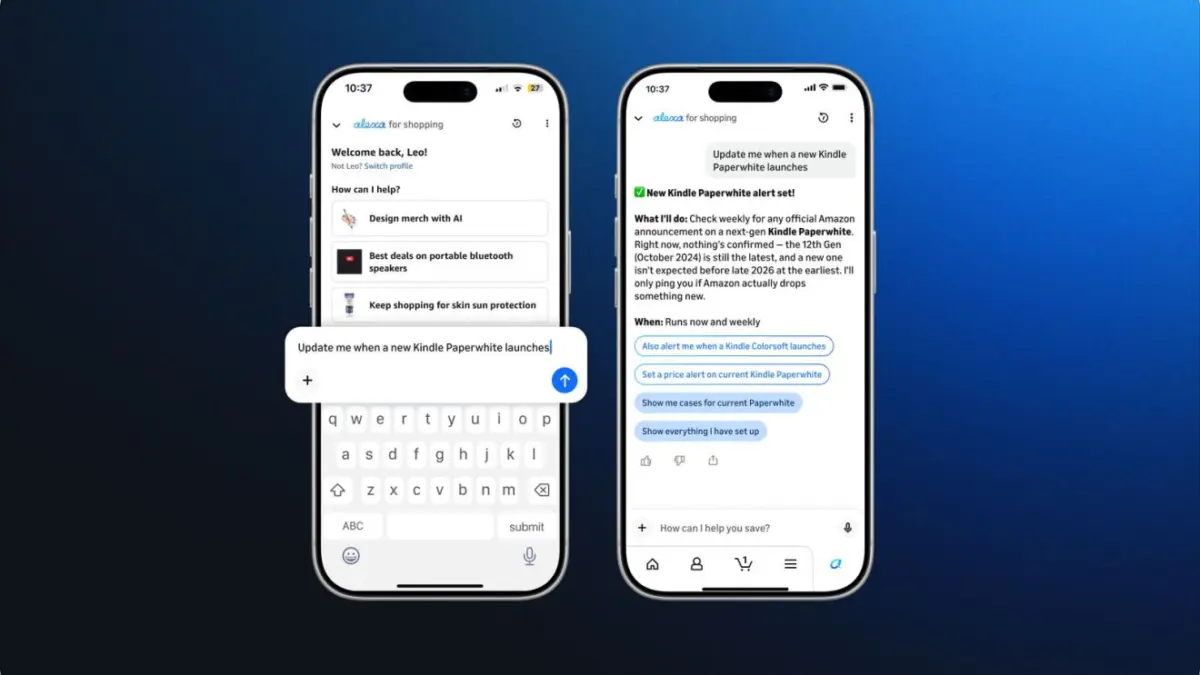
In a decisive move that underscores the rapid evolution of artificial intelligence in global e-commerce, Amazon has officially rolled out a new predictive shopping feature titled “Update Me When.” Integrated directly into the retailer’s Alexa for Shopping AI ecosystem, the capability marks a departure from conventional, reactive search paradigms toward an era of proactive, event-driven consumer monetization.
For years, digital storefronts have operated on an intent-after-the-fact basis: a consumer realizes a need, opens an application, enters a search query, and evaluates options. Amazon’s latest release systematically flips this model. By allowing users to establish tailored alerts based on external cultural, media, and brand milestones—ranging from author book launches and musical concert announcements to seasonal television drops and consumer hardware unveils—“Update Me When” seeks to intercept consumer purchase intent at the exact moment of demand creation.
       TRADITIONAL E-COMMERCE VS. PREDICTIVE COMMERCE

Traditional:  [ Need Arises ] ──> [ Search Query ] ──> [ Compare ] ──> [ Purchase ]

Predictive:   [ Event Trigger ] ──> [ Proactive AI Alert ] ──> [ Auto/1-Click Checkout ]
This launch reflects a fundamental strategic realignment for Amazon. Rather than utilizing its conversational AI simply to answer product inquiries or reorder household staples upon voice request, the company is positioning Alexa as an ambient, predictive shopping assistant. The system aims to anticipate when real-world events will trigger consumer spending—often before the shopper explicitly initiates a query.
As digital retailers navigate rising customer acquisition costs (CAC) and heightened competition from social commerce platforms, Amazon’s push into context-aware, autonomous notifications signals a broader industry transition: the migration from "search and click" interfaces to zero-friction, predictive commerce.
Detailed Chronology: The Evolution of Amazon’s AI Shopping Ecosystem
Amazon’s retail strategy has undergone distinct architectural phases, transitioning from basic voice execution to complex, multi-modal generative intelligence capable of driving autonomous transactions.
+-----------------------------------------------------------------------------------+
|                            AMAZON AI COMMERCE TIMELINE                            |
+-----------------------------------------------------------------------------------+
| 2014–2020: Passive Voice Search & Staples Replenishment                           |
|   • Focus on basic voice orders (e.g., household reorders via early Echo devices) |
|   • Limited to basic keyword matching and structured catalog indexing             |
+-----------------------------------------------------------------------------------+
| 2021–2023: Generative Discovery & Passive Price Intelligence                      |
|   • Introduction of contextual price-tracking and price-drop alerts               |
|   • Integration of product detail summaries and automated comparative guides      |
+-----------------------------------------------------------------------------------+
| 2024–Present: Proactive Predictive Commerce & Autonomous Fulfillment              |
|   • Deployment of "Rufus" generative shopping assistant and multimodal tools      |
|   • Launch of "Update Me When" proactive alert system linking external events     |
|   • Autonomous checkout execution based on predefined user triggers               |
+-----------------------------------------------------------------------------------+
The Early Alexa Era: Passive Voice Commerce (2014–2020)
When Amazon first introduced Alexa alongside the original Echo smart speaker, voice commerce was positioned as an effortless alternative to web browsing. However, consumer adoption was largely constrained to low-involvement, transactional tasks—such as reordering paper towels, setting timers, or checking basic order delivery statuses. The underlying software operated reactively: it processed direct commands but lacked the contextual awareness required to guide complex, discovery-oriented shopping journeys.
The Generative AI Overhaul (2021–2023)
As large language models (LLMs) and advanced natural language processing matured, Amazon began embedding generative capabilities across its marketplace ecosystem. The enterprise moved beyond basic transactional voice commands, introducing features such as:
- AI-generated review overviews on product detail pages.
- Automated shopping guides designed to simplify complex category evaluations.
- Price-tracking mechanisms that alerted customers when tagged items experienced specific discount percentages.
- Multimodal utility tools, including computer-vision tools capable of transcribing handwritten grocery lists into digital carts.
The Proactive Milestone: "Update Me When" (Present)
The launch of "Update Me When" represents the culmination of this multi-year evolution. By linking Alexa’s notifications directly to real-world temporal and cultural triggers, Amazon has bridged the gap between content consumption, brand engagement, and instant retail fulfillment.
Supporting Context & Technical Mechanics
How "Update Me When" Operates
The "Update Me When" architecture operates by creating dynamic monitoring threads linked to specific catalog nodes, content feeds, and external data pipelines. Consumers can configure personalized alerts across several primary verticals:
                  +-----------------------------------+
                  |      "UPDATE ME WHEN" TRIGGERS    |
                  +-----------------------------------+
                                    |
     +-----------------+------------+------------+-----------------+
     |                 |                         |                 |
[ Brand Drops ]  [ Media Premieres ]     [ Live Performances ]  [ Tech Releases ]
  New product      New TV seasons,         Concert tours,         Hardware updates,
line launches streaming drops artist merchandise next-gen devices- Brand Product Line Launches: Subscribing to notification feeds for specific apparel, footwear, or consumer packaged goods brands when new inventory drops.
- Entertainment Releases: Tracking the premiere dates of new television seasons, film releases, or streaming drops on platforms like Prime Video, paired with immediate options to purchase related physical merchandise or digital media.
- Artist & Author Milestones: Monitored triggers for concert tour announcements, ticket sales, or new book releases from specified creators.
- Hardware & Tech Announcements: Alerts for hardware iterations, pre-orders, and consumer technology rollouts.
The Mechanics of Autonomous Purchasing
Beyond simple notifications, the underlying software infrastructure connects directly to Amazon’s 1-Click purchasing engines and account preference settings. A key component of this architecture—first refined in Alexa’s core price-tracking tools—is the ability to grant the system autonomous execution permissions.
If configured by the user, the AI assistant does not merely inform the consumer that a product has met a target price threshold or that a pre-order has opened; it can automatically execute the purchase on the customer’s behalf, processing the payment and initiating shipping without requiring manual checkout confirmation.
+-----------------------------------------------------------------------------------+
|                        ALEXA SHOPPING FEATURE INTEGRATION                         |
+-----------------------------------------------------------------------------------+
| Feature                      | Operational Mechanics                              |
+------------------------------+----------------------------------------------------+
| Update Me When               | Event-triggered proactive notifications            |
+------------------------------+----------------------------------------------------+
| Autonomous Buy Execution     | Auto-purchases items meeting target price/discounts|
+------------------------------+----------------------------------------------------+
| Price History & Tracking     | Real-time monitoring of historical catalog pricing |
+------------------------------+----------------------------------------------------+
| Multimodal List Capture      | OCR vision-based conversion of handwritten lists   |
+------------------------------+----------------------------------------------------+
| Synthesized Product Reviews  | LLM-driven summaries of verified buyer feedback    |
+------------------------------+----------------------------------------------------+
Strategic Metrics driving the Shift
Industry benchmarking data highlights the commercial imperative behind Amazon’s shift toward proactive notifications:
- Conversion Velocity: Organic search queries on e-commerce platforms typically carry conversion rates between 2% and 4%. By contrast, personalized push notifications tied to pre-expressed intent yield conversion rates up to four times higher, significantly reducing the buyer journey’s friction points.
- Customer Lifetime Value (LTV) Optimization: By keeping users anchored to the Amazon platform via real-time cultural and product notifications, Amazon secures high intent prior to consumer searches occurring on competing networks like Google, TikTok, or specialized retail apps.
- Reduction in Cart Abandonment: Average digital cart abandonment rates sit near 70% globally. By utilizing autonomous execution features (where the assistant purchases items automatically upon meeting predefined rules), Amazon eliminates the friction points where drop-offs typically occur.
Official Statements & Enterprise Alignment
According to official operational documentation released by Amazon regarding its retail AI vision, the integration of "Update Me When" aligns with a broader mandate to construct an ambient shopping companion that operates continuously in the background of a consumer’s daily life.
In corporate communications outlining the capabilities of the Alexa shopping assistant, Amazon emphasized the transition from reactive user calls to intelligent context handling:
"Amazon continues to experiment with how AI can be used to improve the shopping experience… Historically, Alexa has mainly answered product questions when shoppers ask directly; now, it can help anticipate when something might prompt a user to make a purchase—before the shopper even thinks to ask."
Furthermore, the company highlighted that while early iterations of the system require consumers to explicitly initiate and configure their desired alert triggers, the technical architecture is built to support predictive machine-learning workflows.
Over time, the platform is expected to suggest contextual alerts to shoppers organically based on their browsing histories, Prime Video streaming habits, Amazon Music listening profiles, and prior order cadence—a move that effectively fuses Amazon’s content and retail ecosystems into a unified recommendation loop.
Future Outlook: The Autonomous Commerce Horizon
The rollout of "Update Me When" provides a clear blueprint for where e-commerce is headed over the next decade. As generative AI models shift from cloud-based text-prompt interfaces to background agents integrated into operating systems and smart environments, the traditional concept of digital shopping is changing.
                           THE EVOLUTION OF RETAIL INTERFACES

    [ Manual Web Browsing ] ──> [ Algorithmic Recommendations ] ──> [ Zero-Click Predictive Commerce ]
    (Desktop/Mobile Search)        (Feeds & Targeted Ads)           (Autonomous Event-Driven Buy)
From Explicit Configuration to Algorithmic Suggestion
Currently, "Update Me When" requires explicit user setup. However, the logical destination of this technology is frictionless ambient deployment.
Future iterations will likely monitor media consumption within the Amazon ecosystem passively—noticing, for example, that a user has watched three episodes of a show or streamed an artist’s discography—and automatically generate dynamic notifications: "The lead singer just announced a local concert tour. Would you like Alexa to secure pre-sale merchandise?"
Ethical Considerations, Privacy, and "Dark Patterns"
This shift toward predictive, auto-executing commerce is not without operational and regulatory risks:
- Consumer Fatigue and Notification Overload: As algorithms push more proactive purchase alerts, push notification fatigue poses a threat to user retention. Retailers must carefully calibrate frequency caps to prevent user disengagement.
- Algorithmic Manipulation and Trust: Regulators in both the U.S. (FTC) and the European Union (under the Digital Markets Act and AI Act) are increasingly scrutinizing "dark patterns"—interface designs that subtly nudge users into unintentional financial transactions. Ensuring clear boundaries between genuinely useful product updates and sponsored promotional alerts will be critical to maintaining consumer trust.
- Data Silos and System Integration: To maximize predictive power, Amazon must responsibly synthesize user signals across its Prime ecosystem without crossing consumer privacy boundaries or drawing regulatory intervention around cross-platform data usage.
Market Impact and the Competitive Landscape
Amazon’s expansion of its Alexa Shopping tools forces competitive countermeasures across the technology sector:
- Google Shopping continues to invest heavily in generative search experiences (SGE) to capture top-of-funnel discovery queries.
- Walmart is accelerating its investments in conversational commerce and supply-chain automation to defend its physical and omnichannel footprint.
- Social Commerce Platforms (TikTok Shop, Instagram) continue to monetizing spontaneous discovery via short-form video feeds.
Amazon’s strategic advantage lies in its logistics apparatus and fulfillment network. By pairing predictive intent capture through "Update Me When" with automated 1-Click checkout and same-day delivery networks, Amazon is building an end-to-end predictive commerce engine.
In this emerging model, the window between a real-world event, consumer awareness, purchase authorization, and doorstep delivery is reduced from days to mere hours—redefining the standards of global retail.