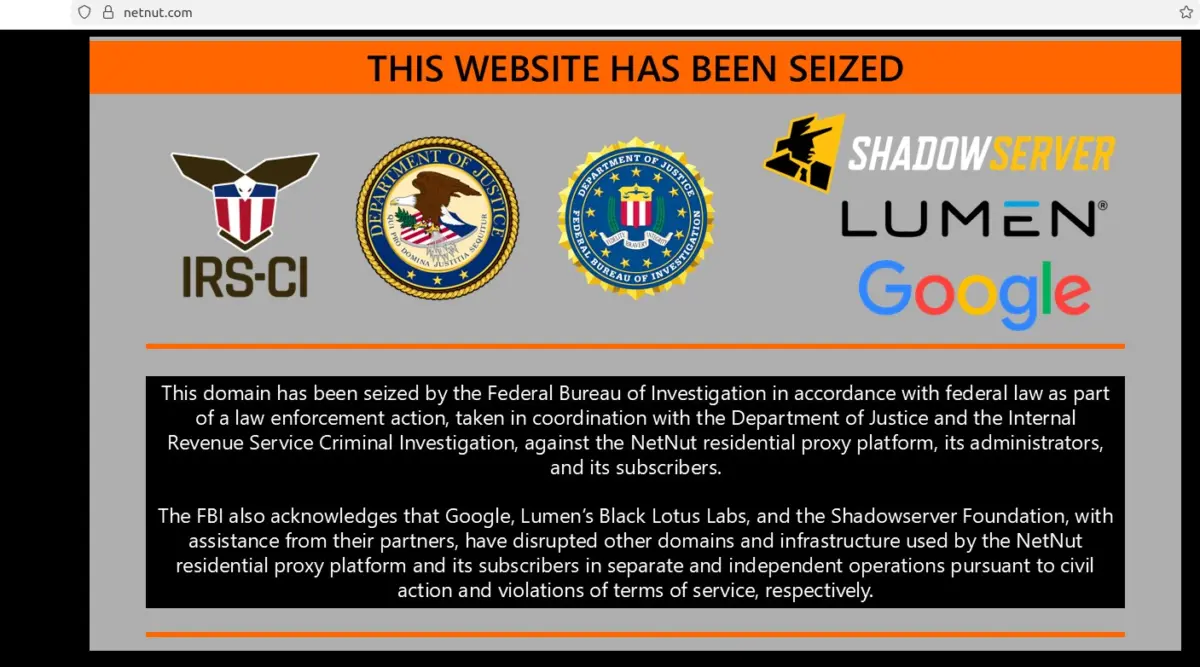
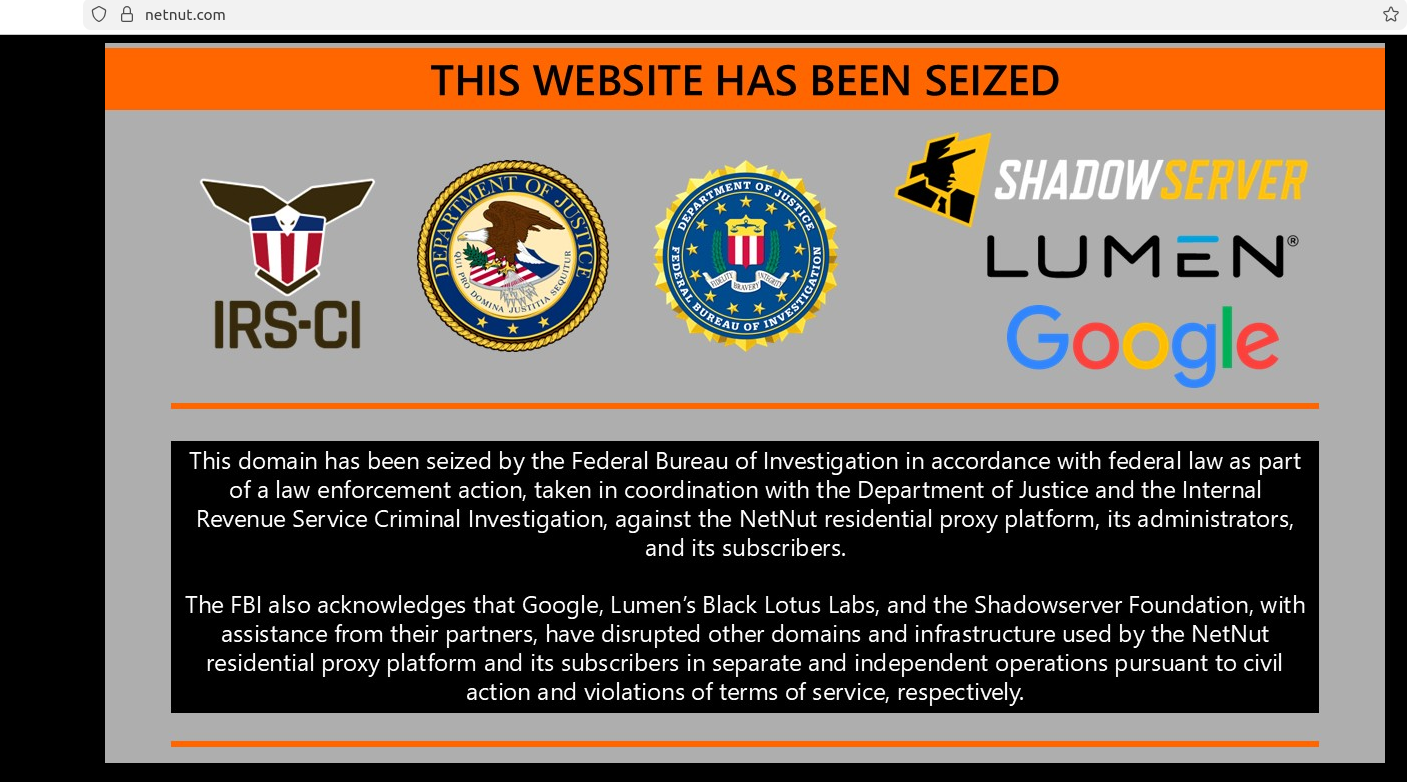
In a landmark coordinated international law enforcement action, the Federal Bureau of Investigation (FBI)—alongside the Internal Revenue Service Criminal Investigation (IRS-CI) division and heavy-hitting industry partners including Google, Lumen Technologies, and The Shadowserver Foundation—has seized hundreds of domains tied to the NetNut residential proxy service.
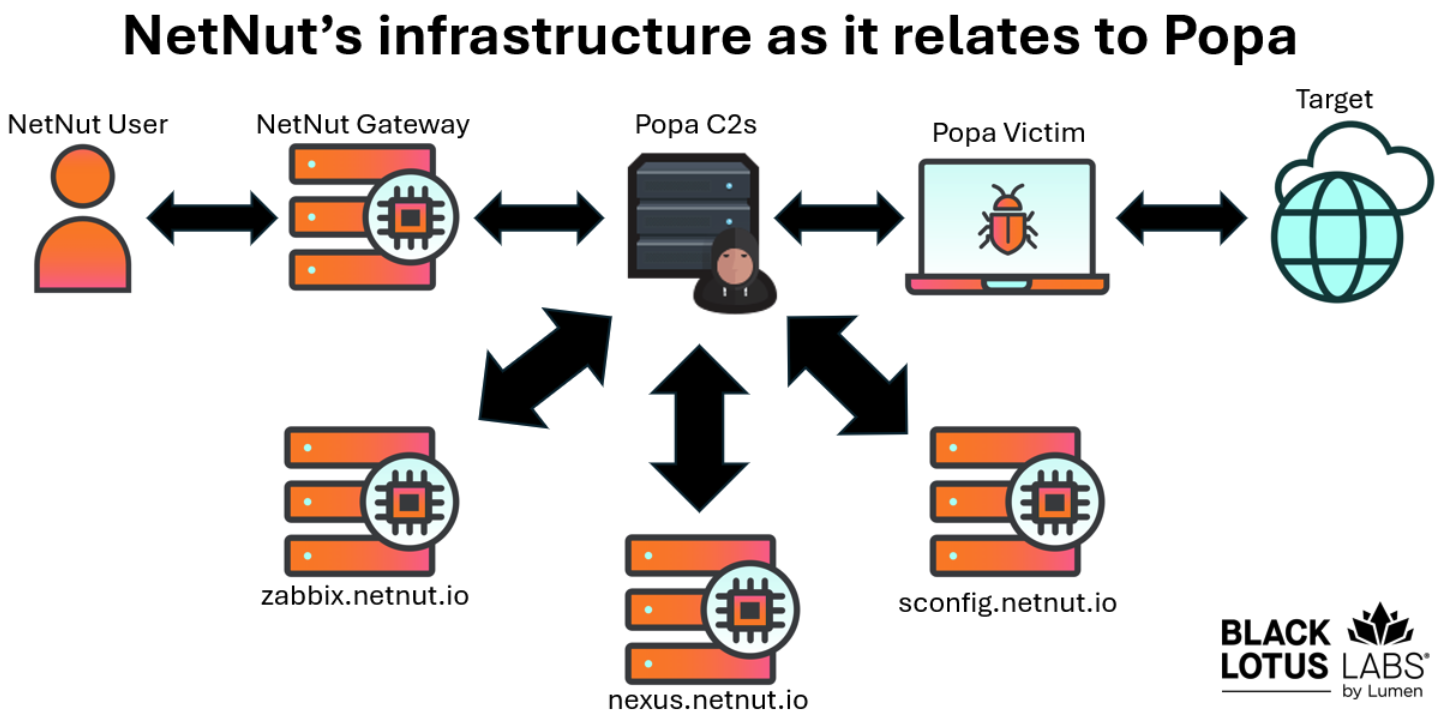
Operated by Alarum Technologies (NASDAQ: ALAR), a publicly traded Israeli tech company, NetNut’s infrastructure formed the operational backbone of the Popa botnet. This sprawling cyber threat covertly enslaved an estimated two million consumer devices—predominantly smart televisions, streaming boxes, and home IoT appliances—transforming them into an always-on network of illicit proxy nodes.
The coordinated seizure banners that abruptly replaced NetNut’s web properties mark a catastrophic blow to the underground cybercrime economy. For years, malicious actors relied on NetNut’s commercial proxy infrastructure to obfuscate their digital footprints, bypass geolocation blocks, execute account takeover (ATO) attacks, launch credential stuffing campaigns, and engage in rampant ad fraud.
Coming hot on the heels of similar legal disruptions targeting rival proxy titan IPIDEA, this takedown highlights a growing, aggressive posture by Western law enforcement and technology conglomerates against the weaponization of everyday consumer hardware. However, cybersecurity researchers warn that while this strike deals a devastating short-term blow to Alarum Technologies—whose stock has plummeted roughly 67% in the wake of the enforcement action—the Hydra-like nature of the residential proxy ecosystem means threat actors will likely attempt to pivot, white-label, or morph into new administrative shells.
Detailed Chronology: From Investigative Exposé to Federal Takedown
The rapid unraveling of NetNut highlights the unprecedented speed at which modern cyber threat intelligence operations move when private sector security firms and law enforcement agencies synchronize their telemetry.
The Net Closing: June 2026
The crisis for Alarum Technologies and NetNut began in earnest on June 19, when three independent cybersecurity and threat intelligence firms published synchronized findings. These reports definitively connected NetNut’s commercial residential proxy services directly to the Popa botnet.
Researchers revealed that NetNut was quietly distributing embedded Software Development Kits (SDKs) and applications—frequently bundled into cheap, unverified Android TV streaming boxes sold widely across major e-commerce platforms—without obtaining genuine, informed consent from end users. Once installed, these routines hijacked device bandwidth and routed malicious inbound traffic through home networks, turning unsuspecting consumers into unwitting exit nodes for international cybercriminal networks and state-sponsored espionage groups.
The Hammer Drops: Early July 2026
Roughly two weeks after the initial wave of public disclosures, the operation transitioned from investigative exposés to kinetic law enforcement intervention. Early in July, visitors to NetNut’s primary web portals were met not with their usual corporate dashboard, but with official asset seizure notices bearing the seals of the FBI and IRS-CI.
Simultaneously, Google’s Threat Intelligence Group (GTIG) published exhaustive documentation detailing how NetNut’s ecosystem operated. Google confirmed that it had taken internal defensive measures, actively disabling Google accounts and services utilized for malware command and control (C2) by NetNut operators, purging offending applications from software distribution pipelines, and sharing granular technical telemetry regarding NetNut’s backend infrastructure with global law enforcement bodies.
The pressure mounted further on July 8, when the primary corporate domain for parent company Alarum Technologies (alarum.io) was also seized by federal authorities, reflecting the depth of the legal exposure facing the enterprise.
Supporting Context & Metrics: The Anatomy of the Popa Botnet
To fully comprehend the magnitude of the FBI’s operation, one must examine the mechanics of the residential proxy economy and the staggering scale of the Popa botnet.
What is a Residential Proxy Network?
Legitimate residential proxies route web traffic through real consumer IP addresses assigned by Internet Service Providers (ISPs). They are frequently used by corporations for benign tasks such as web scraping, ad verification, and localized market research.
However, when weaponized by malicious entities, residential proxies become the ultimate cloak for cybercrime. Because traffic appears to originate from a residential broadband connection rather than a known commercial data center or Virtual Private Network (VPN), traditional security defenses, Web Application Firewalls (WAFs), and rate-limiting mechanisms routinely fail to flag the requests.
Scale and Scope of Abuse
According to telemetry gathered by Google’s GTIG, NetNut was among the most heavily sought-after infrastructure providers for criminal syndicates seeking to mask their geographic and network origins. During a single week in June 2026 alone, Google observed 316 distinct clusters of malicious threat actors—spanning financially motivated cybercriminal cartels and advanced persistent threat (APT) espionage groups—actively leveraging suspected NetNut exit nodes.
Threat actors utilized this infrastructure to:
Bypass multi-factor authentication (MFA) controls via sophisticated password-spraying operations.
Launch credential stuffing attacks against financial institutions and retail platforms.
Pivot deeper into enterprise corporate networks by exploiting home systems.
Furthermore, security researchers from Lumen Technologies’ Black Lotus Labs and proxy tracking firm Synthient noted that Popa was deeply integrated into the dark web proxy resale market. NetNut effectively operated as a wholesale provider, white-labeling its botnet capacity to numerous smaller, underground proxy brands that catered exclusively to malicious clientele.
The Smart TV and Streaming Box Threat Vector
The infection vector relied heavily on the ubiquity of low-cost, uncertified Android TV boxes, as well as mainstream smart TV operating systems.
A chilling research report published by proxy tracking firm Spur revealed the staggering baseline exposure embedded within consumer living rooms:
LG Smart TVs: Roughly 42% of all downloadable applications available via the webOS platform were found to contain embedded SDKs capable of transforming the television into an always-on residential proxy node.
Samsung Smart TVs: More than 25% of apps built for Samsung’s Tizen operating system contained similar unauthorized proxy-routing components.
When combined with obscure Android TV streaming boxes lacking official Google Play Protect certification, millions of homes worldwide effectively became proxy relay stations. This exposed local area networks to lateral movement, allowing bad actors tunneling through proxy connections to discover, scan, and compromise secondary internal devices—such as home computers, network-attached storage (NAS) drives, and connected smart home appliances—sitting safely behind the victim’s firewall.
Official Statements and Corporate Fallout
The fallout from the FBI’s domain seizures has sent shockwaves through both the international cybersecurity community and the public equities market.
Alarum Technologies and NetNut Response
Omer Weiss, legal counsel representing NetNut parent Alarum Technologies, issued a carefully worded public statement acknowledging the federal enforcement action and pledging corporate cooperation:
"Alarum takes this matter seriously and will fully cooperate with law enforcement to ensure any misuse of its infrastructure is thoroughly investigated and those responsible are held to account."
Despite these assurances of cooperation, the market response has been merciless. Following the seizure of Alarum’s corporate web domains and the revelation of deep involvement with the Popa botnet, Alarum Technologies’ stock (NASDAQ: ALAR) suffered an unprecedented collapse, trading at $2.62 per share—representing a staggering 67% valuation wipeout over the course of a single week.
Perspectives from the Threat Intelligence Frontline
Benjamin Brundage, founder of proxy tracking and intelligence platform Synthient—one of the pioneering firms that unmasked the link between Popa and Alarum Technologies—emphasized the broader systemic relief this takedown brings to the defensive community.
"I think this takedown is going to have a big impact, because NetNut gained significant popularity after the IPIDEA takedown," Brundage noted in an interview. "NetNut has been incredibly common among resellers, and they were on par with IPIDEA in terms of their daily traffic, quality, size, price per gigabyte, all of it."
Brundage also pointed out a critical secondary benefit: the disruption of massive DDoS frameworks. Earlier in the year, Synthient exposed how criminals leveraged residential proxy connections—specifically through IPIDEA-affiliated nodes—to construct Kimwolf, the world’s largest DDoS botnet, by tunneling into local networks via compromised TV boxes. The neutralization of NetNut’s expansive node pool is projected to severely degrade the operational capacity of these secondary DDoS botnets.
Google’s Assessment and Strategic Warning
Google’s Threat Intelligence Group adopted a pragmatic, albeit cautious, tone in its official post-mortem analysis. While Google confirmed that the multi-agency intervention successfully inflicted "significant degradation to NetNut’s proxy network and its business operations, reducing the available pool of devices for the proxy operator by millions," the tech giant issued a stern warning regarding the resilience of the cybercrime economy.
Drawing parallels to the aftermath of the IPIDEA disruption earlier in the year, Google warned that modern proxy operators rarely vanish permanently. Instead, when faced with the collapse of their proprietary infrastructure, operators frequently pivot by purchasing capacity from rival networks, effectively transforming into white-label resellers.
"What we have observed is that when faced with the degradation of their own botnet, proxy operators begin buying capacity from their competitors, effectively becoming a reseller," GTIG researchers concluded. "We recognize that creating a lasting disruption in this fluid ecosystem means we must scale our efforts to target the infrastructure of several interconnected providers."
Future Outlook: Securing the Residential Perimeter
Operation Popa stands as a milestone achievement in modern cyber law enforcement, proving that coordinated public-private partnerships can effectively neuter complex, multi-million-node commercialized botnets. However, the survival mechanics of the residential proxy underground mean that constant vigilance remains mandatory for both enterprise defenders and everyday consumers.
Recommendations for Enterprise Security Teams
Advanced Threat Intelligence Integration: Security operations centers (SOCs) must continuously ingest and update blocklists encompassing known residential proxy exit nodes, ASN ranges, and suspicious residential IP blocks to thwart credential-stuffing and password-spraying campaigns.
Behavioral-Based Access Controls: Relying solely on IP reputation is insufficient. Security architects should implement strict device fingerprinting, behavioral anomaly detection, and robust multi-factor authentication paradigms that cannot be bypassed simply by routing traffic through a residential IP address.
Recommendations for Consumers
To prevent home networks from being co-opted into the next iteration of the Popa or Kimwolf botnets, cybersecurity experts and major technology providers urge consumers to adopt strict digital hygiene habits:
Stick to Name Brands: Avoid purchasing cheap, unbranded, or white-label Android streaming boxes from unverified third-party e-commerce marketplaces. Always purchase streaming hardware from reputable, established manufacturers (e.g., Google TV, Roku, Apple TV, Amazon Fire TV).
Verify Play Protect Certification: Ensure that Android-based media devices operate within official parameters by verifying Google Play Protect certification status.
Audit Smart TV Applications: Regularly review installed applications on LG (webOS) and Samsung (Tizen) smart TVs. Remove unused, obscure, or novelty applications that request excessive permissions or background network privileges.
Network Segmentation: Where feasible, isolate IoT devices, smart televisions, and streaming media players onto a separate guest or IoT VLAN on the home router. This ensures that if a streaming device is compromised via malicious firmware or SDK integration, attackers cannot pivot laterally to access sensitive computers or network storage drives on the primary local subnet.
As law enforcement agencies and global tech conglomerates refine their playbook for dismantling illicit proxy networks, Operation Popa demonstrates that the walls are closing in on corporate entities that choose to monetize stolen consumer bandwidth under the guise of legitimate commercial proxy services.