Executive Overview
The global property technology (proptech) ecosystem is caught in a profound structural realignment. Long gone are the euphoric days of the COVID-19 pandemic, when ultra-low interest rates—dipping as low as 2.5% for 15-year mortgages—fueled a speculative gold rush of venture capital into U.S.-centric real estate software, iBuying platforms, and residential leasing apps. Today, as persistent interest rates hover stubbornly in the 6% to 7% range, the macroeconomic climate has fundamentally transformed. Real estate has become a significantly more complex and expensive asset class to finance, directly depressing transaction volume and pushing the bar for startup capitalization to unprecedented heights.
Yet, to characterize the current state of proptech as a depressed wasteland would be a grave miscalculation. According to proprietary Crunchbase data, venture investors have certainly not abandoned the sector; rather, they are exercising far greater discernment. Capital is flowing away from generic, late-stage software solutions that lack a clear growth trajectory and toward ventures that offer immediate, demonstrable return on investment (ROI).
This recalibration has birthed a new breed of proptech, one deeply intertwined with artificial intelligence, heavy industrial decarbonization, autonomous construction tech, and cloud-native operational infrastructure. Crucially, this evolution is playing out on an increasingly global stage. While U.S. startups once dominated the venture landscape entirely, four of the top five largest proptech funding rounds in 2026 to date have materialized outside the United States, spanning structural green steel initiatives in Europe to next-generation hospitality platforms and digital mortgage systems.
As the sector matures, the overarching narrative is one of shifting definitions. Proptech is no longer merely about finding an apartment online or managing a residential lease digitally. It is expanding aggressively into capital-intensive domains like climate tech, heavy construction machinery, asset maintenance, and enterprise workflow optimization. For founders, investors, and enterprise incumbents alike, the playbook has changed: demonstrate tangible cost savings and workflow dominance through advanced AI, or risk being left behind.
Detailed Chronology: Key Funding Rounds and M&A Activity
The trajectory of the proptech sector throughout 2026 is best understood through the lens of its major capital injections and strategic mergers. While total deal counts have contracted, the sheer scale of the top-tier transactions underscores the immense capital required to fuel the industry’s next evolutionary phase.
The European Heavyweight Disruption
Paradoxically, some of the largest investments classified within the broader real estate and construction ecosystem involve heavy industrial manufacturing tied to sustainable building materials—specifically, green steel.
- June 2026: Stockholm-based green steel pioneer Stegra commanded the sector’s largest private equity transaction. Backed by a transaction led by fellow Swedish powerhouse Wallenberg Investments, the 6-year-old startup secured approximately $1.6 billion in fresh capital, a move that cemented Wallenberg as its majority owner. Stegra’s mission—decarbonizing the steel value chain, a foundational element of modern real estate development—highlights how proptech’s boundaries are stretching to encompass primary construction inputs.
- August 2026: Continuing the European green industrial wave, Madrid-based Hydnum Steel closed a substantial $695 million venture round to fund its upcoming green steel manufacturing plant. Led by Madrid-based Cofides, the 3-year-old startup successfully raised the capital at a commanding $3.1 billion valuation, signaling intense investor appetite for sustainable construction infrastructure.
- January 2026: Amsterdam-headquartered Mews closed a massive $300 million Series D funding round at a $2.5 billion valuation. Led by London’s EQT Growth, the 14-year-old cloud-native hospitality management system proved that mature, enterprise-grade software with global footprints can still command unicorn-plus valuations when paired with stellar net retention rates and robust operational workflows.
U.S. and North American Standouts
While European mega-rounds dominated the upper echelons of financing, North American startups drove breakthroughs in autonomous robotics and digital mortgage infrastructure.
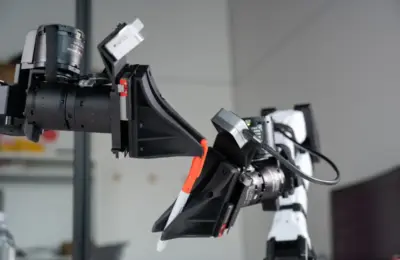
- February 2026: San Francisco-based Bedrock Robotics broke the mold as the sole U.S. company to crack the global top five funding deals of the year. The autonomous construction technology startup secured $270 million in a Series B funding round co-led by the Valor Atreides AI Fund and CapitalG. The financing pushed Bedrock’s total lifetime funding past $350 million and slapped a $1.75 billion valuation on the company, validating the commercial viability of autonomous machinery on active job sites.
- June 2026: Montreal-based Nesto rounded out the elite cohort by securing a $216 million Series E funding round at a $1.47 billion valuation. Nesto’s AI-powered digital mortgage platform addresses the friction points of high-interest-rate financing by streamlining underwriting and brokerage workflows for consumers and lenders alike.
The M&A Landscape and Autodesk’s Dominance
While initial public offerings (IPOs) remained largely muted—highlighted primarily by EquipmentShare’s $747 million primary proceeds debut in January—the mergers and acquisitions (M&A) market proved exceptionally vibrant.
The primary driver behind this M&A wave is strategic consolidation. Large legacy incumbents are aggressively acquiring younger tech companies to lock down proprietary data, secure workflow ownership, and integrate native artificial intelligence capabilities into their legacy portfolios.
The crown jewel of this M&A activity came in May 2026, when design and engineering software giant Autodesk announced a staggering $3.6 billion all-cash acquisition of MaintainX. MaintainX had rapidly scaled its AI-powered equipment maintenance and asset management platform, previously securing a $150 million Series D in 2025 at a $2.5 billion valuation. By absorbing MaintainX, Autodesk instantly fortified its position in industrial asset intelligence, proving that acquirers are willing to pay top dollar for platforms capable of predicting equipment failures and automating physical maintenance workflows.
Supporting Context & Metrics: The Numbers Behind the Shift
A granular look at Crunchbase data reveals the stark numerical realities of the post-pandemic proptech correction. The era of cheap money is firmly in the rearview mirror, replaced by an environment of disciplined capital allocation.
Global Proptech Funding (Seed to Growth Stage):
--------------------------------------------------
2019:  $24.0 Billion (2,400+ deals)  [Pre-pandemic baseline]
2021:  [Historic Venture Funding Peak]
2025:  $12.3 Billion (1,446 deals)
2026:  ~$8.7 Billion (794 deals so far) [Pacing flat-to-up vs. 2025]
The Funding Trajectory
So far in 2026, global real estate-related startups have pulled in approximately $8.7 billion in seed-through-growth-stage financing. To contextualize this figure:
- It sits dramatically below the $24 billion amassed in 2019 (the robust pre-pandemic baseline year).
- It trails the $12.3 billion secured across the entirety of 2025.
- With roughly four months remaining in the calendar year, current projections indicate that 2026 proptech funding is pacing roughly on par with, or slightly exceeding, 2025 levels.
Contraction in Deal Count
Perhaps the most telling metric of the current market environment is transaction volume. The sector has recorded 794 deals to date in 2026. For comparison:
- The space saw more than 2,400 transactions in 2019.
- The sector notched 1,446 transactions in the previous year.
This sharp contraction in deal count—far outpacing the decline in total dollars raised—signals two simultaneous market dynamics. First, investors are exercising extreme caution, passing on marginal or early-stage experiments. Second, the deals that do clear the due diligence hurdle are writing larger checks. Series B, C, and growth-stage rounds are concentrating capital into heavily vetted category winners rather than scattering seed capital across hundreds of unproven point solutions.
Official Insights & Industry Perspectives
To understand where capital is concentrating, one must examine the operational thesis guiding institutional investors. Industry research released by PricewaterhouseCoopers (PwC) and MetaProp in their joint report, “Proptech’s Impact on Real Estate Innovation and Transformation,” highlights a definitive migration of artificial intelligence from speculative testing environments into entrenched, everyday enterprise use.
According to the report, commercial real estate developers, property managers, and general contractors are deploying AI primarily to compress operating expenditures, enhance predictive decision-making, and automate repetitive administrative burdens.
The Investor’s Checklist in a 7% Interest Rate Environment
Venture capitalists speaking on background emphasize three mandatory criteria for any proptech startup seeking capital in the current climate:
- Indisputable ROI: "Nice-to-have" software is effectively dead. Startups must prove that their platform can directly reduce operational overhead, shorten project timelines, or lower financing costs within months, not years.
- Workflow Capture: Investors favor companies that embed themselves deeply into daily operations—such as underwriting, construction logistics, or equipment maintenance—making them mission-critical to the enterprise.
- Capital Efficiency: Given the scarcity of growth-stage rounds, startups are expected to demonstrate a clear path to profitability or, at minimum, sustainable cash burn metrics.
Generic property management tools and consumer-facing apps that rely on continuous venture subsidies to acquire users continue to face brutal valuation haircuts and funding freezes. Conversely, infrastructure-heavy enterprises capable of modernizing the physical built environment are commanding premium valuations.
Future Outlook: The Horizon of Proptech Innovation
Looking ahead, the proptech sector is poised for a maturation phase that will permanently redefine its boundaries. The old paradigm—where tech startups viewed the real estate industry as an antiquated asset class ripe for digital disruption via consumer marketplaces—has given way to a collaborative, infrastructure-driven model.
1. The Convergence of Proptech and Climate Tech
As regulatory pressures mount around carbon emissions and embodied carbon in construction, the line between proptech and climate tech will continue to blur. Transactions like Stegra’s $1.6 billion financing and Hydnum Steel’s $695 million raise demonstrate that future real estate value will be fundamentally tied to sustainable material sourcing. Startups that can audit, report, and reduce the carbon footprint of building lifecycles will capture a disproportionate share of institutional capital.
2. Autonomous Construction and Labor Optimization
Labor shortages and soaring construction costs will continue to drive venture interest toward autonomous heavy machinery and robotics. Companies like Bedrock Robotics are pioneering a future where job sites operate with predictive precision, minimizing human error and slashing development timelines. Over the next three to five years, automation on the job site will transition from an expensive luxury to a standard risk-mitigation strategy.
3. M&A as the Primary Exit Route
Given the subdued IPO climate and the cautious public market reception for newly minted tech floats, mergers and acquisitions will remain the dominant exit strategy for proptech founders and their venture backers. As demonstrated by Autodesk’s acquisition of MaintainX, well-capitalized enterprise software giants are eager to buy rather than build complex AI and workflow integrations. Founders would do well to optimize their platforms for strategic integration early in their lifecycle.
Conclusion
The proptech sector has survived its baptism by fire. Stripped of the speculative excess that characterized the pandemic era, the industry is emerging leaner, more disciplined, and technologically advanced. By hitching its wagon to artificial intelligence, heavy industrial transformation, and verifiable operational efficiencies, proptech is proving that it is not merely a cyclical trend, but an indispensable pillar of the modern global economy.