EXECUTIVE OVERVIEW
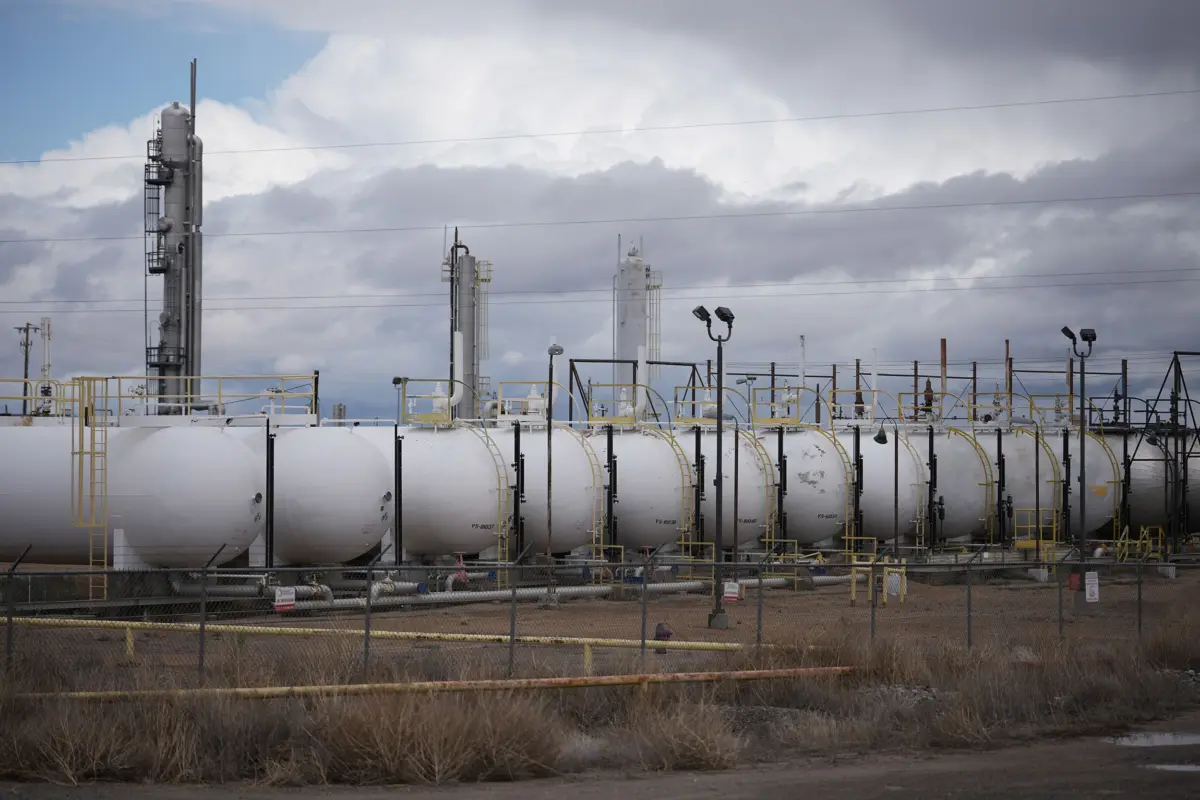
The staggering ascent of artificial intelligence has triggered a profound and unexpected consequence across the American landscape: a massive, unprecedented resurgence in fossil fuel reliance. Driven by an insatiable hunger for electrical power, the technology sector is racing to construct dedicated, private fossil fuel plants at a pace that has left environmental regulators and energy analysts sounding the alarm.
According to new research released by Global Energy Monitor, the pipeline of gas-fired power plants dedicated to fueling domestic data centers has nearly doubled in less than a year. What began as a nascent trend has ballooned into an industrial-scale pivot toward natural gas, raising stark questions about the trajectory of climate policy, grid stability, and the long-term cost of the AI revolution.
The findings underscore a dramatic collision between two defining forces of the modern era: the decarbonization imperatives required to combat global climate change and the breakneck speed of technological development. As tech giants and utility providers grapple with grid connection bottlenecks and skyrocketing electricity demands, they are increasingly choosing to bypass public infrastructure altogether. Instead, they are spinning up private, behind-the-meter gas facilities to guarantee uninterrupted power for sprawling server farms.
Yet, this short-term fix carries long-term consequences. The sheer volume of natural gas capacity currently in development threatens to lock in decades of heavy greenhouse gas emissions, directly undercutting national and international climate targets. Furthermore, while the United States doubles down on fossil fuels to fuel its tech infrastructure, its chief geopolitical rival, China, is steering its own AI boom toward an entirely different energy portfolio—one anchored heavily by surplus renewables.
DETAILED CHRONOLOGY: THE ACCELERATION OF AI’S ENERGY APPETITE
To understand how the United States arrived at this critical juncture, it is necessary to examine the rapid escalation of data center energy demands over the past three years.
The Early Signs (2024)
At the dawn of 2024, the intersection of artificial intelligence and grid capacity was viewed primarily as a future challenge rather than an immediate crisis. Traditional utility forecasters anticipated steady, manageable growth in commercial electricity consumption. Early tracking by Global Energy Monitor in early 2024 identified a modest pipeline of approximately 4 gigawatts of natural gas power projects linked directly to data center development. At the time, these projects were largely considered localized novelties—exceptions to the rule of relying on regional transmission organizations and traditional electrical grids.
The Tipping Point (Late 2025)
As the generative AI boom accelerated, scaling up from experimental language models to ubiquitous enterprise and consumer infrastructure, the computational requirements multiplied exponentially. By the end of 2025, the energy landscape had fundamentally transformed. Global Energy Monitor’s January update revealed an astonishing leap: the pipeline of gas-fired power projects dedicated exclusively to data centers had surged to 97 gigawatts—a nearly twenty-fold increase in less than twenty-four months.
During this window, data center developers realized that traditional utility interconnect queues were hopelessly backlogged. Waiting years for public grid access was no longer commercially viable in an industry dominated by fierce, first-mover competition. The solution was the rapid embrace of "behind-the-meter" power generation, where data centers colocate directly with private natural gas turbines, securing immediate and autonomous electricity supplies.
The Mid-2026 Surge
The latest data, released in mid-2026, shatters previous projections. The gas power demand pipeline has now climbed to more than 189 gigawatts. To put this figure into perspective, a single gigawatt of electrical capacity is roughly capable of powering one million American homes.
"Increasingly, the US gas power buildout is getting tied directly to the data center buildout—you can’t talk about one without the other," says Jenny Martos, a research analyst at Global Energy Monitor who worked on the report. This symbiotic expansion has effectively fused the fossil fuel industry and the tech sector into a singular economic engine, where the growth of one directly necessitates the consumption of the other.
SUPPORTING CONTEXT & METRICS: BEHIND THE NUMBERS AND THE DYNAMICS OF "BEHIND-THE-METER" POWER
The financial, regulatory, and technical drivers behind this gas buildout reveal a complex matrix of operational pressures facing modern tech conglomerates.
The Mechanics of Behind-the-Meter Generation
Why are tech companies turning away from a modernized, increasingly green public grid in favor of private fossil fuel combustion? The answer lies in velocity and risk management.
- Bypassing Interconnect Delays: Traditional grid interconnections can take upwards of five to seven years for environmental reviews, transmission line construction, and regional planning approvals. Private gas plants can often be permitted and constructed on an accelerated timeline.
- Ratepayer Protections and Political Backlash: As data centers proliferate, they draw immense amounts of power, occasionally threatening local grid reliability and driving up electricity costs for residential ratepayers. This dynamic has sparked fierce local opposition, turning data centers into a major political flashpoint across multiple states. By building behind-the-meter private power plants, tech companies argue they insulate local ratepayers from bearing the infrastructure costs of their massive energy consumption.
- Guaranteed Uptime: AI training clusters require continuous, uninterrupted power. A microsecond interruption can ruin weeks of computational training. Private gas turbines offer absolute control over power reliability.
The Carbon Footprint and Turbine Inefficiencies
The environmental toll of this pivot cannot be overstated. Adding over 189 gigawatts of natural gas capacity introduces a severe carbon burden. Compounding the issue is the logistical scramble for hardware: to secure power generation equipment quickly, developers have frequently relied on inefficient gas turbines.
Investigative reporting by outlets like WIRED has highlighted that many of these newly permitted facilities are so large and inefficient that individual data center gas plants are authorized to emit more greenhouse gases annually than entire small- and medium-sized sovereign nations. If fully realized, this infrastructure threatens to derail state-level and national climate commitments, locking in fossil fuel reliance well past mid-century.
OFFICIAL STATEMENTS: POLICY, POLITICS, AND THE GEOPOLITICAL DIVERGENCE
The gas-powered data center boom has attracted significant attention from policymakers at all levels of government, resulting in a fascinating alignment of interests between the federal executive branch, state governors, and major technology executives.
The Federal Push and Industry Pledges
The Trump administration has actively encouraged technology companies to pursue energy independence by generating their own power. This philosophy culminated in a voluntary White House data center energy pledge. Prominent tech titans—including Microsoft, Meta, Google, and OpenAI—have signed the agreement, alongside several influential Republican governors and major American utility corporations.
While proponents praise the pledge for encouraging proactive private-sector investment in energy infrastructure rather than burdening public grids, critics argue it offers more good optics than substantive environmental accountability. By outsourcing power generation to private gas facilities, tech companies can claim they are not draining public resources while quietly anchoring their operations to fossil fuels.
The Global Contrast: The US Versus China
The international dimensions of the data center energy race provide a sharp contrast in industrial strategy. Global Energy Monitor tracks energy projects worldwide, offering a clear view of how other superpowers are managing the AI infrastructure boom.
For years, China has maintained its status as the world’s largest importer of natural gas, utilizing the resource predominantly for industrial chemical applications like fertilizer and plastic manufacturing. While China experienced a surge in gas-fired power plant construction in the early 2020s—temporarily outpacing the United States—the explosive demands of its domestic AI sector have taken a fundamentally different path.
With the recent US data center gas pipeline surpassing 189 gigawatts, the United States has once again outpaced China in developing gas-fired generation capacity specifically for digital infrastructure.
"Overall, the data center boom in China is really oriented around renewables," explains Kyle Chan, a fellow at the Brookings Institution. Rather than relying on fossil fuels, Chinese tech giants such as Huawei and Tencent are increasingly siting massive AI data center complexes in rural, resource-rich provinces—such as Guizhou—to tap directly into surplus renewable energy, particularly solar, wind, and abundant hydropower.
According to Chan, the Chinese government’s deliberate push toward grid-integrated renewables is rooted in a broader strategy of long-term energy independence. While a few smaller-scale private power attempts have emerged, they pale in comparison to the massive state-backed renewable integration strategies.
"The US building gas power for data centers in the near term might make sense economically, and especially if you want to power these data centers fast, and you don’t have access to the same kind of cheap renewable energy that you might be able to have in China," Chan notes. "But over the long term, you pay a price for that—obviously, in terms of emissions, but also, I think in terms of not investing in your own clean energy sector."
FUTURE OUTLOOK: UNCERTAINTIES, CONSTRAINTS, AND THE DECEDENT LEGACY OF THE GAS BOOM
As energy analysts and industry insiders look toward the remainder of the decade, the question remains whether all 189 gigawatts of planned gas capacity will actually materialize.
Jenny Martos of Global Energy Monitor urges caution, pointing out that a vast majority of the tracked projects are still in early development phases and have yet to break ground. A multitude of hurdles could stall or dismantle these proposals:
- Financing Hurdles: Securing capital for massive fossil-fuel infrastructure projects is becoming increasingly complicated as institutional investors face stringent environmental, social, and governance (ESG) pressures.
- Local Opposition and Moratoriums: Community pushback against industrial noise, air pollution, and water usage has led multiple municipal governments to enact zoning moratoriums on data centers and their associated power plants.
- Supply Chain Bottlenecks: The global manufacturing capacity for heavy-duty gas turbines is severely constrained. Even if tech companies want to build rapidly, acquiring the necessary physical hardware remains a formidable bottleneck.
Nevertheless, the psychological and industrial momentum is palpable. "If all of these get built, you’re locking in emissions for decades," Martos warns.
The structural marriage between artificial intelligence and natural gas represents a critical turning point for modern industrial civilization. In their race to achieve technological supremacy and satisfy the computational demands of machine learning, American corporations and policymakers have opted for speed and self-sufficiency over environmental caution.
Whether this calculated gamble pays off as an economic triumph or leaves a heavy, carbon-heavy legacy for future generations will depend entirely on how swiftly clean energy alternatives can scale—and whether the political will to curb fossil fuel dependency can withstand the relentless pressure of the digital age.