Executive Overview
In the rapidly evolving landscape of generative artificial intelligence, a pervasive narrative has emerged: that knowledge workers face inevitable displacement. The mainstream consensus suggests that as large language models (LLMs) grow more sophisticated, they will commoditize professional expertise, flatten creative differentiation, and render unique individual perspectives obsolete.
However, a counter-movement among elite technologists and strategists argues that the threat does not stem from the capability of the technology itself, but rather from how humans attempt to harness it. Most professionals approach AI personalization through simplistic self-reporting—filling out questionnaires or engaging in structured interviews to describe their communication styles, preferences, and backgrounds. According to expert Max Bernstein, co-creator of a newly detailed methodological framework, this approach suffers from a fundamental flaw. It captures only what a person can consciously articulate in a controlled setting, which represents merely a fraction of how genuine expertise operates.
To truly scale a natural voice and professional methodology, users must abandon generic prompts and static questionnaires. Instead, they must extract what cognitive scientists call tacit knowledge—the deep-seated, often unconscious reasoning patterns that drive real-world problem-solving. By utilizing unscripted conversation transcripts and processing them through a multi-layered analytical framework, professionals can build what Bernstein terms a "cognitive fingerprint."
This comprehensive report explores the foundational philosophy behind cognitive fingerprinting, breaks down the four distinct layers of internal knowledge extraction, outlines the precise tools and workflows required for data collection, and examines the profound operational impacts this technology holds for individual knowledge workers and scaling organizations alike.
Detailed Chronology: The Evolution of AI Personalization to Cognitive Fingerprinting
The quest to make artificial intelligence sound more human is as old as the modern consumer AI boom. Yet, the trajectory of this discipline has undergone a dramatic maturation, moving from superficial stylistic mimicry to deep structural alignment.
Phase 1: The Era of Superficial Prompts and Custom Instructions
In the early days of advanced consumer chatbots, personalization was largely limited to static custom instructions or system prompts. Users would manually type out directives such as: "Write in a professional yet conversational tone," or "Avoid corporate jargon." While these adjustments offered marginal improvements over out-of-the-box settings, the resulting outputs remained fundamentally generic. They lacked the substantive weight of authentic professional experience, often resulting in verbose, predictable text that lacked genuine insight.
Phase 2: The Interview-Based Baseline
Recognizing the limitations of static prompts, prompt engineers and AI consultants developed a more interactive approach: the AI-led interview. In this paradigm, the user instructs the LLM to ask a series of probing questions about their industry background, writing habits, and strategic frameworks. The user answers these questions, and the AI compiles the responses into a master context file.
While this method proved superior to manual prompt engineering, it quickly hit a cognitive ceiling. Psychologically, humans are notoriously poor narrators of their own internal mechanics. When placed in an interview setting, individuals default to declarative, resume-style summaries. They recount what they do, but they completely omit how they do it under pressure, missing the nuanced decision logic that truly defines their competitive advantage.
Phase 3: The Discovery of Tacit Knowledge and Transcript Mining
To break past the interview ceiling, innovators like Max Bernstein turned to decades-old cognitive science—specifically the work of philosopher Michael Polanyi on tacit knowledge. Polanyi’s seminal observation was that "we can know more than we can tell."
Expertise does not live in structured bullet points; it lives in the messy, unscripted flow of real-time work. It surfaces when a consultant coaches a struggling client, when a product team argues through a design bottleneck during an impromptu brainstorm, or when a founder records a stream-of-consciousness voice memo while driving between appointments.
By pivoting the raw data source from artificial interviews to authentic conversation transcripts, a new methodology was born. The cognitive fingerprinting framework bridges the gap between raw LLM capabilities and the deeply individualized mental models of human experts.
Supporting Context & Metrics: The Current AI Adoption Landscape
To understand why cognitive fingerprinting represents a vital leap forward, one must examine how professionals are currently navigating the generative AI transition. Comprehensive industry data highlights a startling reality regarding AI self-reliance and the widespread lack of structured institutional guidance.
The Do-It-Yourself AI Phenomenon
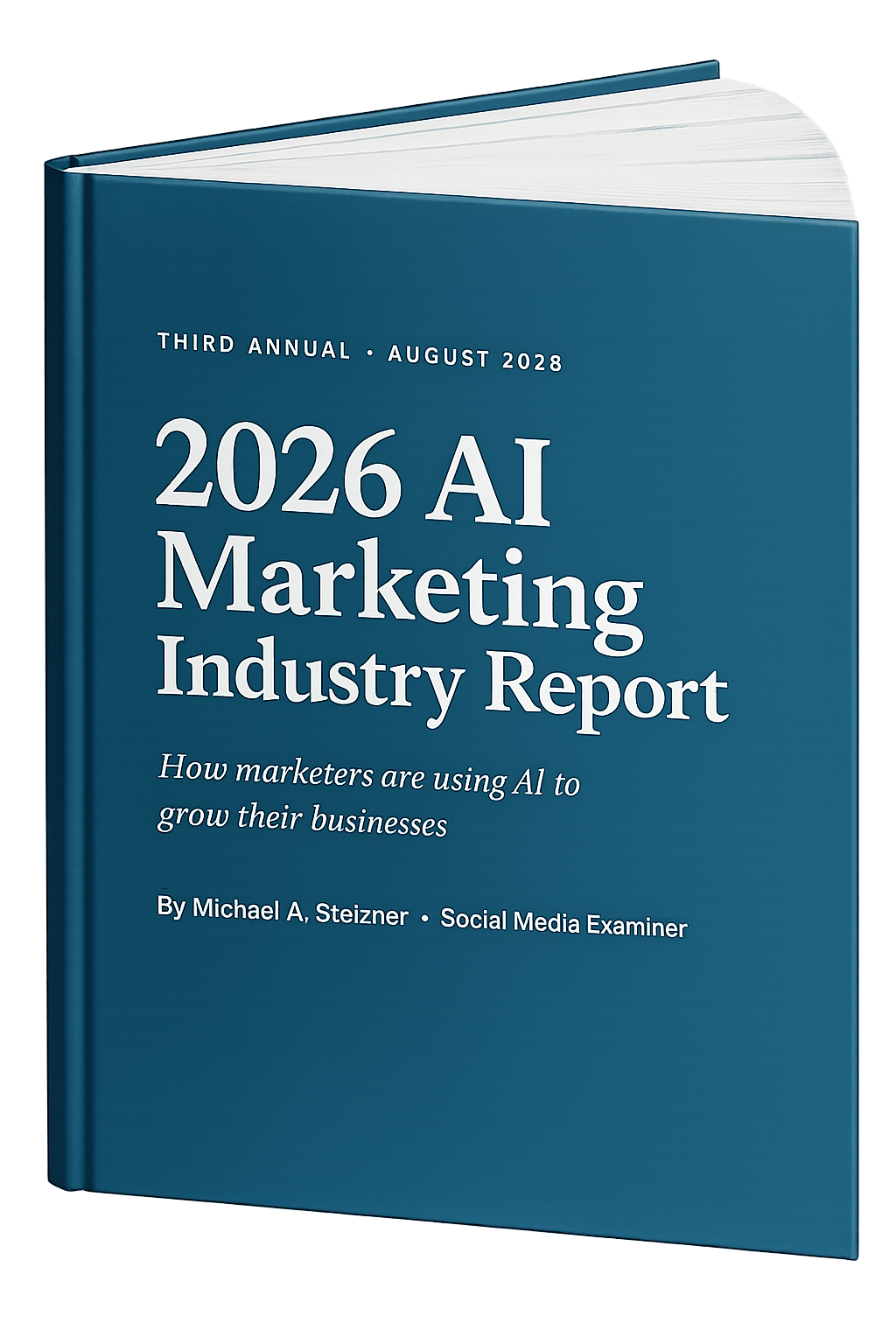
Recent findings from comprehensive industry research—such as the third annual AI Marketing Industry Report, which surveyed hundreds of active professionals—reveal a striking gap in professional development:
- 85% of professionals learn AI entirely through independent experimentation. Rather than receiving formalized corporate onboarding or strategic guidance, the vast majority of knowledge workers are figuring out prompt engineering, workflow automation, and model selection on their own time.
- Only 7% receive structured company training. Corporate support for AI mastery remains remarkably scarce, leaving workers to bridge the productivity gap independently.
- More than half spend their own personal funds on software tools. Driven by the necessity to stay competitive, professionals are routinely purchasing premium subscriptions out-of-pocket to access advanced LLM features.
These metrics underscore a broader market inefficiency: while organizations are eager to capture the productivity gains promised by generative AI, they lack standardized methodologies for transferring deep institutional and individual expertise into these systems. Without a structured framework like the cognitive fingerprint, professionals risk remaining trapped in superficial usage loops, treating AI merely as an advanced search engine rather than a true cognitive multiplier.
Deconstructing the Framework: The Four Layers of Knowledge
Extracting a true cognitive fingerprint requires looking far beneath surface-level descriptions. Bernstein’s framework categorizes human thought into four distinct strata. Extracting all four simultaneously is what transforms an ordinary transcript into a high-fidelity operational profile.
[Level 4: METACOGNITIVE KNOWLEDGE] -> Mental Models & "Thinking About Thinking"
[Level 3: CONDITIONAL KNOWLEDGE]   -> Decision DNA & "If-Then" Logic
[Level 2: PROCEDURAL KNOWLEDGE]    -> Execution Methods & SOPs
[Level 1: DECLARATIVE KNOWLEDGE]   -> Surface Facts & Bio Data
1. Declarative Knowledge (The Surface Layer)
Declarative knowledge represents the foundational facts about an individual’s professional identity. It is the job-description version of expertise—the kind of information found on a LinkedIn profile, a speaker bio, or an introductory corporate pitch. It answers questions like: What is your title? What tools do you use? What industries do you serve?
While necessary for baseline context, declarative knowledge is where most amateur AI personalization efforts begin and end. Relying solely on this layer produces predictable, cliché outputs that lack distinct personality.
2. Procedural Knowledge (The Execution Layer)
This layer moves beyond static facts to capture how a professional executes tasks. Procedural knowledge encompasses the step-by-step sequences, routines, and workflows that turn theory into practice. It is the raw material used to extract Standard Operating Procedures (SOPs) from raw conversation data. Where declarative knowledge names the final outcome, procedural knowledge outlines the specific operational path taken to achieve it.
3. Conditional Knowledge (Decision DNA)
Conditional knowledge represents a critical evolutionary leap in AI training. This layer governs the contextual rules of engagement: the complex web of if-then logic that dictates how an expert responds to variable circumstances.
When a particular type of challenging client enters a meeting, a specific response pattern triggers automatically. When a project hits a financial or time constraint, certain triage mechanisms deploy. These behavioral patterns often feel completely intuitive and automatic to the expert from the inside, but they are actually the result of years of accumulated judgment. Bernstein refers to this accumulated logic as "Decision DNA." Capturing conditional knowledge ensures that an AI profile does not just follow static steps, but dynamically adapts its strategy based on the specific parameters of a given problem.
4. Metacognitive Knowledge (The Deep Mental Models)
At the apex of the framework lies metacognitive knowledge: how an expert thinks about thinking. This layer captures the foundational mental models, philosophical frameworks, and cognitive biases that shape an individual’s worldview.
Crucially, metacognitive knowledge is exceptionally difficult to self-diagnose. When professionals are asked to describe their own mental models during a self-assessment, their perceptions rarely match the reality captured in unscripted transcripts. This blind spot is precisely why external extraction matters. Just as a seasoned executive coach spends years mapping a client’s implicit mental models through continuous observation, an advanced LLM can analyze multiple transcripts to surface these underlying cognitive patterns with unprecedented speed and accuracy.
Official Guidelines: Step-by-Step Implementation of Cognitive Fingerprinting
Building a functional cognitive fingerprint requires a disciplined, four-step workflow encompassing data collection, tool selection, prompt engineering, and file management.
Step 1: Curate the Right Raw Material (Transcripts)
Questionnaires and stylistic checklists are insufficient. The foundation of a true cognitive fingerprint must be built from unscripted conversations where expertise operates without active curation. High-yield sources include:
- Client Coaching and Advisory Sessions: The organic back-and-forth between advisor and client naturally surfaces tacit knowledge and real-time problem-solving.
- Sales and Negotiation Calls: These interactions reveal how an expert reads a room, handles objections, and pivots strategy dynamically.
- Brainstorming and Strategy Meetings: Unfiltered team sessions expose how raw ideas are generated, vetted, and prioritized.
- Solo Voice Memos: Quick recordings captured while walking, driving, or processing thoughts between major tasks provide unfiltered streams of consciousness.
Note on Volume and Variety: While more data yields richer results, a minimum of three to five transcripts from genuinely distinct operational contexts is sufficient to establish a baseline. Variety is paramount; diversifying the contexts ensures that universal thought patterns emerge rather than idiosyncrasies confined to a single type of meeting. Furthermore, adding a brief context note at the top of each transcript file (e.g., "Client coaching session regarding budget reallocation" or "Internal product brainstorm") helps the AI contextualize the mode of thinking being analyzed.
Step 2: Leverage Modern Transcription and Capture Tools
Selecting the right capture mechanism ensures high fidelity in the raw text data:
- Virtual Meetings: Tools like Google Meet, Zoom, and Fathom offer robust automated transcription. For deeper customization, background-processing audio tools like Granola operate without intrusive meeting bots, offering preset output templates and seamless integration with workspace platforms like Notion.
- In-Person Interactions: Wearable hardware solutions, such as Plaud, clip easily to clothing or mobile devices to capture live boardroom discussions or face-to-face consultations.
- Solo Dictation: Voice-to-text engines like Wispr Flow allow users to speak ideas directly into AI sessions. Industry experts consistently note that spoken prompts produce richer, more natural contextual output than typed text.
Step 3: Execute Multi-Layered AI Extraction Prompts
Once a curated, labeled set of transcripts is uploaded into a dedicated AI workspace (such as a ChatGPT project, a Claude project, or a Gemini Gem), the user must deploy an extraction prompt based on the four knowledge layers.
The prompt should explicitly instruct the LLM to analyze the transcripts across all four strata simultaneously:
- Identify declarative statements and baseline professional bios.
- Extract procedural sequences and workflow methodologies.
- Map out conditional decision logic (if-then rules and triggers).
- Uncover foundational metacognitive mental models and flag potential blind spots or unstated assumptions.
As each additional transcript is processed, the AI builds upon previously discovered patterns rather than starting from scratch. It continuously cross-references new data against established behavioral baselines, ultimately culminating in a comprehensive master document: the fingerprint file.
Step 4: Deploy and Maintain the Fingerprint File
The resulting fingerprint document typically spans 20 to 30 pages of dense, highly specific behavioral and strategic analysis. While reading this complete document offers profound self-awareness, the working application involves condensing the file into a portable context layer.

This portability is a primary strategic advantage. As the artificial intelligence market evolves and superior models are released, the fingerprint file travels seamlessly from one platform to another. Whenever a new tool is adopted, the user simply loads the fingerprint file into the system prompt, instantly equipping the generic LLM with their unique decision DNA, mental models, and communication frameworks.
Future Outlook: The Strategic Implications of Scaled Expertise
The adoption of cognitive fingerprinting signals a fundamental shift in how professionals and organizations will leverage artificial intelligence in the coming decade.
1. Enhanced Differentiation in a Commoditized Market
As generative AI lowers the barrier to producing baseline content, market differentiation will no longer depend on what is produced, but how it is reasoned through. By capturing and operationalizing unique mental models, professionals can ensure that their AI-assisted outputs retain a distinct voice, proprietary methodology, and uncompromising intellectual rigor.
2. Intellectual Property and Productization
Once implicit expertise is translated into an explicit cognitive fingerprint, it transitions from intangible intuition into valuable intellectual property. Professionals can use these structured frameworks as the foundational architecture for proprietary coaching programs, high-ticket consulting methodologies, digital courses, and scalable internal training frameworks.
3. Organizational Scaling and Team Dynamics
When applied across entire teams, cognitive fingerprinting moves past individual productivity enhancements to transform collective enterprise operations. By mapping the cognitive profiles of team members, organizations gain unprecedented visibility into organizational dynamics: identifying who naturally excels at analytical problem-solving, who drives narrative-driven marketing, and who thrives in unstructured brainstorms.
This macro-level visibility revolutionizes project assignment, internal communication, and team assembly, allowing leaders to strategically balance cognitive strengths and compensate for shared blind spots.
Ultimately, training AI to think like you is no longer about mastering trick prompts or robotic stylistic imitation. It is an exercise in profound self-discovery—a rigorous, technology-enabled excavation of human expertise that ensures artificial intelligence remains an extension of human genius rather than its replacement.