Executive Overview
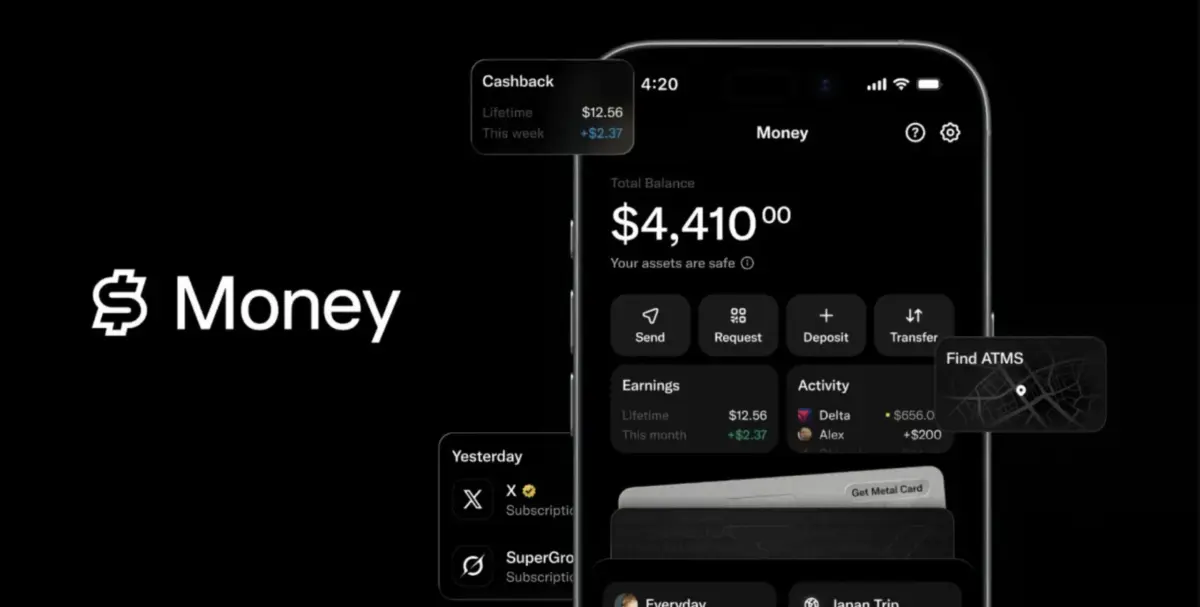
In a decisive move to accelerate its transformation from a microblogging platform into a comprehensive financial ecosystem, Elon Musk’s social network, X, has announced a mandatory shift in how U.S. content creators receive their earnings. Effective immediately, all payouts from both the platform’s newly minted Original Content Rewards Program and user-funded subscriptions will be processed exclusively through X Money, the social network’s proprietary fintech service.
This structural transition marks a critical departure from the platform’s long-standing reliance on Stripe, the industry-standard third-party payment processor. While international creators will remain on Stripe’s rails for the foreseeable future, U.S.-based creators have no choice but to onboard onto X Money if they wish to access their accrued capital. By implementing this hard mandate, X is executing a classic vertical integration strategy, effectively capturing the transaction flow of its most active users and funneling them directly into its nascent consumer banking ecosystem.
The core value proposition pitched to creators is friction-free immediacy: payments are now settled instantly, bypassing the traditional two-week processing delay and eliminating the historical $30 minimum payout threshold. However, beneath the operational convenience lies a calculated corporate maneuver. By tying creator payouts to X Money, X is driving immediate liquidity into its financial platform, boosting user deposit metrics, and forcing adoption of its broader financial products—including high-yield interest accounts and co-branded debit cards.
This investigative report dissects the operational mechanics of the X Money transition, maps the chronological dismantling of X’s legacy monetization frameworks, analyzes the underlying financial structures powered by partner bank Cross River, and evaluates the strategic implications of Musk’s high-stakes bid to build a Western "everything app."
Detailed Chronology: The Road to Closed-Loop Payments
The transition to X Money is the culmination of a multi-phase structural overhaul of X’s creator monetization and financial infrastructure that has unfolded rapidly throughout 2026.
[July 2026] -----------> [August 2026] ----------> [Sept 2, 2026] ---------> [Sept 7, 2026]
X Money Rolls Out        Legacy Revenue Share     X Money Payouts            Legacy Revenue Share
in the United States     Halts New Members        Become Mandatory (US)      Program Fully Retired
Phase 1: The Infrastructure Rollout (July–August 2026)
In late July 2026, X quietly rolled out X Money to the broader U.S. public, positioning it as a modern digital wallet offering premium banking perks. By early August, the service began supporting creator payouts on an opt-in basis, testing the rails of its instant-settlement architecture.
Phase 2: Dismantling the Legacy Revenue Share (August 2026)
Concurrently, X began winding down its legacy Creator Revenue Sharing Program, which paid creators based on ad impressions generated in the reply threads of their posts. Critics had long argued that the ad-revenue sharing model incentivized "engagement baiting"—the practice of posting highly controversial or low-quality content to generate voluminous, emotionally charged comment sections. In mid-August, X stopped accepting new applications for the program.
Phase 3: The September 2nd Ultimatum
On September 2, 2026, X’s official creator communications channel announced that the transition to X Money was no longer optional for U.S. participants. The platform integrated its payout systems directly with the digital wallet, requiring creators to link their accounts to X Money to continue receiving payouts from both subscriptions and the newly established Original Content Rewards Program.
Phase 4: Full Program Retirement (September 7, 2026)
The final phase of this operational shift is slated for September 7, 2026, when the legacy Creator Revenue Sharing Program will be retired completely. All creators are being migrated to the Original Content Rewards Program, which recalibrates payout formulas to heavily favor authentic, original media uploads and high-quality text posts over algorithmic exploitation of reply threads.
Supporting Context & Metrics: The Mechanics of X Money
To understand why X is forcing creators into its proprietary financial loop, one must analyze the unit economics and the design of the X Money ecosystem.
| Feature | Legacy System (Stripe) | New System (X Money) |
|---|---|---|
| Payout Frequency | Every 14 days (Bi-weekly) | Instantaneous / Real-Time |
| Minimum Payout Threshold | $30.00 USD | $0.00 (No minimum) |
| Primary Processor | Stripe | X Money (via Cross River Bank) |
| Direct Deposit Benefits | None | Unlocks Boosted APY |
| U.S. Availability | Yes (Phased out September 2026) | Yes (Mandatory) |
| International Availability | Yes (Standard) | No (Planned for future rollouts) |
The Neobank Architecture
X Money is not a licensed depository institution. Instead, it operates as a neobank, utilizing a financial technology model pioneered by companies like Chime and Cash App. The underlying deposit accounts, clearing services, and banking rails are provided by Cross River Bank, an FDIC-insured, New Jersey-chartered commercial bank known for powering major fintech platforms.
Because the accounts are held at Cross River Bank, creators’ funds are protected by FDIC pass-through deposit insurance up to the standard limit of $250,000. This partnership allows X to bypass the arduous process of obtaining a federal banking charter, relying instead on a patchwork of state-level money transmitter licenses (MTLs) that the company has spent years securing.
High-Yield Incentives and Ecosystem Lock-In
The mandatory migration of creator funds is designed to serve as a powerful customer acquisition tool for X Money’s premium financial services. X is leveraging creator payouts to help users meet the direct deposit requirements necessary to unlock its highly competitive High-Yield Savings rates:
- Standard Users: Receive a highly competitive 4.0% APY on parked balances.
- X Premium Subscribers: Receive an industry-leading 6.0% APY on their balances.
By requiring creators to route their earnings through X Money, X automatically categorizes these incoming transfers as qualifying direct deposits. This immediately qualifies creators for the elevated APY tiers, creating a powerful psychological incentive to keep capital within the X ecosystem rather than transferring it to external commercial banks.
Furthermore, X Money offers a co-branded debit/banking card featuring a 3% cashback reward structure on select purchases, alongside free ATM withdrawals. By offering instant access to capital coupled with high-yield returns and cashback incentives, X aims to transform its platform from a simple advertising-and-content hub into its users’ primary financial portal.
                  [Creator Earns Revenue on X]
                                |
                                v
               [Instant Settlement via X Money]
                                |
        +-----------------------+-----------------------+
        |                                               |
        v                                               v
[Spend via X Debit Card]                     [Hold in X Money Account]
  - 3% Cashback Rewards                        - Up to 6.0% APY (Premium)
  - Free ATM Withdrawals                       - FDIC Insured via Cross River
Tax and Compliance Infrastructure
The professionalization of the platform’s payout infrastructure has also required a tighter compliance framework. For individual creators operating in the U.S., X will generate and file IRS Form 1099-NEC (Nonemployee Compensation) for annual earnings exceeding the statutory $600 threshold.
For creators operating under corporate entities, such as Limited Liability Companies (LLCs) or S-Corporations, X has introduced a mandatory W-9 collection protocol. This system validates taxpayer identification numbers (TINs) and corporate classifications prior to releasing funds, ensuring strict alignment with federal tax regulations and shielding X from secondary withholding liabilities.
Official Statements & Platform Compliance
The rollout of X Money has sparked intense debate within the digital creator community, prompting clarification from X’s corporate representatives.
In a public update shared via the official @XCreators account, the company emphasized the operational benefits of the transition:
"Starting today, U.S. payouts for Original Content Rewards and Subscriptions will be paid through @XMoney. You’ll have access to your payouts the moment they’re sent. Already using X Money? No action needed. Your next payout will be sent there."
However, the definitive tone of the announcement raised immediate questions regarding whether creators could opt out or continue using their existing Stripe accounts. When reached for comment, a corporate representative for X confirmed that the transition is a mandatory policy update for all domestic participants:
"The transition to X Money is a mandatory requirement for all content creators residing within the United States. Creators operating outside of the United States are unaffected by this policy update at this time and will continue to have their payouts processed via Stripe."
This confirmation underscores the bifurcation of X’s global payout system. U.S. creators are being pushed into a closed-loop, vertically integrated banking system, while international creators remain on legacy, decentralized rails due to the complex regulatory hurdles of deploying financial products across multiple foreign jurisdictions.
Future Outlook: The Blueprint for the "Everything App"
The forced migration of U.S. creator payouts to X Money is not merely an operational update; it is a foundational pillar of Elon Musk’s long-term strategic playbook. Since acquiring the platform in late 2022, Musk has consistently articulated his vision of replicating the success of Chinese super-apps like Tencent’s WeChat. In those ecosystems, social networking, digital identity, communication, and peer-to-peer payments are seamlessly integrated into a single digital interface.
           =========================================
                        THE "EVERYTHING APP"
           =========================================
           [ Social Media ]  <--->  [ Subscriptions ]
                  ^                        ^
                  |                        |
                  v                        v
           [ Peer-to-Peer ]  <--->  [ Wealth Mgmt ]
           =========================================
                     POWERED BY: X MONEY
By forcing the platform’s most economically active cohort—its monetizing creators—to adopt X Money, Musk is establishing a critical mass of active account holders. This user base will serve as the foundation for a broader rollout of peer-to-peer (P2P) payment services, merchant processing, and micro-lending products.
Potential Headwinds and Regulatory Scrutiny
Despite the compelling yields and instant liquidity, X’s aggressive push into financial services is fraught with strategic and regulatory risks:
- Antitrust and Platform Tying: By forcing creators to use X Money as a condition of receiving platform earnings, X may attract scrutiny from federal antitrust regulators. Tying a dominant social platform’s monetization benefits to the mandatory use of an in-house financial product could be viewed as anti-competitive behavior.
- Partner Bank Risk: Cross River Bank, X’s financial backbone, has previously faced heightened regulatory scrutiny from the FDIC regarding its fair lending practices and internal controls. Any regulatory actions against Cross River could directly impact X Money’s operational capabilities.
- Consumer Trust and Brand Volatility: Financial services require a high degree of systemic trust and predictability. Given X’s frequent policy pivots, executive turnover, and politically charged public profile, convincing mainstream users to treat X Money as a primary banking depository remains an uphill battle.
If successful, however, the financialization of X could fundamentally rewrite the economics of the creator industry. By cutting out traditional financial intermediaries, X can offer yields and payment speeds that legacy platforms like YouTube, Meta, and TikTok—all of which rely on traditional banking cycles—cannot easily match.
Ultimately, the mandatory adoption of X Money represents a high-stakes bet: that the allure of instant liquidity and market-leading interest rates will outweigh any creator hesitation, paving the way for the transformation of social media into a direct instrument of consumer finance.