Executive Overview
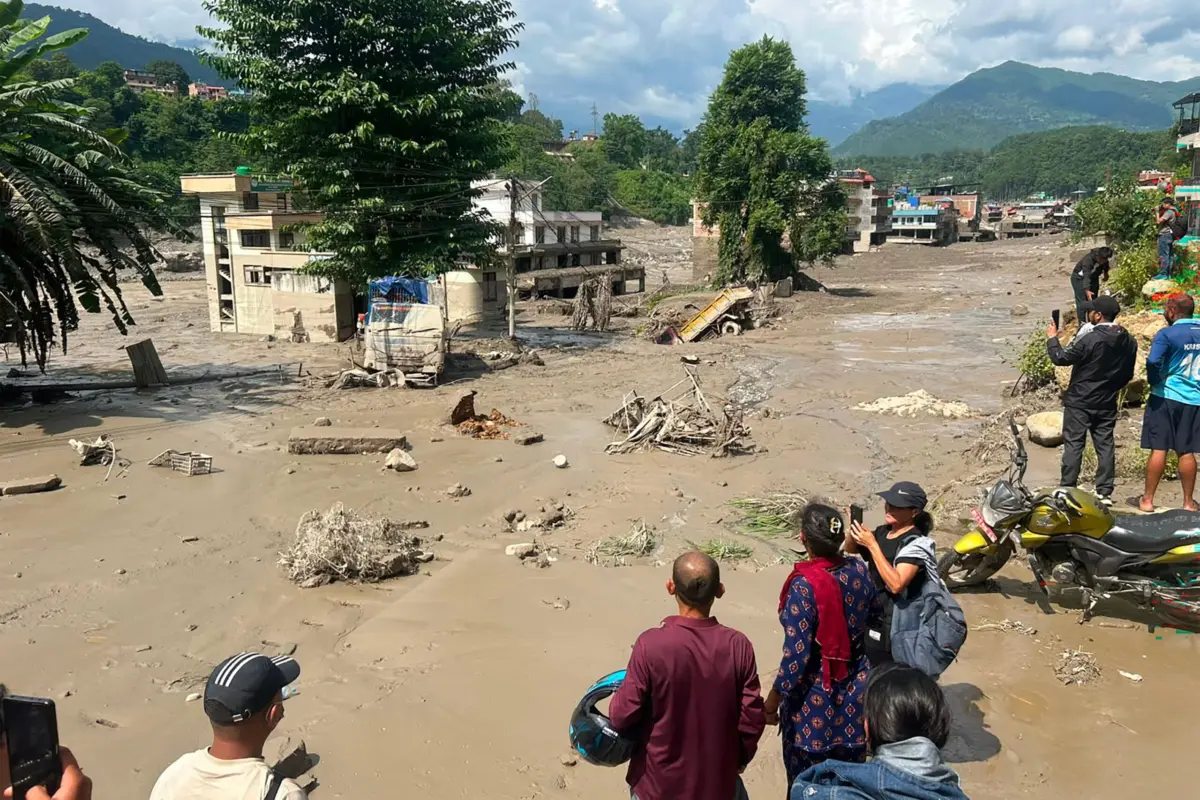
In the rugged, high-altitude borderlands between Nepal and Tibet, a catastrophic natural disaster has left an indelible mark on a fragile mountain ecosystem and the communities that call it home. Wednesday morning transformed a remote valley into a zone of devastation when a massive wall of water, mud, and debris swept through the region, leaving roughly 160 people dead and hundreds more missing. Among the missing are dozens of international tourists drawn to the breathtaking landscapes of the Himalayas, now turned into an unexpected theatre of climate-induced tragedy.
Initial assessments from government authorities, combined with rapid-response satellite imagery analysis, point to a terrifying catalyst: the sudden and catastrophic structural failure of a high-altitude glacier. A monumental slab of ice, estimated to be roughly 2,000 feet wide, broke free and plummeted nearly 4,000 feet into the valley below. The sheer kinetic energy of the fall pulverized the ice on impact, triggering a massive landslide and a subsequent flash flood of extraordinary proportions.
The destructive force of the event was so immense that global seismographs registered the collapse as a magnitude 5.2 seismic event. For scientists and disaster management experts, Wednesday’s tragedy is not an isolated anomaly. Instead, it serves as a glaring, violent manifestation of a global crisis: the rapid, warming-induced destabilization of the world’s mountain cryosphere. As temperatures in the Himalayas rise at rates significantly higher than the global average, the ancient ice anchoring these massive mountain ranges is losing its grip, placing millions of lives downstream in immediate peril.
Detailed Chronology of the Disaster
The Morning of the Collapse
The catastrophe unfolded swiftly on Wednesday, catching residents, local merchants, and trekking groups entirely off guard. Witnesses in the remote mountain corridor reported hearing a low, thunderous roar—a sound initially mistaken for an earthquake or a massive rockslide—before a towering wall of water and grey sludge breached the valley floor.
Within minutes, the deluge swallowed everything in its path. Makeshift residential structures, traditional stone houses, vehicles, and vital infrastructure were swept away as if made of paper. Harrowing footage subsequently uploaded to social media platforms showed frantic individuals scrambling up steep, rocky embankments just moments before raging torrents consumed the paths behind them.
Search and Rescue Operations Under Extreme Constraints
In the immediate aftermath of the disaster, local authorities in Nepal and neighboring regional jurisdictions scrambled to launch emergency response protocols. However, the remote geography of the borderland has severely hampered rescue efforts.
- Inaccessible Terrain: The affected zone lies in a steep, mountainous pocket where roads have been entirely washed away or blocked by massive debris fields.
- Grounded Aviation: Inclement weather and lingering low-hanging clouds have frequently grounded rescue helicopters, preventing medical teams from reaching the injured and leaving stranded survivors waiting desperately for extraction.
- Communication Blackouts: Power lines and cellular towers in the valley were destroyed in the initial minutes of the flood, leaving rescue coordinators blind to conditions on the ground in several of the hardest-hit sub-districts.
Military and police search teams, working alongside local volunteers, have spent the days following the event combing the banks of the swollen river systems downstream. Their mission is complicated by the sheer volume of silt, boulders, and shattered timber deposited by the floodwaters, which has buried potential rescue sites under feet of dense mud.
Supporting Context & Metrics: The Shrinking Cryosphere
To understand the mechanics of Wednesday’s disaster, scientists look to the rapidly shifting baseline of the Himalayan mountain range, often referred to as the "Third Pole" due to its massive reserves of glacial ice.
Accelerating Ice Loss
Glaciers are dynamic systems that naturally advance and retreat over centuries, but human-driven climate change has violently accelerated this cycle. According to recent comprehensive studies published in scientific journals such as Nature, the world’s glaciers have shed roughly 5 percent of their total ice mass since the year 2000 alone.
In the Hindu Kush Himalaya region, the impacts are even more pronounced:
- Historical Deficit: Between 1970 and 2010, glaciers in Nepal lost nearly a quarter of their total surface area.
- Extinction of Smaller Formations: Comprehensive geographical research indicates that more than 160 smaller glaciers within Nepal have vanished entirely over recent decades.
- Future Projections: Climate models from institutions like Columbia University’s Lamont-Doherty Earth Observatory warn that if global carbon emissions are not curbed sufficiently to keep warming under 1.5 degrees Celsius, up to 40 percent of the world’s remaining glacial ice could disappear.
The Physics of a Himalayan Collapse
Dr. Joseph Shea, an associate professor of geography at the University of Northern British Columbia who has extensively studied the region’s ice dynamics, explains that the glaciers in the area are firmly in a state of terminal retreat.
"There’s a lot of glacier mass up there, but we’re seeing thinning, we’re seeing retreating," Shea notes. As these massive blocks of ice thin out, they lose the structural integrity required to support their own weight on steep mountain faces. Furthermore, warming temperatures—such as those recorded in the region earlier in the week, which likely melted lingering seasonal snowpacks—lubricate the base of the ice, creating ideal conditions for sudden, catastrophic structural failure.
Official Statements and Expert Analysis
As the international scientific community digests the satellite data and seismic readouts from Wednesday’s event, leading geologists and glaciologists have stepped forward to decode how a mountain ice mass could translate into a low-altitude disaster.
The Mechanics of the Fall
Dr. Daniel Shugar, a prominent geologist at the University of Calgary in Canada, offered critical insights to The New York Times following an initial review of pre- and post-disaster satellite imagery. Shugar highlighted that a staggering 2,000-foot-wide section of glacier ice broke away from a high ridge, plunging roughly 4,000 feet down into the valley.
"The force of that fall essentially pulverized the ice into water," Shugar explained, emphasizing the terrifying conversion of potential energy into kinetic destructive power. While noting that definitive, peer-reviewed conclusions will require months of on-the-ground investigation, Shugar and his peers agree that the thermal stress of unseasonably warm regional temperatures played a primary role in destabilizing the ice shelf.
Cascading Hazards: From Ice to Outbursts
The disaster in Nepal also highlights a secondary, equally insidious threat associated with retreating glaciers: Glacial Lake Outburst Floods (GLOFs).
As glaciers shrink and retreat up valleys, they frequently leave behind massive terminal moraines—piles of rock, rubble, and sediment pushed forward by the advancing ice over centuries. These moraines act as natural dams, capturing meltwater to form high-altitude glacial lakes.
Dr. Shea outlines the inherent danger of this cycle: "If you have a landslide suddenly into a lake, you get an overtopping of the dam, and then the whole thing can collapse catastrophically."
These sudden outbursts are not theoretical concerns. Two major GLOF events struck Nepal the previous year, and global risk assessments—such as those recently highlighted by investigations into Himalayan hydrology—reveal that millions of people live directly in the path of these ticking ecological time bombs across High Mountain Asia and other alpine regions.
Future Outlook: Living in the Shadow of an Unstable Frontier
The tragedy on the Nepal-Tibet border serves as a grim preview of the challenges facing mountain communities in a rapidly warming world. As global greenhouse gas emissions continue to push average temperatures upward, the fragile equilibrium of the high Himalayas is fracturing.
The Imperative for Early Warning Systems
In the wake of Wednesday’s devastation, international development agencies and local governments face intense pressure to overhaul disaster preparedness and early warning infrastructure. While communities in valleys historically adapted to seasonal monsoons and predictable river swells, the suddenness of glacial collapses and GLOFs defies traditional indigenous tracking methods.
Experts argue that future resilience depends on:
- Advanced Satellite Monitoring: Utilizing real-time synthetic aperture radar (SAR) and optical imaging to track the movement and structural integrity of high-risk glaciers and expanding glacial lakes.
- Downstream Sensors: Installing automated acoustic and water-level sensors in remote gorges to provide seconds or minutes of critical warning time to downstream villages before a wall of water arrives.
- Climate-Resilient Infrastructure: Halting the construction of vulnerable infrastructure—such as hydropower plants, bridges, and tourist lodges—within high-risk flood zones, and relocating existing settlements to higher, more secure ground.
A Global Crisis with Local Victims
Ultimately, the disaster on the Nepal-Tibet border underscores a tragic global irony: the communities paying the highest price for planetary climate change are frequently those least responsible for industrial carbon emissions.
As search and recovery operations wind down and the true human cost of Wednesday’s catastrophe becomes fully realized, the international community is left to reckon with a stark reality. The ice of the Himalayas is no longer an eternal, immutable monument of the earth; it is melting, shifting, and—as 160 families on the border can now tragically attest—deadly. Without aggressive global climate mitigation and rigorous regional adaptation strategies, the valleys of High Mountain Asia will remain caught in the crosshairs of an unfolding climate emergency.