Executive Overview
In the hyper-competitive landscape of B2B SaaS and enterprise software, conventional startup wisdom often dictates that brand identity is a luxury reserved for mature companies with tens of millions in venture backing. Founders are relentlessly told to focus exclusively on product-market fit, bottom-of-the-funnel cold outreach, and founder-led sales during their critical first 12 to 18 months. Brand, according to traditional Silicon Valley dogma, is something you worry about after you have scaled.
According to veteran SaaS investor and SaaStr founder Jason Lemkin, this conventional wisdom is dangerously wrong.
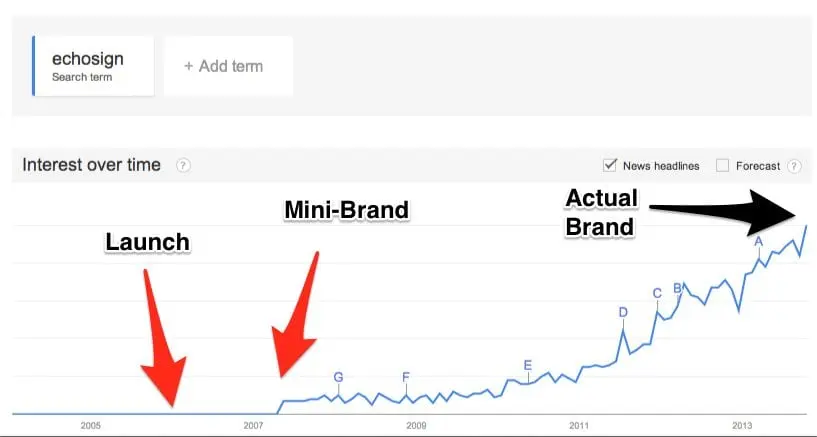
In recent insights shared across the startup ecosystem, Lemkin highlights an overlooked milestone in the lifecycle of high-growth companies: the emergence of the "mini-brand." Long before a startup achieves household-name status on the level of a Salesforce, Snowflake, or Google, a localized, highly potent reputation takes root within a company’s core niche—often arriving right around the $2 million to $3 million Annual Recurring Revenue (ARR) mark.
This comprehensive report examines the early-stage B2B paradox: the near-impossible hurdle of acquiring initial paying logos, the paralyzing Valley of Death between initial traction and true scalability, and why recognizing and leaning into your "mini-brand" serves as the ultimate catalyst for compounding growth.
The Early-Stage B2B Paradox: Surviving the First 18 Months
For any entrepreneur attempting to sell software to enterprises or small-to-medium businesses (SMBs), the opening act is defined by a singular, crushing reality: getting anyone to care about Yet Another Web Service or Pay-For-Yet-Another-Business-App is borderline miraculous.
Modern organizations suffer from profound software fatigue. Every department head is inundated daily with cold emails, LinkedIn pitches, and demo requests for point solutions promising to revolutionize their workflow. In this environment, convincing a business—let alone ten or a hundred businesses—to take a chance on an unproven, early-stage startup is an extraordinary feat of endurance, grit, and psychological warfare.
When a founding team successfully navigates this gauntlet and closes their first handful of enterprise clients, it feels like a monumental victory. And make no mistake: it is. Statistically, the vast majority of startups never cross this chasm.
Yet, once the dust settles, founders frequently find themselves trapped in a psychological and operational conundrum.
[Day 1: Cold Outreach] ──> [The Grind: First 5-10 Logos] ──> [$2M-$3M ARR: The Mini-Brand Emerges] ──> [Compounding Scale]The Scale Illusion
Having 10, 20, or even 100 paying customers is an incredible milestone, but it rarely feels like scale. When founders look at the raw numbers required to reach a $50 million or $100 million valuation, the current trajectory can induce vertigo. The manual, founder-led motions that secured the first few design partners and early adopters suddenly feel heavy, inefficient, and impossible to multiply tenfold.
It is at this exact juncture—when the early adrenaline has worn off and the sheer weight of scaling sets in—that many founders lose their nerve, pivot unnecessarily, or dilute their go-to-market strategy.
According to industry analysts, understanding the mechanics of the "mini-brand" is the single most effective antidote to this early-stage despair.
Defining the "Mini-Brand": What Happens at $2M–$3M ARR?
What exactly is a mini-brand? It is crucial to demystify the term. A mini-brand does not mean global recognition, multi-million-dollar Super Bowl ad campaigns, or cultural ubiquity.
Instead, a mini-brand is localized market resonance. It occurs when a specific segment of your target audience—within the exact niche where you consistently win—starts whispering, talking, and writing about you. It is the moment when prospects within your specific vertical or buyer persona stop viewing you as an unknown, high-risk entity and begin recognizing your name from peer recommendations, industry Slack communities, or word-of-mouth chatter.
"You think brand doesn’t matter in the early days. But it turns out, you’ll have a ‘mini-brand’ far earlier than you might think. Often by just $2-$3m ARR. Customers in your niche, in the part of the market where you do win, will start to hear about you. Double down and…"
— Jason Lemkin, SaaStr
The Inbound Tipping Point
Prior to the arrival of the mini-brand, 100% of your pipeline is manufactured through outbound force of will. Every single meeting is wrestled out of the ether through cold calling, aggressive email sequencing, and personal networking.

When the mini-brand activates, the physics of your business subtly shift:
- Inbound Trickle: You begin receiving 1, 3, or 5 organic inquiries a week from prospects who "heard about you through a colleague."
- Shortened Sales Cycles: Prospects come to initial discovery calls already pre-educated and possessing a baseline level of trust.
- Referenceability: Your name is recognized when mentioned to potential enterprise buyers, reducing the perceived risk of purchasing from a startup.
While this initial trickle of inbound interest rarely satisfies impatient founders looking for hockey-stick growth overnight, it represents a monumental psychological and structural turning point. It is proof that the market is beginning to do some of the heavy lifting for you.
The Compounding Nature of SaaS and Market Validation
In software-as-a-service (SaaS), growth is rarely linear; it is fundamentally compounding. Just as financial interest builds upon interest, early market reputation builds upon itself.
Enterprise buyers are notoriously risk-averse. In the corporate procurement world, the unofficial corporate motto remains: "No one ever got fired for buying the boring, proven, well-known product from BigCo." Choosing an early-stage startup introduces career risk for an IT director or VP of Sales. If the startup goes under, the buyer looks foolish for backing them.
However, once a startup establishes its mini-brand within a specific vertical, that risk equation shifts dramatically.
Leveraging the Tailwinds
When you lean into your mini-brand precisely when it emerges, you unlock organic tailwinds across three critical pillars of your business:
- Sales Efficiency: Sales reps spend less time explaining who you are and building baseline credibility, leading to higher win rates and larger average contract values (ACVs).
- Marketing Multiplication: Content, case studies, and PR campaigns resonate faster because they land on fertile ground where the audience already possesses a faint, positive association with your company name.
- Ecosystem Partnerships: Potential integration partners and channel allies are far more willing to co-market with a startup that possesses a recognized footprint in its niche, rather than an anonymous unknown.
Strategic Playbook: How Founders Can Cultivate and Capitalize on Their Mini-Brand
Recognizing that a mini-brand exists is only half the battle. Knowing how to nurture and accelerate it without burning out your team or losing strategic focus requires tactical discipline. Here is an actionable framework for founders navigating the $2M to $10M ARR corridor.
1. Identify Your True "Winning Zones"
A mini-brand never spans an entire broad market; it is hyper-specific. Analyze your existing customer base ruthlessly:
- Where do you win with the highest gross margins and lowest churn?
- What specific sub-vertical, geography, or company profile loves your product the most?
- Double down exclusively on those pockets of excellence rather than spreading your marketing dollars across broad, unproven demographics.
2. Treat Early Customers Like Royalty
Your mini-brand is entirely built on the backs of your first 10 to 50 paying customers. If they are ignored because you are chasing the next enterprise whale, your fragile reputation will shatter before it can compound. Over-index on customer success, turn them into vocal advocates, and weaponize their success stories in your target niche.
3. Lean in When You Feel the Momentum
As Jason Lemkin famously noted:
"Sales is always hard. SaaS is always hard. But there is a moment in time when your brand kicks in… When it gives you a real tailwind in sales, in marketing, in partnerships. Really lean in when you see it, feel it, and know it."
When you notice prospects coming to meetings already familiar with your logo, or when industry peers reference your product unprompted, do not stay the course with passive marketing. Increase your content velocity, amplify your customer success stories, sponsor the niche community events your buyers frequent, and pour fuel on the fire.
Future Outlook: The Next Era of B2B Brand Building
As we look toward the future of B2B enterprise software, the Noise-to-Signal ratio in sales and marketing is worsening. With the proliferation of generative AI tools enabling automated outbound prospecting at an unprecedented scale, enterprise buyers are building higher walls to block out generic noise.
In this hyper-saturated environment, traditional cold outbound will continue to face diminishing returns. Consequently, the concept of the early "mini-brand" will transition from an accidental byproduct of good product-market fit to an intentional, engineered strategy.
Founders who understand that brand building begins in the trenches—long before the Series B funding announcement or the massive marketing budget—will successfully navigate the $3M ARR conundrum. By respecting their early customers, dominating their micro-niches, and recognizing the subtle tailwinds of market reputation when they appear, the next generation of B2B startups can transform early friction into unstoppable, compounding momentum.