Executive Overview
For over two decades, Audacity has stood as the undisputed titan of accessible audio editing. Born in an era when digital audio workstations (DAWs) required substantial financial investments, high-end hardware, and steep learning curves, Audacity offered a democratic alternative. It was free, open-source, lightweight, and capable of handling everything from quick podcast snips to complex multi-track musical arrangements. However, as the digital media landscape evolved, the software began to show its age. Its utilitarian, battleship-grey interface felt increasingly archaic, and its destructive editing workflows lagged far behind the sophisticated non-linear capabilities found in contemporary commercial software like ProTools, Ableton Live, and Adobe Audition.
Today, developers Muse Group have shattered those historical limitations with the official release of Audacity 4.0. Representing the most monumental structural and visual overhaul since the contentious Version 3.0 launch over five years ago, Audacity 4.0 bridges the chasm between basic audio utility and professional-grade DAW functionality. The update introduces a sweeping modern design language complete with a long-awaited native dark mode, highly requested non-destructive overlapping clip workflows, sample-accurate micro-editing, real-time envelope automation inspired by industry heavyweights, and a completely overhauled user experience.
Yet, this transformation is not without its controversies. By modernizing its architecture and phasing out legacy features like sync-lock in favor of streamlined shortcuts and industry-standard behaviors, Muse Group has walked a delicate tightrope. They must innovate to attract a new generation of creators while preserving the comforting familiarity that has kept millions of loyal users tethered to the platform since its inception. This exhaustive analysis explores the technical advancements, workflow shifts, community implications, and broader industry impact of Audacity 4.0.
Detailed Chronology: The Journey to Version 4.0
To fully appreciate the gravity of the Audacity 4.0 release, one must examine the chronological trajectory that brought the software to this critical juncture. For much of its early history, Audacity operated under a community-driven development model governed by volunteers and original creators Dominic Mazzoni and Roger Dannenberg. Updates were incremental, focusing primarily on stability, bug fixes, and expanding format support via FFmpeg integration, rather than radical UI/UX reinventions.
The Muse Group Acquisition and the Version 3.0 Watershed
The turning point for the software arrived in spring 2021 when Muse Group—the organization behind Ultimate Guitar and MuseScore—acquired the stewardship of Audacity. This transition immediately sparked widespread debate within the open-source community. Almost concurrently with the Version 3.0 release, telemetry and data-collection updates introduced in the privacy policy caused a significant backlash among privacy advocates and long-term users. Although Muse Group quickly recalibrated its telemetry policies to be strictly optional and transparent, the episode underscored the inherent friction when a beloved, grassroots open-source project transitions into corporate-backed stewardship.
Despite early controversies, Muse Group signaled a clear intent to modernize the software’s underlying codebase. Version 3.0 introduced a unified project file format (.aup3), replacing the fragmented folder structures of older versions and laying the groundwork for more advanced data management. Subsequent updates—such as Version 3.2—began dipping toes into non-destructive effects and cloud integration through Muse Hub, laying the foundational plumbing necessary for the architectural leap seen today.
The 4.0 Reveal and Release
Over the last five years, user forums and GitHub repositories buzzed with speculation regarding how radically Audacity would transform. Would it abandon its roots to become a paid, subscription-driven DAW? Would it alienate casual users who relied on its simple cut-and-paste interface?
The release of Audacity 4.0 answers these questions definitively. Rather than locking advanced features behind a paywall, Muse Group has preserved Audacity’s free and open-source ethos while injecting the application with commercial-grade power. The development cycle leading up to Version 4.0 focused heavily on modularizing the interface, rewriting the audio engine to handle complex overlapping timelines, and overhauling plugin architecture to ensure seamless compatibility with modern VST3, LV2, and AU formats. Today’s launch marks the culmination of this multi-year engineering effort, positioning Audacity not merely as a beginner’s stepping stone, but as a legitimate, highly capable workstation for professional and hobbyist audio engineers alike.
Supporting Context & Metrics: Under the Hood of Audacity 4.0
Audacity 4.0 is far more than a superficial coat of paint; it represents a fundamental rethinking of how audio manipulation is performed within an open-source environment. To understand the depth of this release, we must analyze the specific metrics, architectural shifts, and workflow paradigms introduced in Version 4.0.
Aesthetic Modernization and the Dark Mode Imperative
For years, the visual presentation of Audacity was frequently cited as its primary barrier to entry for younger digital natives accustomed to the sleek, high-contrast dark interfaces of modern operating systems and creative suites. Audacity 4.0 addresses this head-on by introducing a vibrant, highly customizable design language.
- Native Dark Mode: The long-overgone dark theme is finally here, reducing eye strain during late-night editing sessions and aligning the software with contemporary desktop design standards.
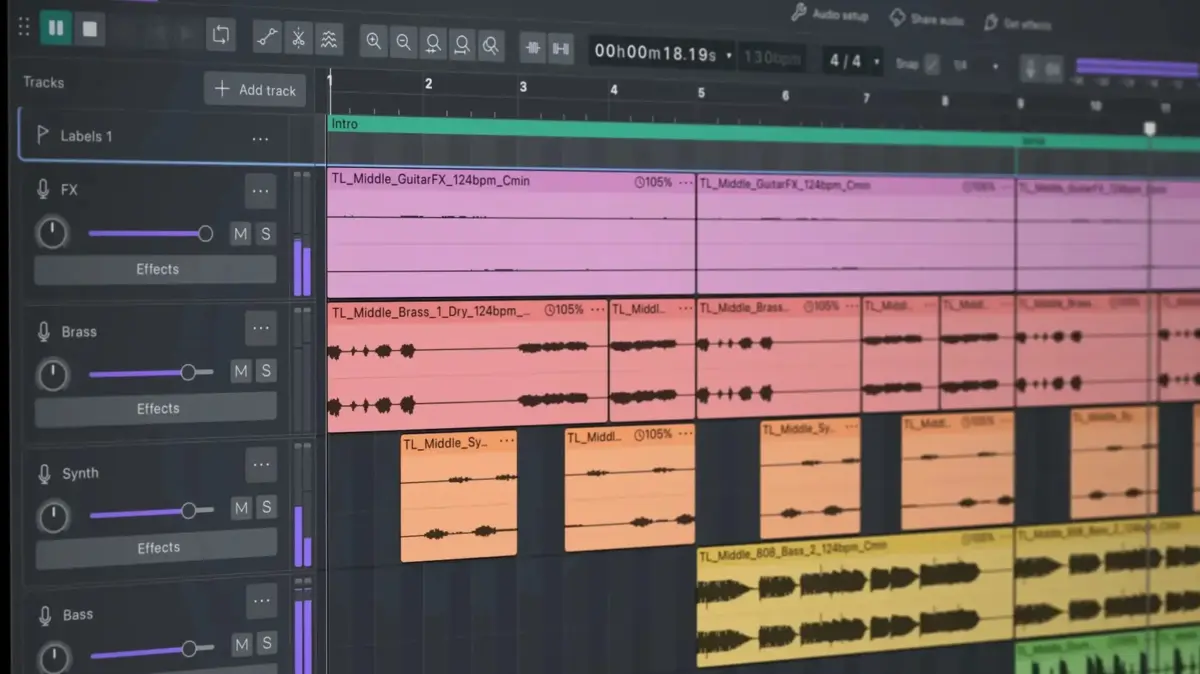
- Playful Visual Hierarchy: The interface incorporates colored audio clips and vivid accent colors on interactive UI elements, such as gain sliders and pan knobs, allowing users to visually categorize tracks instantly.
- The Classic Safety Net: Recognizing that forced aesthetic changes often alienate veteran users, Muse Group has preserved the classic Audacity look as an out-of-the-box configuration option during the initial setup wizard. Users can opt out of the new design entirely, ensuring zero disruption to established muscle memory.
Revolutionary Non-Destructive Editing and Timeline Overhauls
Historically, Audacity relied heavily on destructive editing workflows, where applying an effect or trimming a wave meant permanently altering the underlying audio data unless an immediate "Undo" was executed. Version 3.2 introduced preliminary non-destructive capabilities, but Version 4.0 fully realizes this vision.
- Overlapping Clips: Audio clips can now seamlessly overlap on the timeline. Trimming back an overlapping clip no longer permanently discards the hidden audio data; instead, dragging the edge reveals the previously covered material beneath.
- Multi-Clip Manipulation: Users can now select and trim multiple clips simultaneously by dragging a single structural handle. Furthermore, clips can be grouped together, allowing complex arrangements to be moved, sliced, and edited as a single cohesive unit without dissolving individual track parameters.
- Sample-Level Precision: By zooming in to the microscopic sample level, engineers can perform ultra-fine micro-adjustments. This is a game-changer for podcast editors removing unwanted mouth clicks, or music producers fixing transient clipping on nearly perfect vocal takes.
- Individual Track Meters: Every track now features a dedicated accompanying audio meter, making it exceptionally easy to isolate and diagnose which specific stem or channel is causing clipping within the broader mix.
Automation, Envelope Tools, and Industry Alignment
Perhaps the most striking evolution in Audacity 4.0 is its adoption of workflow paradigms popularized by industry-standard Digital Audio Workstations like Ableton Live, ProTools, and Apple’s Logic Pro.
+--------------------------------------------------------------------------+
|                       AUDACITY 4.0 WORKFLOW EVOLUTION                    |
+------------------------------+-------------------------------------------+
| Feature Area                 | Legacy Approach (v3.x and earlier)        |
+------------------------------+-------------------------------------------+
| Visual Theme                 | Rigid, utilitarian grey interface         |
| Clip Management              | Destructive cutting; non-overlapping      |
| Automation & Gain            | Clunky envelope tool; static adjustments  |
| Cutting & Slicing            | Multi-step select and split workflows     |
| Plugin Integration           | Basic VST support; frequent bridge issues |
+------------------------------+-------------------------------------------+- The Advanced Envelope Tool: Borrowing a page from Ableton Live and ProTools, the new envelope tool allows users to click directly onto a waveform to generate draggable control points for real-time gain automation.
- Real-Time Waveform Rendering: As adjustments are made to automation points or effects parameters, waveforms update on-screen in real-time. This instant visual feedback enables creators to instantly spot redlining or phase cancellation before committing the audio to export.
- One-Click Splitting Tool: Slicing audio is now as frictionless as in Adobe Premiere or Logic Pro. A dedicated splitting tool allows for instant, single-click cuts directly on the timeline, drastically cutting down the time required for dialogue editing and beat-matching.
The Sync-Lock Controversy
No major software update is complete without friction, and Audacity 4.0’s most contentious design choice is the removal of the legacy sync-lock feature. Sync-lock previously ensured that when tracks were edited, surrounding clips shifted in tandem to maintain synchronization across multi-track sessions.
While its removal streamlines the underlying codebase and aligns Audacity with standard DAW workflows, it initially caused concern among long-term podcasters and audiobook narrators who relied on it daily. To mitigate this transition, Muse Group has introduced robust new keyboard shortcuts and grouping mechanics designed to replicate the exact utility of sync-lock without the architectural baggage.
Official Statements and Community Perspectives
The release of a software update with the historical weight of Audacity inevitably sparks intense dialogue across developer forums, social media channels, and professional audio communities. Muse Group representatives and community stakeholders have shared critical insights regarding the philosophy guiding Version 4.0.
Daniel Ray, Head of Audio at Muse Group, emphasized the delicate balance between innovation and accessibility during the development lifecycle:
"When you manage a piece of software as culturally significant as Audacity, you carry a profound responsibility. Millions of people—from bedroom podcasters in rural areas to high school students discovering music production for the first time—rely on this tool precisely because it doesn’t intimidate them. With Version 4.0, our primary engineering goal was to introduce professional-grade non-destructive workflows, sample-level editing, and modern automation without sacrificing the approachable soul that made Audacity a household name. We built an escape hatch into the setup wizard: if you want the classic grey interface, it is one click away. But once you dive into the new timeline capabilities, we believe creators will never want to look back."
Community reception on platforms like Reddit’s r/audioengineering and the official Audacity GitHub repository has been largely enthusiastic, tempered by healthy skepticism regarding workflow adjustments. Long-term power users praised the inclusion of real-time waveform updates and overlapping clip support, noting that these features close a decade-old functional gap between Audacity and paid alternatives costing hundreds of dollars.
Conversely, community moderators have actively addressed transition concerns regarding the deprecation of sync-lock. Power users specializing in spoken-word editing have published impromptu tutorial guides on utilizing the new shortcut groupings to achieve identical multi-track alignment, proving that the open-source community remains exceptionally proactive in adapting to sweeping structural changes.
Future Outlook: What Audacity 4.0 Means for the Audio Industry
As we look toward the horizon of digital media creation, the launch of Audacity 4.0 signals a profound shift in the democratization of audio production tools. For decades, a strict binary existed within the software market: creators either tolerated the frustrating limitations of free, basic editors or mortgaged their budgets to license professional DAWs like ProTools, Logic Pro, or Ableton Live.
By systematically absorbing the best design patterns and workflow efficiencies of these expensive commercial suites and offering them within a free, open-source framework, Muse Group is fundamentally redefining user expectations. Audacity is no longer just a utility for trimming an MP3 or converting an audio file format; it is a fully realized, modern digital audio workstation capable of handling sophisticated podcast post-production, sound design, and indie music recording projects.
Looking forward, several key areas will define the trajectory of the Audacity ecosystem:
- Cloud and Ecosystem Integration: Through platforms like Muse Hub, users can expect deeper integration with cloud backup solutions, royalty-free sample libraries, and community-driven plugin repositories, blurring the line between local desktop software and cloud-connected collaborative platforms.
- Plugin Ecosystem Expansion: With enhanced support for modern plugin architectures (VST3, LV2, and AU), third-party developers are already positioning themselves to release specialized restoration tools, AI-powered noise reduction modules, and dynamic processors explicitly optimized for the Audacity 4.0 engine.
- Educational Adoption: Because schools and non-profit institutions operate under strict budget constraints, the modernization of Audacity ensures that the next generation of audio engineers and media creators will learn on software that mirrors the workflows of professional studios, smoothing the pipeline from education to industry.
Ultimately, Audacity 4.0 proves that open-source software can successfully evolve without losing its core identity. By daring to modernize its interface, embrace non-destructive workflows, and borrow the finest ideas from commercial software giants, Muse Group has ensured that Audacity will remain an indispensable pillar of digital creativity for the next decade and beyond.