Executive Overview
This past summer, the verdant expanses of Southwark Park transformed into an epicenter of radical self-expression, sonic experimentation, and uninhibited joy as Body Movements returned for another triumphant edition in south London. Founded by visionary nightlife aficionados DJ Saoirse, Clayton Wright (co-founder of Little Gay Brother), and Simon Denby, the festival has rapidly cemented its status as a cornerstone of the contemporary global electronic music calendar. Far more than a standard single-day weekender, Body Movements operates as a vital cultural ecosystem—a meticulously curated convergence where LGBTQIA+ creatives, grassroots collectives, and pioneering artists reclaim public space through the unifying power of club culture.
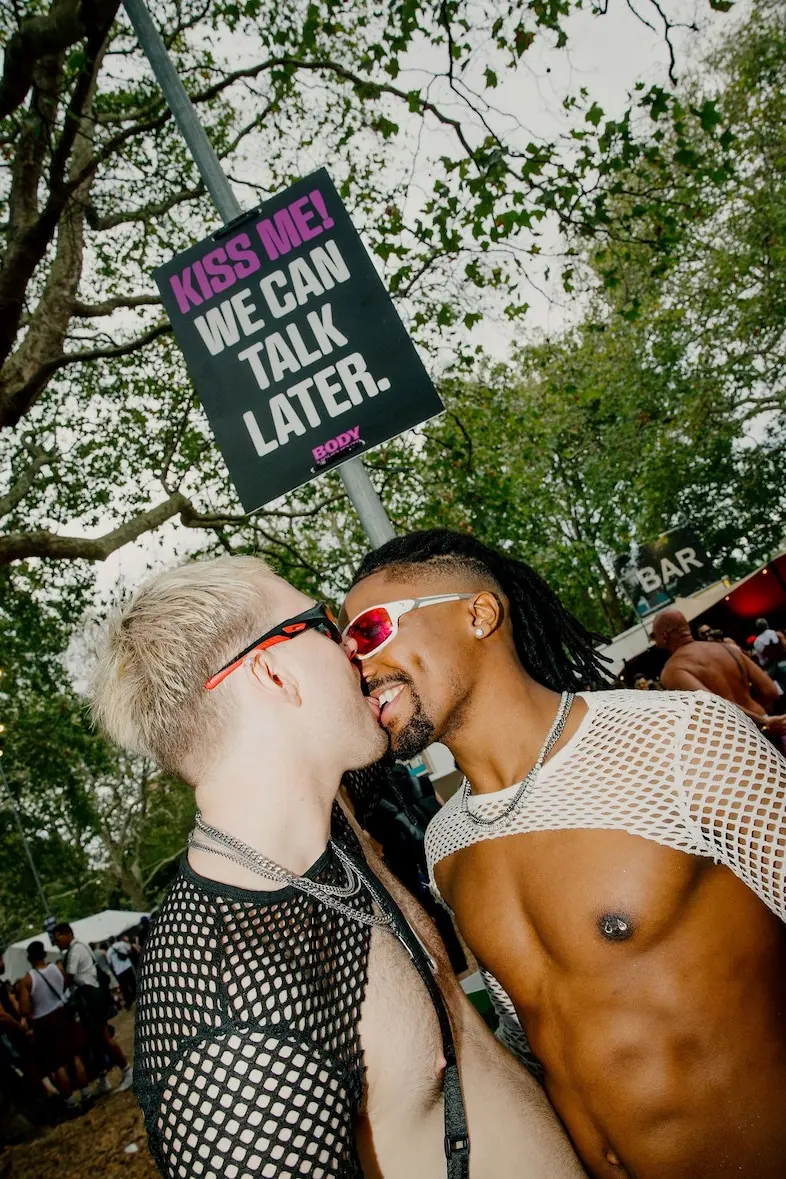
Set across five distinct, character-rich stages—aptly named Mother, The Strap, Snatch, Hot Mess, and Glory Hole—the festival drew thousands of club kids, dancers, and sound-system devotees. Adorned in a sartorial mosaic of leather, lace, PVC, and latex, attendees moved in kinetic harmony until the early hours of the following morning. The air thrummed with the weight of roaring sound systems and an inimitable, life-affirming energy that can only be generated when marginalized communities are given the physical and artistic autonomy to truly thrive.
Yet, beyond the visceral thrill of the dancefloor, Body Movements 2024 functioned as a multi-disciplinary tour de force. The day’s sprawling sonic blueprint bridged underground club subcultures with avant-garde pop, featuring world-class selectors alongside boundary-pushing live performers. Simultaneously, cultural interventions such as an expansive multimedia exhibition curated by The Queer Archive and a bustling marketplace championing independent underground designers elevated the festival from a mere rave to a comprehensive celebration of queer modern artistry.
For those unable to make the pilgrimage to Southwark Park, Dazed Club dispatched acclaimed photographer Ieva Petrauskaitė to document the radical aesthetics, raw emotion, and defiant beauty of the ravers. As daylight faded and the strobe lights cut through the south London dusk, the true heartbeat of the festival was laid bare.
Detailed Chronology: A Day in the Life of Southwark Park’s Queer Utopia
Afternoon Ignition: The Gates Open and the Sound Systems Awaken
As the mid-day sun beat down on Southwark Park, the early arrivals flooded through the gates, immediately greeted by the low-end rumble of sound checks bleeding across the five stages. The atmosphere was charged with palpable anticipation. Unlike traditional commercial festivals governed by rigid corporate timelines, Body Movements carries the spirit of the underground: a fluid, communal rhythm where the boundaries between artist and audience rapidly dissolve.
At the Mother stage, the tone for the afternoon was set with deep, hypnotic grooves that coaxed the early crowds out of the grassy rest areas and onto the asphalt. Meanwhile, over at The Strap, industrial textures and driving percussive rhythms began to dictate a faster pace, drawing in ravers clad in intricate harnesses and metallic hardware.
The early hours offered a masterclass in musical diversity. The crowd swelled as local grassroots crews claimed their turf around the stages, trading stories, showing off meticulously crafted festival looks, and establishing the safe, communal parameters that would protect the space for the rest of the day and night.
Golden Hour Crescendos: Rain, Hyperpop, and Euphoria
As the afternoon bled into the evening, the meteorological and emotional climate of the festival reached a dramatic crescendo. One of the defining moments of the day occurred during Romy’s eagerly anticipated set at the Mother stage. As the singer-songwriter and producer delivered a masterclass in euphoric, emotionally resonant dance music, the south London skies opened up, showering the dancing multitude in a warm, cinematic downpour. Rather than dampening the spirits of the crowd, the hot, wet rainfall acted as a baptismal release. Hands reached toward the bruised-plum sky, tears mingled with rain on ecstatic faces, and the collective energy surged to new heights.
Immediately following this transcendent weather-blessed peak, the festival’s sonic boundaries expanded further with a masterclass in contemporary pop subversion. Babymorocco took to the stage, delivering a set of infectious, high-octane hyperpop that sent shockwaves through the front rows. In a heartwarming display of community intimacy, the entire crowd spontaneously broke into a resounding chorus of “Happy Birthday” dedicated to the artist, turning the performance into an inclusive, communal celebration that exemplified the familial warmth underpinning the entire festival.
Concurrently, the other stages were operating at full throttle. Bashkka and Eris Drew delivered heavy, vinyl-centric masterclasses in house and techno spirituality, their selections bridging generations of club history. Later, MCR-T injected the afternoon with breakneck techno and raw electro energy, while Horsemeat Disco anchored the revelry with a masterclass in joyous, sun-drenched classic disco edits that kept hips swinging across generations.
Midnight Descent: When the Flash Comes On
As twilight surrendered to full darkness, Southwark Park underwent a radical visual transformation. The ambient glow of the London skyline was eclipsed by a grid of meticulously engineered stage lighting, laser arrays, and smoke machines. This was the moment immortalized by photographer Ieva Petrauskaitė for Dazed Club.
Armed with a camera and an intuitive eye for underground aesthetics, Petrauskaitė wove through the heaving crowds at Hot Mess and Glory Hole. As the sun went down, the flash came on, casting stark, high-contrast illumination over faces dripping with sweat, glitter, and unbridled joy. Leather jackets caught the strobe light; lace bodysuits cast intricate geometric shadows; and the sheer, unfiltered intensity of bodies moving in unison was captured for posterity. The night reached its zenith in a blur of smoke, sweat, and heavy bass, proving that the spirit of the rave remains profoundly alive and fiercely protected in the capital.
Supporting Context & Metrics: Beyond the Music
To fully comprehend the cultural significance of Body Movements, one must look beyond the line-up poster and examine the festival’s structural mechanics. Founded in response to the rapid gentrification of London, the commercialization of pride events, and the steady closure of queer nightlife spaces across the UK, Body Movements was intentionally designed as an antidote to exclusionary festival models.
Curating the Counter-Culture: Stages and Collectives
The festival’s five-stage layout—Mother, The Strap, Snatch, Hot Mess, and Glory Hole—is not merely an exercise in clever naming; it is an ideological mapping of queer nightlife geography. Each stage is curated in collaboration with specific grassroots collectives and party promoters who form the lifeblood of the underground.
- Mother served as the emotive heart, championing inclusivity, vocal-driven house, and emotional dance music convergence.
- The Strap catered to the harder, faster, and more uncompromising industrial techno crowds, acting as a haven for leather and fetish subcultures.
- Snatch and Hot Mess provided dynamic platforms for genre-fluid experimentation, bringing together queer people of color (QPOC) collectives, dancehall, reggaeton, and global club sounds.
- Glory Hole leaned into the hedonistic, uninhibited spirit of queer cruising culture, offering raw, unadulterated club energy.
Art, Fashion, and Activism
Body Movements 2024 also recognized that club culture is inextricably linked to fashion and visual art. A standout non-musical feature of this year’s edition was the collaboration with The Queer Archive, which curated an expansive exhibition showcasing the works of 16 multidisciplinary artists. This installation provided historical and contemporary context to the queer bodies dancing on the fields outside, bridging the gap between gallery spaces and the sweaty reality of the dancefloor.
Complementing the visual arts was the Mooch market, a bustling commercial hub that bypassed corporate sponsorships in favor of championing independent queer designers, leather smiths, harness makers, and avant-garde clothiers. In a landscape where festival fashion has often been co-opted by fast-fashion giants, the Mooch market returned economic power directly to the independent creators who define modern queer aesthetics.
Official Statements and Visionary Intentions
The enduring success of Body Movements is rooted in the ideological clarity of its co-founders—DJ Saoirse, Clayton Wright, and Simon Denby—whose collective decades of experience navigating, promoting, and protecting nightlife informed every facet of the festival’s design.
Reflecting on the ethos that birthed the festival, co-founder Clayton Wright (known widely for his work with Little Gay Brother) has consistently emphasized the necessity of safe, radical spaces in an increasingly hostile political and social climate. In prior statements regarding the festival’s mission, Wright noted:
"We didn’t just want to throw a party; we wanted to build a temporary autonomous zone where our communities could see themselves fully reflected—not as a marketing demographic, but as creators, leaders, and royalty. Body Movements is about honoring the lineage of our elders while giving absolute freedom to the sound systems and artists pushing us forward today."
DJ Saoirse, drawing from her extensive tenure as an international selector and champion of underground dance music, has frequently spoken about the importance of sonic integrity within queer spaces. The curation of Body Movements avoids the lazy booking practices of mainstream festivals, instead acting as an archival and forward-thinking platform for marginalized talent.
Co-founder Simon Denby echoed these sentiments, highlighting the logistical and emotional labor required to pull off an independent festival of this magnitude in central-south London:
"Producing an event that scales across multiple stages while maintaining the intimacy and safety of a basement club is no small feat. Every year, we are humbled by the dedication of our crowds, the brilliance of our crews, and the sheer resilience of our community. Southwark Park becomes something entirely otherworldly for one day, and that magic belongs to everyone who steps through our gates."
Artists who performed at the 2024 edition were equally vocal about the unique atmosphere of the festival. Babymorocco, reflecting on the overwhelming crowd response and the spontaneous birthday serenade, noted on social media that the energy at Body Movements was unlike any other festival circuit stop, describing it as "an afternoon wrapped in pure, unconditional love." Similarly, selectors like Eris Drew and Bashkka have repeatedly lauded the festival for offering a rare festival environment where uncompromising, vinyl-heavy, and spiritually deep sets are met with absolute understanding and reciprocity by the dancefloor.
Future Outlook: The Evolution of a Movement
As the dust settles on Southwark Park and the temporary stages are dismantled, the cultural shockwaves of Body Movements 2024 continue to reverberate across the global electronic music community. In an era where nightlife globally faces unprecedented threats—ranging from the ongoing cost-of-living crisis and rising operational costs to local council noise complaints and the steady creep of urban redevelopment—festivals like Body Movements serve as vital blueprints for resistance and resilience.
Sustaining the Ecosystem
Looking ahead, the organizers face the dual challenge of scaling their ambitions without losing the grassroots intimacy that defines the festival’s soul. Unlike corporate-backed mega-festivals that prioritize maximum capacity and homogenized line-ups, Body Movements has proven that cultural relevance is tied directly to community trust.
Future iterations are expected to deepen international exchanges, bringing even more global queer collectives and sound systems to London, while continuing to provide a platform for local, under-represented artists. Furthermore, the partnership with cultural entities like Dazed Club ensures that the visual and journalistic legacy of the festival is archived, providing historical documentation for future generations of club kids who may not yet have found their way to the dancefloor.
A Beacon for Global Queer Nightlife
The success of Body Movements 2024 sends an unequivocal message to the wider festival industry: queer audiences do not want sanitized, corporate-sponsored spaces; they demand radical authenticity, uncompromising sonic curation, and environments where safety and hedonism can coexist in delicate, beautiful balance.
As night finally fell over Southwark Park—as the flashbulbs caught the sweat-slicked skin of ravers lost in the rhythm, and the sound systems hummed their final, resonant frequencies—it was clear that Body Movements is no longer just a seasonal event. It is a living, breathing movement. It is a declaration that queer nightlife is not a fleeting trend, but an eternal, foundational pillar of cultural innovation that will continue to adapt, survive, and dance long after the lights go up.