Executive Overview
For software sales teams across the globe, the word pilot often elicits an internal groan. To the average account executive, a pilot represents administrative friction, stretched engineering resources, and—most crucially—the dreaded "double sale." First, a startup must sell the vision to secure the pilot. Then, after weeks of hand-holding, technical integration, and user onboarding, the sales team must sell the deal again to convert that trial into a long-term, high-value enterprise contract.
Yet, according to industry insights from SaaStr founder Jason Lemkin, fighting the enterprise demand for pilots is a losing battle. Particularly for early-stage startups and emerging vendors, enterprise buyers simply will not take a chance on unproven technology without a test run. This dynamic is exponentially amplified in the modern "Age of AI," where novel capabilities, opaque operational costs, and security risks make enterprise hesitation higher than ever.
Rather than resisting the trend, elite revenue organizations are leaning in, mastering the mechanics of the pilot phase, and weaponizing it against competitors who fail to adapt. When structured with rigorous upfront criteria and clear mutual accountability, the pilot ceases to be a hurdle and becomes the most potent conversion tool in a B2B SaaS playbook.
Detailed Chronology: The Evolution of the Enterprise Trial
To understand why enterprise buyers insist on pilots today, we must examine how enterprise procurement has evolved over the last decade.
Phase 1: The Era of Traditional Software Evaluation (Pre-2015)
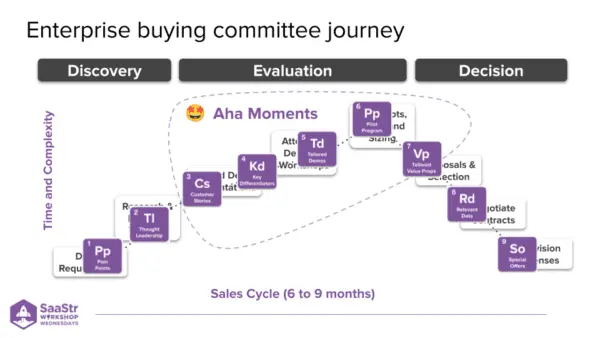
Historically, enterprise software procurement was dictated by lengthy Request for Proposals (RFPs), massive upfront capital expenditures, and multi-month on-premise implementations. Vendors relied heavily on slide decks, reference calls, and demo environments managed entirely by sales engineers. Pilots were rare, expensive to set up, and typically reserved for Fortune 500 implementations involving millions of dollars in legacy infrastructure.
Phase 2: The Rise of Cloud and Freemium (2015–2020)
As Software-as-a-Service (SaaS) took over the enterprise, the barrier to entry dropped. Freemium models and self-serve trial periods became the norm for SMBs and mid-market buyers. However, enterprise buyers—plagued by strict compliance, IT governance, and security requirements—resisted pure self-serve models. This created a hybrid era where startups offered restricted "sandboxes" or proof-of-concept (PoC) environments. These trials were frequently unstructured, lacking defined timelines, and often resulted in "pilot purgatory," where customers used the software indefinitely without converting to paid tiers.
Phase 3: The Complexity of the Modern Enterprise Stack (2020–2025)
As modern tech stacks ballooned to include dozens of interconnected microservices, data warehouses, and cloud infrastructure platforms, enterprise risk skyrocketed. Integrating a new vendor meant exposing core data pipelines to potential vulnerabilities. Consequently, procurement teams institutionalized the paid or structured pilot as a mandatory gatekeeper. Buyers demanded proof that a tool could integrate seamlessly with existing systems before unlocking budget allocations.
Phase 4: The Age of AI and the New Imperative (Present Day)
We have now entered an era dominated by Artificial Intelligence, Large Language Models (LLMs), and autonomous agent workflows. In this landscape, deterministic software has been replaced by probabilistic systems. Enterprise buyers can no longer rely on standard feature checklists; they must test how an AI model behaves when fed proprietary enterprise data, how it handles hallucinations, and what its token consumption costs look like at scale.
As Jason Lemkin noted in recent commentary:
"Sales hates pilots. Why? It has to be sold twice. Once to start the pilot. And again after it finishes. But pilots are an even bigger deal in the Age of AI. Get good at them, when the competition isn’t… and you win."
In today’s market, mastering the AI-era pilot is no longer an operational nuisance—it is the definitive differentiator between startups that scale and those that stall out.
Supporting Context & Metrics: The Economics of the Pilot
While sales teams view pilots as extra work, a holistic financial and operational analysis reveals that net-net, pilots often reduce total sales friction. By absorbing the customer’s perceived risk upfront, a well-run pilot accelerates overall deal velocity once the trial successfully concludes.
Why Enterprise Customers Demand Pilots
- Risk Mitigation: Enterprises operate under strict fiduciary responsibilities. Implementing an unproven vendor’s tool introduces operational, security, and reputational risks. A pilot confines these risks to a controlled sandbox environment.
- Internal Stakeholder Alignment: Enterprise purchases rarely rely on a single decision-maker. A pilot provides the internal champion with tangible usage data, ROI metrics, and user feedback required to convince skeptical CFOs and CIOs.
- Technical Validation: Marketing copy promises seamless integration; reality often involves legacy APIs and messy data structures. A pilot forces technical validation before financial commitments are locked in.
The Financial Impact: Paid vs. Unpaid Trials
A critical debate among revenue leaders centers on whether pilots should be free or paid. Industry data indicates a strong correlation between paid pilots and high conversion rates:
- Unpaid Pilots ("PoCs"): Often suffer from a lack of executive sponsorship on the buyer’s side. Because the customer has no skin in the game, internal resources are deprioritized, leading to low user adoption, elongated timelines, and high ghosting rates.
- Paid Pilots: Charging a nominal fee (even a fraction of the actual contract value) filters out tire-kickers. It ensures that the enterprise buyer has allocated budget, secured internal engineering resources, and treated the evaluation with professional urgency.
Official Industry Perspectives & Methodology
To turn the pilot phase into a revenue engine, sales and customer success teams must adhere to a strict operational framework. The primary catalyst for a failed pilot is an amorphous scope. Without clearly defined parameters, a 30-day trial can easily hemorrhage into a six-month evaluation loop.
The Golden Rule: Upfront Success Criteria
The bedrock of any successful enterprise pilot is establishing rigid, measurable success criteria before a single line of code is deployed or a user is onboarded.
[Contract Signed] ──> [Define Success Metrics] ──> [Execution & Tracking] ──> [Review vs. Criteria] ──> [Conversion]Both the vendor and the enterprise client must mutually agree on what constitutes a successful trial. These criteria should be documented in the pilot agreement and can include:
- Quantitative ROI Metrics: E.g., "Reduction of customer support ticket handling time by 25%," or "Automation of 40% of routine data-entry workflows."
- Adoption and Engagement Thresholds: E.g., "Active daily usage by at least 80% of the designated 50-person pilot team over a consecutive 14-day period."
- Technical Performance Benchmarks: E.g., "Successful integration with enterprise data warehouse with zero data pipeline errors over a 30-day run."
Operationalizing the "Double Sale"
Because the pilot requires selling the vision twice, organizations must align their internal departmental handoffs to support this journey:
- The First Sale (Sales to Champion): The Account Executive sells the hypothesis of transformation. They position the pilot not as a favor, but as a structured scientific test of the software’s capabilities.
- The Execution Phase (Sales Engineering & Customer Success): During this window, the Customer Success Manager (CSM) acts as an extension of the client’s team. Weekly check-ins ensure that adoption milestones are met and technical roadblocks are cleared immediately.
- The Second Sale (Conversion to Enterprise Agreement): Armed with hard data matching the agreed-upon success criteria, the transition to a full-scale contract becomes an objective business review rather than a subjective sales pitch. The conversation shifts from "Do we want this tool?" to "How do we scale what is already working?"
Future Outlook: The Next Decade of Enterprise Procurement
As we look toward the remainder of the decade, enterprise sales will continue to decouple from traditional relationship-based selling and move toward empirical, data-driven validation.
1. Automated and Instantaneous Sandbox Provisioning
Future enterprise platforms will leverage advanced cloud orchestration to spin up customized, secure sandbox environments tailored to a prospect’s specific tech stack within minutes of a discovery call. This will compress the time-to-pilot from weeks to hours.
2. AI-Driven Pilot Analytics
Vendors will increasingly deploy telemetry within trial environments that automatically tracks usage patterns, spots user friction points, and generates real-time ROI dashboards for enterprise executives. This data will automatically trigger conversion workflows when predetermined value thresholds are crossed.
3. The Demise of the Free, Unstructured Trial
As AI operational costs rise and cybersecurity scrutiny intensifies, free, unfettered trials for enterprise software will become entirely obsolete. Enterprises and vendors alike will standardize around paid, highly scoped, high-accountability pilot programs.
Conclusion
You can fight the pilot. You can complain about the administrative overhead, the allocation of scarce engineering hours, and the friction of the double sale. Or, you can lean in—build a world-class pilot apparatus, enforce strict upfront success criteria, and out-execute competitors who treat trials as an afterthought. In the unforgiving landscape of enterprise software and modern AI adoption, mastering the pilot isn’t just a sales strategy; it is the ultimate engine for sustainable enterprise growth.