Executive Overview
"They should have sent a poet."
These immortal lines, spoken by Jodie Foster’s character in the 1997 sci-fi classic Contact after emerging on an alien beach beneath a glittering firmament, have long captured humanity’s yearning to experience the cosmos through an artistic lens rather than a purely utilitarian one. In 2018, Japanese billionaire Yusaku Maezawa took that cinematic sentiment quite literally. Just over two decades after Robert Zemeckis’s film hit theaters, Maezawa announced an unprecedented endeavor: the dearMoon project.
Commanding a SpaceX Starship rocket, Maezawa intended to carry eight international creatives—photographers, musicians, filmmakers, and digital artists—on a lunar flyby mission. None of them were trained astronauts; all of them were embarking on their maiden voyage beyond Earth’s atmosphere, entirely free of charge. The mandate was simple yet profound: witness the majesty of the cosmos, capture it, and return to translate that awe for a terrestrial audience.
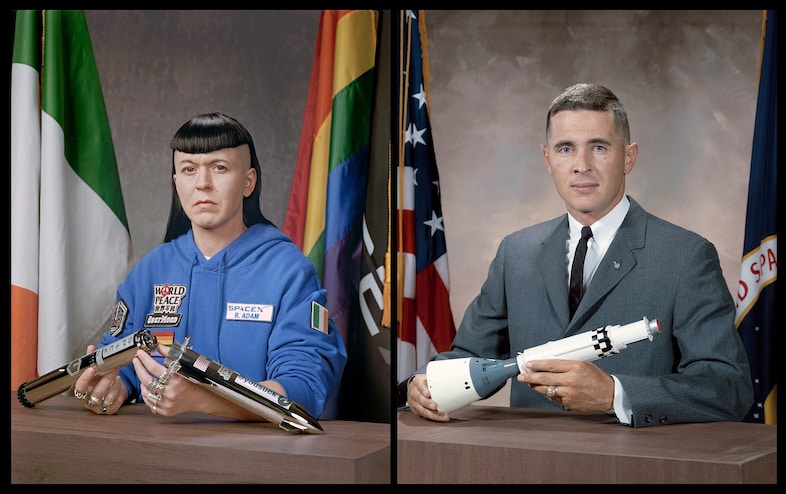
Among the chosen few was Irish photographer Rhiannon Adam. Set to be the sole female member of the crew, Adam was also poised to make history as the first openly queer woman to venture beyond Earth’s atmosphere.
Yet, what began as a golden age of optimistic, art-driven space exploration ultimately evaporated into corporate realpolitik. In 2024, plagued by persistent development delays and a shifting executive attention span, Maezawa abruptly cancelled the mission. For Adam and her crewmates, the cancellation was not merely a postponed vacation; it was the sudden, unceremonious collapse of a life-defining commitment.
Through her multimedia art exhibition, Rhi-Entry, Adam has channeled the grief, absurdity, and profound betrayal of that experience into a vital critique of the private space industry. Her story serves as a cautionary tale about the perils of hitching artistic manifestos to the whims of tech oligarchs, illuminating a stark reality: when billionaires play cosmic patron, the people who stake their lives on the journey are often treated as disposable.
Detailed Chronology: From Pandemic Isolation to Houston Interviews
The genesis of dearMoon for Rhiannon Adam occurred against the claustrophobic backdrop of the global COVID-19 pandemic. Stranded in a state of existential dread, the photographer found herself questioning the trajectory of her career.
"It was the middle of the pandemic," Adam recalls. "I mainly make work about humans, and I was in the midst of a bit of a life crisis thinking, ‘My god, I’m never going to be allowed near another human again.’ So everything ground to a horrible standstill."
Salvation, or at least surreal distraction, arrived via a digital grapevine. A friend who followed Elon Musk on Twitter—back before the platform’s turbulent transformation into X, right-wing meltdowns, and the creation of DOGE—flagged a public open call for Maezawa’s lunar mission.
"I thought it was a bit of a joke at first," Adam admits. "I mean, who gets to apply to go to space? That’s just not a real thing. So I applied, but I didn’t really think too much of it."
What started as an idle click quickly escalated into a high-stakes gauntlet. Weeks after her initial submission, Adam received an email requesting further documentation. This snowballed into a grueling elimination process featuring intensive Zoom interviews, collaborative team-building exercises, and spontaneously requested self-tape videos often demanded at 2:00 AM. While SpaceX orchestrated operations out of its Texan headquarters, Adam fielded these high-pressure directives from a grim, run-down bed-and-breakfast in Great Yarmouth, England.
After clearing extensive medical surveys, she was flown to Houston for a rigorous in-person evaluation. By 2022, the selection process concluded. Adam was officially unveiled as one of eight mission participants. Alongside her were an eclectic mix of global cultural figures, including South Korean rapper T.O.P (Choi Seung-hyun), American DJ and music producer Steve Aoki, and digital creator Tim Dodd, known online as Everyday Astronaut.
For the next two years, the crew worked closely with SpaceX engineers and mission coordinators to map out the unique parameters of the flight. The mission profile required looping around the far side of the moon aboard a private Starship rocket—a feat similar to NASA’s crewed Artemis II lunar flyby, which eventually utilized the Orion spacecraft piloted by professional astronauts.
The intensive preparations forged an intense, transnational camaraderie among the crew. They trained together, shared psychological evaluations, and engaged in stark, sobering conversations about the very real possibility of catastrophic failure. They were preparing to stake their lives on a collective vision of artistic expansion. Then, without warning, the machinery ground to a halt.
Supporting Context & Metrics: The Anatomy of a Collapse
In June 2024, Yusaku Maezawa released a public statement announcing the termination of the dearMoon mission. The primary culprit cited was the protracted timeline of Starship’s iterative development and safety certification. However, the manner of the cancellation left deep emotional scars on the crew who had organized their entire existence around the launch.
According to Adam, Maezawa’s public justification—that he could no longer bear keeping the crew waiting in a state of perpetual limbo—masked a more cavalier underlying motivation.
"He basically got bored of waiting," Adam asserts. Her multimedia project, Rhi-Entry, directly interrogates the psychology of this letdown, juxtaposing personal disappointment against the sweeping, technocratic history of human spaceflight. "My suspicion is that, ultimately, he knows it’s a bit like an airline… you can just buy another ticket later on. For him, there wasn’t any great loss."
While Maezawa stated in his official departure that he could no longer plan his future amidst such uncertainty, Adam contends that the billionaire failed to afford the crew the basic courtesy of a direct, advance heads-up.
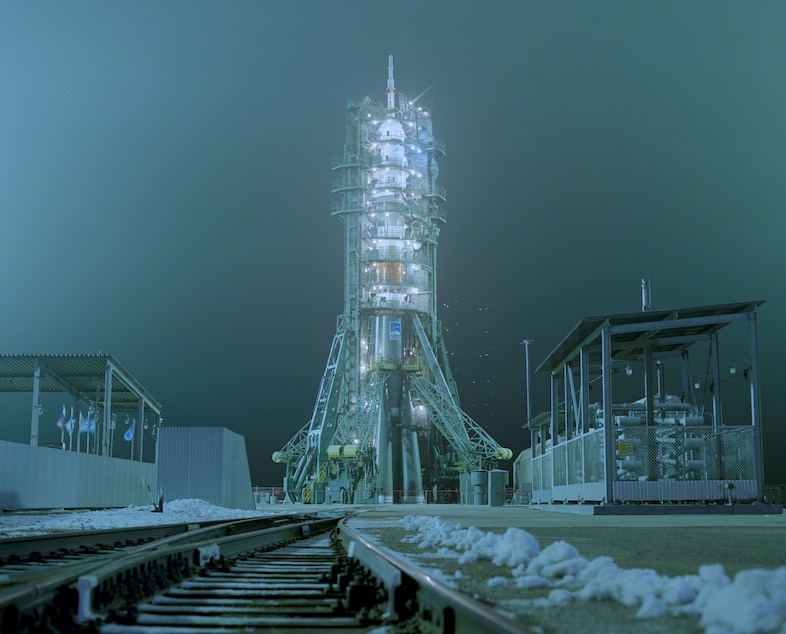
Furthermore, the crew was never under the illusion that SpaceX’s aggressive, move-fast-and-break-things timeline was gospel. "All of us were super aware that the original timeline that was set out was completely impossible," Adam notes. Manufacturing bottlenecks, regulatory friction with the Federal Aviation Administration (FAA), and pandemic-era supply chain fractures made delays an inevitability.
"If we thought for one second that it was either that timeline or nothing, none of us would have agreed to being trawled through the media," she reflects. "We were in it for the long haul. All of us had decided that this was going to be our life’s mission, so we planned our lives accordingly."
The psychological toll of that commitment cannot be overstated. To prepare for a deep-space mission requires confronting mortality head-on, restructuring personal and professional priorities around a singular, monumental horizon.
"It’s a strange thing to contemplate your own mortality, and make quite important decisions based on that, and then for it all to fizzle into nothing," Adam says, her voice carrying the lingering weight of disillusionment. "It’s quite a thing to say that you’re willing to die for something, and then for it to be treated as something disposable… God, what a thing to commit to, when people don’t commit back."
Official Statements and Evolving Perspectives
The collapse of dearMoon forced a radical re-evaluation of the private space sector among its participants. Initially, Adam and her fellow crewmates were drawn to the project precisely because it offered an alternative to sterile, state-sponsored nationalism.
"I did feel like it was a way of reigniting an interest in space in a way we could all get behind," Adam reflects on her early enthusiasm. "SpaceX, at that time, hadn’t become so entrenched with the government, so Elon hadn’t been meddling in US politics. There was this moment… where it felt like we could do the things that NASA would have loved to have done, and say the things that others couldn’t, because we didn’t have a party line to tow."
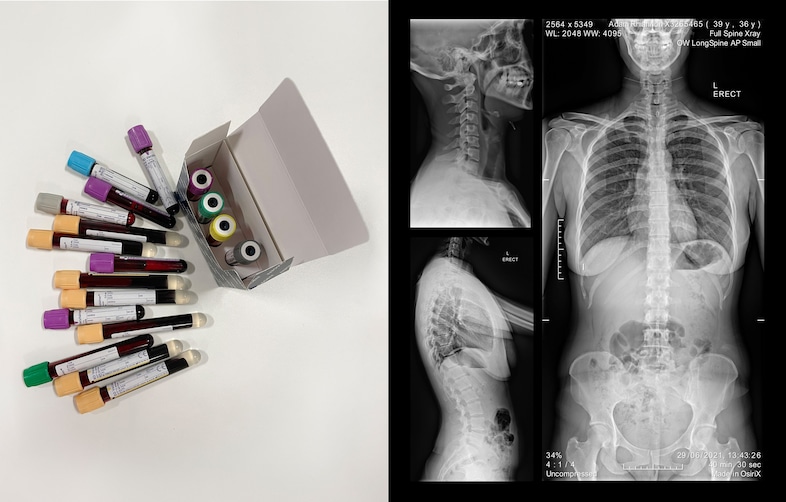
This lack of ideological bureaucracy offered a liberating sense of autonomy. Free from the constraints of projecting American geopolitical hegemony or deploying cold-war colonial rhetoric, the crew viewed themselves as cultural ambassadors.
Curiously, Adam found that the hyper-conservative, traditionalist culture often associated with aerospace hubs in Texas evaporated inside the operational bubble. "As an out queer person, I felt like a Trojan horse in that environment," she says. "But what’s kind of weird is that when you’re really in it, people don’t care about what colour your skin is, or where you came from. They feel like if you’re there, you deserve to be. Everyone has respect for each other, like, ‘We’re all nerds together.’"
Yet, this utopian internal culture existed in stark contrast to the external power dynamics of billionaire-funded enterprise. Despite its egalitarian artistic aspirations, dearMoon was irrevocably bound to the capital of a single tycoon and the industrial output of the world’s wealthiest man.
As geopolitical landscapes shifted, so too did Adam’s critique. In her accompanying cinematic work for Rhi-Entry, she addresses the sobering convergence of private space exploration, political lobbying, and terrestrial conflict. The film features awe-inspiring footage of SpaceX rocket tests—including the now-legendary "chopsticks" mechanical catch tower system demonstrated in late 2024—only to subvert the triumph with audio clips of political figures framing the cosmos as an upcoming theater of war.
"Ultimately, Elon Musk spent a whole load of money on an election to get Trump elected because he really wanted some red tape cut with the FAA so that he can get to Mars faster and launch more Starship rockets," Adam argues bluntly. "People don’t think space relates to them… but USAID is cut because Trump is in power, people are dying of HIV because Elon Musk helped win an election because he wants more rockets in space."
The implications extend far beyond theoretical governance. Critical infrastructure like the Starlink satellite mega-constellation—physically controlled and operated by Musk’s private enterprise—has already demonstrated a decisive, real-time hand in terrestrial warfare, such as the conflict in Ukraine. For Adam, treating space as an apolitical playground is no longer an option. "We should really care," she urges.
Future Outlook: Art as a Counterweight to Corporate Cosmologies
Rather than letting her experience dissolve into bitterness, Rhiannon Adam has weaponized her creative output to interrogate the mythology of private space exploration. Her exhibition, Rhi-Entry, has traveled across cultural capitals including Milan and Copenhagen, and is slated for an extensive run at the International Centre for the Image in Dublin from September 11 through December 23, 2026.
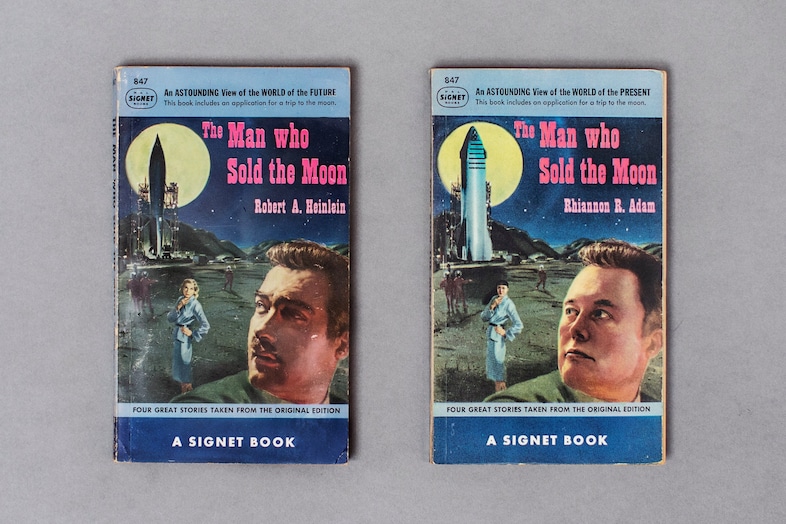
The exhibition weaves together traditional photography, moving image archival materials, quirky installations (such as floating basketballs), and pointed historical commentary. Among its most striking installations is a sharp critique of the private space race’s patriarchal and capitalistic subtext, featuring a modern reimagining of Robert Heinlein’s 1950 sci-fi novel The Man Who Sold the Moon—a story about an ultra-rich industrialist who commodifies the lunar surface—with Elon Musk’s visage superimposed onto the titular protagonist. Janky, uncanny AI-generated artwork further casts Musk into classic mid-century space narratives like Destination Moon.
In a candid companion film within the exhibition, Adam reflects on the profound vulnerability of having her dreams publicly dismantled, admitting she initially felt "like an idiot" for trusting the enterprise. Yet, the underlying message of Rhi-Entry is not one of total despair, but of radical re-engagement.
The private space industry wants the public to view cosmic expansion as an inevitable, techno-optimistic march led by visionary billionaires. Adam’s work insists on a different narrative—one that reclaims space as a shared human heritage rather than a private corporate balance sheet. By deploying artists, poets, and documentarians back into the discourse, Rhi-Entry serves as an urgent reminder that we must scrutinize who controls the keys to the stars, lest our collective future be bartered away by those who view the cosmos—and the people daring to dream of it—as entirely disposable.