Executive Overview
In one of the most intellectually provocative intellectual property battles of the modern tech era, a Delaware federal court has issued a split ruling that could permanently alter the landscape of corporate rebranding and trademark enforcement. The dispute pits Elon Musk’s X Corp. against Operation Bluebird, an opportunistic startup spearheaded by veteran trademark lawyers. The startup’s mission is simple yet audacious: to scavenge and monetize the multi-billion-dollar brand equity that Musk discarded during his abrupt, polarizing transition from Twitter to X.
The U.S. District Court for the District of Delaware recently delivered a mixed verdict on X Corp.’s motion for a preliminary injunction. While U.S. District Judge Colm F. Connolly barred Operation Bluebird from operating under its initial moniker, "Twitter.now"—ruling in favor of X Corp. on the core "Twitter" wordmark—the court dealt a devastating blow to Musk’s enterprise elsewhere. Judge Connolly ruled that X Corp. has likely abandoned its rights to both the iconic Twitter bird logo (affectionately known historically as "Larry the Bird") and the globally recognized verb and noun "tweet."
Armed with this judicial green light, Operation Bluebird immediately rebranded its platform to Tweet.app and opened its doors to the public. This case represents a critical case study in trademark law, illustrating the perils of corporate rebrands that fail to defensively maintain legacy intellectual property. It also raises profound questions about whether a digital-era verb can truly be orphaned by its corporate creator and claimed by the public domain.
Detailed Chronology: From the Ashes of the Bluebird to the Courtroom
[July 2023] Elon Musk rebrands Twitter to "X"; begins phasing out legacy terms.
       │
[August 2026] Operation Bluebird launches "Twitter.now", challenging X's abandoned IP.
       │
[Late 2026] X Corp. files for a preliminary injunction in Delaware Federal Court.
       │
[Present] Judge Connolly issues split ruling:
       ├── X retains "Twitter" trademark.
       └── Operation Bluebird wins right to "tweet" and the Bird Logo; rebrands to Tweet.app.
The Great Renaming of 2023
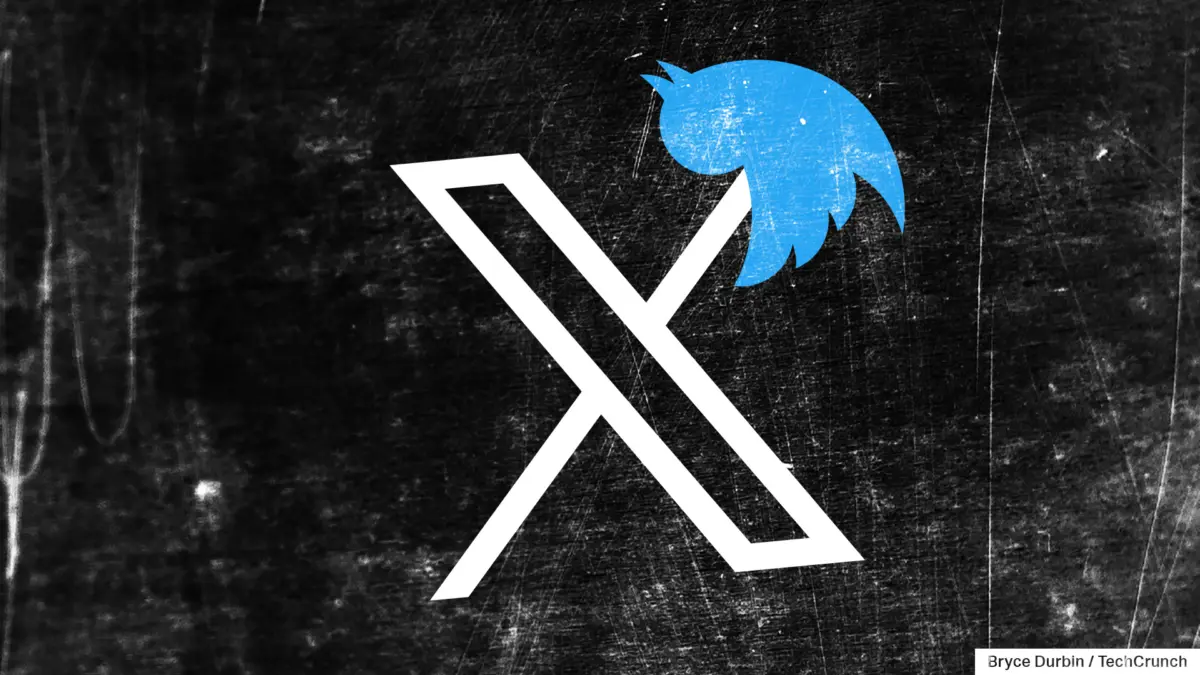
The origin of the dispute traces back to July 2023, when Elon Musk finalized his $44 billion acquisition of Twitter and executed one of the most radical corporate rebrands in history. Almost overnight, the blue bird logo was dismantled from the San Francisco headquarters, the website domain was redirected to X.com, and the term "tweet" was officially replaced by the sterile nomenclature of "post."
To branding experts, this move was equivalent to discarding a century of built-up cultural currency. To Michael Peroff and Stephen Coates—two experienced attorneys—it was a glaring, high-value intellectual property vacancy. Under US trademark law, non-use of a mark combined with an intent not to resume use constitutes abandonment. By systematically purging the bird logo and the word "tweet" from its user interface, marketing materials, and corporate communication, X Corp. inadvertently laid the groundwork for its own expropriation.
The Launch of Operation Bluebird
In mid-2026, Operation Bluebird emerged from stealth, launching a bare-bones social media platform under the domain "Twitter.now." The company’s stated objective was not to pioneer next-generation social networking technology, but rather to reclaim the abandoned cultural relics of the pre-Musk era.
X Corp. reacted swiftly, filing a multi-count trademark infringement lawsuit in Delaware and seeking a sweeping preliminary injunction to halt the startup’s operations. X Corp. argued that the "Twitter," "tweet," and bird logo marks remained inextricably linked to its corporate identity and that any third-party use would cause severe consumer confusion.
The Split Decision in Delaware
U.S. District Judge Colm F. Connolly analyzed the preliminary injunction request by dividing the contested assets into distinct categories.
- The Core "Twitter" Mark: The court found that X Corp. maintained a sufficiently active defense and residual use of the word "Twitter" to prevent others from using it as a primary platform name. Consequently, Judge Connolly granted X Corp.’s injunction against the use of "Twitter.now."
- The "Tweet" and Bird Logo Marks: In a striking departure from corporate expectations, the judge denied X Corp.’s injunction regarding these assets. Judge Connolly wrote that Operation Bluebird was "likely to succeed in proving both that X Corp. discontinued the bona fide use of the Tweet mark and Bird logo and that it intends not to resume the use of the marks."
Following the ruling, Operation Bluebird pivoted gracefully, rebranding its web presence to Tweet.app and leveraging its newly validated legal right to use the classic bird imagery and the word "tweet."
Supporting Context & Legal Analysis: The Mechanics of Trademark Abandonment
To understand how a multi-billion-dollar brand asset can slip through a corporation’s fingers, one must examine the strict parameters of the Lanham Act (the primary federal trademark statute in the United States).
The Lanham Act and the Presumption of Abandonment
Under Section 45 of the Lanham Act (15 U.S.C. § 1127), a trademark is deemed abandoned when:
- Its use has been discontinued with intent not to resume such use.
- Non-use for three consecutive years constitutes prima facie evidence of abandonment.
While Musk’s rebrand to X occurred in July 2023, making the timeline tight relative to the three-year statutory presumption, the court focused heavily on the "intent not to resume" prong. The public declarations by Musk and X executives—including statements celebrating the "death of the bird" and the transition to an "everything app" where "tweets" are obsolete—served as powerful evidence.
Is the Mark Actively Used?
       │
       ├── Yes ──> Trademark remains protected.
       └── No  ──> Is there an intent to resume use?
                     │
                     ├── Yes ──> Protection temporarily preserved.
                     └── No  ──> Trademark is legally ABANDONED.
                                 (Tweet.app successfully argued this state for "tweet" & the Bird Logo)
By actively scrubbing the bird logo from App Stores, web interfaces, and physical signage, X Corp. provided the startup’s legal team with a textbook case of intent to abandon.
The "Legal Arbitrage" of Tweet.app
The profiles of Operation Bluebird’s founders suggest this venture is less about software engineering and more about high-stakes intellectual property arbitrage.
- Stephen Coates, President of Operation Bluebird, is a highly specialized trademark attorney who previously served as in-house trademark counsel for Twitter itself. His intimate knowledge of Twitter’s legacy IP portfolio likely allowed him to identify the exact moments when X Corp.’s statutory protections began to fray.
- Michael Peroff, an Illinois-based attorney, brings a wealth of commercial litigation experience to the table.
For a startup led by two seasoned legal minds, building a functional social media platform serves as a necessary mechanism to establish "bona fide use in commerce"—a prerequisite for securing and maintaining trademark registration. By launching Tweet.app to the public, the founders are cementing their legal claim to the "tweet" mark through active commercial exploitation.
Metrics and Monetization: The Economic Engine of Tweet.app
Despite the highly technical legal battles occurring behind the scenes, Tweet.app has struck a chord with a nostalgic public. The brand equity of "Twitter" and its associated vocabulary remains potent, driven by a widespread cultural dissatisfaction with the post-rebrand environment of X.
User Acquisition and Demand
According to data provided to TechCrunch, Operation Bluebird amassed significant consumer interest prior to its official public launch:
| Metric | Details |
|---|---|
| Pre-launch Handle Requests | Over 172,000 unique users |
| Monetization Model | $20 flat fee to reserve a username and secure early access |
| Estimated Initial Revenue | ~$3.44 million (assuming full conversion of reservation requests) |
This $20 reservation fee is a highly strategic business decision. Beyond validating user demand, this cash influx serves as a war chest, directly funding the massive legal bills required to fight X Corp.’s white-shoe legal teams in federal court.
Official Statements and Judicial Insights
The ideological divide between the two camps is reflected in their public statements and the court’s written opinion.
The Judicial Perspective
In his written opinion, Judge Connolly emphasized that trademark protection cannot be used hoarder-style to block competition if the owner has no genuine intention of using the asset:
"The record indicates a systematic and deliberate effort by X Corp. to distance itself from its legacy branding. Trademark rights are not rights in gross; they exist only as an appurtenance to an active business. When the business publicly and structurally discards its tools of identification, it cannot simultaneously wield them as shields against market entrants."
The Startup’s Defense
Stephen Coates, President of Operation Bluebird, framed the battle as a populist reclamation of digital culture in an email statement:
"They kept the word. They let go of the bird, and they let go of the tweet. A tweet was never a corporation. It’s one person saying something. That word survived three years of a company trying to replace it, because the public declined to stop using it. We think that tells you who it belongs to."
Future Outlook: The Legal and Tech Industry Implications
The Delaware court’s decision on the preliminary injunction is not the final chapter of this saga, but rather a critical interlocutory milestone. The case will now proceed to a full trial on the merits to determine whether X Corp. has permanently forfeited its rights to the legacy assets.
Potential Scenarios for X Corp. and Tweet.app
                  ┌───────────────── TRIAL ON THE MERITS ─────────────────┐
                  │                                                       │
        [Scenario A: X Wins]                                    [Scenario B: Tweet.app Wins]
                  │                                                       │
  • X proves "residual goodwill" & defensive use.        • Court rules "tweet" and bird logo are abandoned.
  • Tweet.app forced to rebrand again.                    • Tweet.app solidifies its brand.
• High financial damages for the startup. • Sets major precedent for corporate rebrands.- Scenario A: X Corp. Reclaims the IP. X Corp.’s legal team will likely attempt to prove "residual goodwill"—the concept that even if a company stops using a mark, the public still associates it so strongly with the original owner that any third-party use constitutes unfair competition. If successful, Tweet.app could be forced to shut down or undergo another costly rebrand, alongside paying significant financial damages.
- Scenario B: The Startup Solidifies Its Claim. If the court permanently rules that the bird logo and "tweet" are abandoned, Tweet.app will secure an incredibly valuable, globally recognized brand identity for a fraction of its historical valuation. This would allow them to scale their alternative social platform with unparalleled organic marketing advantages.
A Warning to Silicon Valley
The ongoing litigation serves as a stark warning to other technology giants contemplating major rebrands. When Facebook transitioned to Meta, and Google restructured under Alphabet, both companies carefully maintained and defended their legacy brands (Facebook and Google remain highly active consumer-facing marks).
Elon Musk’s total-abandonment strategy with X represents an unprecedented experiment in corporate branding. By attempting to completely erase Twitter’s past, X Corp. has created a blueprint for how aggressive startups can strip-mine discarded corporate identities. For the broader tech industry, the lesson of Tweet.app is clear: if you do not actively use your iconic brand assets, the market—and the courts—will gladly hand them to someone else.