Executive Overview
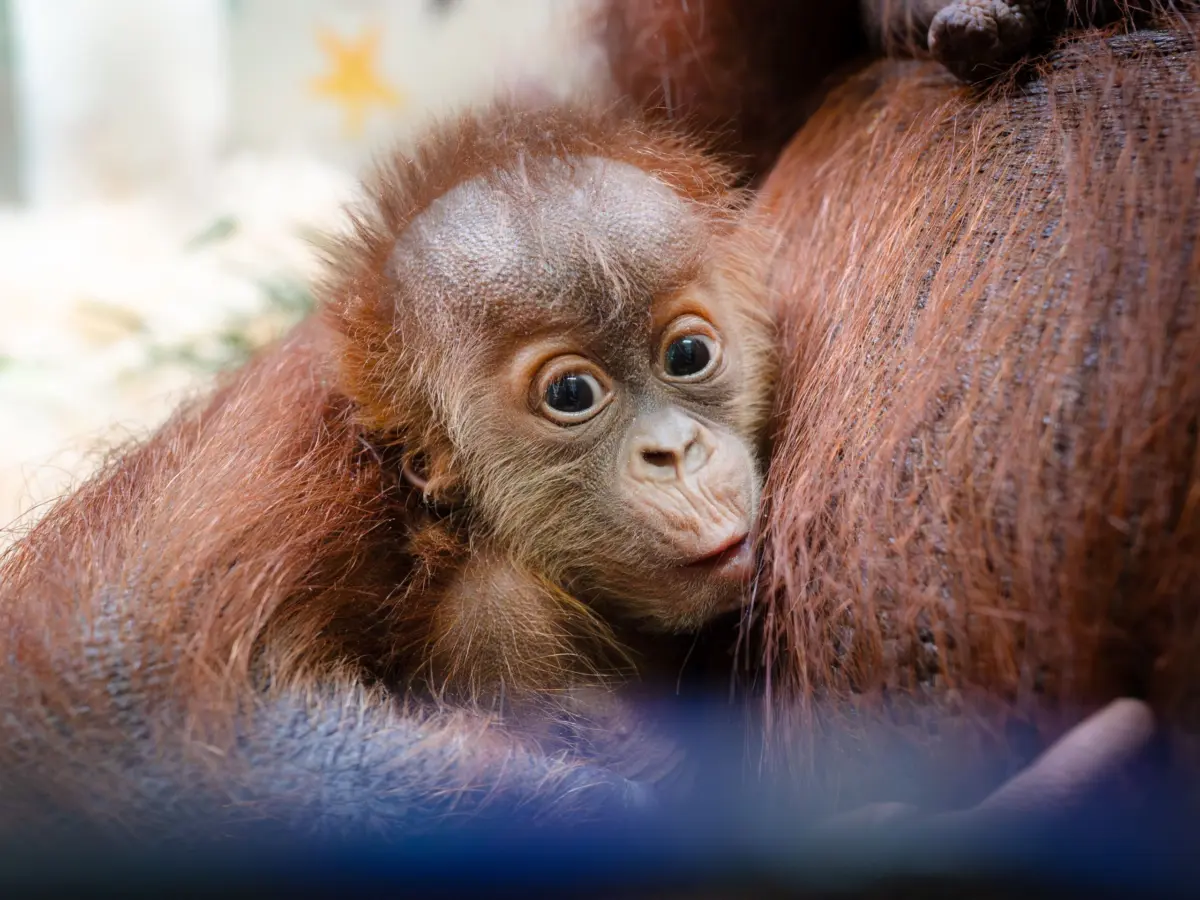
Outside an operating room at the Memphis Zoo, the tense silence of a high-stakes delivery suddenly evaporated into triumphant cheers. "It’s a girl!" exclaimed Melissa Peterson, associate primates curator. Moments earlier, obstetrician-gynecologist Joseph Dewane had successfully delivered a healthy infant via Cesarean section, while neonatalist Autumn Joi Goodwin-Samson stepped forward to tend to the newborn, still slick with a protective waxy film.
It was a delivery mirroring any high-level human medical procedure, save for one distinct detail: the patient was a critically endangered Sumatran orangutan named Ruhana—affectionately known as "Ru."
Ruhana’s arrival in December marked a historic milestone, but she is far from an anomaly. Since the beginning of 2025, accredited zoos across the United States have welcomed eight orangutan babies—a staggering and unprecedented figure for a species facing catastrophic population decline in the wild. Far from a stroke of biological coincidence, this coordinated baby boom is the triumph of a meticulous, decades-long conservation strategy orchestrated by the Association of Zoos and Aquariums (AZA) and the Orangutan Species Survival Plan (SSP).
Through genetic tracking, innovative animal husbandry, and advanced veterinary medicine that mirrors human healthcare, this unprecedented wave of births represents a critical safety net. While these captive-born infants will never walk the rainforests of Borneo and Sumatra, their very existence—and the scientific insights gathered from raising them—offers an indispensable lifeline to their wild counterparts teetering on the edge of extinction.
Detailed Chronology: Anatomy of a Pan-National Baby Boom
The unfolding wave of 2025 and 2026 orangutan births is the result of forward-planning that began decades ago. However, the manifestation of this strategy over the past year reads like an orchestrated timeline of conservation triumphs across the American zoo network:
- February 2025 (Indianapolis Zoo): The boom kicked off in earnest when the Indianapolis Zoo welcomed Edi, a healthy and vigorous baby boy, setting a high standard for neonatal care and maternal engagement.
- June 2025 (Hogle Zoo, Utah): Weila entered the world, sparking a complex test of animal husbandry. When Weila’s biological mother struggled to bond with her, zookeepers deployed intensive hand-rearing protocols while preparing a surrogate mother, setting the stage for a remarkable behavioral success story.
- Late 2025 (Los Angeles Zoo): Bintang arrived, further bolstering the genetic diversity of the Western managed population and demonstrating the reliability of the SSP’s pairing recommendations.
- December 2025 (Memphis Zoo): Ruhana was delivered via high-risk C-section, requiring a multidisciplinary medical team typically reserved for human hospitals.
- Early 2026 (Cameron Park Zoo, Sedgwick County Zoo, & Fort Wayne Zoo): The momentum continued into the new year, with three consecutive baby girls born across facilities in Waco, Texas; Wichita, Kansas; and Fort Wayne, Indiana.
- Spring 2026 (Denver Zoo): Most recently, the Denver Zoo welcomed a healthy baby boy named Rambutan, born to first-time mother Hesty, whose prebirth training regimen paid immediate dividends.
This coordinated spacing and geographic distribution are no accident. They reflect the tireless administrative and genetic calculations managed by program coordinators who view each birth not as an isolated event, but as a strategic chess move designed to secure the long-term viability of the species.
Supporting Context & Metrics: The Science of the Species Survival Plan
To understand the mechanics of the orangutan baby boom, one must examine the inner workings of the Orangutan Species Survival Plan. Established in 1985, the SSP functions as a centralized management engine for all orangutans housed within AZA-accredited institutions.
Every two years, the program generates an exhaustive breeding and transfer plan. At the heart of this system is the "studbook"—a dynamic genealogical registry tracking the pedigree, lineage, and life history of every individual orangutan within the managed North American population.
[AZA Master Studbook]
       │
       ▼
[Genetic & Behavioral Analysis] ──► (Minimizing Inbreeding Coefficients)
       │
       ▼
[SSP Breeding Recommendation] ──► (Personality, Group Dynamics, Age Demographics)
       │
       ▼
[Targeted Zoo Implementation] ──► (Successful Neonatal Outcomes)
According to Angie Selzer, senior animal care specialist with the Fort Wayne Zoo and the Orangutan Species Survival Plan coordinator, the selection process is deeply nuanced. "We want to maintain a healthy and sustainable population that mimics the natural history of wild orangutans while ensuring successful mother-rearing of offspring," Selzer explains.
When geneticists and coordinators evaluate prospective breeding pairs, they look far beyond simple lineage charts. Recommendations account for:

- Underrepresented Genetic Lines: Prioritizing alleles that are scarce within the captive population to maximize genetic diversity.
- Individual Temperament and Personality: Ensuring that prospective mates are psychologically compatible to minimize aggression and stress.
- Complex Group Dynamics: Factoring in the social structure of the existing troop at the host facility.
- Kinship Minimization: Always aiming for the lowest possible coefficient of inbreeding between pairs.
This scientific precision is matched only by the medical crossover between human and primate medicine. Humans share more than 90 percent of their DNA with orangutans—a biological proximity that is starkly evident in their reproductive physiology and behavioral care.
Female orangutans in the SSP program are routinely prescribed human birth control and human prenatal vitamins. Animal care specialists train them to voluntarily urinate on human pregnancy tests to confirm conception. Their gestation period mirrors our own at nearly nine months, and, second only to humans, orangutans experience the longest childhood dependence of any mammal on Earth.
When complications arise, modern veterinary medicine steps in. While surgical interventions like C-sections remain rare, many forward-thinking zoos keep obstetrician-gynecologists and neonatal specialists on retainer, bridging the gap between human surgical suites and zoological medicine.
Official Statements and Perspectives from the Front Lines
The human element of these conservation victories is rooted in profound empathy, rigorous trust-building, and an unwavering commitment to animal welfare. Zookeepers and curators describe their work not merely as supervision, but as an intimate partnership with some of the planet’s most cognitively advanced animals.
"Looking at their eyes and their hands, it’s like a mirror. It’s humbling."
— Matthew Lenyo, Assistant Curator of Predators, Denver Zoo
This mirror-like connection demands intense behavioral conditioning long before a baby is born. For instance, at the Denver Zoo, first-time Sumatran orangutan mother Hesty underwent extensive prebirth training. Because Hesty’s own mother had struggled with maternal care, keepers trained Hesty to voluntarily present her infant to staff for critical health checks and nursing assessments—a safeguard designed to prevent maternal rejection.
Trust-building is equally vital when interventions are unavoidable. At the Utah Hogle Zoo, when Weila’s biological mother failed to bond with her following birth, keepers stepped in to hand-rear the infant while simultaneously preparing a surrogate. They selected Acara, a proven foster mother who had successfully raised her younger brother.
Using a stuffed animal as a proxy, keepers conditioned Acara to handle an infant gently, rewarding her for correct behaviors. Hannah Comstock, animal care supervisor of primates at Hogle Zoo, notes that Acara’s inherently gentle disposition made her an ideal candidate. Today, Weila lives with Acara full-time, thriving to the point where she has begun adopting her adoptive mother’s physical mannerisms and behavioral quirks.
Despite the heavy lifting required by keepers, the ultimate philosophy of modern zoological care remains remarkably humble. "We do all this work, but then at the same time, the best outcome is when you’re not needed," Lenyo reflects.
Future Outlook: The Front Lines of Extinction and the Power of Ambassadors
While the success of North American breeding programs is a celebrated achievement, it unfolds against the backdrop of an unfolding ecological catastrophe in Southeast Asia. Orangutans are endemic to the vanishing rainforests of Borneo and Sumatra, where their survival is threatened on multiple fronts:

- Habitat Destruction: Vast tracts of ancient rainforest are continually razed to clear land for industrial palm oil plantations, fragmenting populations and destroying essential food sources.
- The Illegal Wildlife Trade: Poachers routinely target wild orangutan mothers, killing them to kidnap their infants, which are then funneled into the black market as illegal exotic pets.
Current field estimates paint a grim picture of the wild population:
- Bornean Orangutans (Pongo pygmaeus): Approximately 100,000 remain in the wild.
- Sumatran Orangutans (Pongo abelii): Roughly 11,000 individuals survive.
- Tapanuli Orangutans (Pongo tapanuliensis): Discovered as a distinct species relatively recently, their population is perilously close to the brink, with wild estimates numbering just over 700 individuals.
Conservationists warn that without aggressive intervention, wild orangutans could face functional extinction within the next 50 years—with some experts arguing the timeline could accelerate to a mere 10 to 20 years.
Ambassadors and Indirect Conservation
Captive-born orangutans will not be reintroduced into the wild; the complex, learned survival skills required to navigate a shrinking rainforest cannot be easily replicated in a managed environment. However, their role in global conservation is indispensable.
First, they serve as living ambassadors. When zoo visitors look into the eyes of a young orangutan, abstract global crises—such as deforestation, climate change, and corporate biodiversity loss—transform into concrete, emotional realities that drive public advocacy and consumer reform.
Second, the managed population serves as an engine for field research that directly benefits wild and rehabilitated orangutans. Data collected within AZA-accredited institutions regarding disease management, nutrition, and behavioral psychology is regularly funneled to field organizations operating in Southeast Asia.
A prime example is the work of Felicity Oram, a conservation practitioner and co-director of OrangJUGA, a Borneo-based conservation NGO. Oram partnered with North American zoos to study orangutan dental emergence—research that linked specific tooth development stages to behavioral and developmental milestones.
Before this research, estimating the age of young orangutans rescued from the illegal pet trade was an imperfect guessing game. "It’s very difficult with size," Oram explains, drawing a parallel to human children. "You go, ‘Isn’t that a cute 4-year-old!’ And then they tell you it’s 2."
By utilizing dental data gathered from captive populations, field rescuers and rehabilitation centers can now accurately assess age, allowing them to optimize nutrition, medical interventions, and socialization protocols. This precision gives rescued orphans the best possible chance at rehabilitation and, ultimately, a second chance at contributing to wild populations.
As Oram aptly summarizes, bridging the gap between captive management and field conservation: "Captive orangutans can help their cousins in the wild and in rehabilitation centers just by opening their mouths."
Through meticulous planning, cutting-edge medical science, and global collaboration, the 2025–2026 baby boom proves that humanity’s reflection in the eyes of the orangutan is not one of passive resignation, but of active, defiant hope.