Executive Overview
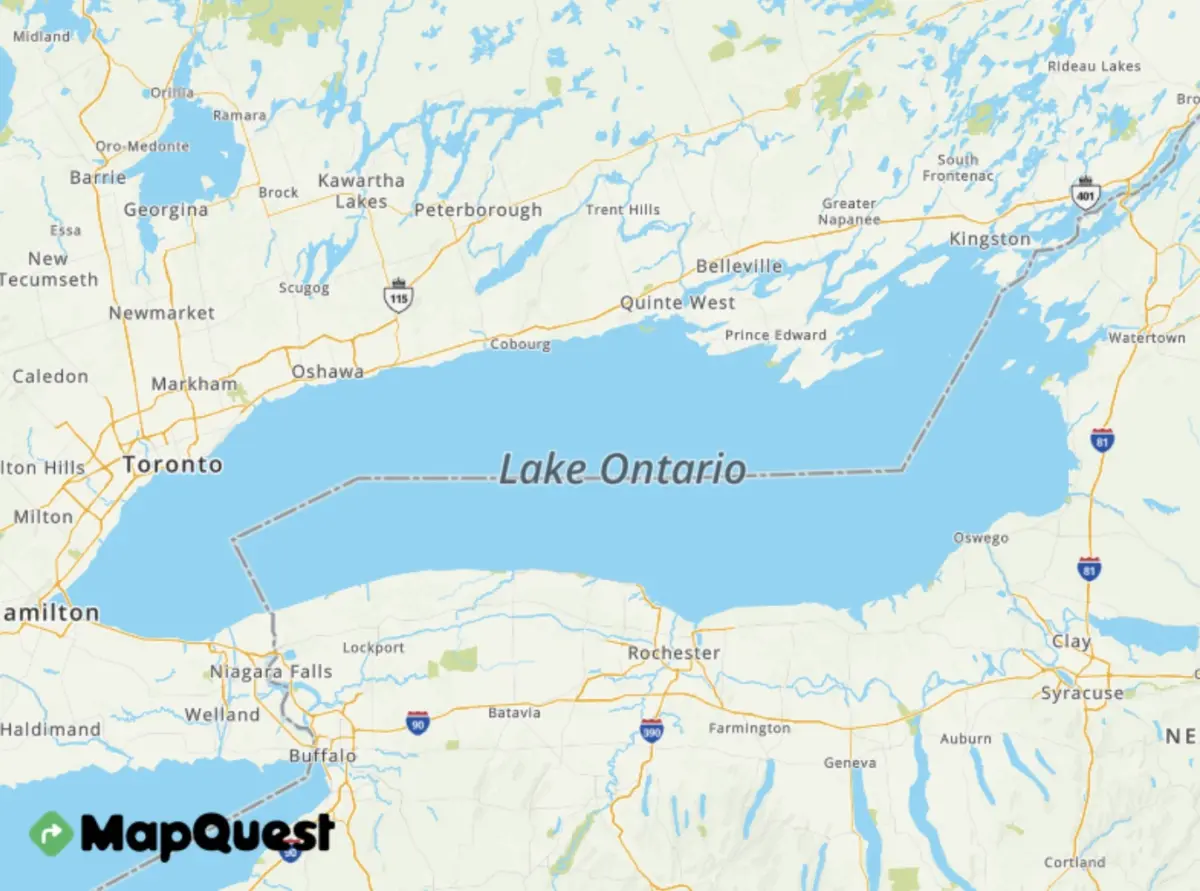
In an era dominated by tech behemoths like Google and Apple, an unexpected player has emerged at the center of a geopolitical and digital cartography dispute. MapQuest, self-described as the "OG of online mapping," has experienced an unprecedented renaissance after publicly defying an executive order from President Donald Trump. The directive, which ordered the renaming of Lake Ontario to "Lake America," has ignited a fierce debate over national sovereignty, the weaponization of geographical data, and the role of private corporations in arbitrating geopolitical realities.
By refusing to alter its maps, the 30-year-old navigation pioneer positioned itself as a corporate counterweight to federal overreach. This stance has yielded massive dividends. Over the course of a single weekend, MapQuest’s mobile application skyrocketed to the top of the digital charts, securing the No. 1 spot in the United States Navigation category and reaching No. 4 among all non-gaming iOS applications.
This development highlights a growing trend: the balkanization of digital geography, where maps are no longer neutral representations of physical terrain but rather battlegrounds for political signaling, corporate compliance, and international diplomacy.
Detailed Chronology: The Great Lakes Cartographical Dispute
The controversy began in late August 2026, amid a severe breakdown in trade negotiations between the United States and Canada. Following the collapse of bilateral talks, the Trump administration announced aggressive punitive measures, including a 50% tariff on $20 billion worth of Canadian imports. In tandem with these economic sanctions, President Trump issued an executive order directing the U.S. Department of the Interior to officially rename Lake Ontario—a massive body of water shared by both nations—to "Lake America" within the U.S. Geographic Names Information System (GNIS).
[Late August 2026: Trade Talks Collapse]
       │
       ▼
[U.S. Imposes 50% Tariffs on Canada]
       │
       ▼
[Executive Order: Rename Lake Ontario to "Lake America"]
       │
       ├─────────────────────────────────────────┐
       ▼                                         ▼
[Google Maps Complies (Saturday)]      [MapQuest Defies Order (Thursday)]
• Implements regionalized viewing       • Refuses name change
• Shows "Lake America" to U.S. users    • Launches satirical renaming tool
• Shows "Lake Ontario" to Canadians     • App downloads surge over 10x
The chronological escalation unfolded rapidly:
- Thursday, August 27, 2026: MapQuest preemptively declared on social media that it would not comply with the executive order. The company announced that the body of water would remain labeled "Lake Ontario" on all its platforms, asserting its commitment to cartographical familiarity over political directives.
- Friday, August 28, 2026: As news of MapQuest’s resistance spread across social media, a coordinated consumer movement emerged. Users began downloading the MapQuest app as a form of political protest, driving a massive spike in installation rates.
- Saturday, August 29, 2026: Google Maps announced its compliance with the federal mandate. The search giant explained that its policy is to align its cartographical database with official national authorities—in this case, the GNIS. Google implemented a regionalized approach: users inside the U.S. would see "Lake America," users in Canada would see "Lake Ontario," and international users would see both names.
- Sunday, August 30, 2026: MapQuest’s download surge reached international proportions. In Canada, where public anger over the tariffs and the renaming order was high, the MapQuest app climbed to the No. 2 overall position in the Canadian App Store.
- Monday, August 31, 2026: Industry analysts confirmed that MapQuest had secured the No. 1 spot in the U.S. Navigation category and the No. 8 spot overall across all iOS apps and games. Meanwhile, Apple Maps remained silent, keeping "Lake Ontario" on its platform without issuing an official statement regarding future compliance.
Supporting Context & Market Metrics: The Anatomy of a Viral Surge
While MapQuest’s defiance was a public relations success, third-party data reveals the scale of its commercial impact. According to market intelligence firm Sensor Tower, MapQuest’s weekly downloads experienced a massive, non-linear spike immediately following its announcement.
Weekly Download Metrics (Week Commencing August 24, 2026)
During the week of the announcement, MapQuest recorded historic adoption rates, reversing years of steady market share decline to modern competitors.
| Metric | Historical Weekly Average | Week of August 24, 2026 | Percentage Increase |
|---|---|---|---|
| Global Downloads | ~15,000 | 184,000 | 1,126% |
| U.S. Downloads | ~14,000 | 162,000 | 1,057% |
| Active App Usage | Baseline | 50x Normal Levels | 4,900% |
In the United States, daily downloads experienced a 128% day-over-day increase between August 26 and August 30.
Long-Term Context and App Performance
To understand the scale of this surge, it is helpful to look at MapQuest’s historical download data. Since 2012, MapQuest has accumulated approximately 24.4 million downloads, with 97% of those installs originating from the United States.
Prior to this political controversy, MapQuest was experiencing modest but steady growth, with 687,000 global downloads in 2026 up to that point—a 29% year-over-year increase. The single-week surge of 184,000 downloads represents more than a quarter of the app’s total volume for the entire year, demonstrating how political alignment can rapidly drive consumer adoption.
MapQuest Global Downloads (2026 YTD)
Jan - Mid-Aug: 503,000 (Avg ~15k/week)
Late August:   184,000 (Single-week surge) █ █ █ █ █ █ █ █ █ █
Cartographical Warfare: The Geopolitics of Digital Space
The dispute over Lake Ontario is not an isolated incident; it represents a growing trend of "cartographical warfare." This is the second time the Trump administration has used geographic renaming as a tool of foreign policy and national branding.
In 2025, a similar executive order directed federal agencies to rename the Gulf of Mexico to the "Gulf of America." In that instance, both Google Maps and Apple Maps eventually complied, updating their databases to reflect the new designation for U.S. users. MapQuest, however, refused to implement the change. Instead, it launched a satirical web tool allowing users to rename the Gulf of Mexico to whatever they wished and share the customized maps on social media.
MapQuest has revived this strategy for the Lake Ontario dispute, launching an online interactive tool that lets users rename the Great Lake and share their custom creations.
       [Federal Executive Order]
                  │
         ┌────────┴────────┐
         ▼                 ▼
  [Big Tech Model]   [MapQuest Model]
  • Compliance       • Defiance
  • Regionalization  • Standardization
  • Geofenced Truth  • Satirical Engagement
This divide highlights two very different approaches to digital mapping:
- The Conglomerate Compliance Model (Google/Apple): Large tech companies prioritize regulatory compliance and governmental relations. Because they operate across many different industries and face antitrust scrutiny, they generally comply with official federal geographic authorities (like the GNIS in the U.S.) to avoid legal and political friction. To manage international disputes, they often use geofencing to show different names to different users depending on their location.
- The Independent Challenger Model (MapQuest/System1): Smaller, independent entities can use political neutrality or active resistance as a way to stand out in the market. Free from the complex regulatory burdens of trillion-dollar corporations, MapQuest has used cartographical consistency as a unique selling point, appealing to users who prefer traditional geographic names.
Official Statements and Corporate History
In a public statement, Doug Berger, General Manager of MapQuest, framed the company’s decision as a commitment to user experience and geographic continuity:
"We took the same approach we did with the Gulf of Mexico: be part of the conversation, and give people an app that keeps the names they’re familiar with. Hundreds of thousands of people signaled to us this weekend that we got it right by downloading our app."
This defiant stance is a new chapter for a company that practically invented consumer digital mapping. Founded 30 years ago, MapQuest was the dominant navigation platform of the early internet era. However, it struggled to keep pace with the mobile revolution and the rise of pre-installed services like Google Maps and Apple Maps.
Over the decades, MapQuest has changed hands several times:
[MapQuest Founded] ──► [Acquired by AOL] ──► [Acquired by Verizon] ──► [Acquired by System1 (2019)]Following AOL’s acquisition, the brand eventually became part of Verizon’s media portfolio. In 2019, Verizon sold MapQuest to System1, an internet privacy and marketing company. Under System1’s ownership, MapQuest has focused on privacy-centric navigation and targeted marketing. This latest controversy has given the legacy brand its highest cultural and commercial relevance in over a decade.
Future Outlook: The Balkanization of Digital Truth
The dispute over Lake Ontario highlights a broader shift toward regionalized digital platforms. As governments increasingly use digital infrastructure to assert sovereignty, the concept of a single, universally agreed-upon map is fading.
                      [Global Geographic Reality]
                                   │
         ┌─────────────────────────┼─────────────────────────┐
         ▼                         ▼                         ▼
   [U.S. IP Address]       [Canadian IP Address]      [Independent Platforms]
    "Lake America"            "Lake Ontario"             "Lake Ontario"
   (Google/Govt Align)       (Sovereign View)          (MapQuest/Standard)
This trend raises several key questions for the tech industry:
- Will Apple Maps Comply? As of late August 2026, Apple has not updated the name of Lake Ontario in its app. How Apple handles this issue could influence whether other tech companies feel pressured to comply with political renaming demands.
- The Risk of Fragmented Navigation: If different apps display different names for major geographic features, it could cause confusion for international travel, shipping, and logistics. A delivery driver using Google Maps in New York might see different destination data than a Canadian logistics coordinator using a different service.
- Sustaining MapQuest’s Growth: While the download surge has given MapQuest a major boost, the company’s long-term success will depend on its ability to turn these new users into active, long-term customers. Keeping people on the platform will require ongoing feature updates and reliable navigation performance once the initial news cycle fades.
Ultimately, MapQuest’s stand shows that even in a highly consolidated tech market, legacy brands can find new life by taking a clear, independent path. As digital maps continue to intersect with international politics, the lines we draw on our screens are becoming as contested as the borders they represent.