Executive Overview
In an era defined by hyper-curated digital personas, algorithmic matching, and a pervasive cultural dread of appearing "cringe," modern dating has increasingly become an exercise in emotional detachment. The prevailing wisdom of the swipe-culture economy often champions a defensive posture: play it cool, mask your investment, and never let them see you sweat.
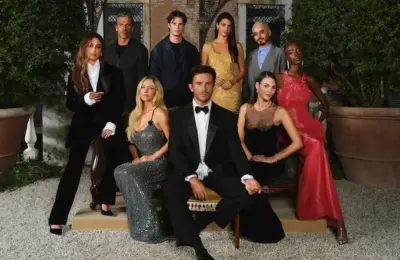
Enter acclaimed novelist Nicola Dinan (Bellies, Disappoint Me) and Polyester Zine founding editor Ione Gamble. In a wide-ranging, candid conversation, the two cultural critics dissect the shifting topography of modern romance, confronting the anxieties that dictate contemporary courtship. Central to their discussion is Dinan’s contribution to Hinge’s new audio project, No Ordinary Love—an immersive audiobook featuring real-life love stories penned and narrated by notable literary figures, including Tembe Denton-Hurst, Curtis Garner, Raven Smith, and Rufi Thorpe.
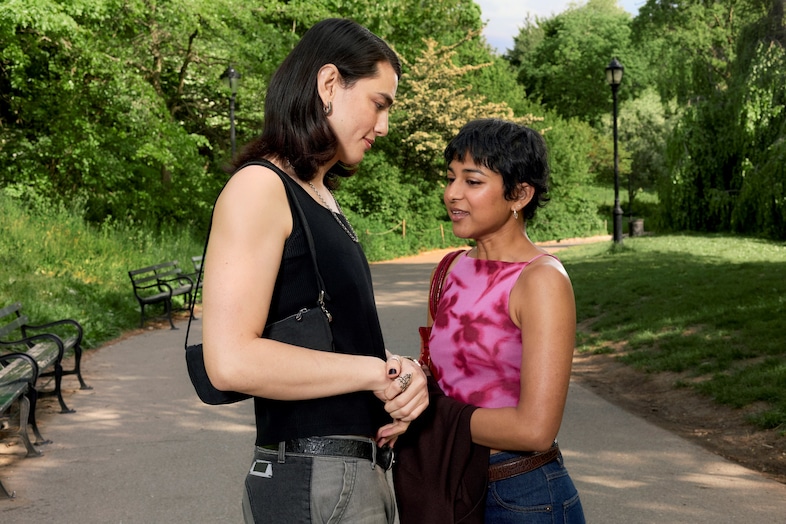
Dinan’s contribution, titled Rules to Love By, chronicles the early-stage romance of Raka and Carty, a real couple who met on Hinge. The narrative tackles head-on the terror of the slow burn, the power of vocalizing one’s boundaries, and the radical act of earnestness in a cynical world. Together, Dinan and Gamble unpack why today’s daters are beginning to reject traditional romance tropes in favor of self-reflection, emotional clarity, and the courage to articulate their true desires out loud.
Detailed Chronology: From Page to Podcast and the Anatomy of Modern Storytelling
The genesis of Rules to Love By is rooted in deep journalistic and narrative immersion. Unlike traditional short fiction conceived entirely in a vacuum, Dinan’s audio vignette required an intimate translation of real human lives into a tightly constrained format.
Developing Rules to Love By
When approached to write for Hinge’s No Ordinary Love anthology, Dinan opted to examine the relationship of Raka and Carty. The creative process began with long-form exploratory conversations.
- Phase One: The Introspection Phase. In her initial interviews with the couple, Dinan sought to understand the mechanics of their meeting and, crucially, Carty’s rationale behind implementing "rules" for taking the relationship slow. Rather than serving as manipulative game-playing, Carty’s rules emerged from a year of profound personal introspection. She was actively interrogating why her past relationships had failed, designing a framework to tame her own worst instincts and protect her emotional well-being.
- Phase Two: Infusing Life and Detail. A second extensive interview allowed Dinan to capture the granular details that make a story breathe. She integrated charming, specific markers of their individuality: Carty’s passion for restoring vintage cameras, and Raka’s pivot from civil engineering to acting.
- Phase Three: The Short Story Constraint. For Dinan, primarily known for sprawling, psychologically rich novels like Bellies and Disappoint Me, transitioning to the short story format presented a distinct technical challenge. Novels afford authors the luxury of time and expansive character development. In contrast, short fiction demands immediate narrative economy—readers must understand and connect with characters almost instantaneously.
Thematic Resonance and the Audio Release
No Ordinary Love launched across Spotify and Substack, offering audiences a mosaic of stories exploring the risks—both monumental and minute—that define the pursuit of connection. Dinan’s story opens with a phrase capable of striking panic into the heart of any modern dater: "There’s something I want to talk to you about."
By subverting this anxiety-inducing cliché into a productive dialogue about intentional pacing, Dinan’s work mirrors her broader literary ethos. Her novels are celebrated for subverting romantic tropes, reflecting real-world dating experiences, and occasionally acting as an eerie predictive manual for her own life stages.
Supporting Context & Metrics: The Cultural Ecology of Modern Dating
To understand the resonance of Dinan and Gamble’s conversation, one must examine the broader socio-cultural landscape of contemporary romance. Modern dating is increasingly shaped by structural, psychological, and technological forces that alter how human beings form attachments.
The Paradox of Choice and the "Cool" Economy
The advent of dating apps has introduced an unprecedented volume of potential partners, fostering what sociologists term the "paradox of choice." In response, daters have developed psychological armor. As Ione Gamble noted during their discussion, cultural attitudes toward earnestness and irony operate in cyclical waves.

- The Irony Era: Emerging from the early 2010s, cultural production was saturated with detached irony—a defense mechanism against vulnerability.
- The Corporate Co-option: A subsequent pivot toward corporate, fourth-wave feminist earnestness commodified vulnerability, leading to a subsequent cultural backlash.
- The Modern Stalemate: Today, daters are trapped in a performative "coolness" arms race. To care too much, text back too quickly, or express unadulterated enthusiasm is frequently coded as desperate or unattractive.
The Surveillance Culture and the Fear of "Cringe"
Dinan identifies an underlying driver of this emotional guardedness: the rise of surveillance culture. In a digital ecosystem where private dates can quickly be abstracted into public TikTok narratives, the stakes of social missteps have magnified.
This environment breeds a profound cultural fear of cringe. When individuals view themselves not just through their own eyes, but through the imagined lens of an algorithm or an anonymous audience, genuine emotional expression becomes fraught with peril. People become allergic to their own desires, burying their authentic needs beneath layers of calculated nonchalance.
Official Statements & Dialogue Highlights
The core of Nicola Dinan and Ione Gamble’s dialogue illuminates the profound psychological shifts required to navigate modern dating with integrity. Below are key excerpts and thematic breakdowns from their conversation.
On Interrogating Romance and Self-Perception
Ione Gamble: "Your first two books are literary romances, and you often subvert tropes of that genre. What about today’s dating climate makes for such compelling, unexpected love stories?"
Nicola Dinan: "So many people, and I’d say particularly women, are really reckoning with the role that romantic relationships play in their lives. There’s tension between really wanting to love and be loved while grappling with these promises engendered by the previous generation of romance novels that very much sold us on this fantasy idea of romance."
Dinan emphasizes that contemporary daters are undergoing a massive internal reckoning. They are caught between the enduring human desire for profound connection and the disillusionment born of outdated, patriarchal romance tropes that prioritize being chosen over mutual compatibility.
Redefining Boundaries vs. Manipulation
A central theme of Rules to Love By is the concept of setting boundaries without resorting to psychological gamesmanship.
Nicola Dinan: "There’s something about the word ‘rules’ that feels kind of authoritarian, but Carty’s rules weren’t to manipulate Raka to like her. It was about reflecting on herself and allowing Raka to either accept that or leave it… Any curbs on your behaviour should be for your own well-being, not because you feel like someone liking you is hanging in such a delicate balance that any disruption is going to throw it completely out of whack."
Gamble praised this approach, noting how refreshing it is to witness transparent communication rather than the exhausting, one-sided internal monologues typically dedicated to making oneself "more likeable."
The Journey to Self-Actualization
Both writers drew parallels between their creative journeys and their romantic lives, noting that vulnerability is a muscle that requires intentional exercise.
Nicola Dinan: "I always think about making that switch into writing… I just remember this very specific moment where I said to myself, ‘I’m just going to start calling myself a writer’. Suddenly, it started to exist. It was something that I held myself accountable for because I’d allowed myself to admit the desire."
Reflecting on her own growth, Dinan confessed that while she rarely doubted her professional capability, she historically struggled with feeling lovable. Admitting her romantic desires out loud—much like claiming her identity as a novelist—marked a pivotal turning point in her personal development.
Future Outlook: Where Do We Go From Here?
As digital dating continues to evolve, the discourse championed by creators like Nicola Dinan and Ione Gamble points toward a much-needed cultural correction. Several key trajectories are beginning to emerge on the horizon of modern relationships:
1. The Death of the "Play It Cool" Paradigm
As burnout reaches an all-time high, the cultural exhaustion associated with playing it cool is becoming unsustainable. Daters are increasingly recognizing that emotional guardedness acts as a barrier to the very intimacy they seek. The future of dating points toward a renaissance of radical earnestness—where articulating one’s needs, fears, and intentions is viewed not as a liability, but as a standard of emotional maturity.
2. Boundaries as Self-Care, Not Control Tools
Stories like Rules to Love By are helping to redefine how boundaries are perceived in early-stage relationships. Rather than utilizing boundaries as tests or punitive measures to manipulate a partner’s behavior, the cultural shift is moving toward introspection. Boundaries are increasingly understood as internal frameworks designed to protect one’s peace, leaving the other partner the sovereign freedom to step up or step away.
3. The Re-Enchantment of Patience
In a world addicted to instant gratification—swipe, match, date, discard—the concept of the "slow burn" is radical. Dinan’s primary takeaway from writing the audio story is a renewed appreciation for patience: allowing bonds to develop organically without the frantic pressure of immediate validation.
4. Spilling Over into Broader Cultural Spheres
As Gamble astutely observed, the intense self-reflection currently happening within the realm of dating is not operating in a vacuum. The tools of emotional literacy, vulnerability, and boundary-setting cultivated in modern romance are beginning to bleed into other areas of life—transforming how we approach friendships, professional environments, and creative endeavors.
Ultimately, the dialogue between Dinan and Gamble serves as a vital blueprint for anyone attempting to navigate the complexities of modern affection. By shedding the fear of cringe, rejecting the tyranny of the algorithm, and daring to speak our desires out loud, we open the door to connections that are truly worth having.