The global networking landscape is once again standing on the precipice of a generational shift. While consumer adoption of Wi-Fi 7 is still rolling out across mainstream devices, the hardware industry is already looking aggressively toward the horizon. The recent announcement of next-generation wireless systems at high-profile technology showcases—most notably TP-Link’s unveiling at IFA 2026 and Asus’s prior hardware reveals at Computex—has officially kicked off the race for Wi-Fi 8 dominance.
Unlike previous generational leaps that primarily chased raw, eye-watering speed figures to grab headlines, Wi-Fi 8 takes a more mature, pragmatic approach. The core engineering philosophy of the new standard is not just about moving data faster in optimal conditions; it is about unyielding stability, enhanced long-range performance, and intelligent resource allocation in increasingly congested modern smart homes.
As streaming 4K and 8K video, competitive cloud gaming, virtual reality headsets, and countless Internet of Things (IoT) sensors battle for airtime, standard routers often buckle under the pressure. Wi-Fi 8 promises to fundamentally alter this dynamic.
This comprehensive report examines the emerging ecosystem of Wi-Fi 8 hardware, led by heavyweights Asus and TP-Link. We will explore how these bleeding-edge routers—such as the Asus ROG Rapture GT-BN98 and the ZenWiFi BN12, alongside TP-Link’s Archer 9 Ultra and Deco 8 Ultra—aim to redefine digital connectivity, and whether consumers should consider investing when the hardware hits shelves later this year.
Detailed Chronology: The Race to Wi-Fi 8
The timeline for the introduction of Wi-Fi 8 hardware has moved at a surprisingly rapid pace, catching many industry analysts off guard who expected Wi-Fi 7 to maintain the spotlight for a longer tenure.
June 2026: Asus Takes the Early Lead at Computex
The opening salvo for the Wi-Fi 8 era was fired in June 2026 at Computex. While consumer tech shows are often saturated with iterative updates, Asus captured the attention of the hardware community by pulling back the curtain on its next-generation wireless architecture.
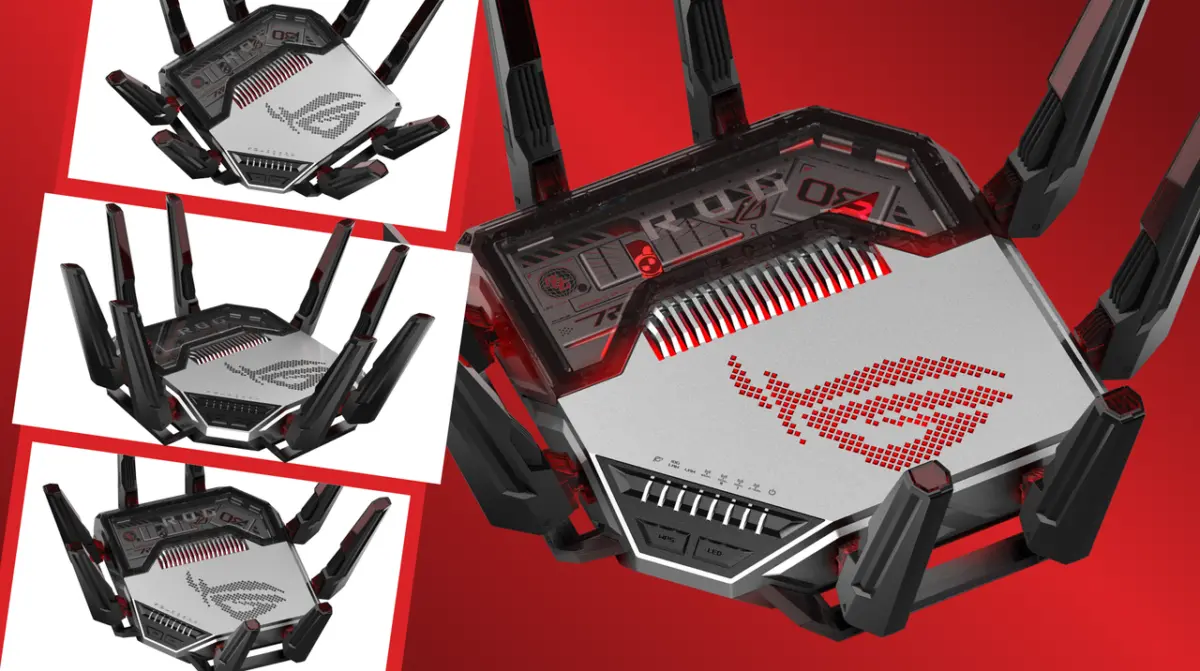
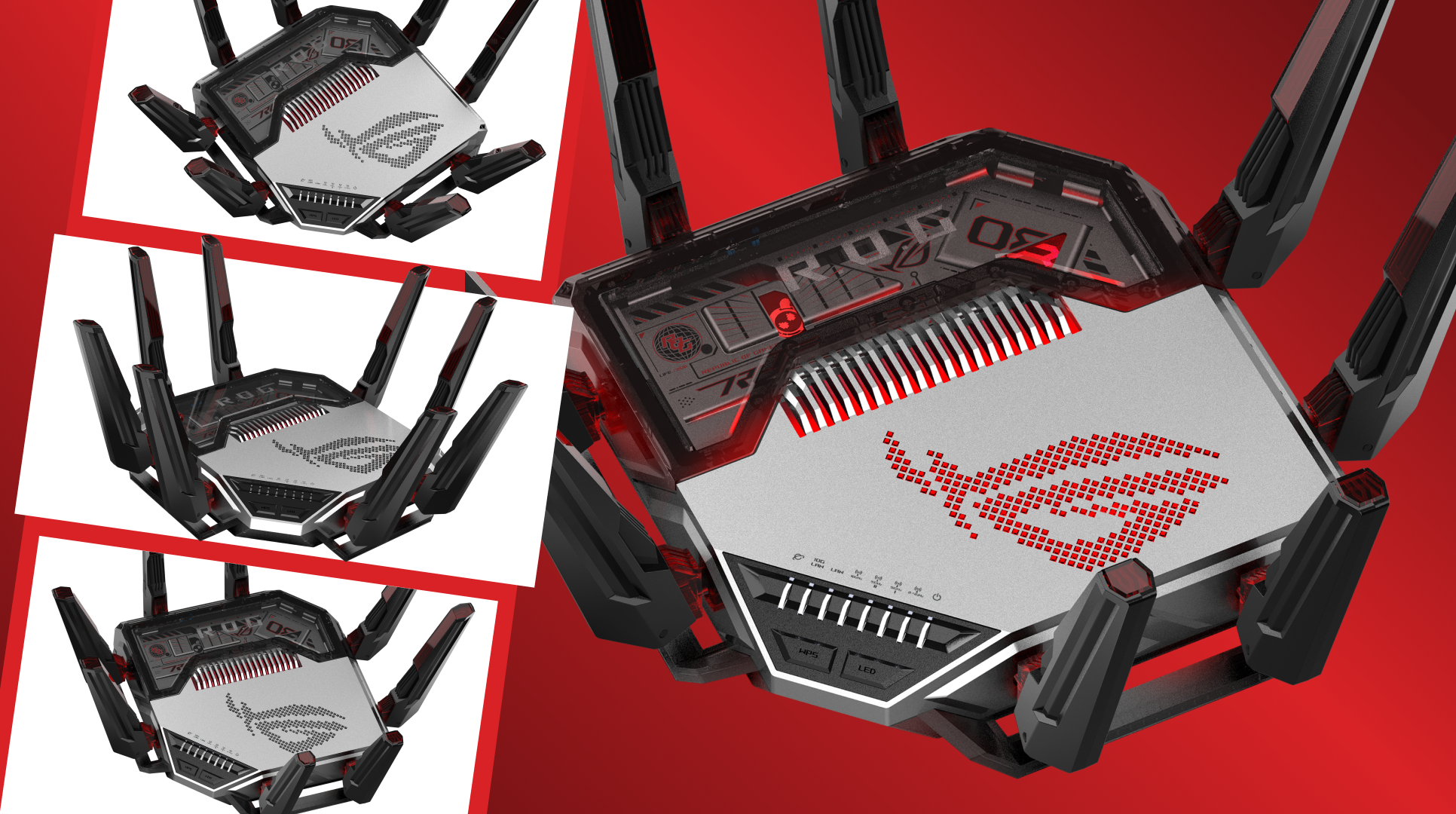
At the center of attention was the Asus ROG Rapture GT-BN98, a high-end, unapologetically aggressive gaming router adorned with the classic, over-the-top Republic of Gamers (ROG) aesthetics. Alongside it, Asus debuted a more understated, consumer-friendly mesh solution: the ZenWiFi BN12. Attendees were treated to a close-up look at these engineering samples, signaling that Asus was not merely conceptualizing Wi-Fi 8, but actively moving toward production-ready silicon.
September 2026: TP-Link’s IFA Showcase
Fast forward to September 2026 at IFA, where TP-Link made waves by announcing its own comprehensive Wi-Fi 8 ecosystem, featuring the Archer 9 Ultra router and the Deco 8 Ultra mesh Wi-Fi system.
While TP-Link marketed their lineup as the world’s first officially revealed complete Wi-Fi 8 product family, the industry noted that Asus had beaten them to the initial public hardware showcase by a couple of months. Regardless of marketing claims, the autumn trade shows established one undeniable fact: Wi-Fi 8 is no longer a distant theoretical concept; it is arriving in living rooms later this year.
The Immediate Future: Review Samples and Market Launch
As of right now, precise retail pricing and strict calendar release dates remain under wraps from both manufacturers. However, industry insiders indicate that review samples of flagship devices like the ROG Rapture GT-BN98 are slated to circulate among hardware reviewers very soon. This suggests a commercial rollout is imminent, likely aligning with the holiday shopping season or early next year.
Supporting Context & Metrics: Why Wi-Fi 8 Changes the Game
To understand why the tech industry is pivoting toward Wi-Fi 8 so quickly, one must examine the fundamental engineering shortcomings of previous wireless standards when deployed in modern, device-heavy real-world environments.
Moving Beyond Raw Speed: The Focus on Reliability
Historically, every new Wi-Fi iteration—from Wi-Fi 5 to Wi-Fi 6, and subsequently Wi-Fi 7—boasted massive multi-gigabit throughput gains. While impressive on paper, these peak speeds were frequently bottlenecked by distance, physical obstructions, and interference from neighboring networks.
Wi-Fi 8 shifts the performance paradigm. Rather than simply inflating maximum theoretical speed limits, the standard addresses the "dirty realities" of wireless communication:
Mid-to-Long Range Enhancement: Wi-Fi 8 technologies facilitate nearly double the data transmission speeds at medium-to-long ranges compared to its predecessors.
IoT Network Density: Internet of Things coverage is slated to nearly double, allowing smart homes to support dozens of connected bulbs, cameras, and appliances without choking the primary bandwidth pipeline.
Latency Reduction in Crowded Environments: In apartment complexes or dense urban areas where dozens of Wi-Fi routers fight over the same airwaves, Wi-Fi 8 drastically minimizes latency spikes.
Legacy Device Optimization: Older, slower, or weaker client devices connected to a Wi-Fi 8 network experience efficiency boosts, ensuring the entire home ecosystem runs harmoniously.
Deep Dive: Asus ROG Rapture GT-BN98 Hardware Specifications
The ROG Rapture GT-BN98 is engineered specifically to cater to competitive gamers, streamers, and power users who demand zero compromise.
AI-Powered Adaptive QoE: The router features advanced artificial intelligence that actively inspects packet content and behavior patterns in real-time. By dynamically monitoring bandwidth usage, it identifies critical gaming traffic and prioritizes it over background downloads, cloud backups, or family streaming sessions. This ensures unexpected bandwidth hogs never ruin a match.
Wired Connectivity Without Compromise: To ensure ultra-low latency, the router is equipped with dual 10Gbps ports (one pre-configured with game-optimization settings) alongside dedicated 2.5Gbps WAN and LAN ports. For hardwired PC gamers and high-end NAS setups, these ports offer massive headroom.
Advanced Management Interface: Asus has revamped its administrative dashboard, providing highly granular telemetry detailing environmental interference, channel congestion, and the operational status of every connected device.
Robust Security Suite: Both the Rapture and ZenWiFi lines include Asus’s triple-level network security framework, complete with AiProtection and comprehensive parental controls, provided entirely free with no recurring monthly subscription fees.
Deep Dive: Asus ZenWiFi BN12 Mesh Architecture
For mainstream households requiring whole-home coverage rather than single-room gaming dominance, the ZenWiFi BN12 offers a compelling alternative. Available as a standalone unit or as a multi-node mesh network, it utilizes advanced Multi-Link Operation (MLO) backhaul between nodes.
Traditional mesh systems often suffer catastrophic performance drop-offs as data hops from a satellite node back to the main router. The BN12’s MLO backhaul mitigates this degradation, ensuring that devices connected to remote nodes enjoy speeds nearly identical to those wired directly to the base unit. Each node is generously appointed with dual 10Gbps and triple 2.5Gbps ports, proving that mesh systems no longer need to skimp on wired connectivity.
Official Statements and Industry Insights
While official press releases from Asus and TP-Link focus heavily on marketing superlatives—highlighting terms like "ultra," "intelligent," and "revolutionary"—hardware analysts and network engineers offer a more grounded perspective on the transition.
Network specialists note that the primary catalyst for Wi-Fi 8 is the exponential growth of wireless traffic congestion. As remote work, cloud gaming (via services like GeForce NOW and Xbox Cloud Gaming), and high-definition smart home setups become standard, the sheer number of simultaneous data streams has outpaced the traffic management capabilities of Wi-Fi 7.
During briefings at Computex and IFA, manufacturer representatives emphasized that Wi-Fi 8 is fundamentally a user experience upgrade. An Asus hardware engineer noted during a technical presentation:
"We have reached a point where pushing raw gigabits per second into empty air is no longer the primary hurdle. The real challenge is maintaining a rock-solid, jitter-free connection when twenty different devices are streaming, gaming, and downloading simultaneously in the same household. Wi-Fi 8 is designed to bring order to that digital chaos."
Furthermore, industry analysts point out that while TP-Link and Asus are leading the charge with high-end tier-one hardware, the broader industry ecosystem—including smartphone manufacturers, laptop builders, and silicon designers—will take time to catch up.
Future Outlook: Should You Upgrade?
With cutting-edge routers like the ROG Rapture GT-BN98 and Archer 9 Ultra looming on the horizon, consumers facing aging network infrastructure are naturally asking a critical question: Should I buy in immediately, or wait?
The Client Device Bottleneck
The most important factor to consider when evaluating a Wi-Fi 8 router purchase is the availability of client devices.
When a router is upgraded, it can only communicate as efficiently as the wireless cards inside your laptops, tablets, smartphones, and desktop adapters. Historically, when a new Wi-Fi standard launches, router manufacturers are the first to market. Client devices—such as phones with Wi-Fi 8 chipsets or standalone PCIe and USB adapters—frequently lag behind router availability by weeks, months, or even a full year.
If you are currently running a modern Wi-Fi 7 setup (such as an Asus ROG Rapture GT-BE98 or TP-Link BE85), there is virtually no practical reason to upgrade to Wi-Fi 8 right away. Your current client devices cannot leverage the specific spatial efficiency and advanced management protocols of Wi-Fi 8, meaning you would see little to no perceptible real-world performance gain.
The Case for Future-Proofing
Conversely, if you are currently running an older Wi-Fi 6 (or Wi-Fi 5) router and are experiencing dropped connections, dead zones, or sluggish performance under heavy family loads, your perspective should be entirely different.
Because Wi-Fi 8 hardware will inherently backward-compatible and fully incorporates all the foundational speed and efficiency gains of Wi-Fi 7 (while adding superior long-range stability and congestion management), investing in a next-generation Wi-Fi 8 router provides exceptional long-term future-proofing. Even if your current devices cannot exploit every advanced protocol on day one, a top-tier router purchased today will easily serve your household for the next five to seven years as client hardware slowly catches up.
As review samples begin dropping into the hands of tech journalists in the coming weeks, real-world benchmarks will soon reveal whether the marketing promises of Wi-Fi 8 hold up under rigorous testing. Until then, network enthusiasts would do well to monitor pricing announcements and prepare for the next evolution of home connectivity.