Executive Overview
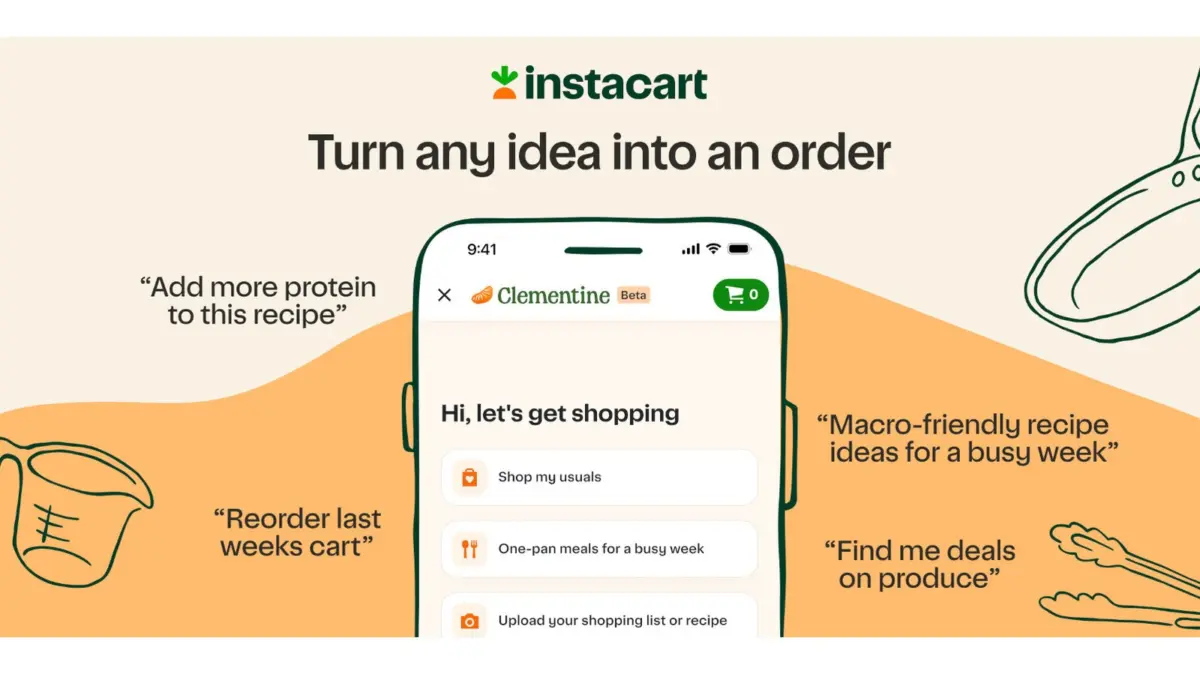
The grocery shopping experience—a weekly chore historically defined by paper lists, wandering grocery store aisles, budget fatigue, and the perpetual, exhausting question of "What’s for dinner?"—is undergoing a profound technological transformation. In an aggressive bid to cement its dominance in the digital grocery sector, Instacart has officially launched Clementine, its proprietary, generative artificial intelligence shopping assistant.
Available across North America on the Instacart Marketplace, Clementine is not merely a novelty chatbot; it is a sophisticated, agentic shopping engine engineered to solve the most friction-laden aspects of meal planning and food acquisition. By leveraging natural language processing (NLP), real-time inventory tracking across local brick-and-mortar storefronts, and deep integrations with individual user order histories, Clementine aims to transition Instacart from a transactional delivery platform into an indispensable, everyday culinary companion.
Yet, this convenience comes with strategic implications. Early internal data reveals that orders placed through Clementine routinely outpace Instacart’s traditional $115 average basket size, highlighting the subtle, powerful mechanics of conversational commerce. As automated suggestions make adding ingredients to a cart as seamless as tapping a screen, consumer spending patterns are shifting. Furthermore, Clementine arrives at a time when Instacart is aggressively weaving its infrastructure into the broader artificial intelligence ecosystem, partnering with tech giants like OpenAI (ChatGPT), Anthropic (Claude), Google (Gemini), and Google Search’s AI Mode.
This comprehensive report examines the architecture of Clementine, its operational mechanics, the broader economic trends fueling its deployment, and what this means for the future of food retail.
Detailed Chronology: The Evolution of Instacart’s AI Strategy
To understand the strategic significance of Clementine, one must trace the trajectory of Instacart’s technology investments over the past several years. Once viewed primarily as a gig-economy delivery service that profited off the convenience of human shoppers navigating supermarket aisles, Instacart has systematically morphed into a retail media and software powerhouse.
Phase 1: From Delivery App to Search Engine (2021–2023)
Long before the current generative AI boom, Instacart recognized that search intent within a grocery marketplace differed fundamentally from traditional e-commerce platforms like Amazon. Buying a television involves specifications, reviews, and infrequent purchases. Buying groceries involves recurring habits, dietary restrictions, impulse choices, and immediate temporal needs. During this phase, Instacart focused on upgrading its recommendation algorithms, helping users find substitutes for out-of-stock items, and building out its enterprise "Connected Stores" tech stack for physical grocery partners.
Phase 2: The Agentic Partnership Wave (Late 2023–Early 2025)
As generative AI matured from text generation to agentic execution—where AI models can perform actions on behalf of users across external applications—Instacart executed a pivotal pivot. Rather than attempting to lock users exclusively into its own app, the company pursued an ubiquitous integration strategy.
- OpenAI Integration: Instacart embedded its cart-building capabilities directly into ChatGPT, allowing users to ask OpenAI’s model for a dinner plan and instantly port those items into an active Instacart checkout flow.
- Claude & Gemini Partnerships: Similar integrations quickly followed with Anthropic’s Claude and Google’s Gemini, as well as AI Mode within Google Search.
This ecosystem play ensured that wherever consumers dreamed up a recipe—whether browsing a blog via a search engine or brainstorming with a general-purpose LLM—Instacart’s transaction rails were waiting at the finish line.
Phase 3: The Launch of Clementine (Mid-2025 and Beyond)
Despite the success of these third-party integrations, Instacart leadership recognized the need for a dedicated, first-party experience optimized explicitly for the nuances of grocery retail. Enter Clementine. Rolled out widely across North America, Clementine represents the culmination of years of data accumulation regarding household purchasing behaviors, regional inventory constraints, and nutritional profiling. It serves as Instacart’s flagship consumer-facing AI agent, designed to keep users within the proprietary app ecosystem by offering a superior, hyper-personalized planning experience.
Core Features and Operational Mechanics of Clementine
Clementine differentiates itself from generic AI chatbots through deep logistical integration and practical utility. It is built to address the three primary pain points of modern household provisioning: inspiration, inventory management, and execution friction.
1. Conversational Meal Planning with Real-Time Inventory Awareness
Ask a standard AI chatbot for a dinner recipe, and it may enthusiastically recommend a dish requiring obscure artisanal cheeses or seasonal vegetables that are currently out of season or completely unavailable in your local geographic market. This has historically been the Achilles’ heel of AI-generated cooking guides.
Clementine bridges the gap between digital ideation and physical reality. When a user inputs a natural language prompt such as, "I need to make a high-protein, easy dinner for two under thirty dollars," Clementine does not merely pull a generic recipe from a database.
- It cross-references the required ingredients against the real-time inventory of the user’s selected local store location.
- If a key ingredient is out of stock at your preferred neighborhood supermarket, Clementine proactively adjusts the recipe or suggests viable substitutions before presenting the final plan.
- Each recommended recipe is accompanied by a curated ingredient checklist. With a single tap, the entire list—minus any pantry staples the user explicitly toggles off—is transferred directly into the active cart.
2. Preference Center Customization
Modern households are complex ecosystems of dietary restrictions, allergies, ethical food choices, and picky eaters. Clementine incorporates a dedicated preference center designed to filter out incompatible culinary paths permanently. Users can configure parameters such as:
- Nut-free, gluten-free, dairy-free, or vegan constraints.
- Cultural or religious dietary guidelines (e.g., Kosher, Halal).
- Budget thresholds and household size scaling.
Once established, these preferences act as guardrails for every interaction, ensuring that Clementine never suggests a peanut-laden Thai dish to a household managing a severe nut allergy.
3. Pantry Restocking and "Shop Your Usuals"
Not every grocery trip begins with culinary ambition; much of grocery retail is driven by repetitive replenishment of household staples—milk, eggs, coffee, paper towels, and olive oil.
Clementine simplifies this mundane aspect of shopping via predictive pattern recognition. By querying historical order data, the assistant can execute commands like "Restock my pantry" or "Shop my usuals." The AI analyzes frequency-of-purchase metrics and consumption cadences to compile a comprehensive restock list. Users can review the generated list with a glance, adjust quantities, and send the order straight to checkout in seconds.
4. Multimodal Input: The Analog-to-Digital Bridge
Despite the digitization of our lives, the humble paper grocery list remains stubbornly persistent. People scribble notes on sticky notes, refrigerator whiteboards, or the backs of envelopes while cooking or rummaging through pantry cabinets.
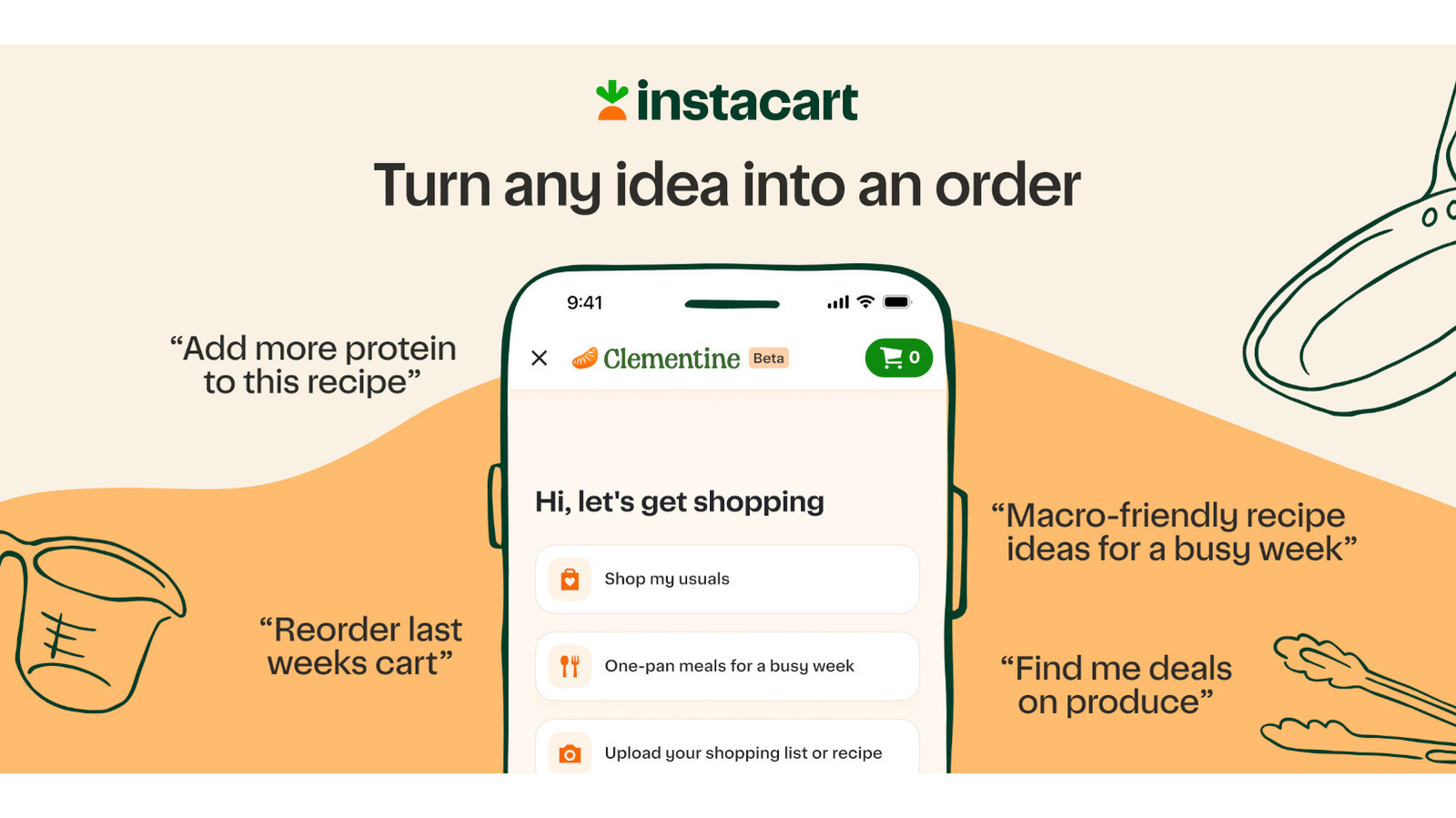
Clementine accommodates this analog habit through multimodal computer vision. Users can snap a photo of their handwritten grocery list with their smartphone camera and upload it directly into the chat interface. Clementine’s vision models parse the handwriting—no matter how messy—extract the items, match them to actual products available at the local store, and compile a digital cart.
Supporting Context & Metrics: The Economics of Conversational Commerce
To evaluate Clementine’s market impact, one must analyze the underlying financial and behavioral metrics driving modern grocery retail technology.
The Basket Size Phenomenon
One of the most revealing disclosures accompanying Clementine’s launch is its direct impact on consumer spending. According to internal Instacart data, orders placed via the Clementine assistant routinely exceed the platform’s standard $115 average basket size.
This phenomenon highlights a core principle of conversational commerce: friction reduction drives volume. When shopping manually, consumers are prone to cognitive fatigue. Scrolling through hundreds of search results, comparing brands, and hunting for recipe components requires mental energy, often leading to cart abandonment or stripped-down orders. By contrast, an AI assistant that presents a cohesive, complete solution—recipe, ingredients, and precise quantities bundled neatly into a single tap—removes the psychological barriers to purchasing. Users are far more likely to accept a complete ingredient list than they are to manually assemble it item by item.
The Shift Toward Agentic Retail
Retail analysts note that e-commerce is transitioning from a search-and-browse paradigm to an intent-and-execute paradigm.
- The Old Way: Consumers visit an app, type keywords into a search bar, filter results, read labels, and manually build a cart.
- The New Way: Consumers articulate a desired outcome ("Plan my meals for the week while keeping me under $150"), and an AI agent handles the labor-intensive execution layer.
For platforms like Instacart, this shift is critical for defending market share against ecosystem giants like Amazon and Walmart, both of which are aggressively deploying proprietary AI tools to lock consumers into their respective retail loops.
Official Statements and Industry Perspective
The launch of Clementine reflects a calculated bet by Instacart executives that conversational AI will define the next decade of digital commerce.
"We designed Clementine to tackle the most exhausting parts of grocery shopping—the mental load of deciding what to cook, balancing dietary needs, and staying on budget," said an Instacart product lead during the platform’s rollout. "By combining natural language understanding with real-time local store inventory and deep historical personalization, we aren’t just helping people buy groceries; we are removing the friction from everyday life."
Industry analysts have responded with cautious optimism, noting that while the technology is undeniably impressive, its long-term success will hinge on execution accuracy.
"The holy grail of grocery AI is inventory accuracy," notes retail tech analyst Marcus Vance. "If an AI recommends a recipe and half the ingredients are out of stock when the human shopper goes to pick them, trust evaporates immediately. Instacart’s advantage is that they have deep, direct pipelines into local supermarket inventory systems. If they can maintain high reliability, Clementine could become the default operating system for household food management."
Furthermore, consumer advocacy groups have raised questions regarding transparency in AI-driven recommendations. As algorithms increasingly curate what people eat and buy, questions surrounding sponsored product placement, brand bias, and nutritional neutrality will undoubtedly demand regulatory scrutiny. Instacart maintains that Clementine’s primary directive is user utility and preference alignment, but as monetization models evolve, balancing commercial incentives with unbiased culinary advice will remain a delicate tightrope.
Future Outlook: Where Goes Clementine, Goes the Kitchen?
As artificial intelligence continues its rapid integration into domestic life, the boundaries between software, kitchen appliances, and grocery logistics are blurring. What is the trajectory for tools like Clementine over the next three to five years?
1. Integration with Smart Kitchen Hardware
The logical next step for an agentic grocery assistant is hardware integration. Imagine a future where Clementine communicates directly with smart refrigerators equipped with internal cameras. When milk levels run low or vegetables begin to spoil, the refrigerator notifies Clementine, which automatically queues a replenishment order or suggests a recipe utilizing expiring ingredients to minimize food waste.
2. Hyper-Personalized Nutritional Health Coaching
As health-conscious consumers increasingly demand diets tailored to their biometric markers, AI shopping assistants will likely evolve beyond basic allergen filters. Future iterations of Clementine could integrate data from wearable health devices (smartwatches, continuous glucose monitors) and DNA-based nutrition profiles to dynamically curate meal plans optimized for athletic recovery, diabetes management, or longevity.
3. Voice-First Domestic Assistants
While Clementine currently operates primarily via text and multimodal photo inputs within the Instacart mobile interface, the broader market is shifting toward ambient voice computing. Integrating Clementine into smart home speakers and kitchen-embedded voice interfaces will allow cooks with flour-covered hands to verbally request ingredient substitutions or add missing items to their cart mid-recipe without touching a screen.
Conclusion
Instacart’s launch of Clementine marks a definitive turning point in how digital platforms mediate physical consumption. By transforming the arduous mental labor of meal planning into a fluid, conversational dialogue backed by real-time inventory and powerful logistics, Instacart is redefining convenience. Whether consumers are willing to surrender their grocery lists to an algorithm remains to be seen, but early spending metrics suggest the transition is already well underway. The kitchen of the future is conversational, connected, and cart-ready.