Executive Overview
Hours before Apple’s flagship autumn hardware keynote, the technology world is holding its collective breath. Rumors, supply chain murmurs, and frantic speculation have swirled around Cupertino’s most heavily guarded secret for years. Now, on the absolute eve of the official unveiling, a clearer—and vastly more surprising—picture has emerged.
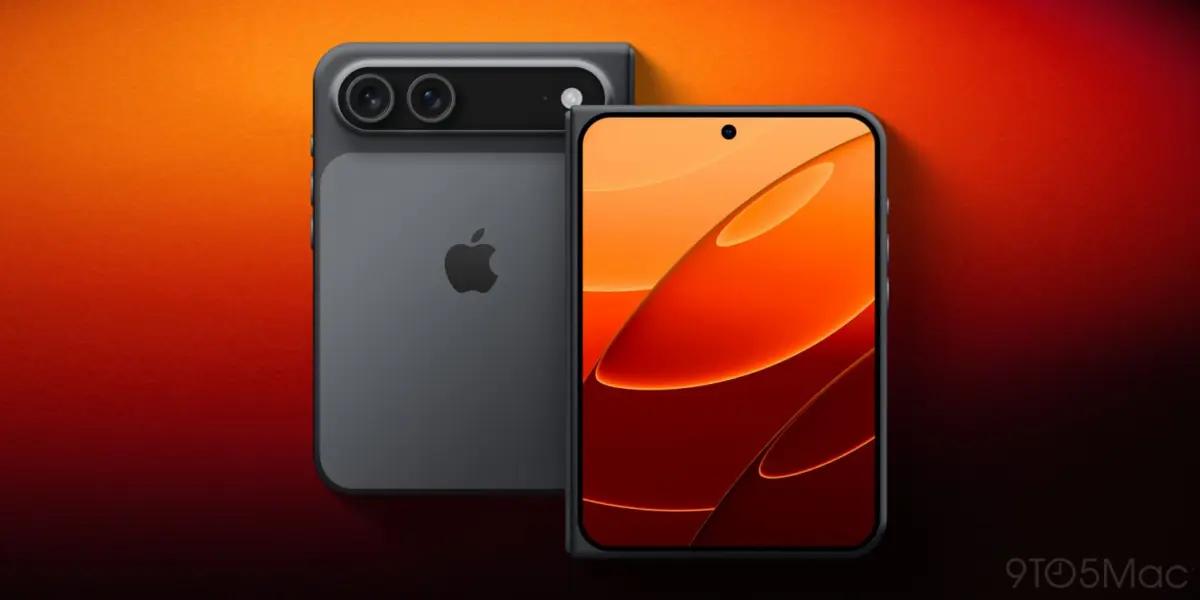
According to a late-breaking report by Mark Gurman of Bloomberg, Apple is officially poised to enter the foldable smartphone market with a device that defies early industry expectations. Abandoning the widely anticipated moniker "iPhone Ultra," Apple has reportedly chosen a fresh, highly descriptive identity for its debut folding device: the iPhone Duo.
Priced at a commanding $1,999, the iPhone Duo costs roughly as much as two standard flagship iPhones combined. Yet, market analysts note that this price point is notably lower than initial forecasts, which frequently projected price tags exceeding $2,500 due to the immense complexities of manufacturing durable, flexible OLED panels and advanced hinge architectures. Apple has reportedly chosen to absorb a portion of the financial impact caused by recent spikes in memory component costs, keeping the device strategically competitive as it squares off against entrenched competitors like Samsung and Google.
Featuring an innovative dual-screen layout with both inner and outer displays, the iPhone Duo is slated to launch in two core colorways at debut: a sleek white and a sophisticated dark blue. Furthermore, late-stage supply chain checks indicate that Apple has successfully integrated Apple Pencil support—a major productivity coup that positions the device at the intersection of a smartphone and a mini-tablet. While traditional iPhone 18 Pro models are expected to hit shelves later this month, the iPhone Duo will roll out to consumers slightly later, with a targeted release window "as early as October."
As the countdown ticks down to the 10:00 AM PT keynote, the technology sector is bracing for a paradigm shift. Apple is not merely joining the foldable race; it is looking to redefine the rules of engagement entirely.
Detailed Chronology: The Road to the iPhone Duo
To truly understand the gravity of the iPhone Duo’s launch, one must look back at the arduous, decade-long evolutionary timeline that brought Apple to this precipice.
The R&D Genesis (2018–2021)
Long before folding phones achieved mainstream viability, Apple’s advanced research and development teams were quietly patenting hinge mechanisms, ultra-thin flexible glass (UTG), and inward-folding configurations. While early iterations from competitors suffered from jarring crease visibility, mechanical failures, and fragile plastic screens, Apple remained notoriously patient. Industry insiders frequently noted that Cupertino’s engineering ethos demanded absolute perfection before entering a nascent product category—a philosophy that often meant arriving late to the party, but dominating it once there.
The Component Crisis and Supply Chain Pivots (2022–2024)
As Samsung iterated through multiple generations of the Galaxy Z Fold and Flip lineups, Apple’s internal roadmaps faced continuous evaluation. Rumors alternated between a foldable iPad, a hybrid MacBook-tablet, and a massive clamshell iPhone. By late 2024, however, supply chain reports coalesced around a dual-screen smartphone design.
This period was also marked by severe volatility in the global semiconductor and memory markets. Surging costs for high-density RAM and NAND flash storage threatened to push the retail price of a folding iPhone past the psychological $2,500 threshold. Rather than passing the entirety of these inflationary pressures onto consumers, Apple’s executive leadership—led by CEO Tim Cook and CFO Luca Maestri—reportedly made the strategic decision to absorb margin hits on memory components, ensuring the device remained within reach of high-end enterprise buyers and early adopters.
The Naming Debate: Ultra vs. Duo (2025–Early 2026)
For months, tech commentators and leakers referred to the device under various working titles, most notably the "iPhone Fold" or "iPhone Ultra." However, as packaging and marketing documentation locked down in late August 2026, the branding pivoted. The designation "Ultra" was deemed better suited for a future ultra-thin bar phone, while "Duo" was chosen to explicitly highlight the device’s defining hardware characteristic: its dual-screen layout comprising both an expansive inner folding canvas and a fully functional outer display.
Final Hours Before the Keynote (September 2026)
In the 24 hours leading up to the event, final leaks confirmed that Apple Pencil integration—previously thought abandoned due to internal thermal and digitizer constraints—had successfully passed validation testing. Simultaneously, Bloomberg’s reporting narrowed the color palette down to two initial options (white and dark blue) and established an anticipated October retail rollout window, setting the stage for one of the most consequential product launches in mobile history.
Supporting Context & Metrics: Market Dynamics and Financials
Apple’s entry into the foldable arena does not occur in a vacuum. For years, Samsung enjoyed an uncontested monopoly in the global foldable market, eventually joined by aggressive Chinese original equipment manufacturers (OEMs) like Honor, Oppo, Xiaomi, and Huawei, alongside Google’s Pixel Fold series.

Pricing Strategy Analysis
At $1,999, the iPhone Duo occupies a precarious yet powerful financial sweet spot.
| Metric / Dimension | iPhone Duo Specifications & Estimates |
|---|---|
| Retail Price | $1,999 USD |
| Form Factor | Inward-folding book-style foldable with dual screens |
| Display Configuration | Outer cover display + Inner folding flexible OLED |
| Initial Colorways | White, Dark Blue |
| Accessory Support | Confirmed Apple Pencil compatibility |
| Target Release Window | Early October 2026 |
By pricing the device at under $2,000, Apple is undercutting pessimistic market predictions while still maintaining a luxury tier margin. This pricing strategy directly mirrors Apple’s historical playbook: enter at the high end, establish product category legitimacy, and gradually drive down component costs through massive economies of scale in subsequent generations.
The Memory Component Factor
The decision by Apple to absorb recent memory component price increases cannot be overstated. As AI workloads, on-device large language models (LLMs), and multitasking requirements demand unprecedented amounts of RAM and high-speed storage, component costs have risen across the board. By eating these costs for the iPhone Duo, Apple is signaling that it views foldable devices not as low-volume novelty experiments, but as foundational pillars of the future iPhone lineup.
Official Statements and Industry Reactions
While official Cupertino executives maintain their customary pre-event silence, industry analysts have been vocal about the seismic market implications of the iPhone Duo.
Counterpoint Research released a pre-briefing note suggesting that "Apple will quickly become a dominant player in folding phones." The firm noted that consumer hesitation regarding durability, software optimization, and ecosystem integration has historically stymied broader adoption of Android foldables. With Apple’s entry, developer support for flexible aspect ratios is expected to skyrocket overnight, transforming software optimization for folding screens from an afterthought into an industry standard.
Furthermore, supply chain analysts have pointed out that Apple’s proprietary silicon architecture—presumably powered by an advanced variant of the A-series or M-series chips optimized for neural processing—will give the iPhone Duo a distinct performance and battery-efficiency advantage over current Android counterparts.

Consumer advocacy groups and tech reviewers have similarly focused on the inclusion of Apple Pencil support. By bridging the gap between a pocketable smartphone and a digital notebook or canvas, Apple is directly targeting mobile professionals, digital artists, and enterprise executives who require maximum versatility without carrying multiple devices.
Future Outlook: What the iPhone Duo Means for the Industry
The launch of the iPhone Duo marks the definitive end of the "experimental phase" for foldable technology. When a titan like Apple commits to a dual-screen folding form factor, it sends a clear signal to the entire supply chain, software development community, and consumer base: foldables are here to stay, and they are moving firmly into the mainstream luxury tier.
1. The Death of Android Foldable Exclusivity
For years, Android manufacturers used foldables as a technological showcase to prove their engineering superiority over Apple. With the iPhone Duo, that narrative evaporates. Android OEMs will now face immense pressure to refine their own hinge designs, software ecosystems, and hardware durability to compete with Apple’s tightly integrated hardware-software synergy.
2. Ecosystem Maturation and iPad Convergence
The introduction of Apple Pencil support on a folding iPhone blurs the historical lines separating iPhones, iPads, and Macs. As iPadOS and iOS features continue to merge under unified design languages, the iPhone Duo may well serve as the ultimate precursor to a fully realized wearable or rollable computing future.
3. Supply Chain Evolution
Apple’s immense purchasing power will undoubtedly reshape the manufacturing pipelines for ultra-thin glass, hinge components, and flexible OLED panels. Suppliers who secure contracts for the iPhone Duo and its successors are positioned for unprecedented financial growth, while competitors may find themselves fighting for remaining manufacturing capacity.
As the keynote event commences in just a few hours at Steve Jobs Theater, the tech world watches with bated breath. The iPhone Duo is no longer a theoretical concept whispered in forum threads—it is reality, and it is poised to change mobile computing forever.