Executive Overview
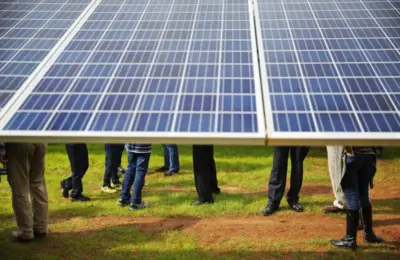
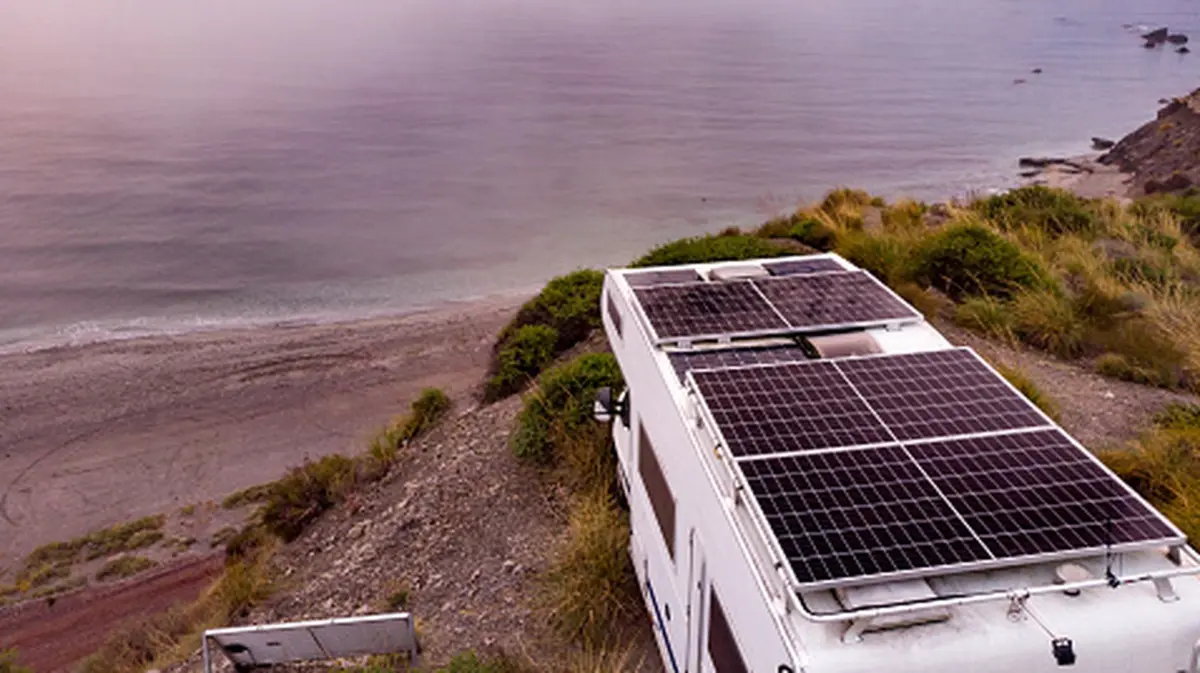
As the global urgency surrounding climate change escalates, consumer habits are shifting dramatically toward renewable energy solutions. From urban residential plug-in solar kits to remote off-grid applications, harnessing the sun’s power has transitioned from an alternative novelty to a mainstream necessity. Within the recreational vehicle (RV) community, this evolution is particularly pronounced. Traditional, noisy, fossil-fuel-guzzling generators are rapidly giving way to silent, clean, and increasingly efficient solar power systems.
Yet, transitioning an RV to fully or partially solar-powered living is not merely a matter of slapping a few panels onto a roof and hitting the highway. It requires a meticulous, calculated approach to energy generation, conversion, and storage. Failing to crunch the numbers can leave travelers stranded in remote wilderness areas entirely "powerless"—stripped of climate control, refrigeration, navigation aids, and communication devices.
This comprehensive guide explores the structural anatomy of an off-grid RV solar setup, the mathematical realities of daily power consumption, the variables that impact panel efficiency, and the gold-standard industry practices—such as the vital "20 percent rule"—necessary to guarantee a seamless, self-sustaining journey.
Detailed Chronology: The Evolution of RV Power and the Rise of Modern Solar
The quest for autonomous energy in mobile living has undergone a fascinating technological transformation over the past several decades. Understanding how we arrived at today’s high-efficiency, lightweight photovoltaic (PV) arrays provides crucial context for modern RVers planning an installation.
Era 1: The Age of the Combustion Generator (Pre-2000s)
For generations, RV travel was synonymous with the rhythmic, often disruptive drone of portable gasoline and propane generators. While reliable for heavy loads like air conditioning units and microwave ovens, these machines came with steep drawbacks: noxious exhaust fumes, heavy fuel storage requirements, high maintenance overheads, and severe noise pollution that frequently clashed with the peace of nature.
Era 2: The Auxiliary Battery and Inverter Bridge (Early 2000s – 2010s)
As consumer electronics miniaturized and demand for mobile computing grew, RV manufacturers began incorporating deep-cycle lead-acid battery banks paired with basic inverters. These systems allowed travelers to run lights, televisions, and charging stations for limited periods without running a motor. However, replenishing these batteries still fundamentally relied on shore power hookups or hours of running a combustion generator, capping true off-grid capabilities.
Era 3: The Photovoltaic Revolution (2010s – Present)
The dramatic drop in the cost of silicon photovoltaic cells, coupled with exponential leaps in lithium-ion (LiFePO4) battery technology, revolutionized mobile energy. Modern RVers can now outfit their roofs, awnings, or portable mounts with lightweight, high-efficiency solar panels. Combined with smart charge controllers and pure sine wave inverters, contemporary rigs can sustain indefinite off-grid operation entirely silently and sustainably, provided the system is engineered to match the user’s exact energetic footprint.
Supporting Context & Metrics: Decoding the Hardware and the Math
Going "all-in" on solar energy requires more than just panels. An independent RV electrical grid is an integrated ecosystem comprising three core hardware components working in tandem with strict mathematical calculations.
The Anatomy of an Off-Grid RV Solar System
To fully power an RV using solar energy without an active generator or shore connection, your mobile setup requires three essential pillars:
- Solar Panels (The Generation Source): Photovoltaic panels capture sunlight and convert it into Direct Current (DC) electricity.
- Charge Controller (The Regulator): Acting as the traffic cop of your system, the charge controller safely channels electricity from the panels to the battery bank, preventing overcharging and regulating voltage fluctuations.
- Battery Bank (The Storage Vault): Because the sun does not shine 24/7, a robust battery bank (increasingly dominated by lithium iron phosphate variants due to their depth of discharge and longevity) stores the generated electricity for use at night or during overcast weather.
- Inverter (The Converter): Most RV appliances run on Alternating Current (AC). The inverter translates the DC power stored in your batteries into the 120V AC power required by household-style electronics, kitchen appliances, and entertainment centers.
The Golden Rule of Inverter Sizing
When designing your system, component specifications matter immensely. For instance, industry standards dictate that your ideal inverter size should be equal to approximately 1.25 times the maximum peak wattage you expect to draw simultaneously at any given moment. This headroom prevents thermal overload and ensures the inverter operates well within safe mechanical limits.
Doing the Math: Tallying Your Daily Wattage
Avoiding power failure on the road begins with a meticulous energy audit. Every electronic device in your RV has a power rating listed on its safety label, usually measured in watts (W) or volts (V) and amps (A).
- The Formula: If a device lists only volts and amps, multiply them together to determine its wattage ($Volts times Amps = Watts$).
- Factoring Duration: A device’s wattage must be multiplied by its run-time per day to determine total daily energy consumption in watt-hours (Wh). For example, a heavy-duty appliance that draws 1,500 watts per hour may sound terrifyingly power-hungry; however, if you only operate it for ten minutes (0.166 hours) per day, its actual consumption is a manageable 250 watt-hours.
By compiling a comprehensive list of every gadget—from your CPAP machine, portable heater, and induction cooktop to your laptop, smartphone chargers, and GPS units—you can arrive at a precise baseline of your daily energy requirements.
Environmental Variables and Technical Realities
Even the most mathematically sound solar installation will occasionally underperform due to environmental variables outside the traveler’s control. Acknowledging these real-world limitations is critical to preventing mid-trip power outages.
The Myth of Maximum Panel Output
It is a common pitfall for beginner RVers to assume that a 100-watt solar panel will consistently pump 100 watts into their system every single hour the sun is in the sky. In practice, solar panel ratings are derived from strict laboratory conditions (Standard Test Conditions, or STC).
In the real world, a 100W solar panel—when accounting for shifting weather patterns, atmospheric interference, and sub-optimal panel angles—typically yields roughly 350 watt-hours of power per day under average North American sunlight conditions.
Obstructions and Weather Anomalies
Travel naturally takes RVers through diverse topographies. Venturing through dense evergreen forests, parking under deep canyon overhangs, or experiencing prolonged multi-day rainstorms will drastically diminish solar yield. Furthermore, panel orientation plays a massive role; unless you possess adjustable tilting mounts or automated solar trackers, flat-roof-mounted RV panels rarely capture direct overhead rays throughout the entire course of the day.
The Thermal Paradox: Hot vs. Cold Panels
A common counter-intuitive realization for new solar users is that solar panels operate more efficiently in colder temperatures. While it seems logical that blistering, bright summer sun would generate maximum power, excessive heat actually degrades the voltage efficiency of photovoltaic silicon cells. Bright, crisp, sub-freezing winter days with clear blue skies often yield superior energy conversion efficiency compared to sweltering mid-summer afternoons, provided the panels are kept free of snow accumulation.
The 20 Percent Rule: Insurance Against the Elements
To bridge the gap between ideal mathematical projections and messy, unpredictable real-world weather, seasoned off-grid solar engineers universally adhere to a foundational guideline known as the 20 percent rule.

What Is the 20 Percent Rule?
Simply stated, the 20 percent rule dictates that your solar panel generation and storage setup should be engineered to produce 20 percent more energy than your calculated daily needs.
For example, if your comprehensive daily energy audit reveals that your appliances consume a total of 2,000 watt-hours per day, you should not design a system that maxes out at precisely 2,000 watt-hours. Instead, you should scale your array (such as implementing a robust 400W panel setup or larger, depending on geographic latitude) to comfortably output 2,400 watt-hours daily.
Why This Margin Matters
Because your solar panels will be operating below maximum output the vast majority of the time—due to passing clouds, shadows from trees, morning and evening low-angle sun, and thermal degradation—this 20 percent buffer acts as an essential safety net. It ensures that your battery bank maintains a healthy state of charge, protects your deep-cycle batteries from harmful deep discharges, and grants you peace of mind when weather conditions turn sour for days on end.
Future Outlook: The Horizon of Mobile Renewable Energy
As we look toward the future of recreational vehicle technology, the integration of solar power is poised to become even more seamless, efficient, and accessible.
Emerging Technologies on the Horizon
- Transparent and Flexible Solar Films: Future RVs may move away from rigid, heavy glass panels entirely, utilizing thin-film photovoltaic skins laminated directly onto curved RV roofs, pop-up tent fabrics, and side awnings.
- Smart Energy Management Ecosystems: The next generation of RV power systems leverages Internet of Things (IoT) sensors and artificial intelligence to automatically monitor weather forecasts, predict solar yields, and intelligently shed non-essential loads or cycle appliances to optimize battery health without human intervention.
- Solid-State Battery Storage: As solid-state battery chemistry transitions from automotive laboratories to the consumer market, future RVers can anticipate lighter, drastically smaller battery banks capable of storing massive amounts of solar energy with zero risk of thermal runaway.
Final Takeaway
Embracing solar power in an RV frees travelers from the noisy constraints of traditional generators and ties them closer to sustainable, eco-friendly travel. However, success on the open road demands respect for the physics of electricity. By accurately auditing your power consumption, accounting for environmental realities, and strictly following the 20 percent rule, you can design a resilient, self-sustaining mobile energy ecosystem that keeps you comfortably powered—no matter how far off the grid you roam.