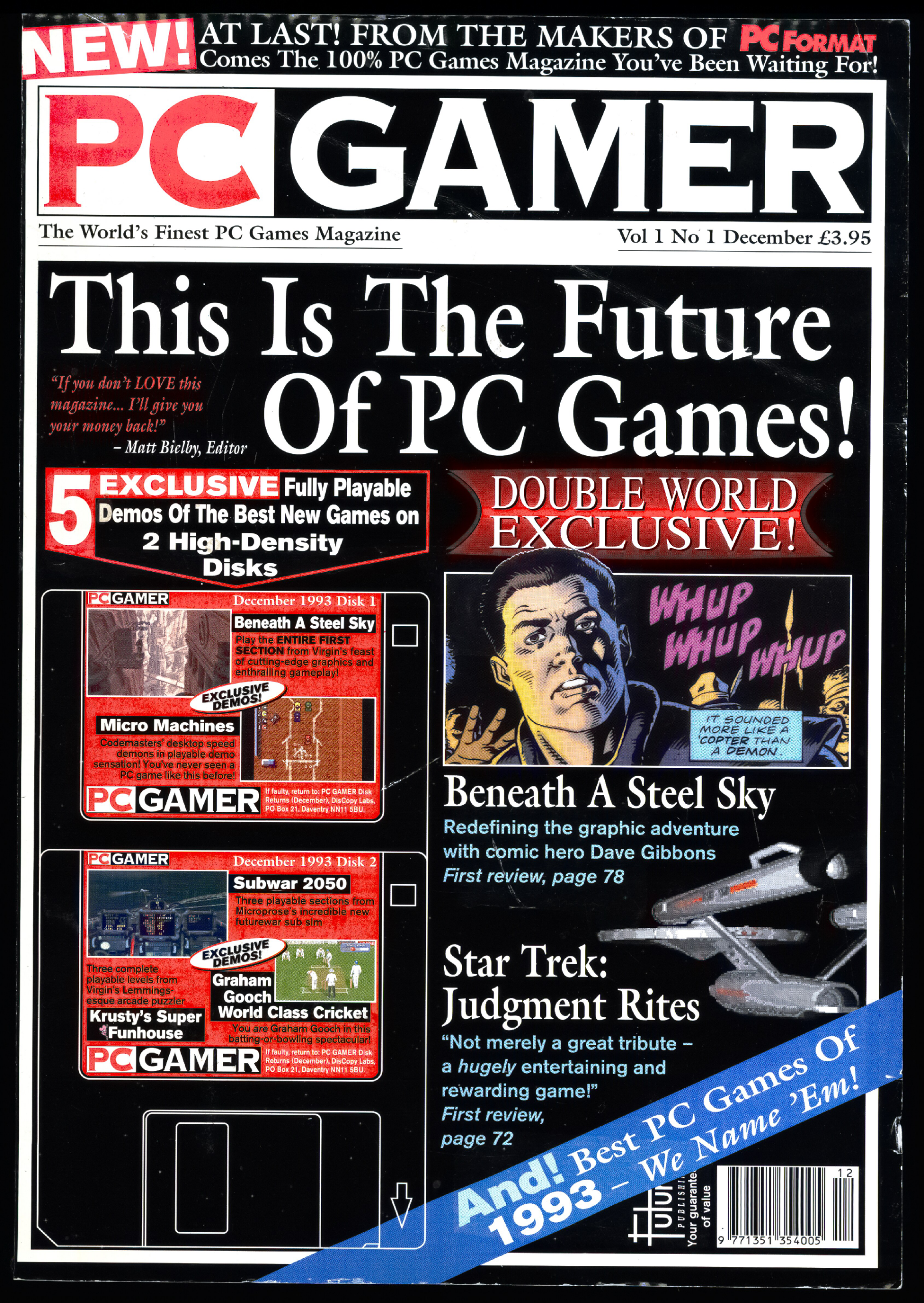
In the golden age of 1990s point-and-click adventure games, few titles generated as much feverish anticipation—or delivered as unique a creative friction—as Beneath a Steel Sky. Developed by UK-based studio Revolution Software and featuring the unmistakable visual DNA of legendary Watchmen comic artist Dave Gibbons, the game landed in the hands of eager players in late 1993. Debuting in the inaugural issue of PC Gamer (UK, December 1993) with a glowing verdict hailing it as "a must-buy for all serious adventure fans," the title represented a massive tonal and stylistic pivot from Revolution’s 1992 fantasy debut, Lure of the Temptress.
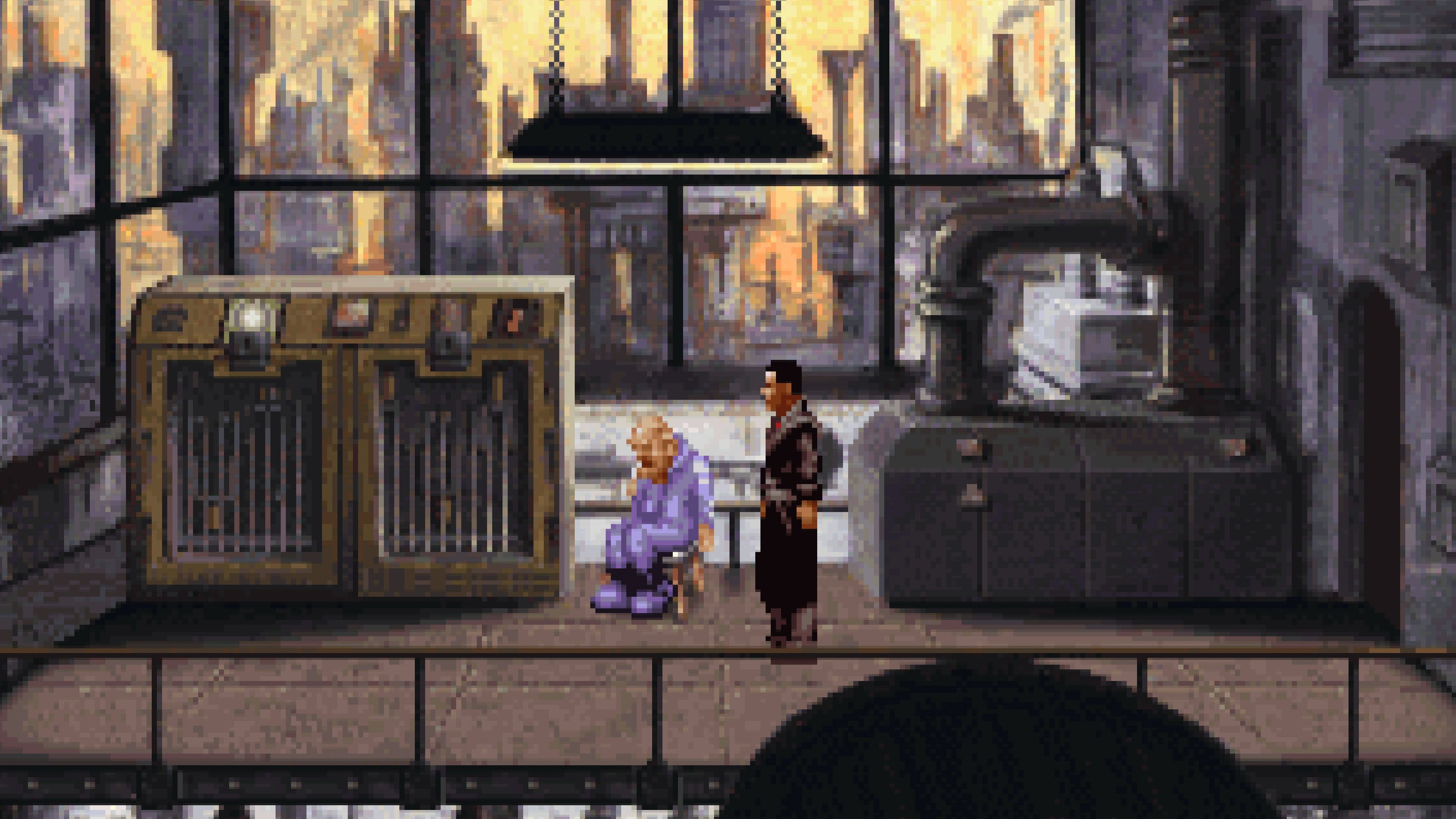
Driven by a haunting dystopian premise that merged the cyberpunk grit of Philip K. Dick and William Gibson with the distinct graphic-novel aesthetic of Gibbons, Beneath a Steel Sky challenged the industry standard. It positioned itself not merely as a puzzle-solving exercise, but as an interactive graphic novel set within an oppressive, vertically stratified mega-city. Decades after its initial launch, the game remains a masterclass in atmospheric world-building, remembered as fondly for its snappy robotic companion, Joey, as it is for its labyrinthine conspiracies. This retrospective examines the historical reception, the ideological clashes during its original review cycle, and the enduring legacy of a title that ultimately bridged the gap between traditional 2D pixel art and modern adventure game design.
Detailed Chronology: From Concept to the Pages of PC Gamer
The genesis of Beneath a Steel Sky traces back to Revolution Software’s ambition to evolve beyond the standard fantasy tropes typical of early 1990s computer role-playing and adventure games. Following the completion of Lure of the Temptress, the team sought a partnership that could elevate their storytelling and visual identity. Enter Dave Gibbons. Following a failed attempt to collaborate on a planned Watchmen adaptation, Gibbons turned his creative focus toward the burgeoning British studio, providing the dystopian cityscape designs, key character concepts, and narrative framing that would define the game.
The development cycle spanned roughly two years, accompanied by an unprecedented wave of preview coverage in gaming periodicals. When the title finally materialized in December 1993, it was greeted with high expectations. In the pages of PC Gamer’s landmark first issue, reviewer Garry Whitta encapsulated the industry’s collective excitement, contrasting Revolution’s gritty techno-thriller with contemporary rivals.
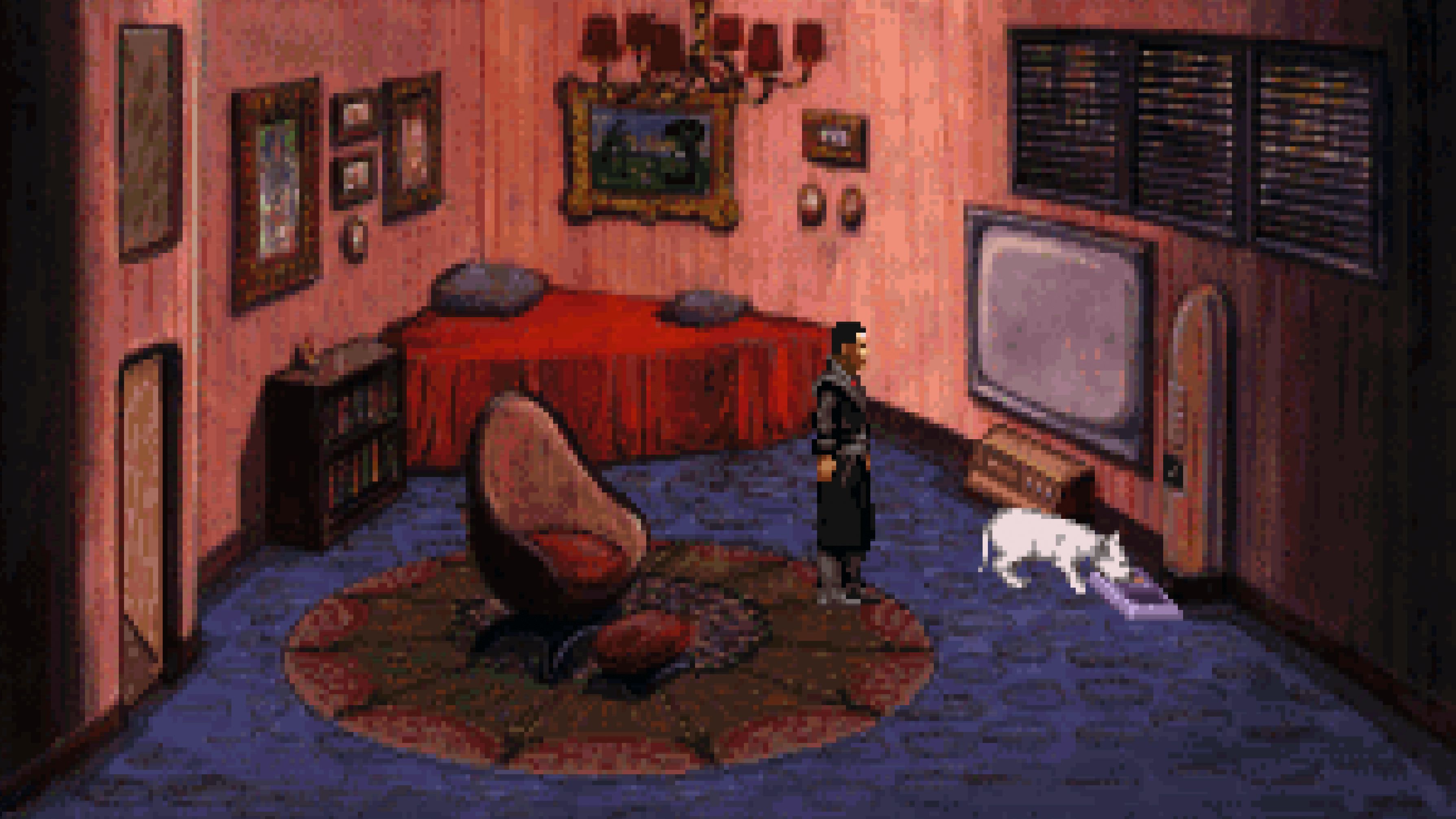
The chronological journey of the player begins with protagonist Robert Foster—a rugged, raincoat-wearing outsider from "The Gap," a desolate desert outland populated by those who rejected societal collapse. Foster’s tranquil exile is abruptly shattered when sinister corporate security forces kidnap him without explanation. A subsequent helicopter crash leaves him stranded in the dizzying, high-altitude towers of a towering, ecologically devastated city-state.
Rather than front-loading exposition, Revolution designed the opening hours to be disorienting. Players were given only sparse clues, forced to piece together Foster’s origins, his captors’ motivations, and the overarching urban layout through exploration. Progress required descending from the affluent, high-rise luxury tiers down through security checkpoints, industrial levels, and ultimately into the subterranean bowels of the city to confront an all-powerful central computer. Along the way, players navigated approximately 100 distinct locations, encountering a sprawling cast of characters, complex multi-step riddles, and calculated red herrings.
Supporting Context & Metrics: Analyzing the Mechanics and Atmosphere
When evaluating Beneath a Steel Sky through a critical lens, contemporary and retrospective analysts often point to the dichotomy between its high-concept sci-fi narrative and its traditional, inventory-driven puzzle mechanics.
Core Metrics and Design Pillars
Scale and Scope: Spanning approximately 100 distinct locations, the game was remarkably expansive for its era, offering a dense web of interconnected areas.
Character Interaction: The dynamic between Robert Foster and Joey—a sentient artificial intelligence whose consciousness begins the game housed on a simple circuit board before being transferred into various cybernetic and robotic chassis—served as the emotional anchor of the narrative.
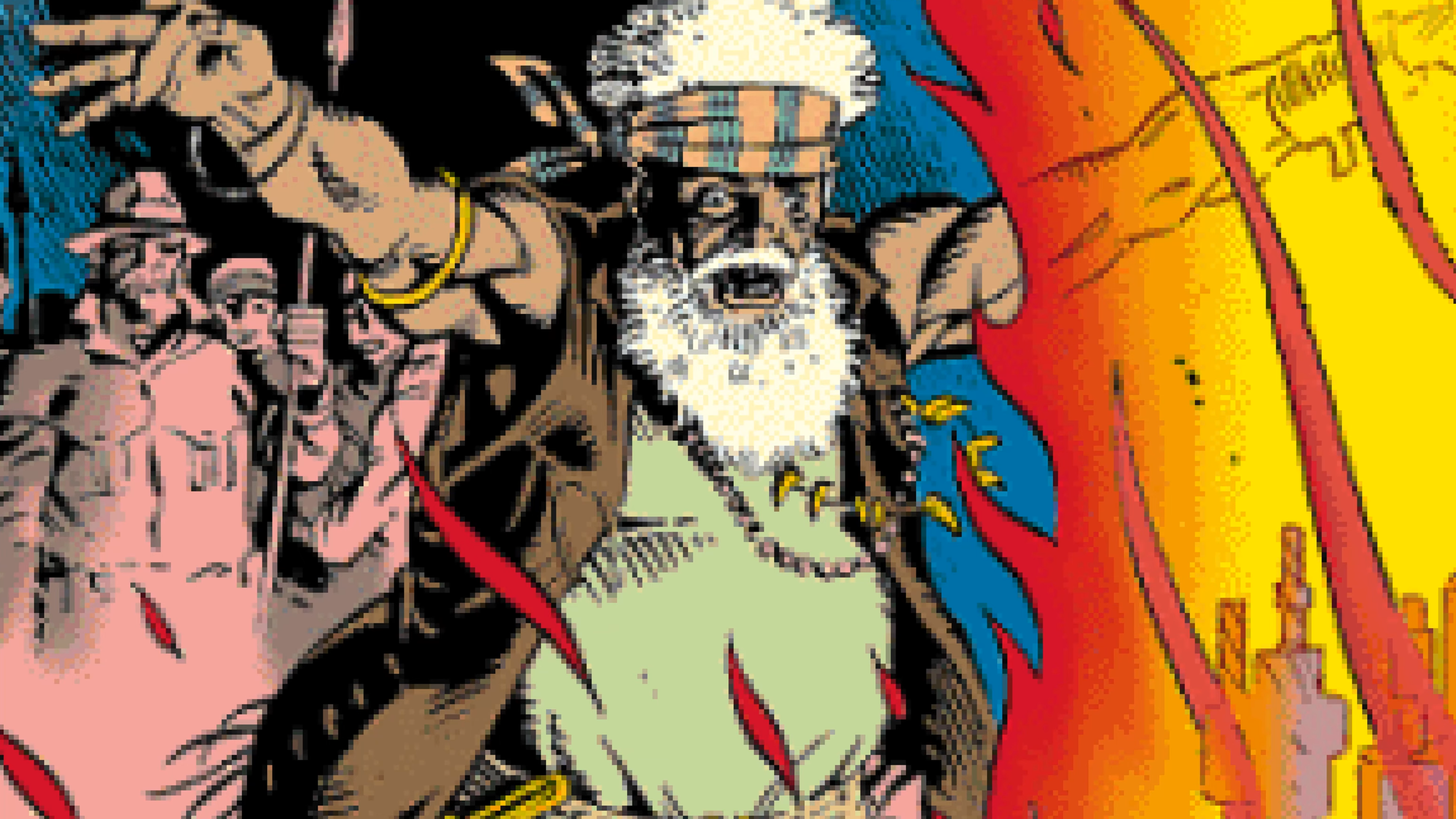
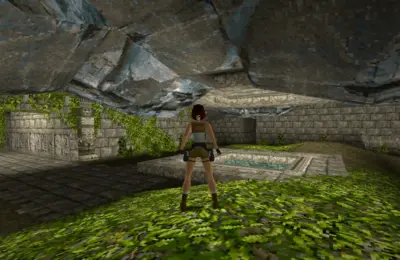
Artistic Direction: Dave Gibbons’ contribution was universally lauded. His signature comic-book linework and vibrant, desolate palettes provided a tangible, cohesive identity that many critics argued aged far more gracefully than early, experimental 3D polygon models.
Despite these strengths, the title faced valid critiques regarding its internal tonal consistency. In a famous PC Gamer #1 counterpoint review, Matt Bielby raised a compelling argument regarding the game’s stylistic identity. Comparing it to LucasArts’ commercially dominant, humor-infused masterpieces like The Secret of Monkey Island or Sam & Max, Bielby noted that Beneath a Steel Sky leaned heavily into a serious, straightforward sci-fi narrative while occasionally undercutting its own brooding atmosphere with discordant musical cues or lighthearted script elements.
Garry Whitta echoed similar reservations in the main review, observing that while the visual design and accompanying mini-comic screamed dark, oppressive cyberpunk noir, the underlying musical score—skewing closer to upbeat radio jingles at times—threatened to dilute the tension. Nevertheless, both reviewers agreed that as a piece of interactive fiction, its structural competence and engagement factor comfortably overshadowed minor tonal missteps.
Official Statements and Critical Perspectives
The ongoing cultural relevance of Beneath a Steel Sky is underscored by how industry veterans and gaming historians continue to reevaluate its impact.
Reflecting on the title’s production and its legacy, modern retrospective commentators often highlight the audacity of Revolution Software’s vision. Archive analysts note:
"Revolution Software is probably best-known among point-and-click fans for the Broken Sword series, and the infamous goat puzzle… But before that, Revolution gave us Lure of the Temptress and Beneath a Steel Sky, the latter a collaboration with comics artist Dave Gibbons. After a planned Watchmen game fell through, Gibbons instead provided the dystopian cityscape, character designs, and part of the story for Beneath a Steel Sky. The art remains the most convincing thing about it, making me wonder why we ever bothered with 3D graphics."
This sentiment touches upon a core debate in video game history: the transition from hand-crafted 2D pixel art to early 3D environments. When Revolution eventually returned to the intellectual property decades later for the crowdfunded 2020 sequel, Beyond a Steel Sky, the franchise transitioned into full 3D. While the sequel earned a respectable 81% review score from PC Gamer, purists often look back to the 1993 original as the purest realization of Dave Gibbons’ artistic vision, untethered by the technological growing pains of early polygonal modeling.
Garry Whitta’s original assessment in PC Gamer #1 ultimately championed the game’s mechanics over its stylistic ambiguities, noting:
"This isn’t a movie or a high-brow novel, it’s a computer game, for God’s sake, and although it may have its failings as a piece of interactive fiction, as an adventure game in the classic LucasArts tradition it’s difficult to find fault with."
Future Outlook: The Enduring Legacy of Steel and Pixels
As the point-and-click adventure genre evolved from a dominant commercial force into a cherished, niche artistic medium, the footprint of Beneath a Steel Sky remained indelible. Its influence can be felt across subsequent generations of narrative-driven indie titles that prioritize atmospheric world-building, ethical dilemmas, and dystopian sociopolitical commentary.
The successful 2020 revival, Beyond a Steel Sky, proved that Robert Foster and Joey still held a special place in the hearts of modern gamers, bridging a nearly thirty-year gap between the MS-DOS era and contemporary gaming platforms. However, the definitive historical consensus remains tied to that crisp December morning in 1993 when PC Gamer first hit newsstands in the UK.
For modern players and preservationists, Beneath a Steel Sky stands as a vital time capsule. It captures a moment when comic book royalty and video game developers pushed the boundaries of interactive storytelling, proving that a compelling mystery, a wise-cracking robotic sidekick, and brilliantly executed hand-drawn art can transcend decades of technological progress. It remains, quite deservedly, a must-buy and a must-experience milestone for all serious adventure fans.