Executive Overview
In an era defined by relentless digital connectivity, sociopolitical polarization, and an overarching sense of impending doom, human beings are increasingly searching for radical models of self-care and stress mitigation. At the forefront of this behavioral search is an unlikely teacher: the domestic cat.
In early June 2026, as global uncertainties continue to weigh heavily on the collective human consciousness, a profound realization has emerged regarding the psychological mechanisms of stress, presence, and boundary setting. By examining the daily rituals of our feline companions—specifically their mastery of immediate emotional regulation, environmental curation, and unapologetic self-preservation—researchers and thinkers are beginning to map a new framework for emotional resilience.
This report explores the intersection of human psychology and feline behavior, drawing on observations of daily life to evaluate whether adopting a "cat’s-eye view" of the world can alleviate contemporary burnout. While humans grapple with the heavy burdens of existential guilt, long-term goal setting, and civic responsibility, cats operate on a simpler, more anchored plane of existence. Yet, as this analysis reveals, the ultimate takeaway is not a desire to abdicate human duty, but rather a sophisticated blueprint for managing the fragile, complex architecture of the human mind.
Detailed Chronology: A Morning in the Sunroom
To understand the mechanics of feline-inspired self-soothing, one must examine the micro-moments of domestic life where stress and recovery intersect. The following chronology chronicles a typical morning sequence illustrating the transition from human agitation to feline-modeled equilibrium.
08:15 AM – The Catalyst of Friction
The morning begins with a minor domestic friction point—a misplaced manuscript. Following a brief, mild exchange regarding the location of a story draft intended for editorial review, an undercurrent of irritation takes hold. The expectation that the draft rested neatly on a designated desk clashes with reality. Although the emotional dismay lasts mere seconds, its psychological residue lingers, leaving the nervous system unsettled and the internal "fur" ruffled.
08:22 AM – The Instinctual Shift to Grooming
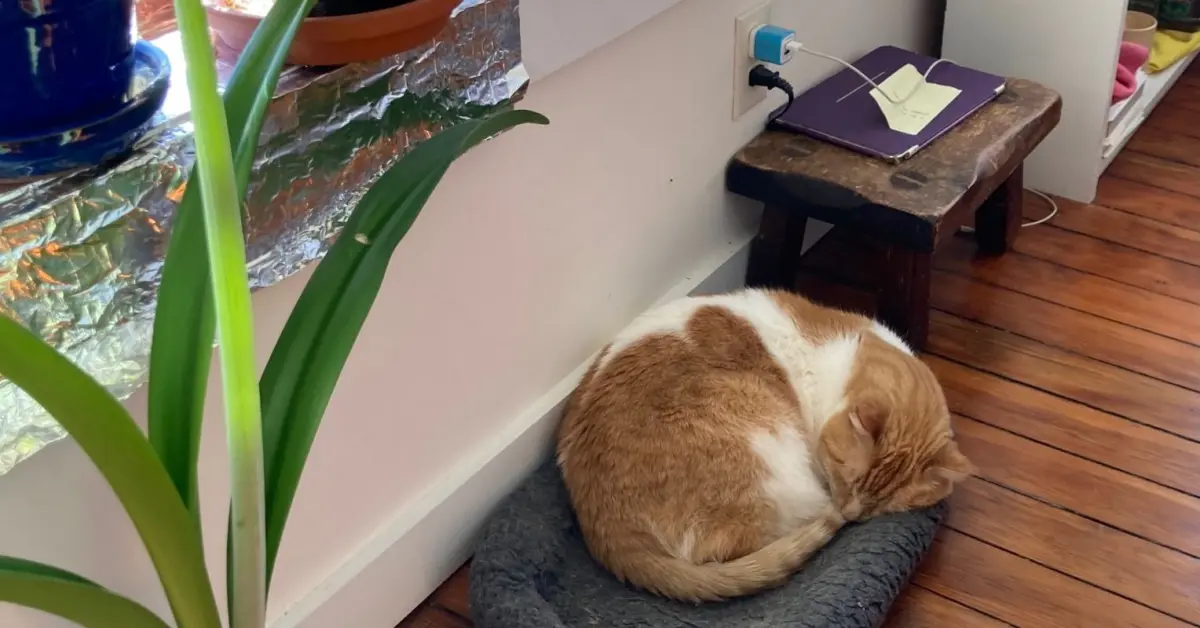
Seeking a method to restore equanimity, a sudden shift in behavior occurs on the sunroom windowsill. Engaged in the intense, methodical task of plucking withered blossoms from begonias, a behavioral parallel becomes glaringly obvious. This action mirrors the coping mechanism of Sunny, the household cat. When Sunny experiences emotional distress or overstimulation, he resorts to frantic fur-licking. For both human and feline, physical grooming—whether tending to the petals of a houseplant or cleansing a coat—serves as an immediate, tactile circuit-breaker for anxiety. It feels good; it restores order; it rights the internal compass.
08:45 AM – Environmental Curation and Spatial Order
The compulsion to restore order expands outward into the physical environment. A routine inspection of the yard commences, mirroring the territorial vigilance and presence characteristic of felines. Walking the perimeter of the property—checking for new buds, inspecting leaves, and weeding neglected spaces between the patio, side fence, and gazebo—becomes an extended exercise in somatic grounding. Hours are invested in turning chaos into structure. This external tidying acts as a physical manifestation of mental decluttering.
09:30 AM – The Pivot to Mindfulness
Recognizing the weight of the broader sociopolitical climate—where global news cycles frequently induce paralysis and despair—a deliberate psychological pivot occurs. Drawing inspiration from Sunny’s absolute commitment to the present moment, a mental mantra is established: One day at a time. Stay in the present. The focus narrows to immediate sensory inputs: warm sunshine, the physical weight of a cat, the resonance of acoustic music, and distant sounds of community life. Deep, intentional breathing fills the body with affection and presence, anchoring the consciousness firmly in the here and now.
Supporting Context & Metrics: The Psychology of Stress and Feline Coping Mechanisms
The impulse to look toward animals for psychological guidance is rooted in well-documented shifts in contemporary mental health metrics. According to recent psychological data, chronic stress levels have risen exponentially over the past decade, driven by information overload and economic instability. In response, modern therapeutic paradigms increasingly emphasize somatic therapies, mindfulness, and behavioral biology.
Stress, Attention, and Gratitude: A Comparative Metric
| Psychological Domain | Human Manifestation | Feline Counterpart | Resulting Benefit |
|---|---|---|---|
| Stress Response | Rumination, anxiety over future events, cognitive overload. | Immediate physical grooming, pacing, or environmental withdrawal. | Rapid reset of the nervous system; prevention of chronic cortisol buildup. |
| Attention & Focus | Divided attention, multi-tasking, digital distraction. | Hyper-fixation on immediate sensory stimuli (prey, sunbeams, human laps). | Deep mental rest and cognitive recovery. |
| Gratitude & Reward | Complex social contracts, delayed gratification, reciprocity. | Direct physical affection (purring, pressing, gentle headbutts). | Immediate reinforcement of social bonds and dopamine release. |
The Mechanics of Non-Verbal Boundaries
One of the most striking parallels between human frustration and feline behavior lies in conflict management. While humans often struggle with assertive communication—tipping between passive-aggressiveness and explosive outbursts—cats display a masterclass in transparent, non-verbal boundary setting.
When a cat is displeased, ambiguity is rare. The physical indicators are precise and unmistakable:
- Postural Shifts: Turning away or assuming a posture of absolute stillness with one’s back to the offending party.
- Piloerection: The visible raising of the ridge of fur along the spine, signaling agitation.
- Whiskers and Tails: Whiskers pulled taut and rigid; a rhythmic, powerful thrashing of the tail that reverberates physically through the immediate environment.
Unlike humans who may suppress anger to maintain social harmony—often leading to psychosomatic stress—felines broadcast their boundaries instantly. They do not typically lash out unpredictably; rather, they communicate their limits clearly through physical presence and posture, demanding respect without engaging in protracted verbal arguments.
Official Insights: Bridging Animal Behavior and Human Resilience
Behavioral scientists and psychologists have long studied the therapeutic benefits of the human-animal bond, but fewer have examined the intentional mimicry of animal coping strategies as a valid psychological tool.
Dr. Helena Vance, a leading researcher in behavioral somatic practices, notes that humans often over-complicate stress management. "We look for complex cognitive reframing techniques when our nervous systems are fundamentally mammalian," explains Dr. Vance. "When an animal grooms, stretches, or seeks a patch of sunlight after a fright, it is performing a primal physiological reset. When humans engage in similar ritualistic, tactile tasks—like gardening, cleaning, or rhythmic breathing—we are tapping into that exact same ancient biological circuitry."
Furthermore, the transactional nature of affection between humans and cats offers a masterclass in relational clarity. Sunny and his human companion demonstrate that mutual dependency does not require complex negotiation. As observed in daily interactions:
- Needs Articulation: Both species excel at training their caregivers to recognize essential needs through persistent, gentle cues.
- Affectionate Currency: Rewards are paid in the currency of undivided attention, soft physical contact (hugs, laps), and biological resonance (warm smiles, generous purrs).
- Unconditional Presence: The communication of value is entirely somatic, reminding participants that they matter simply by virtue of existing in the same physical space.
Future Outlook: The Irreplaceable Value of Human Complexity
While the fantasy of shedding human responsibility for the unburdened life of a cat holds immense appeal—offering total freedom from guilt, career pressures, civic duty, and existential dread—it remains a temporary mental sanctuary rather than a sustainable lifestyle goal.
The Limits of Feline Liberation
If one were to permanently inhabit the mind of a cat, the existential ledger would shift dramatically. The benefits are clear:
- Unapologetic Rest: Zero guilt associated with sleeping for twelve hours or demanding undivided attention from loved ones.
- Hedonistic Focus: The complete absence of anxiety regarding societal improvement, political advocacy, or the moral imperative to fix a broken world.
- Present-Moment Absolutism: Freedom from the agonizing weight of long-term regret and anticipatory shame.
Yet, this liberation comes at a devastating cost.
Embracing the Messy Human Mind
Ultimately, the exercise of imagining oneself as a cat serves to highlight the irreplaceable richness of the human condition. The very traits that cause human suffering—our capacity for deep empathy, our drive toward altruism, our historical memory, and our burning desire to write letters to the editor, march for peace, and build a more just society—are inextricably linked to our capacity for profound joy and inspiration.
A cat does not know the triumphant release of working through a moral dilemma, nor the expansive warmth of uncovering a deep, shared human generosity that has been earned through struggle. The bittersweet flavor of human existence—where moments of profound contentment are all the more vibrant because they are juxtaposed against the backdrop of effort and resilience—cannot be replicated in a sunbeam on a living room rug.
As we navigate the uncertainties of the mid-2020s, the ideal psychological stance is not to surrender our humanity, but to borrow judiciously from our feline companions. We can learn to groom our minds through small, tactile rituals of order; we can master the art of stepping into the present moment; and we can communicate our boundaries with unflinching clarity. But when the dust settles, we must return willingly to the messy, beautiful, and deeply human work of caring for our world.