Executive Overview
For decades, the ritual of building a custom gaming PC has stood as a rite of passage for hardware enthusiasts, a satisfying weekend project that combined technical problem-solving with the thrill of unboxing high-performance components. Today, however, that landscape is shifting dramatically. Faced with volatile component pricing, supply chain pressures, and the looming shadow of broader market inflation—often exacerbated by high-demand sectors like AI infrastructure—today’s custom PC builders find themselves navigating a financial minefield.
Simply put, the traditional economic rationale of building your own PC to save money has rarely been harder to justify. Prebuilt gaming desktop systems frequently offer comparable, or even superior, price-to-performance ratios right out of the box.
Yet, for the dedicated enthusiast, the joy of selecting individual parts, managing cable routing, and troubleshooting a fresh boot sequence remains an irreplaceable hobby. To keep the dream of custom builds alive, savvy builders are increasingly turning to strategic retail workarounds. Chief among these are vendor bundle deals—such as Newegg’s active combo builder platform—which attempt to restore some semblance of value to the DIY ecosystem.
This report examines a notable AMD-centric bundle currently circulating on the market, pairs it with a current-generation graphics card to evaluate a partial-system build cost, and weighs these findings against the convenience of prebuilt alternatives from manufacturers like iBuyPower. Ultimately, we explore whether the DIY spirit can survive an era where convenience and bulk-purchasing power heavily favor pre-assembled hardware.
Detailed Chronology & Market Context: How We Got Here
To understand why a hardware bundle requiring additional purchases still leaves builders calculating every dollar, one must look at the historical progression of the component market over the past several years.
The Era of Predictable Pricing (Pre-2020)
Historically, the PC building community operated on a reliable economic model: buying individual components—CPU, motherboard, RAM, storage, power supply, chassis, and GPU—would almost always yield a cheaper or faster system than buying an off-the-shelf prebuilt machine. Manufacturers of prebuilt systems charged a "convenience tax," and components depreciated predictably, allowing builders to upgrade incrementally over time.
The Pandemic and Supply Chain Shocks (2020–2022)
The global health crisis disrupted semiconductor manufacturing, logistics, and raw material acquisition. Simultaneously, a surge in remote work, indoor entertainment, and cryptocurrency mining drove unprecedented demand for GPUs and memory. Component prices skyrocketed. GPUs that originally retailed at targeted mid-range price points were routinely scalped for double or triple their value, turning the DIY market upside down.
The Modern Era: AI Infrastructure and Memory Pressures (2023–Present)
As the industry moved past pandemic-era bottlenecks, new pressures emerged. The explosive global investment in Artificial Intelligence infrastructure drastically redirected high-end silicon, advanced packaging capacity, and high-bandwidth memory (HBM) toward enterprise data centers.
While consumer-grade DDR5 and standard DRAM have not suffered the catastrophic shortages of enterprise chips, the broader strain on semiconductor fabrication plants has kept component pricing structurally elevated. Entry-level and mid-range PC builders now face a persistent "tax" on memory, motherboards, and processors. In response, online retailers like Newegg have leaned heavily into dynamic component-bundling tools—incentivizing consumers to purchase entire platform foundations (CPU, motherboard, and RAM) together at a modest discount to clear inventory and stimulate sluggish mid-tier upgrade cycles.
Breaking Down the Build: The Newegg AMD Combo and GPU Pairing
Faced with these economic realities, what does a realistic, budget-conscious modern build look like? Let us dissect a current promotional configuration designed to capture the best possible value on the AMD AM5 platform.
The Foundation: Newegg’s Zen 4 Combo Deal
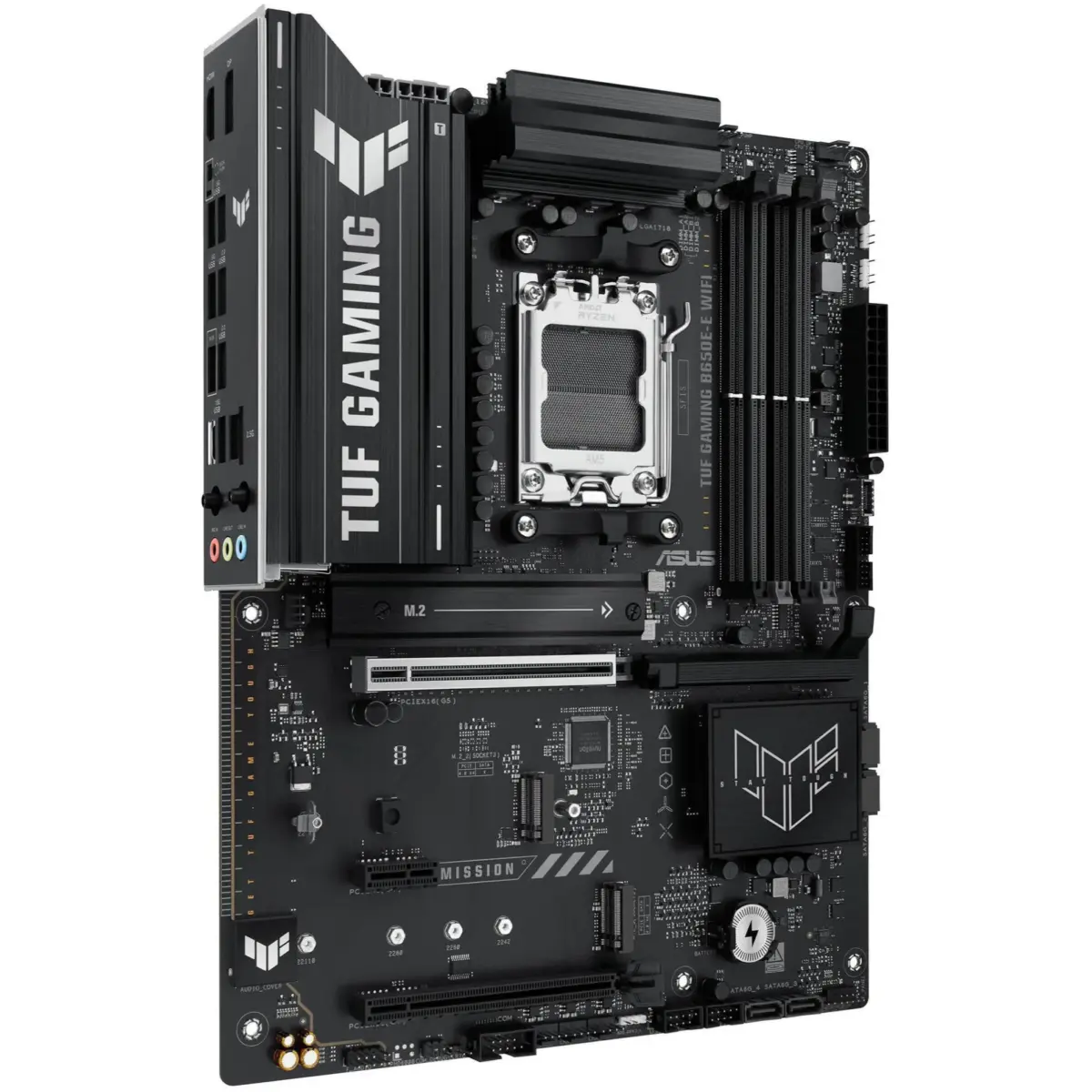
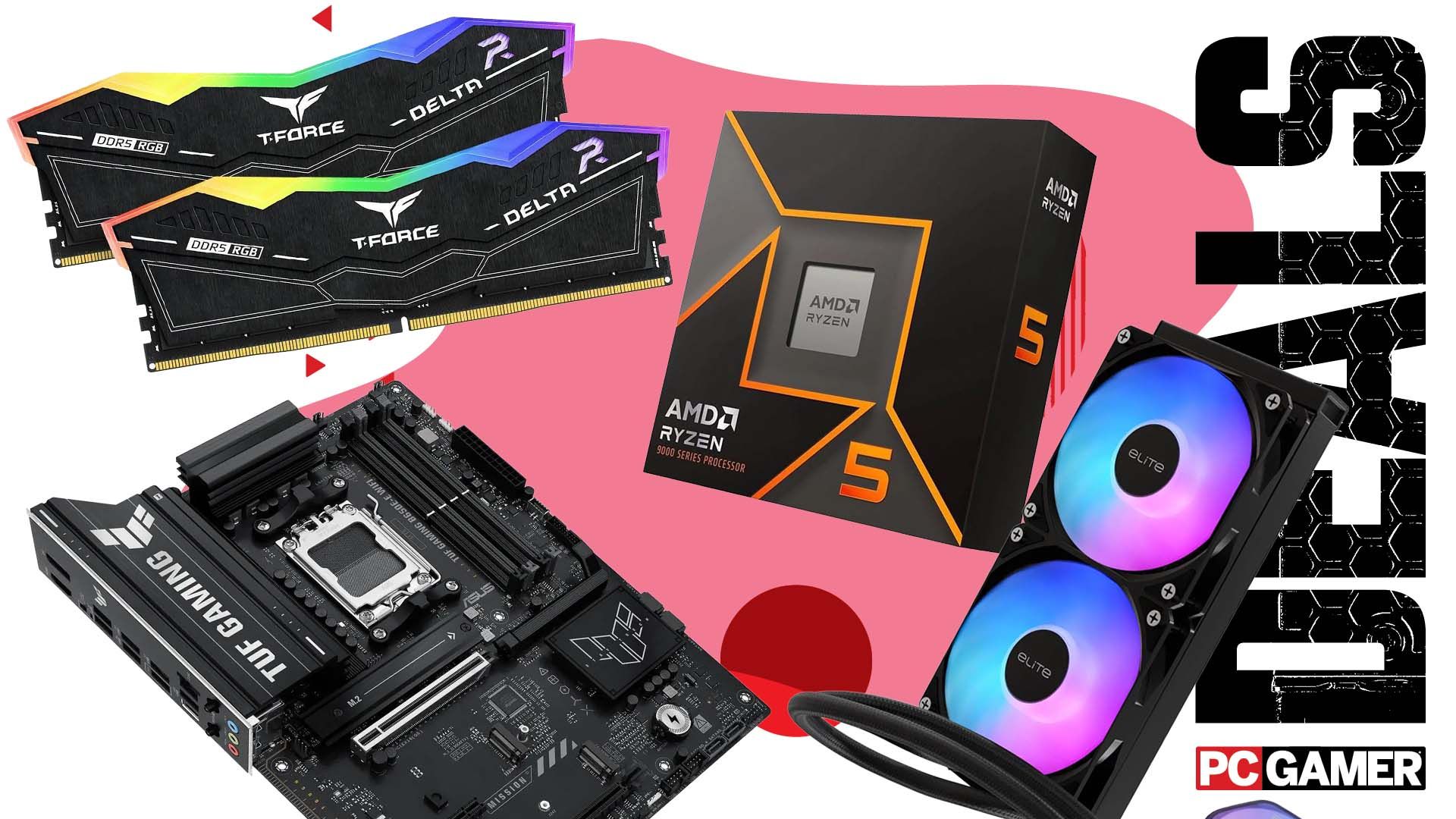
Newegg’s current hardware bundle offers a compelling triad for platform adopters looking to jump into modern architecture without breaking the bank. For $546.98, the package includes:
- Processor: A capable six-core, twelve-thread Zen 4 CPU (offering a solid entry point into AMD’s current AM5 socket architecture).
- Motherboard: A robust Asus motherboard featuring modern connectivity options.
- Memory: 16GB of DDR5 memory running at high speeds (DDR5-6000), which ensures the CPU isn’t starved for bandwidth.
- Bonus Incentive: A complimentary 240mm Cooler Master liquid CPU cooler, removing an immediate out-of-pocket accessory expense.
While $546.98 for a core platform, memory, and cooling solution is reasonable in the post-inflationary landscape, it is far from an entire computer.
Adding the GPU: The RTX 5060 Ti Equation
To transform this core bundle into a functional gaming rig, a graphics card is non-negotiable. Turning to the retail market, an RTX 5060 Ti 8GB can be sourced for roughly $389 (via retailers like Walmart).
Combining the Newegg combo ($546.98) with the GPU ($389) brings the running total to $935.98.
The Missing Pieces
Crucially, a system at this stage is still missing several vital components required to boot into an operating system:
- Power Supply Unit (PSU): A reliable 80+ Gold-rated power supply to handle modern power transients.
- PC Case: A chassis with adequate airflow and cable management space.
- Storage: A fast NVMe M.2 SSD for the operating system and modern game libraries.
Once an SSD, case, and power supply are factored in, the total cost of the "DIY" approach easily creeps back up—potentially surpassing $1,100 to $1,200 depending on component tier choices.
Supporting Context & Financial Metrics: DIY vs. Prebuilt
The central debate troubling hardware enthusiasts today is whether the time, effort, and risk of a custom build are offset by financial savings. Market data suggests that, more often than not, they are not.
To evaluate this objectively, consider a fully realized prebuilt alternative currently on the market, such as configurations offered by system integrators like iBuyPower.
Comparative Metric Table
| Metric / Feature | Newegg DIY Combo + RTX 5060 Ti Build | iBuyPower Prebuilt Alternative |
|---|---|---|
| Processor | 6-Core Zen 4 CPU | Comparable Mid-Range Gaming CPU |
| Motherboard & Cooler | Asus Motherboard + 240mm Cooler Master AIO | Proprietary/Standard OEM Board & Cooling |
| Memory (RAM) | 16GB DDR5-6000 | 32GB DDR5-5200 (Double the capacity) |
| Storage | Not Included (Requires separate SSD purchase) | 1TB NVMe SSD Included |
| Graphics Card | RTX 5060 Ti 8GB | RTX 5060 Ti 8GB |
| Operating System | Not Included (Requires separate Windows license) | Pre-installed Windows |
| Estimated Total Cost | ~$936 base (Plus PSU, Case, SSD, OS) $rightarrow$ Exceeds $1,200+ fully specced | ~$1,400 All-Inclusive |
| Warranty Support | Individual component warranties (Multiple vendors) | Single-point-of-contact system warranty |
The Value Disconnect
At first glance, piecing together a system via Newegg’s bundle appears cheaper ($936 base). However, once you account for the missing infrastructure—buying a 1TB NVMe SSD to match the prebuilt spec, upgrading the RAM from 16GB to 32GB to remain future-proof, purchasing a quality power supply, a PC case, and a legal Windows license—the price parity vanishes.
If you upgrade the Newegg combo build to match the specifications of the $1,400 iBuyPower prebuilt system (specifically adding a 1TB SSD and doubling the memory to 32GB), the DIY cost frequently meets or even surpasses the prebuilt retail price. System integrators leverage bulk-purchasing power to acquire Windows licenses, bulk components, and chassis structures at wholesale prices that individual consumers simply cannot access.
Official Perspectives & Industry Commentary
Industry veterans and hardware journalists who have watched the PC component market evolve over decades have expressed mixed feelings about the current landscape.
Dave, a veteran hardware analyst with decades of experience covering the volatile graphics card market, high-core CPUs, and surging storage prices, notes the ongoing erosion of the traditional DIY value proposition:
"Sadly, this is another nail in PC building from a value perspective… But I still maintain it’s the best way to get to know your PC; getting elbow deep into its innards and bringing it to life."
This sentiment echoes across enthusiast forums and hardware newsrooms globally. The financial incentive to build your own PC has largely evaporated for entry-level and mid-range configurations. Retailers and system builders operate under economic pressures where scale dictates savings.
However, industry analysts also point out that component bundles—while requiring meticulous comparison shopping—are vital survival mechanisms for the retail sector. By bundling slow-moving motherboards or promotional liquid coolers with high-demand processors, retailers create synthetic value that keeps the enthusiast hardware market breathing. Without such bundle initiatives, the cost of adopting new motherboard platforms (such as AM5 or LGA 1851) would likely alienate an even larger share of budget-conscious builders.
Future Outlook: Where is the PC Building Hobby Headed?
As the industry looks toward the horizon, the trajectory of PC building will likely be defined by a delicate balance between corporate supply chain dynamics and grassroots enthusiast dedication.
1. The Persistence of Bundling Strategies
As long as standalone component pricing remains artificially inflated by enterprise demand and broad macroeconomic pressures, retailer-driven combo builders will remain the primary lifeline for DIY builders. Consumers should expect retailers to experiment further with dynamic, customizable bundles that allow mixing and matching across brands to stimulate hardware adoption.
2. The Redefinition of "Value"
The definition of value in PC building is changing. It is no longer strictly measured in dollars saved per frame. Instead, value is increasingly found in customizability, aesthetic personalization, upgrade longevity, and educational fulfillment. The builder who spends a Saturday evening routing cables through a dual-chamber chassis is paying an intangible premium for ownership, pride, and deep technical literacy—qualities that an off-the-shelf prebuilt system simply cannot deliver in a plain cardboard box.
3. Component Architecture and Efficiency
Looking forward, future generations of CPUs and GPUs will continue to push thermal and electrical boundaries. As power delivery requirements shift, the role of bundled cooling solutions—such as the 240mm Cooler Master cooler included in current promotional deals—will become even more critical in helping consumers offset hidden peripheral costs.
Conclusion
The modern PC builder faces a challenging landscape. From a pure spreadsheet and financial perspective, buying a prebuilt system often provides superior immediate value, especially when factoring in memory upgrades, storage, power supplies, and operating system licenses.
Yet, the death of custom PC building has been prematurely predicted many times before. Through clever retail workarounds like Newegg’s component combo builders, alongside the sheer, unyielding stubbornness of an enthusiast community that refuses to let market forces extinguish their favorite hobby, the DIY spirit endures. It may cost a little more and require sharper arithmetic, but for those willing to get their hands dirty, the reward of bringing a custom rig to life remains entirely unmatched.