Executive Overview
Amazon Web Services (AWS), a foundational pillar of modern cloud computing, has officially announced a radical transformation of its onboarding and project creation experience. Designed specifically for the fast-paced paradigm of artificial intelligence and agile development, this new workflow seeks to eliminate the traditional configuration friction that has historically greeted developers looking to build on the world’s largest cloud infrastructure.
For nearly two decades, AWS has scaled to meet the exhaustive demands of global enterprises, financial institutions, and government agencies. This hyper-growth necessitated a sprawling ecosystem of granular configuration choices, spanning advanced networking protocols, rigid security matrices, complex governance controls, and intricate cost management architectures. However, for a lone developer, a lean startup, or a team iterating at the speed of generative AI agents, navigating this labyrinth of options before writing a single line of code has long been a daunting hurdle.
The newly rolled-out onboarding experience addresses this challenge head-on. By introducing friction-free federated sign-in, sensible default configurations, credit-backed experimentation, and deep integration with modern AI coding assistants, AWS is returning to its roots: providing an instantaneous launchpad for anyone with a brilliant idea. Crucially, this streamlined tier does not trade away scalability. Builders can seamlessly transition to the full breadth and depth of advanced AWS features—without migrations or downtime—the moment their applications demand enterprise-grade infrastructure.
Detailed Chronology and Architectural Mechanics
From Infrastructure Pioneers to AI-Velocity Builders
When AWS launched with rudimentary infrastructure blocks like Amazon Simple Storage Service (S3), Amazon Elastic Compute Cloud (EC2), and Amazon Simple Queue Service (SQS), the objective was simple: democratize access to world-class computing. Over subsequent years, enterprise adoption steered the platform toward maximum configurability. While essential for massive corporations operating across multiple regulatory jurisdictions, this legacy setup process often bogged down modern developers who rely on automated tooling and AI agents to spin up prototypes in minutes.
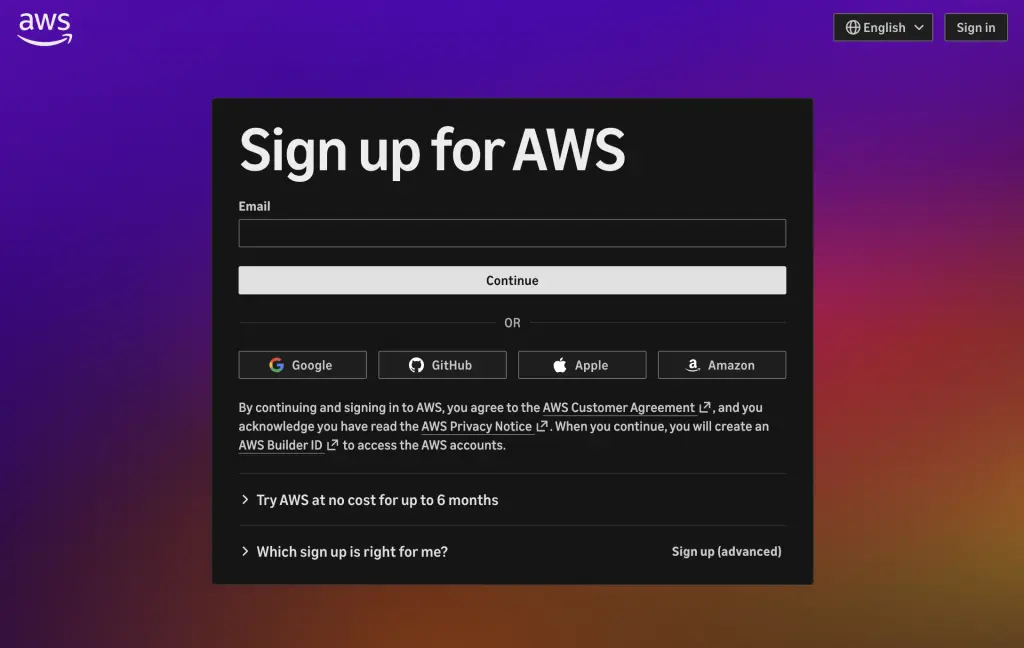
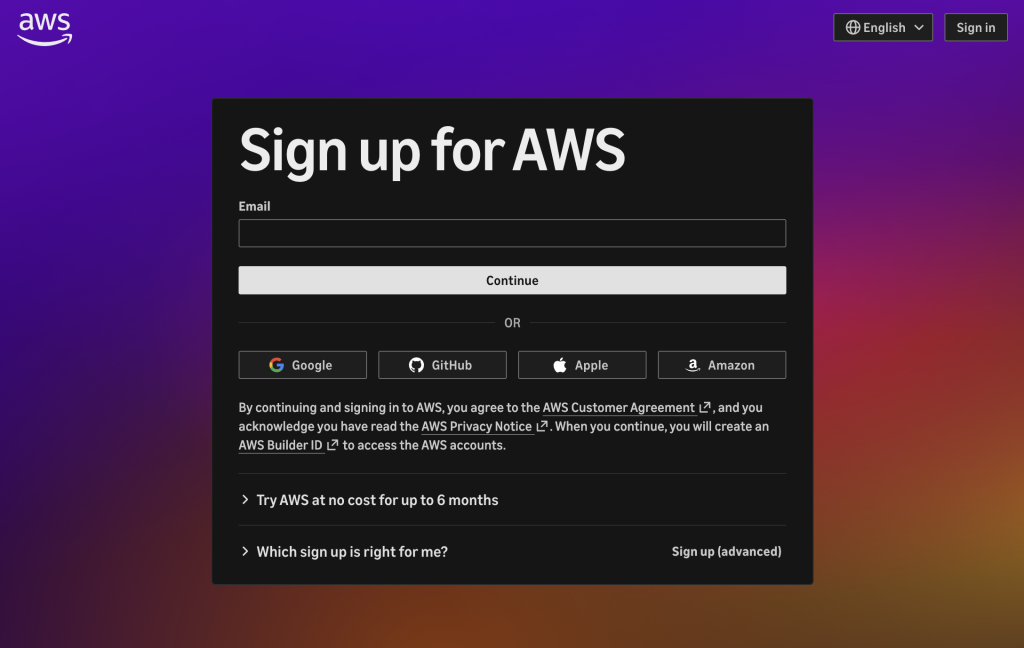
The new workflow completely redesigns the initialization lifecycle. Instead of facing complex account setups, multi-factor authentication policies, and credit card validations, new users can initialize an environment using established third-party identity providers such as Google, GitHub, and Apple. For a significant portion of new users, credit cards are entirely bypassed at signup, replaced immediately by a $100 complimentary credit allocation through the AWS Free Tier.
The Project-Centric Paradigm
At the heart of this new architecture is the concept of the Project. Rather than forcing builders to grapple with root AWS accounts and IAM (Identity and Access Management) hierarchies from day one, AWS automatically abstracts account creation behind an intuitive project container.

- Isolation and Structure: When a builder creates a project, AWS provisions an underlying AWS account and wraps it in automated security baselines and best-practice controls.
- Collaborative Sharing: Inviting colleagues requires nothing more than an email address. The system automatically provisions granular permissions tied strictly to the specified project, shielding collaborators from the complexities of AWS IAM and IAM Identity Center.
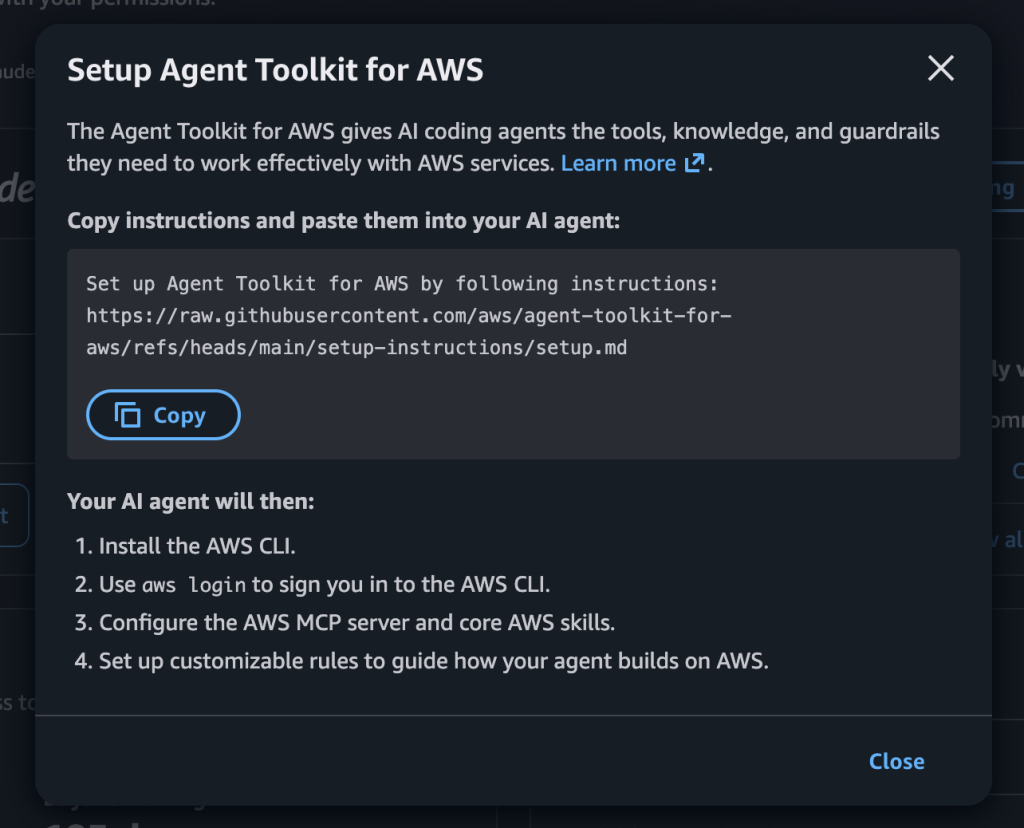
- AI Coding Agent Integration: Upon authentication, the system generates a specialized prompt configuration designed to be copied directly into modern coding agents. Once pasted, the agent initializes the AWS Command Line Interface (CLI), installs the Agent Toolkit for AWS, authenticates the developer, and establishes a guiding
CLAUDE.mdcontext file within the workspace.
Real-World Execution: Building an API in Minutes
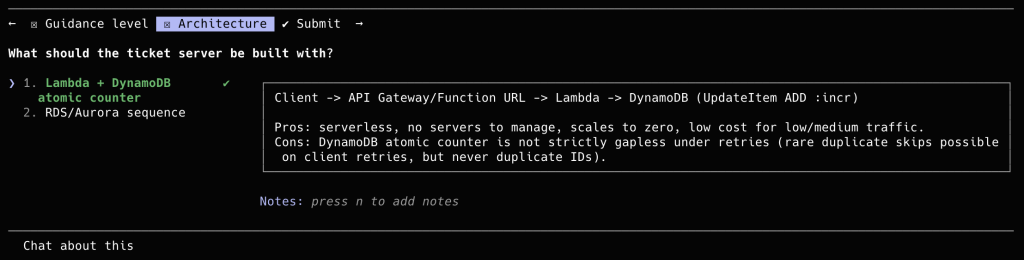
To demonstrate the efficacy of this new experience, early testers documented a streamlined workflow centered on generative development. Armed with a newly initialized project and a connected AI coding agent, a developer issued a simple natural language prompt: “Build an API that returns a new unique sequential ID on every request.”
Without any manual intervention or explicit resource permission tuning, the coding agent architected, configured, and deployed a robust serverless stack:
- Amazon API Gateway to manage incoming HTTP traffic and expose the public endpoint.
- AWS Lambda to execute the compute logic safely and scalably without server management.
- Amazon DynamoDB to maintain a persistent, low-latency data store for tracking sequential identifiers.
The entire deployment completed in minutes, accompanied by real-time credit updates and zero friction regarding security policies or role-assumption configurations.
Supporting Context and Metrics: Guardrails, Spend Limits, and Scaling
While speed is the primary driver of this new experience, financial predictability and structural scalability remain paramount. AWS has engineered sophisticated guardrails into the project lifecycle to protect developers from unexpected financial exposure while maintaining an unobstructed path to enterprise maturity.
Granular Spend Limits and Cost Controls
Financial oversight in cloud development often leads to anxiety for early-stage teams. The new AWS experience introduces project-level spend caps starting at a modest $20 per month:
- Usage Ceilings: Each project operates under its own designated monthly budget ceiling. Costs scale dynamically based on actual resource consumption up to the defined limit.
- Proactive Notifications: As a project approaches its designated threshold, AWS issues automated alerts to the developer.
- Automatic Safeguards: Should a project hit its predefined spend ceiling, AWS safely pauses the workloads rather than accumulating uncontrolled overage charges. Developers can instantly resume operations by elevating the project budget.
- Isolated Budgets: By enforcing per-project limits, teams can allocate aggressive financial ceilings to fast-growing production workloads while locking experimental ideas behind tightly constrained budgets.
Activating Advanced Capabilities Without Migration
A common pitfall of simplified development platforms is the eventual "cliff" where the platform can no longer support complex requirements, forcing a painful, error-prone migration to a more robust environment. AWS has circumvented this entirely.
When an application matures to the point where it requires multi-Region deployments, complex networking topologies, or rigorous governance frameworks such as custom policies managed via AWS Organizations, the builder can unlock advanced features directly within the console at no additional cost.
Behind the scenes, the existing project account transforms cleanly into a fully fledged AWS Organization structured strictly according to cloud best practices. Because the underlying infrastructure was native AWS from the start, no data migration, code refactoring, or service downtime is required. Every resource, policy, and configuration established during the prototyping phase remains completely intact.
Official Statements and Industry Perspective
Industry analysts and cloud architects have closely monitored the shift toward developer experience (DevEx) optimization across major cloud providers. As AI-assisted software engineering accelerates the pace of creation, infrastructure providers are realizing that the battle for the next generation of builders will be won at the point of least resistance.

While AWS leadership has not framed this as a departure from its enterprise roots, the messaging surrounding the release emphasizes a return to foundational accessibility:
"AWS began as a place where anyone with an idea could start building. Over the years, as the world’s largest enterprises adopted our platform, we expanded our depth and breadth to meet complex global security and operational needs. But if you are at the start of a new idea, every configuration option is friction standing in the way of shipping your dream product fast. We listened to builders who told us they don’t want to spend their first hours configuring an environment—they want to build."
By acknowledging the cognitive overhead traditionally associated with cloud onboarding, AWS is positioning itself not just as an enterprise utility, but as the premier destination for AI-native startups, indie hackers, and enterprise innovation labs alike.
Future Outlook
The launch of this simplified, AI-integrated AWS onboarding experience signals a broader maturation of cloud computing. As low-code development, generative coding agents, and natural language programming become standard operating procedures, the traditional barriers separating abstract infrastructure from creative execution are rapidly dissolving.
As this rollout gradually expands to new customers globally, several key trajectories emerge for the immediate future:
- Compressed Time-to-Market: The duration between conceptualizing a software product and deploying a secure, scalable cloud prototype will shrink from days or weeks to mere hours.
- Ecosystem Standardization: Deep integrations between cloud control planes and AI developer toolkits will likely become the baseline expectation across the entire technology sector.
- Enterprise Innovation Velocity: Large enterprises will increasingly adopt these simplified project silos internally to foster internal hackathons, rapid prototyping, and sandboxed AI experimentation without violating corporate governance guardrails.
For developers standing on the precipice of their next big idea, the cloud has officially become as frictionless as the imagination driving it.