Executive Overview
Artificial intelligence has officially crossed the Rubicon from a novelty chat interface into the realm of enterprise labor. While millions of knowledge workers treat tools like ChatGPT and Claude as transactional search engines—typing ad-hoc prompts, copying the output, and starting entirely from scratch the next day—forward-thinking organizations are pioneering a radically different operational framework. They are building, training, and scheduling "AI employees."
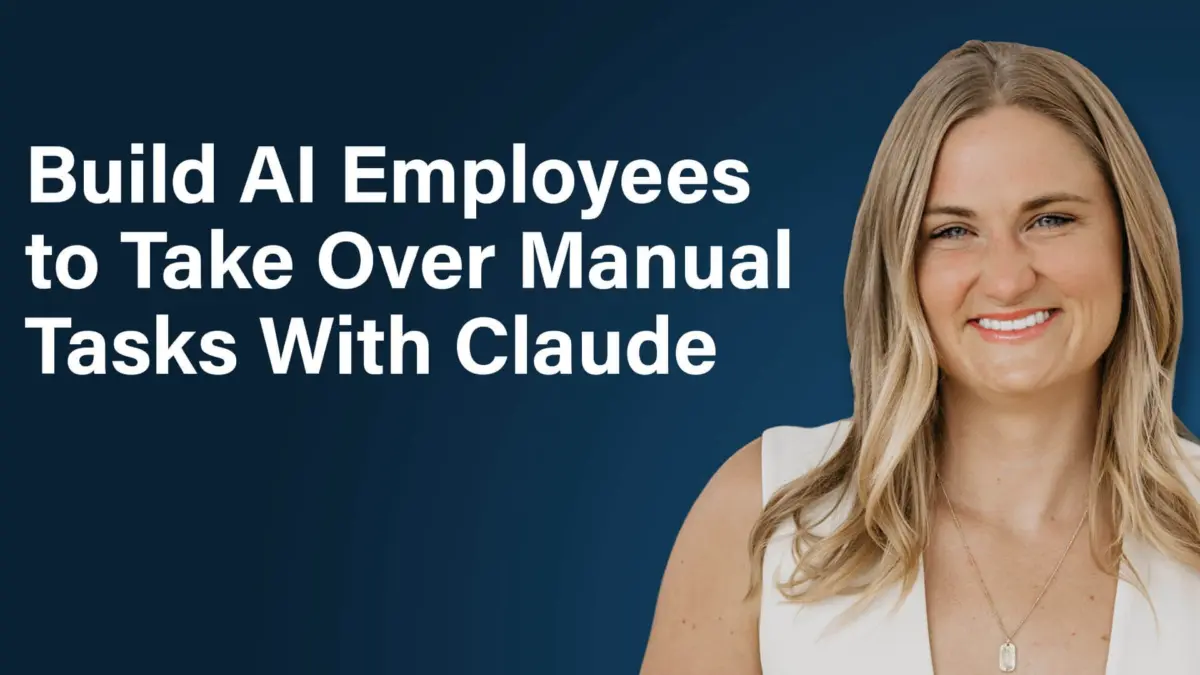
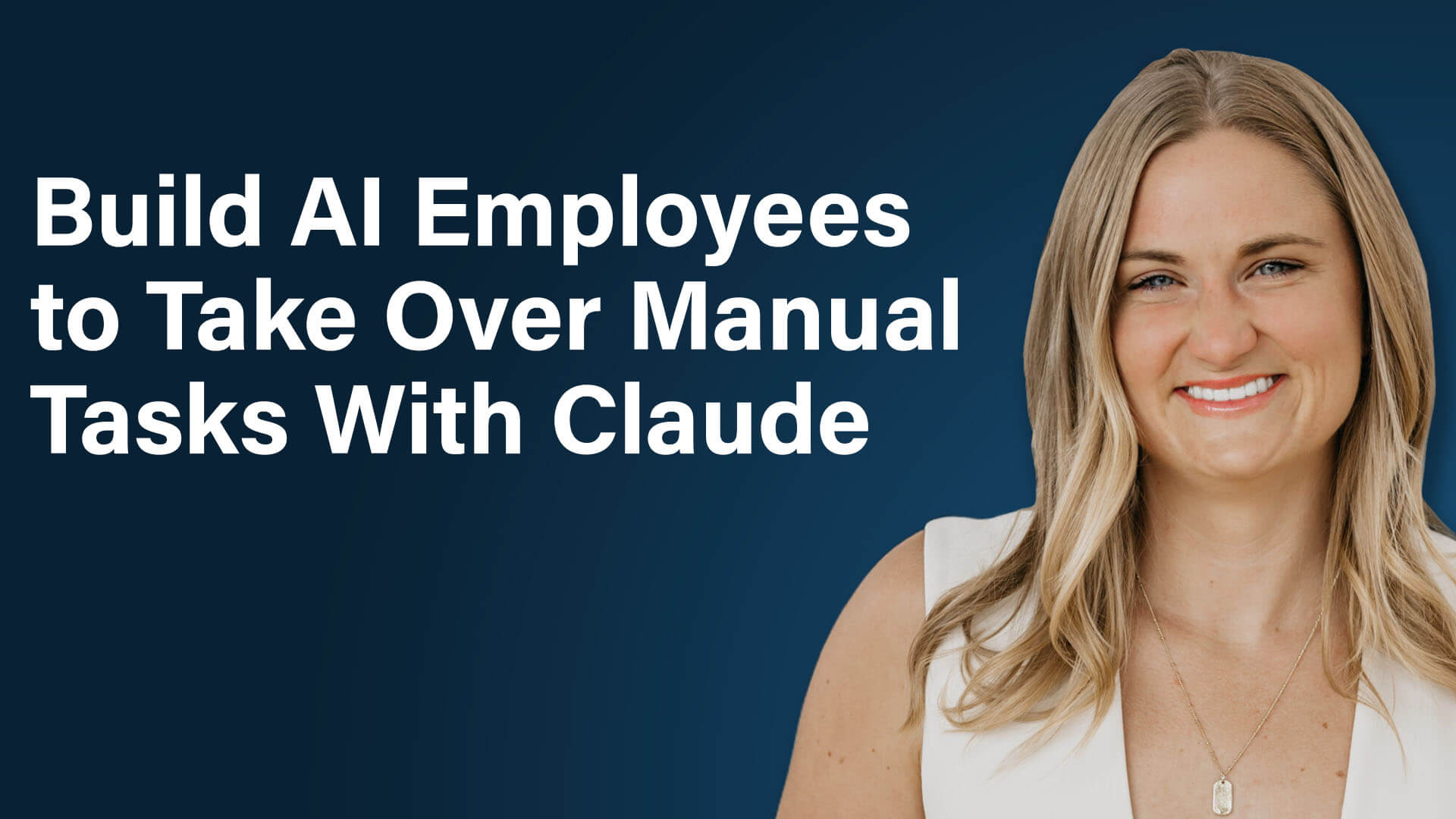
Co-created by Callan Faulkner and Michael Stelzner, recent insights from the AI Explored podcast shed light on a profound shift in business operations. Faulkner, whose company The Uncommon Business is scaling toward $40 million in annual revenue with a lean team of roughly 50 human employees, argues that casual AI usage is no longer enough to maintain a competitive advantage. The future belongs to leaders who treat AI not as a search box, but as a trainable, reusable workforce capable of executing complex business processes as well as—or better than—human counterparts.
This comprehensive guide breaks down the core philosophies, step-by-step methodologies, and advanced scheduling tactics required to move your team from basic prompting to deploying a fully autonomous fleet of AI workers.
Detailed Chronology: The Evolution from Ad-Hoc Prompting to AI Employees
To understand the mechanics of building an AI employee, one must first recognize why traditional AI adoption consistently fails to scale.
Phase 1: Diagnosing the Casual Prompting Trap
In the typical corporate environment, a sales representative or marketer will open an AI window, interact with it for an hour to craft a single proposal, and then close the window. The next time a proposal is needed, the employee repeats the exact same manual sequence. No knowledge base is built; no reusable instructions are saved; no institutional memory is retained.
According to Faulkner, this represents a fundamental misunderstanding of AI’s potential. Casual AI usage yields one-off results. Building an AI employee requires shifting mindset from task executioner to system architect.
An AI employee is defined as a trained, reusable AI system that performs a specific business function—such as proposal generation, market research, or content creation—consistently and at a high standard. Crucially, these systems do not replace human beings; rather, they act as force multipliers, lifting humans out of repetitive, low-leverage tasks and placing them into strategic, creative roles.
Phase 2: Establishing the Foundational Concepts
Before an organization can successfully deploy its first AI worker, it must adopt two critical mindset shifts and build one foundational asset:
- Shortcut-Seeking as a New Work Ethic: Historically, professionals have worn "busywork" as a badge of honor, proving their worth by grinding through manual processes. In the age of AI, finding the absolute fastest path to an "A-plus" output is the new competitive advantage. Shortcuts do not mean cutting corners; they mean leveraging technology to collapse the time and energy cost of production without sacrificing quality. For instance, designing Instagram carousels that once took days in Canva can now be systematically generated via trained AI skills in minutes.
- Training Equals Output Quality: Generic prompts yield generic, robotic content. To avoid this, teams must document their exact operational standards, brand voices, and goal definitions. Without rigorous documentation, AI has nothing substantial to operate on.
- The Asset: Your Business Brain: An AI employee is only as intelligent as the data it can access. Organizations must centralize their most critical operational documentation—pricing models, standard operating procedures (SOPs), brand voice guidelines, ideal client profiles, and historical case studies—into an organized repository. If a human new-hire cannot get up to speed using your documentation in 30 minutes, an AI employee certainly cannot either.
Step-by-Step Methodology: How to Build an AI Employee From Scratch
Building an AI employee is fundamentally an exercise in effective communication and creative persistence rather than computer programming. Here is the operational roadmap for bringing your first digital worker online.
Step 1: Conduct a Time and Task Self-Audit
Begin by auditing how your team spends its working hours. Identify tasks that are executed daily, weekly, or monthly which either drain energy or fall below a high-value hourly threshold (e.g., tasks under $50/hour).
Even tasks where professionals feel genuinely elite should be examined. Faulkner notes that when experts train AI on processes they excel at, the resulting output can often match or exceed their own baseline. This transforms the human worker from a creator into an editor—a vastly more leveraged and strategic use of time.
Step 2: Leverage the "AI Interview Method"
Rather than writing a rigid prompt from scratch, initiate a collaborative dialogue with an advanced model like Claude. Describe your role, company context, and the specific objective you want to automate. Crucially, instruct the AI to interview you first.
Example Prompt Strategy:
"My name is Mike, and I run a company called Social Media World. One of the things I excel at is generating sponsorship proposals. I want to build an AI employee to handle our sponsorship packages and outreach. Before we begin, interview me with a series of five high-impact questions to extract my exact process, and we will build this skill together."
To capture maximum nuance, utilize voice-to-text tools like Wispr Flow. Speaking verbally allows users to articulate complex details, contextual background, and subconscious habits far faster than typing, which naturally invites premature self-editing.
Step 3: Employ the "Board of Directors" Technique
When tackling unfamiliar or highly strategic territory—such as drafting executive compensation packages or designing complex bonus structures—prompt the AI to assemble a virtual board of industry thought leaders (e.g., modeling frameworks after business icons like Mark Cuban or Sara Blakely). This ensures the foundational logic of your AI employee is grounded in proven business acumen rather than generic internet data.
Step 4: Package the Interaction into a Reusable "Skill"
Once the chat yields consistently exceptional results, transition that intelligence into a persistent asset. In modern AI workflows, a "skill" functions as a prompt on steroids: a saved, reusable instruction set connected to your workspace that executes a complex, trained process via a single command.
Ask the AI directly: "What information or data would you need to increase and improve the output of this skill? What files would you want in a perfect world?" Their answers will guide you in building out a comprehensive project workspace populated with reference files, pricing sheets, past wins, and objection-handling frameworks.
Supporting Context & Metrics: Testing, Training, and Managing AI Employees
Deploying an AI employee does not end with its creation; in many ways, that is where the real work begins.
The Realities of Training Investment
Many professionals abandon AI tools after 45 minutes because the initial output fails to capture their unique style. This is a false economy. Training an AI to master a specific brand voice requires rigorous, iterative testing. Faulkner notes that crafting her team’s voice copywriter skill took roughly 15 hours of rigorous iteration—an investment comparable to spending months onboarding a human employee.
To refine a skill, utilize a feedback loop whenever the output falls short of an "A-plus" standard:
"Here is the paragraph you wrote [COPY]. This is how I would write it [COPY]. Update the skill file to reflect this correction and explain what mistake in the current instructions prevented the correct output."
Technical Management and Governance
For organizations scaling their digital workforce, governance is paramount.
- Workspace vs. Project Skills: Ensure skills are designated as "workspace" or "main" assets so they remain universally accessible rather than getting trapped inside isolated project folders.
- Centralized Tracking: Leading companies maintain a centralized database (such as a Notion repository) tracking every AI employee, its version history, its owning department, and its specific purpose. Regular quarterly reviews should incorporate audits of departmental AI skills to ensure continuous optimization.
Future Outlook: Autonomous Execution via Scheduled Workflows
The ultimate frontier of AI integration is autonomous scheduling. Once a skill has been manually tested and refined, it can be configured to run independently without human initiation.
While current desktop limitations require a designated office computer or active session to maintain uptime, tools like Claude’s desktop integration enable powerful automated workflows:
- Autonomous Market Research: Imagine an Instagram Researcher skill scheduled to run every Monday at 6:00 AM. It visits competitor accounts, aggregates viral content formats from the past week, analyzes engagement hooks, and drops structured content briefs directly into a team Notion database before human employees even arrive at their desks.
- Operations Automation: Scheduled jobs can parse meeting transcripts hourly from tools like Granola, updating internal knowledge bases and syncing CRM data automatically.
Official Statements and Industry Impact
The broader economic implications of this technological leap are profound, yet widely misunderstood. Critics often express anxiety regarding workforce displacement. However, industry leaders like Callan Faulkner emphasize a different reality: AI is not replacing humans; humans using AI are replacing humans who refuse to use it.
In competitive hiring markets, the performance gap between AI-trained personnel and non-trained personnel is already stark. Teams that embrace AI leverage can produce tenfold increases in output within a single business day. Organizations that fail to adopt these systems face insurmountable efficiency deficits, forcing structural changes not because of automation, but because of execution velocity.
Ultimately, building AI employees frees human workers from the mechanical drag of repetitive execution, unlocking unprecedented levels of strategic clarity, creative problem-solving, and sustainable business growth.