Executive Overview
To the uninitiated observer, Olympic weightlifting is an exercise in absolute, primal force. Across two disciplines—the snatch, and the clean and jerk—competitors step onto the platform, grip a knurled steel barbell loaded with heavy bumper plates, and attempt to hoist it overhead. The victor is simply the athlete who moves the heaviest absolute weight. Yet, beneath this veneer of brute-force athleticism lies one of the most technically demanding, psychologically taxing, and strategically complex sports in the global arena.
It is a discipline where fractions of a second dictate success or failure, where biomechanical efficiency outweighs raw muscular size, and where mental resilience under pressure can completely rewrite the outcome of a competition.
To unpack the hidden layers of this ancient yet modern sport, we sat down with Matthew Tung, a premier competitive weightlifter representing Hong Kong on the international stage. Tung offers an insider’s perspective on the mechanical intricacies of the lifts, the high-stakes game of tactical card manipulation during weight declarations, and the baffling paradox of how an elite competitor can miss four out of six attempts and still walk away with a gold medal.
This comprehensive investigation explores what it truly takes to excel at the pinnacle of strength sports—and what everyday fitness enthusiasts and elite competitors alike can learn from athletes who have pushed human strength training to its absolute theoretical limits.
Detailed Chronology: Anatomy of a Competition and the Mind of the Lifter
The Genesis of a Lift: From Warm-up Room to Platform
The journey of an Olympic weightlifter on competition day does not begin under the blinding stadium lights; it starts hours prior in the labyrinthine warm-up room. Here, athletes manage a delicate physiological balancing act: stimulating the nervous system to peak output without depleting glycogen stores or accumulating premature fatigue.
Matthew Tung describes the warm-up area as a psychological pressure cooker. "You are monitoring not just your own body, but the warm-up boards of your competitors," Tung explains. "Weights are clattering, chalk is hanging thick in the air, and coaches are frantically calculating when you need to take your opener so that you don’t cool down before walking onto the platform."
When an athlete’s name is finally called, they transition from the chaos of the back room into a profound cone of silence. The platform is an isolated stage. Under the gaze of international judges and a global audience, the lifter has precisely one minute from the time their name is announced to initiate the lift.
The Snatch: A Symphony of Speed and Mobility
The first of the two contested movements, the snatch, is widely regarded as the most explosive and technically intricate movement in all of sports. The objective is deceptively simple: lift the barbell from the floor to an overhead locked-out position in a single, uninterrupted fluid motion.
- The First Pull: The lifter assumes a wide grip on the barbell. Initiating the pull requires immense leg drive, maintaining a rigid spine while breaking the barbell off the platform.
- The Transition (The Double Knee Bend): As the bar passes the knees, the lifter slides their knees back under the bar, shifting their body into the "power position." This creates a mechanical spring effect, maximizing the potential for hip explosion.
- The Second Pull (Triple Extension): The ankles, knees, and hips extend simultaneously in an ultra-fast, violent leap. The shoulders shrug and the elbows flare high and wide, imparting maximum vertical velocity onto the barbell.
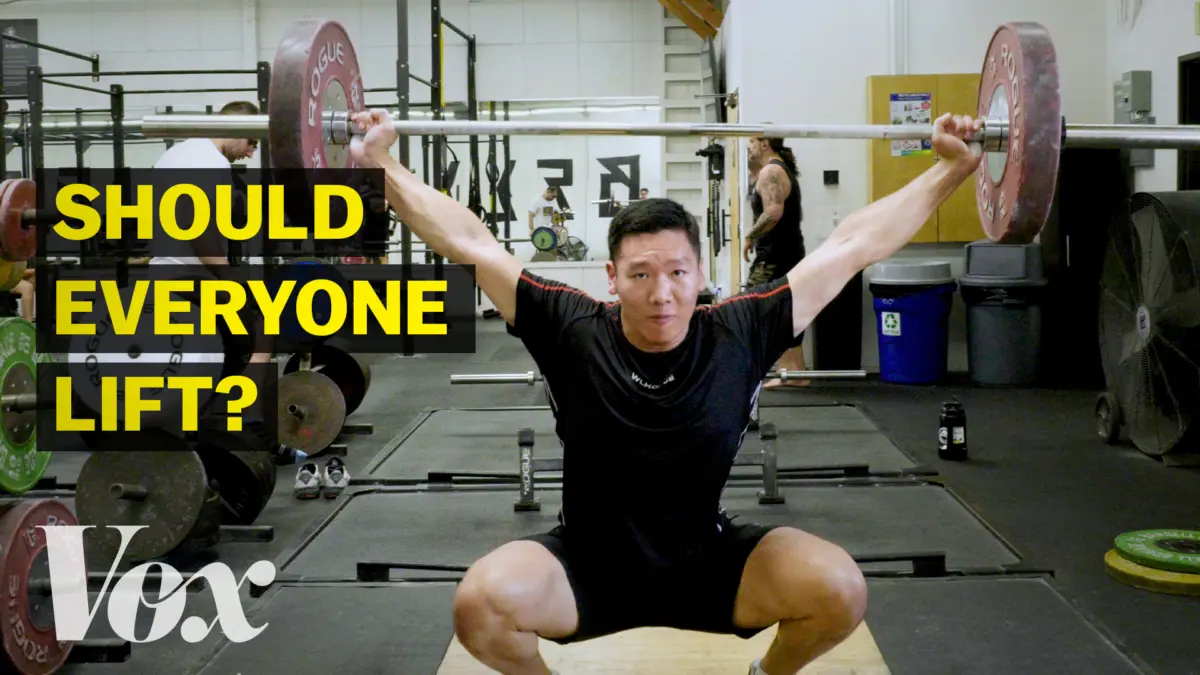
- The Drop and Catch: While the barbell is momentarily weightless at its apex (the third pull), the lifter violently drops their entire body underneath the steel, catching the weight in a deep, hyper-stable overhead squat.
"People think you use your arms to pull the weight up," Tung notes, shaking his head. "Your arms are merely straps connecting your torso to the bar. The lift is generated entirely by the floor-shattering power of your lower body, transferred through a rigid core, and finished with blindingly fast footwork and shoulder stability."
The Clean and Jerk: Power Meets Structural Integrity
If the snatch is a display of pure velocity, the clean and jerk is an exhibition of raw power coupled with structural resilience. Divided into two distinct phases, this movement allows athletes to lift significantly heavier loads.
- The Clean: The athlete hoists the barbell from the platform to the front deltoids (the rack position) in a motion similar to the snatch, but with a narrower grip. Upon catching the bar in a deep front squat, the lifter must stand up smoothly to complete the clean.
- The Jerk: After resetting their breath and grip, the lifter executes the jerk. This requires a dipping motion of the knees to load the legs, followed by an explosive drive upward. The lifter simultaneously splits their legs forward and backward (the split jerk) or drops into a squat (the squat jerk) to punch the barbell into a stable overhead lock-out.
The Tactical Chess Match: Declared Weights and Strategic Gameplay
To the casual viewer, weightlifting appears to be a solitary battle between man and iron. In reality, it is a high-stakes tactical chess match played between coaches, athletes, and the jury table.
Every lifter must submit their opening attempts well before the session begins. However, as the competition unfolds, coaches are permitted to change their declared weights based on how opponents are performing. This creates an intricate web of psychological warfare.
"You can manipulate the order of lifters by changing your weight at the last second," Tung reveals. "If you want to force an opponent to follow you immediately—giving them zero time to rest between heavy attempts—your coach will sit by the jury table waiting to alter your requested weight. It’s a game of chicken. You’re trying to force the other guy to show his hand first."
This strategic maneuvering explains one of the most baffling phenomena in the sport: how an athlete can miss four out of six attempts and still win a gold medal. Because weightlifting rules dictate that an athlete’s best successful snatch and best successful clean and jerk are added together for a total score, risk management dictates strategy.
An elite lifter aiming for a world record might deliberately select an astronomical weight for their first two attempts in both categories, missing them to test their limits or force rivals into early, over-eager jumps. If they successfully nail their third and final attempt at a massive weight—while their conservative competitors plateau early—that single successful lift can yield a total high enough to secure the gold medal, despite the four preceding misses. It is a sport that heavily rewards calculated risk over safe mediocrity.
Supporting Context & Metrics: The Science of Human Limits
To contextualize the achievements of modern weightlifters like Matthew Tung, it is essential to examine the physiological and biomechanical metrics that govern the sport.
Biomechanical Efficiency and Force Production
Elite weightlifters generate vertical ground reaction forces that exceed three to four times their own body weight in fractions of a millisecond. When a 73kg male athlete snatches 160kg, he is accelerating a mass more than double his own body weight through a range of motion exceeding one and a half meters.
- Power Output: Studies published in the Journal of Strength and Conditioning Research indicate that peak power output during the second pull of an elite snatch can exceed 5,000 watts—comparable to the instantaneous power output of a Formula 1 car engine scaled down to human proportions.
- Barbell Trajectory: High-speed motion analysis reveals that the path of the barbell is never a straight vertical line. To maximize biomechanical leverage, the bar actually loops slightly back toward the lifter’s hips during the second pull before traveling outward and back inward underneath the catch. Millimetric deviations in this trajectory result in missed lifts.
Weight Classes and Pound-for-Pound Strength
International weightlifting is governed by the International Weightlifting Federation (IWF), which structures competition across distinct bodyweight categories for both men and women. These categories ensure that strength can be evaluated fairly relative to body mass.
| Division | Men’s Weight Classes (kg) | Women’s Weight Classes (kg) |
|---|---|---|
| Lightweight | 55, 61, 67 | 45, 49, 55 |
| Middleweight | 73, 81, 89 | 59, 64, 71 |
| Heavyweight | 96, 102, 109, +109 | 76, 81, 87, +87 |
Pound-for-pound, elite lightweight and middleweight weightlifters routinely achieve feats that defy standard physiological expectations. It is common for athletes in the 61kg and 73kg categories to clean and jerk over 2.5 times their own body weight.
Official Statements & Expert Insights
Matthew Tung on the Reality of International Competition
Reflecting on his journey representing Hong Kong, Matthew Tung emphasizes that the physical strain of weightlifting is only half the battle. The mental fortification required to step onto the international platform is what truly separates amateurs from professionals.
"People look at the numbers—they see a barbell loaded with heavy plates—and they think the sport is purely physical. But when you are standing on that platform, with the lights in your eyes, your heart pounding at 180 beats per minute, and you have sixty seconds to execute a lift that you’ve spent four years training for, your mind is the only thing that matters. If there is even a millisecond of doubt, the weight will crush you. You have to develop an unshakeable internal dialogue."
— Matthew Tung, International Competitive Weightlifter
The Intersection of Commercial Support and Elite Sport
The rigorous demands of Olympic weightlifting require year-round dedication, specialized coaching, physical therapy, and nutritional programming. In a sport where global commercial visibility fluctuates compared to mainstream team sports, partnerships with major corporate entities play an instrumental role in sustaining elite athletes.
Speaking on the partnership supporting the documentary feature on Tung’s training camp, representatives noted the alignment between daily resilience and athletic excellence:
"Colgate doesn’t have a say in our editorial decisions, but they make stories like this one possible. High-performance athletics teach us about daily discipline, resilience under pressure, and the relentless pursuit of self-improvement—values that resonate deeply with our mission to champion everyday confidence and health."
— Production Statement
Future Outlook: The Evolution of Strength Sports
As the landscape of global sport continues to evolve, Olympic weightlifting stands at an intriguing crossroads of tradition and modernization.
Technological Innovations in Training
The integration of wearable technology, motion-capture software, and velocity-based training (VBT) devices has revolutionized how coaches prepare athletes for international competition. Sensors attached to the barbell now measure bar speed, displacement, and peak power in real-time, allowing coaches to adjust training volume instantly and prevent overtraining injuries.
In the coming decade, experts predict that artificial intelligence will play an increasing role in analyzing lifting mechanics, identifying micro-faults in movement patterns before they manifest as chronic injuries or missed competition lifts.
Cultural Growth and Accessibility
Once considered an obscure discipline hidden away in dimly lit powerlifting gyms, Olympic weightlifting has experienced a massive cultural resurgence over the last decade. Propelled in part by the global popularity of functional fitness methodologies, millions of everyday practitioners now incorporate snatch and clean-and-jerk variations into their fitness regimens.
This grassroots explosion has expanded the talent pipeline for national federations worldwide. Countries that historically did not produce competitive weightlifters are now finding representation on the international stage, fostering a more competitive and globally diverse sporting ecosystem.
Looking Ahead to Future Games
As the international federation works diligently to secure the long-term future of weightlifting within the Olympic program through governance reforms and anti-doping transparency, the sport’s core essence remains untouched.
For athletes like Matthew Tung, the future is clear. It is measured in kilograms added to the total, millimeters corrected in the catch position, and the unyielding pursuit of human potential. Long after the lights fade on the competition arena, the fundamental question of Olympic weightlifting will endure: How much weight can the human spirit, driven by flawless technique and unyielding willpower, lift toward the sky?