Executive Overview
In the sprawling, hyper-accelerated ecosystem of the modern internet, digital culture moves at a breakneck pace, frequently giving birth to hyper-specific subcultures, abstract ironies, and fleeting existential catchphrases. Yet, rarely does a single piece of media capture the collective exhaustion of an entire generation quite like a video published in September 2006 by content creator Emilymarie. Titled "If You Log Out, It’s Still 2007," the video was initially intended as a personal, reflective essay examining growing up during the 2000s, the dizzying evolution of digital spaces, and the toll that relentless online connectivity takes on mental health and cognitive development.
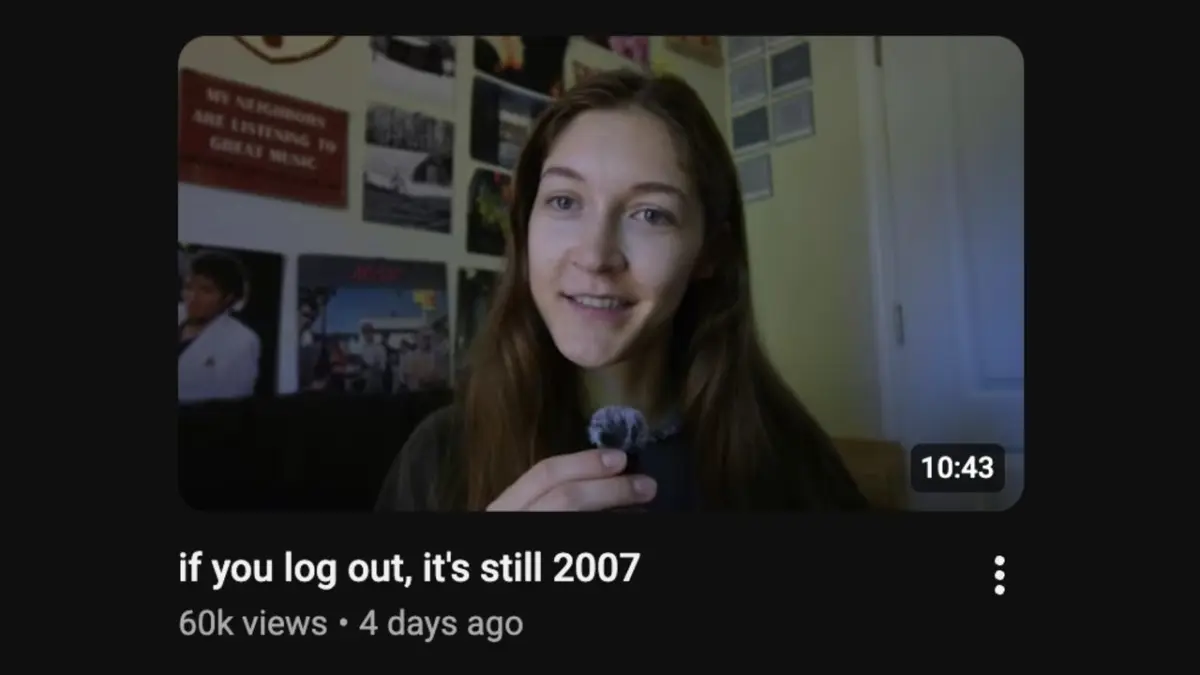
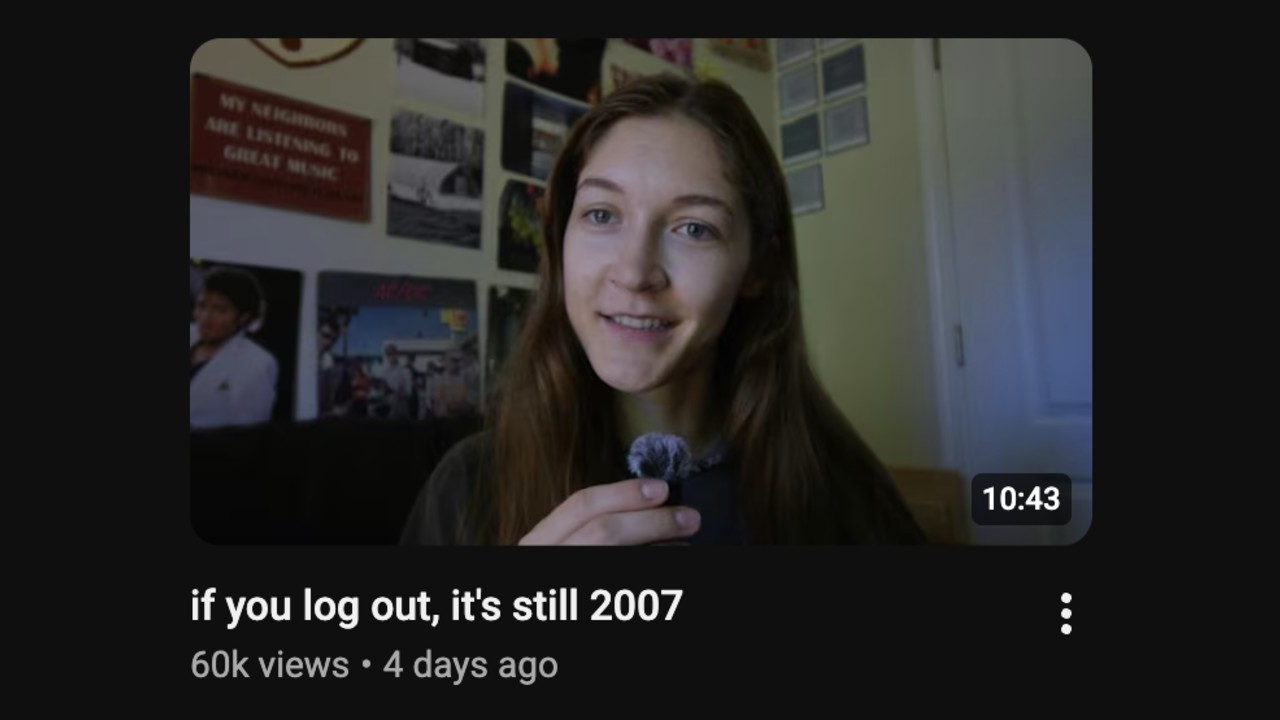
However, within days of its release, the video’s striking thesis underwent a radical transformation. When an X (formerly Twitter) user shared a screenshot of the video’s thumbnail and title out of context on September 14, 2026, it ignited a massive, multi-platform cultural phenomenon. The phrase "if you log out, it’s still 2007" swiftly morphed into a pervasive meme, serving as a Rorschach test for internet users navigating post-pandemic cynicism, economic stagnation, shifting urban landscapes, and modern alienation.
While some participants utilized the template for lighthearted nostalgia—joking about retro video games, classic pop culture, or simpler offline routines—a significant and alarming portion of the discourse hijacked the phrase to air grievances regarding demographic shifts, rising living costs, AI-generated "slop," and controversial, racially charged anti-immigration rhetoric. This report provides an exhaustive investigation into the origin, rapid digital spread, socio-cultural implications, and overarching trajectory of the "If You Log Out, It’s Still 2007" phenomenon, mapping out how a quiet lament for a bygone digital era became a lightning rod for contemporary anxiety.
Detailed Chronology
The trajectory of the "If You Log Out, It’s Still 2007" meme is a textbook case of modern viral velocity, transitioning from a niche video essay into a cross-platform flashpoint in less than a week.
Phase 1: Inception and the YouTube Release (Early September 2026)
On September 9, 2026, content creator Emilymarie uploaded a video to YouTube entitled "if you log out, it’s still 2007." Grounded in reflective nostalgia, the video chronicled her formative years navigating the nascent, relatively innocent internet of the late 2000s. Emilymarie explored the psychological cost of shifting from an intentional, forum-based internet to an omnipresent, algorithmically driven social media landscape. She concluded the video with practical, wellness-oriented advice for viewers suffering from digital fatigue: limiting daily screen time, stepping away from the endless doom-scrolling loop, and reinvesting energy into tactile, low-stress, real-world activities. Within its first eight days online, the video quietly accumulated over 250,000 views, resonating primarily with millennials and older Gen Z viewers who shared her yearning for a less anxious digital past.
Phase 2: The X (Twitter) Catalyst and Initial Spread (September 14, 2026)
The dynamic changed overnight on September 14, 2026, when X user @amritwt posted a simple, uncaptioned screenshot capturing the thumbnail and title of Emilymarie’s video. Devoid of the original video’s nuanced context regarding mental health, the provocative title stood alone as a philosophical claim: that the physical, offline world remains fundamentally unchanged from the year 2007 if one simply chooses to disconnect.
The post struck a nerve, exploding across the platform. Within 72 hours, @amritwt’s post garnered over 8.8 million views, 88,000 likes, and 4,900 reposts. It instantly acted as an open invitation for thousands of users to interrogate, deconstruct, and weaponize the premise.
Phase 3: The Divergence of Discourse (Mid-September 2026)
As the screenshot circulated, users across X, Instagram, and 4chan began reacting to the prompt by sharing their own interpretations of what the offline world actually looks like in 2026 compared to two decades prior. The responses quickly fractured into distinct categories:
- Economic and Technological Reality Checks: Users pointed out the stark realities of modern inflation and commercialism. X user @Isaac2003_v2 went viral with a post noting, "There’s AI slop posters everywhere, the high streets are deserted except for bookies and vape shops, and the far right have draped flags on every lamppost. It’s a far cry from 2007 out there," securing over 47,000 likes. Others, like @ShitpostRock, joked about fast-food inflation, noting that a Big Mac costs drastically more than it did in the late 2000s.
- Controversial and Anti-Immigration Backlash: A darker, highly controversial strand of the discourse emerged as users co-opted the meme to voice xenophobic sentiments and lament perceived cultural changes in Western countries. Posts by users like @Milo_H4 and @kangminlee—claiming that shifting demographics, language barriers, and urbanization meant that neighborhoods no longer resembled the culturally homogenous environments of 2007—racked up tens of thousands of likes and sparked heated debates regarding immigration, crime, and assimilation.
- Meta-Commentary and Offline Observations: By September 16, internet critics like X user @LudditeHacker offered a meta-analysis of the trend itself, writing, "My main experience with logging out is that extremely offline people repeat online discourse on a delay and you can just trace what online corner everything is from and how far they are behind." This observation received over 50,000 likes, highlighting the feedback loop between digital echo chambers and real-world interactions.
Supporting Context & Metrics
To fully understand the cultural resonance of the "If You Log Out, It’s Still 2007" phenomenon, it is vital to examine the quantitative data and socio-psychological underpinnings driving its spread.
Quantitative Engagement Metrics
| Platform / User | Date Posted | Content / Angle | Key Metrics (Within 72 Hours) |
|---|---|---|---|
| Emilymarie (YouTube) | Sept 9, 2026 | Original video essay on digital evolution and mental health. | 250,000+ views |
| @amritwt (X / Twitter) | Sept 14, 2026 | Uncaptioned screenshot of the video thumbnail. | 8.8M views, 88,000 likes, 4,900 reposts |
| @pansexualDBZfan (X) | Sept 14, 2026 | Linguistic displacement commentary. | 45,000+ likes |
| @Isaac2003_v2 (X) | Sept 14, 2026 | Critique citing AI advertising, urban decay, and radical politics. | 474,9K views, 47,000+ likes |
| @Milo_H4 (X) | Sept 14, 2026 | Anecdotal post regarding demographic changes in high schools. | 336,8K views, 21,000+ likes |
| mlbhallofgood (Instagram) | Sept 14, 2026 | Nostalgic sports culture joke (Grady Sizemore). | 4,800+ likes |
| @LudditeHacker (X) | Sept 16, 2026 | Meta-critique on offline populations repeating stale internet discourse. | 1.0M views, 50,000+ likes |
The Psychology of "2007 Nostalgia"
The year 2007 occupies a unique mythological status in contemporary internet culture. Sandwiched between the dot-com recovery and the widespread rollout of the iPhone, 4G networks, and modern social media hegemony, 2007 represents the twilight of the "Web 1.5" era—a time when the internet was expansive and entertaining, yet still required users to physically sit at a desktop computer to access it. Smartphones had not yet colonized human attention spans, and public life was not entirely mediated through algorithmic feeds, surveillance capitalism, or constant documentation.
When Emilymarie asserted that logging out transports a person back to the psychological safety of 2007, she tapped into a deep well of collective exhaustion. However, the subsequent backlash and memeification proved that users instinctively knew the physical world had changed drastically. Between astronomical inflation, the ubiquity of automated service kiosks demanding tips, urban architectural decay, and intense political polarization, the offline world of 2026 feels to many like a stressful extension of the online panopticon rather than an escape from it.
Official Statements & Creator Perspectives
As the meme spiraled far beyond the original intent of its creator, cultural commentators, digital sociologists, and internet historians weighed in on the implications of the viral discourse.
Emilymarie’s Core Message
While Emilymarie has largely remained quiet amidst the storm of political and cultural commentary sparked by her thumbnail, her original video stood as a clear advocacy piece for digital minimalism. Her thesis argued that human psychology evolved for a slower-paced physical reality that has been systematically dismantled by attention-economy business models. In the video, she noted:
"We spend our entire lives reacting to ghosts on screens, forgetting that the physical earth continues to turn. But when you finally put the phone down, the illusion shatters—you realize the damage has already been done, and the world we left behind has grown older, harsher, and far more complicated."
Sociological Analysis of the Backlash
Digital media analysts have pointed out that the phrase "if you log out, it’s still 2007" became a perfect vessel for projection. Because the statement is abstract and empirically unverifiable, it allowed disparate political factions to utilize it as a rhetorical cudgel.
Progressive and moderate commentators used the meme to highlight modern economic hardships—such as unaffordable housing, stagnant wages, and corporate greed—arguing that physical life is demonstrably harder today than it was two decades ago. Conversely, right-wing and populist commentators seized upon the phrase to validate narratives of civilizational decline, utilizing the prompt to air grievances regarding immigration, cultural fragmentation, and the erosion of traditional community structures.
Future Outlook
The "If You Log Out, It’s Still 2007" phenomenon illustrates a broader, permanent shift in how digital media interacts with physical reality. As society marches deeper into the mid-2020s, the boundary between online discourse and offline lived experience has grown increasingly porous.
Key Takeaways for the Future of Digital Discourse
- The Death of Nuance in Screenshots: As demonstrated by @amritwt’s viral post, long-form video essays addressing nuanced psychological or philosophical topics are increasingly vulnerable to being stripped of their context, reduced to single-frame thumbnails, and weaponized by algorithmic echo chambers.
- Escalating Eco-Pessimism and Nostalgia: The intense hunger for pre-smartphone aesthetics (often categorized under "Frutiger Aero" or 2000s core aesthetics) indicates that cultural nostalgia is no longer merely aesthetic; it has become an emotional refuge against modern economic and social instability.
- The Politicization of Everyday Spaces: Simple philosophical musings on disconnecting from the internet can no longer escape the hyper-polarized political climate. Every observation about urban decay, community cohesion, or inflation is swiftly filtered through ideological lenses.
Ultimately, "If You Log Out, It’s Still 2007" will be remembered not merely as a viral meme of September 2026, but as a cultural snapshot of a generation grappling with the irreversible transformation of their world. Whether one views logging out as an escape hatch to a simpler time or an impossible fantasy in a fundamentally altered reality, the enduring legacy of the trend is clear: the digital genie cannot be put back in the bottle, and the year 2007 exists now only as a ghost haunting our collective memory.