Executive Overview
The ongoing high-stakes legal battle between technology giant Apple and the United Kingdom government reached a pivotal juncture during a London court hearing. Apple formally challenged the British government’s persistent refusal to publicly confirm or deny the existence of a controversial "Technical Capability Notice." This clandestine directive demands that Apple engineer a security backdoor into its end-to-end encrypted iCloud user data.
The hearing, held before the Investigatory Powers Tribunal (IPT) in London, marks the latest escalation in a multi-year global saga concerning digital privacy, state surveillance, and the absolute limits of encryption. While the core of Apple’s secondary legal challenge targets the legality of the demand itself, today’s courtroom sparring specifically attacked the UK government’s strict "neither confirm nor deny" (NCND) policy. Legal representatives for Apple, alongside human rights and digital privacy organizations, argued that the government’s insistence on absolute secrecy in the face of widespread public leaks has become "farcical" and actively undermines the foundational principles of open justice.
As governments worldwide grapple with the balance between national security intelligence gathering and personal digital privacy, this case stands as a landmark showdown. The tribunal’s impending decision on the government’s secrecy mandate could establish profound precedents for how tech companies contest state surveillance directives without running afoul of sweeping national security laws.
Detailed Chronology: A Multi-Year Saga of Secrecy and Resistance
To fully understand the gravity of today’s tribunal hearing, it is necessary to retrace the complex timeline of events that brought Apple and the British state to this legal collision course.
The Secret Worldwide Mandate (Early 2025)
The conflict burst into public view when The Washington Post revealed that the British government had secretly issued an enforcement order compelling Apple to construct a backdoor into all iCloud content globally. Protected by stringent UK national security secrecy rules, Apple was legally barred from publicly discussing, acknowledging, or disclosing the existence of the demand.
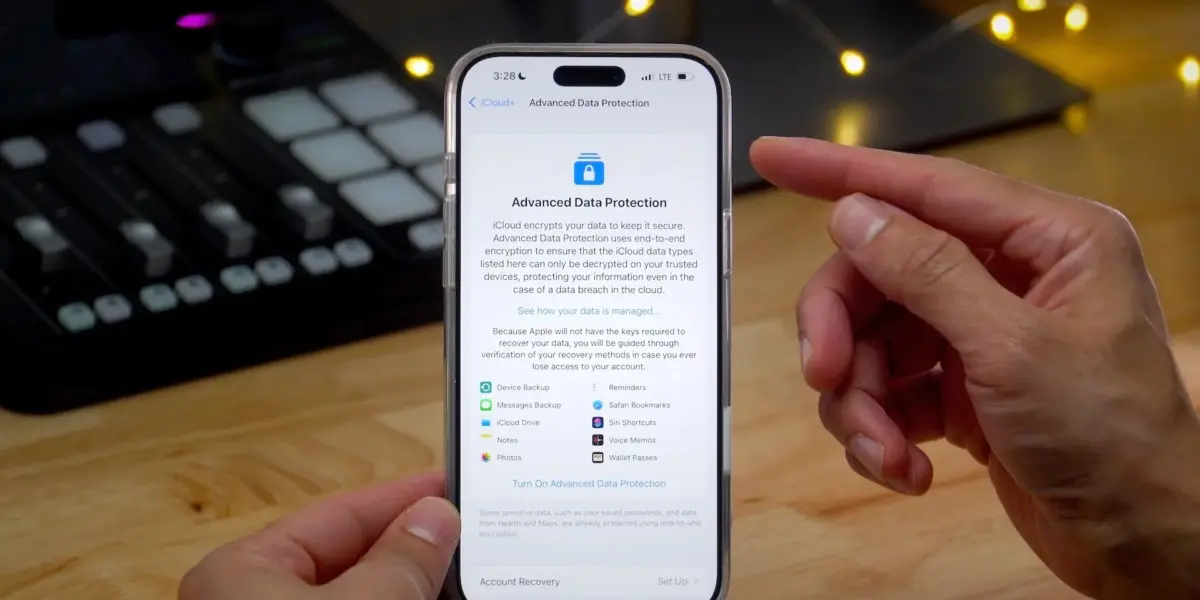
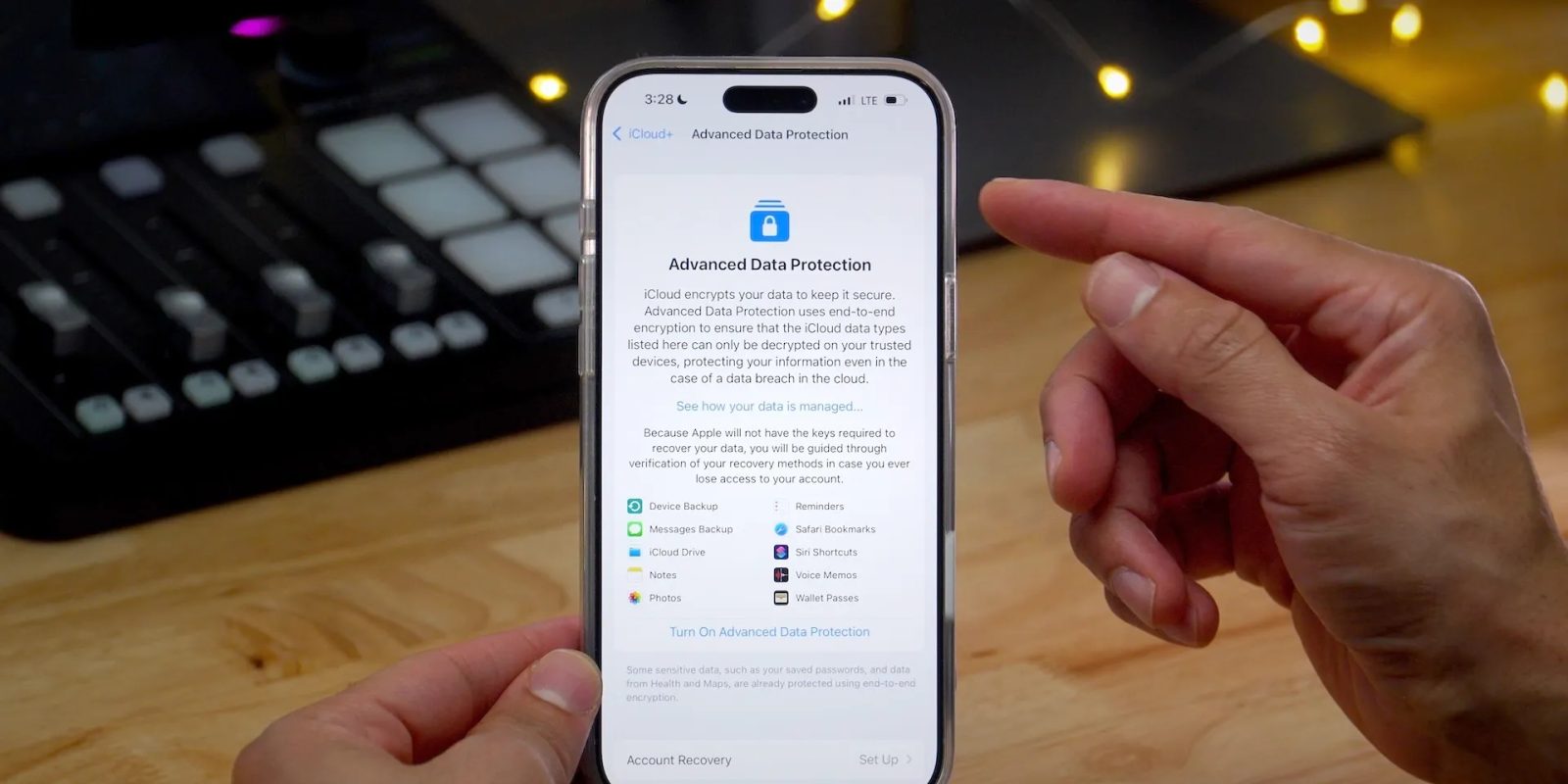
Faced with a directive that fundamentally compromised its security architecture—and unwilling to build a systemic vulnerability that could be exploited by malicious actors worldwide—Apple took drastic action. Rather than secretly complying or capitulating, the Cupertino-based company completely removed the option to enable Advanced Data Protection (ADP) for new iCloud users in the United Kingdom. ADP provides end-to-end encryption for iCloud backups, notes, photos, and other sensitive categories, ensuring that even Apple cannot access the data. By withholding the feature from the UK market, Apple effectively neutralized the immediate global threat of the mandate, setting the stage for a bitter, institutional standoff.
Legal Pushback and the White House Intervention (2025)
Apple’s resistance quickly bifurcated into a two-pronged legal strategy: challenging the substantive legality of the data-access demand itself, and fighting the suffocating gag orders that prevented any transparent public discourse.
In April 2025, British judges delivered an early win for transparency, rejecting the UK government’s attempt to keep even the fundamental existence of Apple’s legal challenge entirely secret. The court ruled that acknowledging the case would not breach national security in a manner that justified total obfuscation.
Pressure intensified internationally later that year. Prompted by strong diplomatic and political pressure from the White House—which raised concerns over the extraterritorial overreach of foreign intelligence demands targeting American tech infrastructure—the British government altered its approach. In August 2025, reports confirmed that London had backed away from demanding data access from American users under the original mandate.
However, the retreat was short-lived and tactical. Recognizing the loophole in its geographic jurisdiction, the British government quickly pivoted. In October 2025, authorities issued a brand-new notice specifically narrowing its scope to target Apple users residing within the United Kingdom.
The Second Legal Challenge and the Current IPT Hearing (2026)
Following the issuance of the revised, UK-focused notice, Apple launched a secondary formal legal challenge before the Investigatory Powers Tribunal. This brought the matter to Thursday’s high-profile hearing in London.
Rather than arguing the merits of whether the British state can legally access encrypted data, Thursday’s proceedings centered on the legality of the government’s NCND policy. Apple and its co-petitioners argued that maintaining absolute radio silence on a mandate that is already an open secret globally makes a mockery of the judicial system.
Supporting Context & Metrics: The Encryption Battleground
The conflict between Apple and the UK government is not an isolated regulatory dispute; it is part of a larger global war over end-to-end encryption (E2EE), often framed by law enforcement as "going dark."
The Stakes of End-to-End Encryption
End-to-end encryption ensures that data is encrypted on the user’s device and can only be decrypted by the recipient or the device owner holding the cryptographic keys. Companies like Apple, Signal, and WhatsApp champion E2EE as an absolute necessity for modern digital security, protecting billions of people from identity theft, financial fraud, state-sponsored cyberattacks, and corporate espionage.
Conversely, intelligence agencies, law enforcement bodies, and child protection advocates argue that absolute encryption shields dangerous criminals, terrorists, and exploiters from lawful interception. Governments have frequently pushed for "lawful access" mechanisms—such as escrowed keys, exceptional access, or security backdoors—arguing that technology companies can build secure workarounds for law enforcement without compromising general user security.
However, cybersecurity experts universally reject this premise. The consensus within the computer science community is that any intentional weakness or backdoor built into an encryption system creates a critical vulnerability. Once a backdoor exists, malicious actors, rogue nation-states, and criminal syndicates inevitably discover and exploit it, rendering the entire system fundamentally insecure.

Apple’s Advanced Data Protection (ADP) Metrics
Apple’s rollout of Advanced Data Protection in late 2022 drastically expanded the categories of iCloud data protected by end-to-end encryption from 4 to 14, including iCloud Backups, Photos, Notes, and Voice Memos. Before ADP, Apple held the cryptographic keys required to decrypt user backups, meaning it could comply with lawful subpoenas and government data requests by handing over plaintext data.
With ADP enabled, Apple stripped itself of the technical capability to decrypt that data. This architectural shift transformed the company from a data custodian that could comply with government snooping orders into a service provider that technically cannot comply, even if legally compelled. The UK government’s Technical Capability Notice was an explicit attempt to force Apple to reverse this architectural evolution and reintroduce centralized key management or client-side scanning—moves that security analysts warn would eviscerate global privacy standards.
Official Statements and Legal Arguments in Court
During Thursday’s gripping hearing at the Investigatory Powers Tribunal, legal representatives for Apple and allied privacy advocacy groups dismantled the government’s posture of enforced ignorance.
The "Farcical" Nature of the NCND Policy
Ben Jaffey, representing prominent digital rights campaign groups Privacy International and Liberty who intervened in the case, delivered blistering criticisms of the state’s official silence. Jaffey characterized the government’s insistence on neither confirming nor denying the technical notice as "farcical."
"The horse has long bolted," Jaffey argued before the tribunal judges, pointing out the absurdity of maintaining strict legal secrecy over a mandate that has been extensively detailed by major international newspapers, acknowledged by anonymized government insiders, and openly debated by politicians in the United States.
Both Jaffey and Apple’s counsel argued that the government’s rigid NCND (Neither Confirm Nor Deny) doctrine represents a direct affront to the principle of "open justice." By hiding behind national security confidentiality rules, the state prevents the public, civil society organizations, and cybersecurity researchers from participating in an informed debate regarding sweeping technological mandates that affect millions of citizens.
The Government’s Defense
Representing the UK government, state lawyers maintained that the statutory powers granted under investigatory frameworks—such as the Investigatory Powers Act 2016—are vital for national security and the prevention of serious crime. The state argued that acknowledging the existence of targeted technical capability notices, even when widely reported in the media, sets a dangerous precedent that could compromise ongoing intelligence operations and reveal sensitive methodologies to hostile foreign actors.
The tribunal judges reserved their judgment regarding the government’s invocation of the NCND policy.

Future Outlook: What Lies Ahead?
Thursday’s hearing marks an important procedural milestone, but the broader war over iCloud encryption in the UK is far from over.
Immediate Next Steps
The Investigatory Powers Tribunal will deliberate on whether the UK government can continue to lawfully hide behind its "neither confirm nor deny" stance in this specific context. Should the tribunal rule against the government, it could force a degree of institutional transparency rarely seen in British national security litigation, compelling authorities to formally acknowledge the notice and defend its merits openly in court.
The Road to a Full Trial
Even if the secrecy veil is partially lifted, the ultimate legal challenge addressing whether the UK state possesses the statutory authority to force Apple to weaken its global security standards will take considerably longer to resolve. Industry legal analysts tracking the litigation suggest that a substantive, full-scale hearing addressing the legality of the underlying Technical Capability Notice is unlikely to materialize before next year.
Global Implications
The outcome of this protracted legal battle will reverberate far beyond the borders of the United Kingdom. If the UK government ultimately succeeds in compelling Apple to alter its encryption protocols for British users, it will establish a perilous global precedent. Authoritarian and democratic regimes alike could leverage the UK’s legal framework to demand similar backdoors, effectively fracturing the global internet into fragmented regional zones where absolute digital security is legally prohibited.
For Apple, the case represents an existential defense of its brand identity, which is deeply anchored in consumer privacy. As the legal proceedings grind forward into next year, the technology sector, privacy advocates, and intelligence communities will be watching London closely to see where the boundary between national security and unbreakable digital privacy will finally be drawn.