Executive Overview
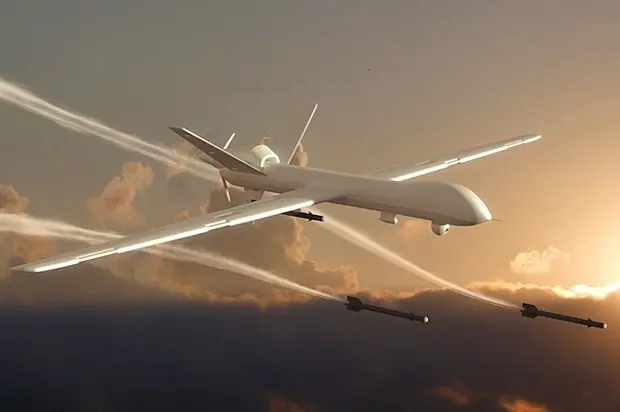
As the United States’ protracted "War on Terror" spans more than sixteen years, the theater of modern conflict has grown increasingly reliant on unmanned aerial vehicles (UAVs)—commonly known as drones. Promoted by military strategists and defense contractors as surgical, clinical, and infallible instruments of remote combat, drones have fundamentally transformed how Washington projects power across the Middle East, South Asia, and the Horn of Africa.
Yet, beneath the glossy marketing campaigns and carefully cultivated public perception of spotless precision lies a troubling reality. A comprehensive, landmark report titled "Drone, Inc.: Marketing the Illusion of Precision Killing" pierces the veil of official rhetoric to examine the actual hardware, software, and human machinery driving remote warfare. Authored by award-winning investigative journalist and CorpWatch Executive Director Pratap Chatterjee, the report exposes profound technological vulnerabilities, systemic intelligence failures, and the devastating human toll borne by civilians trapped beneath the flight paths of these airborne surveillance platforms.
Far from being omniscient gods-eyes in the sky, drones are revealed to be fragile assemblages of imperfect sensors, algorithms, and fatigued human operators susceptible to confirmation bias and cultural disconnects. As whistleblower testimonies from former military personnel underscore, the clandestine nature of the drone campaign shields it from meaningful democratic oversight, creating a self-perpetuating cycle of violence that experts argue generates more security threats than it eliminates.
Detailed Chronology and Technical Anatomy of Failure
To understand how drone warfare so frequently results in tragedy, one must deconstruct the technology itself. Pratap Chatterjee explains to Salon that a drone is not a singular, autonomous death-bringer, but rather "really just a collection of sensors"—a mosaic of high-definition cameras, phone trackers, radar systems, and infrared detectors cobbled together to form a networked weapons platform.
The Fragility of Sensor-Driven Warfare
When an operator sits thousands of miles away at a computer console—whether at Creech Air Force Base in Nevada or elsewhere—they view the battlefield exclusively through the digital lenses of these unmanned machines. If any single component within this sensor array falters, the entire mission profile degrades.
Because absolute technological perfection is impossible, the burden of interpretation inevitably falls upon human operators and command teams. Operating under immense pressure with incomplete, degraded, or delayed data sets, these operators frequently succumb to psychological phenomena such as confirmation bias. When an analyst suspects a target is hostile, subsequent ambiguous data points are often misinterpreted to validate that initial, potentially fatal assumption.
Case Study: The Tragic Killing of Warren Weinstein and Giovanni Lo Porto
The catastrophic real-world consequences of these technical and human limitations were laid bare in a 2015 drone strike in Pakistan. The operation targeted a compound suspected of housing four high-value al-Qaeda militants. Tragically, the strike also killed American aid worker Warren Weinstein and Italian aid worker Giovanni Lo Porto, who were being held hostage inside the building.
Despite the deployment of extensive surveillance assets—including more than 400 hours of aerial monitoring—neither the drone’s primary video cameras nor its secondary thermal imaging systems detected the presence of the hostages. All six occupants of the building perished.
As Chatterjee’s report highlights, while the primary video feeds were poor, the more alarming failure involved the backup forward-looking infrared (FLIR) heat sensors utilized by standard Predator and Reaper drone models. FLIR technology suffers from severe environmental constraints:
- Resolution Limits: The sensors frequently cannot distinguish one human being from another.
- Environmental Blind Spots: Infrared optics cannot penetrate tree canopies and are easily disoriented by high ambient temperatures, urban heat islands, and even simple household items like blankets designed to dissipate human body heat.
- Subterranean Barriers: Drones hovering 10,000 feet in the air possess zero capability to peer into basements, caves, or underground bunkers.
When operating algorithms depend on approximate results and incomplete telemetry, the margin for error narrows to zero, transforming high-tech surveillance into a game of lethal guesswork.
Supporting Context & Metrics: The Human and Geopolitical Toll
Public understanding of the clandestine drone apparatus has historically been starved of transparency. Much of what is known today exists thanks to rare investigative leaks, such as the landmark 2015 Intercept exposé “The Drone Papers” by Jeremy Scahill, which laid bare critical shortfalls in intelligence-gathering across Afghanistan, Yemen, and Somalia.
The Illusion of Clean Warfare
The lack of official accountability has allowed successive U.S. administrations to downplay civilian casualties. While common legal and ethical critiques of the drone campaign focus on the extrajudicial nature of signature strikes and the morality of machine-aided killing, Chatterjee’s work expands the debate to fundamental efficacy.
- Untested Experiments: The civilian populations of nations like Pakistan and Yemen have essentially served as testing grounds for rapid technological deployments without rigorous, systematic post-strike evaluations to determine whether the systems actually achieve their strategic objectives.
- The Blowback Effect: Far from neutralizing terrorism, extensive empirical research suggests the opposite. According to a classified 2011 FBI intelligence assessment unearthed via public records organization MuckRock, analysts concluded "with high confidence" that a broadening U.S. military footprint overseas—combined with aggressive ideological outreach by extremist groups—correlated directly with an 11 percent increase in plotted terror attacks against Western interests.
By substituting boots on the ground with missiles from the sky, the United States has relied on a tactic that experts argue breeds the very insurgencies it seeks to extinguish.
Official Statements and Insider Perspectives
The institutional inertia driving the drone program is further illuminated by those who operated within its command structures. Lisa Ling, a former Distributed Common Ground System (DCGS) technician featured in Sonia Kennebeck’s critically acclaimed documentary “National Bird,” has become a vocal critic of remote warfare.
The Problem of Cultural Ignorance
Ling argues that the foundational architecture of the drone program is deeply flawed due to an insurmountable cultural barrier.
"We’re asking young people, the ages about 18 to 24, to recognize something in cultures that anybody from the outside really can’t understand fully from the ground, let alone a two-dimensional screen," Ling explained in an interview. "How can it not be problematic?"
Young intelligence analysts and pilots are conditioned by their superiors to believe their actions are morally righteous and strategically sound. Yet, Ling contends that viewing complex foreign societies through a two-dimensional lens inevitably dehumanizes populations and blinds operators to the profound psychological terror inflicted below.
State-Sponsored Terror from Above
Ling challenges the very nomenclature of the War on Terror, pointing out the hypocrisy of using terror tactics to combat extremism:
"I don’t believe that we’re on the right side of history with armed drones. I don’t believe that we can continue to fight a war on terror with more terror… Imagine, if there was a drone over any one of us right now, and we didn’t know whether ordinance was going to fall out of the sky? And there’s nobody immune, there’s no profession, there’s no age group, there’s no gender, that really has not been blown up by drones. This is terror, and we’re seeing the blowback."
Furthermore, Ling notes that transparency has steadily eroded across successive presidential administrations. Under clandestine agencies, meaningful congressional oversight is virtually nonexistent, leaving the public entirely divorced from the realities of ongoing hostilities. For the Western public, these wars are consumed as distant media spectacles—easily dismissed by simply changing the television channel.
Future Outlook: Accountability and the Path Forward
As “Drone, Inc.: Marketing the Illusion of Precision Killing” demonstrates, the core danger of drone warfare is not merely technical malfunction, but political expediency. Drones allow political leaders to project an image of decisive action—giving the illusion of safety and engagement—while avoiding the political costs associated with traditional ground deployments and American troop casualties.
Yet, this expediency carries an unsustainable moral and strategic price tag. If success in the War on Terror is measured solely by body counts and the number of suspected militants eliminated via remote strike, the U.S. military can claim a grim tactical victory. However, if success requires long-term regional stability, the eradication of violent extremism, and adherence to international humanitarian norms, the drone campaign is a profound failure.
Without rigorous public discourse, exhaustive independent evaluations, and a willingness to dismantle the secrecy surrounding military-industrial complex contracting, the cycle of automated warfare will persist. Top-to-bottom accountability will remain out of reach until the international community—and the American citizenry—demand transparency, recognize the severe limitations of algorithmic combat, and listen to the voices of those living under the constant, silent hum of the machines above.