Executive Overview
The landscape of social media marketing has fundamentally shifted. For business owners and digital creators wondering why their Instagram content is no longer converting the way it used to, the answer lies in a massive saturation of algorithm-flooding, AI-generated content. In 2026, audiences have grown acutely sensitive to inauthentic messaging, slick brand aesthetics, and overly polished production values. When consumer skepticism takes over, the core message of any brand gets lost entirely.
However, amidst a backdrop of declining organic reach and intense competition for attention, Instagram remains a premier revenue-driving engine for forward-thinking brands. The secret to breaking through the noise no longer relies on chasing superficial metrics like views or likes. Instead, sustainable growth requires a modern, three-part strategy:
- Creating natural-feeling content that prioritizes human connection over corporate perfection.
- Building sustainable operational systems to maintain consistent posting schedules without burnout.
- Amplifying proven organic winners through a simplified, highly efficient Meta paid ads framework.
Co-created by digital marketing strategist Ellen Mackenzie and Social Media Examiner founder Michael Stelzner, this comprehensive blueprint offers a masterclass in adapting to the 2026 platform economy. By combining unscripted media formats, artificial intelligence as a collaborative brainstorming partner, and precise performance metrics (such as comments, saves, and shares), businesses can turn Instagram into a predictable and scalable revenue channel.
Detailed Chronology: The Evolution of Instagram’s Algorithm and Content Standards
To understand why traditional Instagram tactics are failing, marketers must examine how the platform’s ecosystem transformed heading into 2026.
The AI Saturation and the Rise of Audience Skepticism
For years, the standard advice for digital creators was simple: "Just focus on making better content." However, 2026 marks the first year that leading strategists like Ellen Mackenzie have had to temper that directive. Why? Because the platform has been inundated with low-effort, AI-generated text, graphics, and videos.
This influx has triggered a psychological shift among consumers. Users constantly question whether an image, reel, or caption is authentic or synthetic. When audiences suspect they are interacting with automated bulk content, trust evaporates. This widespread skepticism has driven down organic reach for business owners who rely on traditional, high-production corporate media kits and heavily designed Canva layouts.
The Impact of "Trial Reels"
Compounding these algorithmic changes is the widespread adoption of "Trial Reels." Meta introduced this feature as a testing ground for creators to A/B test hooks, wording, and formats before committing a piece of media to their main grid.
While trial reels offer immense opportunity—allowing creators to run two, three, or four variations to see which phrase or visual hook resonates best—they have also inadvertently supercharged content mass-production. This has turned the feed into a hyper-competitive battleground where volume often supersedes substance.
To navigate this landscape, successful creators now treat trial reels as diagnostic labs. By measuring audience reception before rolling content out broadly, businesses can protect their main brand feeds from low-performing experiments and focus exclusively on data-backed winners.
Supporting Context & Metrics: The Three-Part 2026 Instagram Growth Strategy
Achieving predictable revenue on Instagram requires a structured, multi-layered approach. Each component relies on the one beneath it; without a solid foundation of engaging content and consistent posting, paid ads and advanced growth hacks will simply accelerate failure.
Pillar #1: Create Natural-Feeling Instagram Content
The modern consumer is actively rejecting the perfectly curated, hyper-polished aesthetic that defined Instagram in the early 2020s. Today, spontaneous, real-world moments consistently outperform studio-grade shoots.
- The Power of Casual Carousels: Data across multiple top-tier accounts demonstrates that heavily designed graphics yield diminishing returns. Conversely, simple, unpolished smartphone photos paired with straightforward text overlays routinely blow past standard engagement benchmarks. For instance, casual snapshots—such as a selfie taken at a local café alongside a miniature pony—frequently achieve organic view counts that more than double a creator’s total follower base.
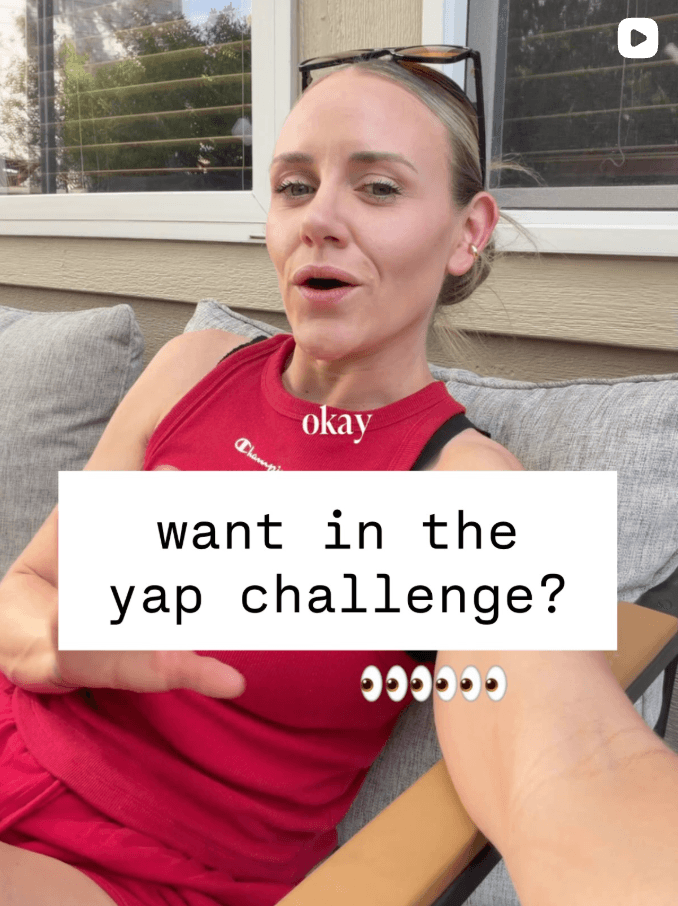
- The Unscripted Video Revolution: The financial viability of authenticity-first content is staggering. Entrepreneurs utilizing unscripted, conversational video frameworks (such as the viral "Yap Challenge," where participants show up on camera to tell real stories without teleprompters) have generated multi-million-dollar sales figures across short launch windows. Audiences want to hear from real humans, not corporate avatars.
- Leveraging AI as a Collaborative Partner: Interestingly, embracing natural-feeling content does not mean abandoning technology entirely. Top creators use advanced large language models (such as Claude) not to generate lazy content from scratch, but as a collaborative sounding board. By training an AI model on years of personal frameworks, client interactions, and core opinions, creators can feed the system half-formed rants or raw observations. The AI then structures and refines the data, ensuring the final output remains deeply human while saving valuable operational time.
Execution Tactics for Reels and Carousels
- For Reels: Avoid the unnatural cadence that occurs when staring directly into a lens. Instead, place the camera off to the side while performing a natural, routine activity—such as a florist arranging blooms or a podcaster mid-conversation. Furthermore, trim the first 30 seconds of any recording to eliminate artificial "presenter energy." Cutting straight into the middle of a sentence hooks viewers immediately with authentic momentum.
- For Carousels: Prioritize a 4:5 aspect ratio using casual, everyday photos (workspace snapshots, weekend moments, travel candids) paired with simple black text on a white background. Emphasize readability over strict brand-color conformity.
Shifting Your Metrics Mindset
Vanity metrics are dead. In 2026, likes are no longer reliable indicators of business success. Modern audiences consume content passively, rarely tapping the heart icon unless prompted. Instead, the true north stars of Instagram performance are comments, saves, and shares.
- Comments indicate that a piece of content sparked a conversation or prompted action (such as triggering an automated ManyChat link for a digital product).
- Saves prove that the content holds high utility, prompting users to revisit the material later.
- Shares show that the message resonated deeply enough for a user to endorse it to their own network.
Approaching analytics with emotional distance—treating low view counts not as personal failures, but as objective data points—keeps frustration out of future content creation.
Official Statements and Operational Frameworks: Building Sustainable Systems
Consistency is frequently cited as the holy grail of social media marketing, but definitions of consistency are often unrealistic. Business owners cannot reasonably match the output of full-time influencers whose sole enterprise is volume-based content creation. True consistency requires sustainable systems.
Batching and Routine Integration
To prevent burnout, top-performing entrepreneurs implement strict operational rhythms:
- Dedicated Filming Days: Block out specific days on the calendar free of meetings. Use this focused window to capture video content for Instagram, YouTube, and podcasts, while simultaneously snapping library photos for future carousels.
- Routine Attachment: Anchor content creation to existing daily habits. Whether it is filming a quick thought during a skincare regimen or recording a three-minute unscripted reflection on a front porch every morning, tying content creation to pre-existing routines eliminates decision fatigue.
- The 60-Minute Snapshot Alarm: Set an hourly phone reminder during work days to capture candid photos of standard operations—packing orders, working at a desk, or grabbing coffee. This builds an evergreen visual repository that can be paired with varying text topics over subsequent weeks.
Future Outlook: Amplifying Organic Success with Simplified Paid Ads
Once organic content foundations and operational systems are firmly established, businesses can introduce the third layer of the strategy: paid advertising. Putting ad spend behind weak organic content or inconsistent posting schedules is a waste of capital, but amplifying proven winners unlocks exponential scale.

Why Organic Must Precede Paid
Organic posts have inherent limitations—most notably, the inability to include clickable links directly within standard feed posts, and the challenge of managing geographic distribution (such as organic views drifting into regions outside a brand’s target service area). Paid ads solve both problems instantly.
The Simplified Meta Ads Framework
You do not need a massive media-buying agency or complex multi-tiered ad architectures to drive a return on investment. The most effective contemporary ad strategy keeps things remarkably streamlined:
- One Campaign, One Ad Set, Three Creatives: Structure your ad account around a singular product or offer campaign.
- Broad Targeting: Keep demographic restrictions to basic parameters (country, gender, broad age ranges). Avoid heavy interest-based layering; Meta’s advanced machine learning algorithms are fully capable of identifying high-converting audiences organically when fed strong creative assets.
- Organic Integration: Run ads directly through existing, high-performing organic Instagram posts. When prospective customers visit your profile, they see a post bolstered by genuine social proof (comments, saves, and engagement) rather than an obvious, sterile advertisement.
- Automated Monitoring: Utilize custom AI tools or skills to monitor Key Performance Indicators (KPIs) like Cost Per Lead (CPL). Setting up automated threshold alerts ensures that underperforming ad variations can be quickly identified and cut without requiring constant manual oversight.
Conclusion
Instagram marketing in 2026 is no longer a game of algorithmic hacks, massive content volume, or sterile perfection. As consumer skepticism toward automated and over-produced media peaks, brands that win are those that return to human fundamentals.
By embracing natural-feeling content, leveraging AI as a supportive brainstorming partner rather than a ghostwriter, establishing batch-processing operational systems, and supercharging proven organic posts with simplified paid ads, businesses can cut through the noise. Stop chasing empty likes, focus on the metrics that drive genuine engagement (comments, saves, and shares), and transform your Instagram presence into a reliable, revenue-generating powerhouse.